

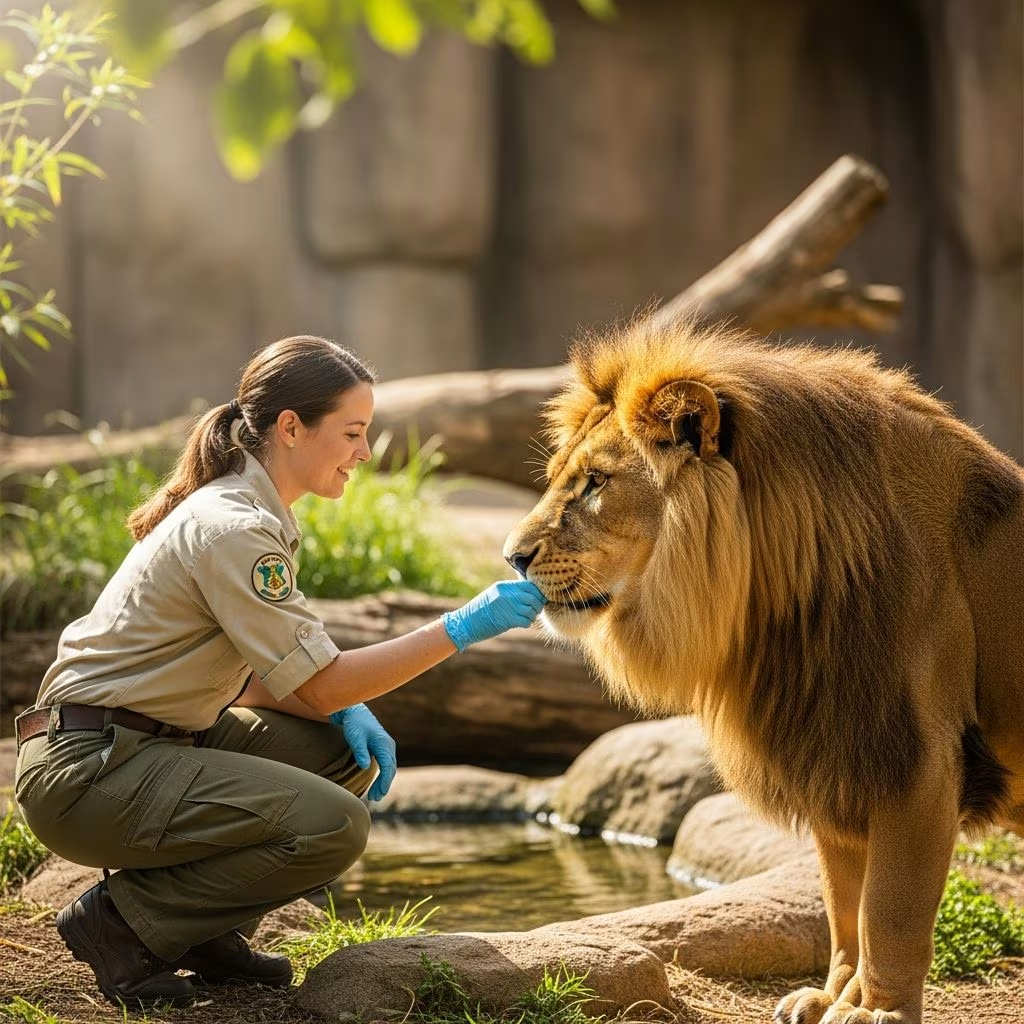
Managing a zoological facility represents a complex balance between providing exceptional care for captive animals, delivering meaningful experiences for visitors, and maintaining sustainable business operations. The foundation of any successful zoo rests upon its unwavering commitment to animal welfare and health, supported by well-trained staff, appropriate facilities, and evidence-based management practices. This comprehensive approach ensures that every animal receives the specialized care required for its species while the institution operates efficiently and ethically.
The Central Role of Animal Welfare in Zoo Operations
Animal welfare has emerged as the cornerstone of modern zoo management, moving beyond basic survival to encompass physical health, psychological enrichment, and quality of life. Contemporary zoos recognize that comprehensive welfare strategies must be embedded into every aspect of institutional operations, from daily care routines to long-term collection planning. This paradigm shift reflects growing scientific understanding of how captive animals experience their environment and the psychological factors that influence their wellbeing.
The implementation of structured welfare frameworks requires commitment from all organizational levels. Leadership must prioritize animal care in institutional mission statements, resource allocation, and strategic planning. When animal welfare is positioned as central to an organization’s identity rather than as an auxiliary concern, staff members develop a shared understanding of their role in promoting positive outcomes for animals under their care.
Foundational Care Standards and Daily Management Protocols
Providing appropriate daily care forms the essential foundation upon which all other animal welfare initiatives build. Zookeepers and animal care professionals shoulder the primary responsibility for implementing care protocols that directly impact animal health. These professionals must possess current knowledge of species-specific biology, behavioral needs, nutritional requirements, and environmental preferences to make informed decisions throughout their workday.
Essential Daily Care Components
- Enclosure Maintenance: Regular cleaning prevents disease transmission and creates sanitary living conditions for both animals and staff. Daily removal of waste, soiled bedding, and uneaten food maintains environmental quality while reducing pathogenic organisms.
- Nutritional Management: Providing species-appropriate diets requires understanding each animal’s specific requirements, including caloric intake, essential nutrients, and natural feeding behaviors. Zoos must develop feeding protocols that account for seasonal variations and individual dietary needs.
- Health Observation: Daily assessment of animal behavior, appetite, physical condition, and activity patterns enables early detection of health issues. Zookeepers serve as the first line of defense in identifying problems before they escalate.
- Environmental Enrichment: Providing mental stimulation through appropriate enrichment items and activities reduces behavioral stereotypies and promotes natural behaviors.
- Water Quality and Management: Fresh, clean water must be available continuously, with regular monitoring in aquatic facilities to maintain appropriate chemical parameters.
Comprehensive Animal Welfare Assessment Frameworks
Moving beyond anecdotal observations, modern zoos employ structured assessment methodologies to systematically evaluate animal welfare across multiple domains. These evidence-based approaches provide objective data that guide management decisions and identify areas requiring intervention.
The Five Domains model represents a widely-adopted framework that examines four physical/functional domains alongside one mental domain. This comprehensive approach assesses nutrition, environment, physical health, behavioral expression, and psychological state. By evaluating animals across these interconnected areas, zoo professionals gain insights into overall welfare status and can identify specific concerns requiring attention.
Assessment mechanisms extend beyond simple observation checklists. Zoos should implement formalized programs including behavioral monitoring protocols, health and nutritional assessments, environmental enrichment evaluation, quality of life assessments, and animal transfer assessments. Regular data collection and analysis reveal trends over time and inform strategic improvements to animal management practices.
Facility Design and Environmental Considerations
Enclosure design profoundly influences animal welfare by either facilitating or constraining natural behaviors and psychological wellbeing. Modern facility design incorporates scientific understanding of species-specific needs while maintaining practical operational considerations. Successful enclosures provide appropriate space, complexity, social groupings, and environmental variability that reflect natural habitat conditions.
Environmental design should incorporate:
- Species-appropriate space dimensions that allow for natural movement patterns and social interactions
- Substrate variety and complexity that encourages natural behaviors such as foraging, digging, or climbing
- Appropriate lighting, temperature, and humidity conditions specific to each species
- Visual and auditory complexity that provides psychological stimulation and reduces stress
- Multiple refuge areas where animals can retreat and control their environment
- Opportunities for social interaction appropriate to each species’ natural grouping patterns
Facilities must be designed with both animal and human welfare in mind. Safe pathways for staff, appropriate restraint systems, and ergonomic work areas reduce injury risk and enable staff to perform their duties effectively. Regular facility maintenance prevents deterioration that could compromise animal safety or environmental quality.
Staff Development and Professional Competency
The quality of animal care ultimately depends upon the knowledge, skills, and commitment of zoo personnel. Comprehensive professional development programs ensure that staff remain current with evolving best practices in animal husbandry and welfare science. Training should address species-specific biology, handling techniques, behavioral enrichment strategies, health assessment, and ethical decision-making frameworks.
Organizations should establish clear expectations through formal documentation including mission statements, animal welfare charters, and ethical guidelines that emphasize animal care as a central organizational value. When staff members understand institutional commitment to animal welfare and their personal role in achieving welfare goals, engagement and performance improve significantly.
Handling techniques merit particular attention, as inappropriate restraint or capture methods cause unnecessary stress. Training programs should emphasize low-stress handling techniques, positive reinforcement training to reduce reliance on physical or chemical restraint, and gradual habituation to necessary procedures. Monitoring animal stress responses during handling ensures that protocols remain appropriately calibrated to minimize negative impacts.
Record Keeping and Information Management Systems
Systematic record keeping provides the informational foundation for evidence-based decision-making in zoo management. Comprehensive records enable tracking of individual animal health histories, behavioral patterns, dietary intake, breeding information, and medical treatments. These records facilitate communication among staff members and support continuity of care even as personnel change.
Records should document:
- Complete animal identification, origin, and species information
- Medical histories including vaccinations, treatments, and health status
- Behavioral observations and enrichment responses
- Dietary intake and nutritional assessments
- Breeding information and genetic considerations
- Transfer history and acquisition details
- End-of-life information and cause of death when applicable
Organized record systems support institutional learning by revealing patterns that might otherwise remain unnoticed. Analysis of health records across multiple individuals may identify environmental factors or management practices requiring adjustment. Behavioral records provide baseline information for assessing enrichment effectiveness and detecting emerging welfare concerns.
Health and Safety Management Systems
Protecting the health of animals, staff, and visitors requires multifaceted safety protocols and preventive measures. Zoos operate at the intersection of human and animal health, requiring vigilance against zoonotic disease transmission and occupational hazards.
Critical health and safety elements include:
- Preventive Medicine: Vaccinations, parasitic control programs, and regular health assessments prevent disease outbreaks before they impact animal welfare or human health.
- Hygiene Protocols: Standardized cleaning procedures, appropriate personal protective equipment, and hand hygiene practices minimize disease transmission.
- Occupational Safety: Staff training, appropriate equipment, and hazard assessment programs reduce workplace injuries and ensure safe working conditions.
- Visitor Safety: Clear signage, appropriate barriers, and staff supervision protect visitors while maintaining their ability to observe animals.
- Emergency Preparedness: Protocols for medical emergencies, escapes, and natural disasters ensure rapid appropriate response when incidents occur.
Management of Undesired Wildlife and Coexistence Strategies
Zoo facilities inevitably attract wild animals seeking food, shelter, or water. Traditional management approaches have often employed lethal control methods; however, contemporary facilities increasingly adopt integrated approaches emphasizing prevention, humane deterrence, and coexistence strategies.
Modern undesired animal management prioritizes:
- Prevention: Securing food sources, eliminating water sources, and sealing entry points prevent attraction of unwanted species.
- Non-lethal Deterrence: Humane deterrents such as motion-activated lights, sound devices, and physical barriers discourage unwanted animals without causing harm.
- Ethical Assessment: When lethal control becomes necessary, methods are selected based on effectiveness and humaneness, avoiding techniques that cause prolonged suffering.
- Compassionate Approach: Recognition that all animals deserve ethical treatment shapes decision-making about undesired species management.
Organizational Structure and Administrative Functions
Successful zoo operations require clear organizational structures that define roles, responsibilities, and decision-making authority across functional areas. Effective management clarifies reporting relationships, establishes communication pathways, and coordinates activities across diverse departments including animal care, veterinary services, facilities, education, and visitor services.
Administrative responsibilities include:
- Development and implementation of written policies and procedures governing all significant operations
- Personnel management including hiring, training, performance evaluation, and professional development
- Budget planning and financial management to ensure adequate resources for animal care
- Collection planning that considers space availability, species compatibility, and conservation priorities
- Regular review and revision of policies based on operational experience and emerging best practices
Integration of Scientific Advancement into Practical Operations
The field of animal welfare science continues to evolve, generating new insights into animal behavior, physiology, and psychological needs. Zoos must maintain awareness of scientific developments and systematically incorporate evidence-based improvements into operational practices. Formal structures such as animal welfare committees can facilitate ongoing evaluation of new research and assessment of applicability to institutional operations.
This commitment to continuous improvement requires flexibility rather than rigid adherence to established protocols. Performance indicators should be regularly reviewed and adjusted as needed, ensuring that management practices remain responsive to emerging challenges while celebrating progress toward welfare goals.
Stakeholder Engagement and Transparency
Modern zoos recognize that public trust and support depend upon transparent communication about animal welfare practices and genuine engagement with diverse stakeholders. Communicating welfare assessment results, facility improvements, and staff training initiatives demonstrates institutional commitment to animal welfare. Meaningful stakeholder involvement embeds animal welfare considerations into policies and practices while building understanding among visitors, donors, and community members.
Conclusion
Effective zoo management represents a comprehensive commitment to animal welfare supported by well-trained staff, appropriate facilities, evidence-based practices, and transparent operations. By integrating animal care, welfare assessment, communication, and continuous evaluation throughout organizational operations, zoos create conditions where animals can thrive while providing meaningful education and engagement opportunities for human visitors. This multifaceted approach ensures that zoo animals receive exceptional care while institutions operate sustainably and ethically.
References
- Operationalising animal welfare strategies in zoos and aquaria — National Center for Biotechnology Information (NCBI). 2024. https://pmc.ncbi.nlm.nih.gov/articles/PMC12722085/
- Animal Welfare Strategy — World Association of Zoos and Aquariums (WAZA). Accessed 2026. https://www.waza.org/priorities/animal-welfare/
- Zoo Management: Principles and Practices — General zoo management best practices documentation. Accessed 2026. https://www.scribd.com/document/830869648/Zoo-Management-Principles-and-Practices
- Records, Planning and Protocols — Wild Welfare. Accessed 2026. https://wildwelfare.org/wp-content/uploads/Record-Keeping.pdf
- The Wellbeing of Undesired Animals in Zoos and Aquariums — Animal Concepts. Accessed 2026. https://www.animalconcepts.eu/blog/the-wellbeing-of-undesired-animals-in-zoos-and-aquariums
- EAZA Best Practice Guidelines — European Association of Zoos and Aquaria (EAZA). Accessed 2026. https://www.eaza.net/bpg/
- Zoo Management Overview — European Association of Professional Zookeepers. Accessed 2026. https://www.zookeepers.eu/framework/area-4-the-role-and-operation-of-a-modern-zoo/4-5-zoo-management/



