

Hi, I’m Dr. Karyn! Read my introduction to learn more about me and meet my five hilarious cats: Clutch, Cyril, Alex, Zelda, and Zazzles.
By now, you might be familiar with “da boyz” in my home—Clutch, Cyril, and Alex—but we haven’t seen much of my female felines, Zazzles and Zelda. They are definitely more shy than the lads, sometimes proving downright elusive, particularly if there’s a brush or nail clippers within ten miles.
Being a shorthaired cat, Zazzles rarely needs anything more than a vigorous stroking to keep her coat looking healthy. But Zelda has luscious long fur that she enjoys leaving in clumps around the house. Not only is this a nightmare to keep on top of cleaning-wise, it leads to many a hairball being unceremoniously ejected on the carpet, bed, computer keyboard…you name it! Even worse, one of my “always up to something” Chihuahuas has developed something of an appetite for Zelda’s hairy offerings, meaning that I now have twice-vomited hairballs to contend with!
The Trouble With Zelda
Zelda is one of those cats that has a very limited window of tolerance when it comes to contact and affection; happy for a pat or a smooch, but it’s always very much on her terms. My husband and I can usually manage to clip her claws with little or no bloodshed, but for some reason, she seems to think that brushing will cause her grievous bodily harm.
As a veterinarian, I know the importance of regular grooming for long-haired cats. Mats can form quickly in Zelda’s dense undercoat, leading to skin infections, discomfort, and even painful tangles that require professional shaving. Loose fur contributes to hairballs, which can cause vomiting, constipation, or in severe cases, intestinal blockages requiring surgery. According to the American Veterinary Medical Association (AVMA), proactive grooming reduces these risks significantly.
I have, on occasion, used chemical restraint to give her a full body brush and trim, but I would like to be able to groom her without the aid of sedation. Sedation carries risks like respiratory depression or prolonged recovery, especially in older cats, and it’s not ideal for routine care. The goal is desensitization—gradually building positive associations with grooming tools to make sessions voluntary and stress-free.
Long-haired breeds like Persians, Maine Coons, or mixed longhairs like Zelda shed heavily, especially seasonally. Daily brushing removes 90% more loose hair than self-grooming alone, per studies from the Journal of Feline Medicine and Surgery. Without it, hairballs become chronic, and vacuuming becomes a full-time job. Zelda’s shedding has turned our home into a fur factory, with tufts collecting under furniture and triggering allergies in sensitive household members.
What’s a Dog Got To Do With Grooming a Cat?
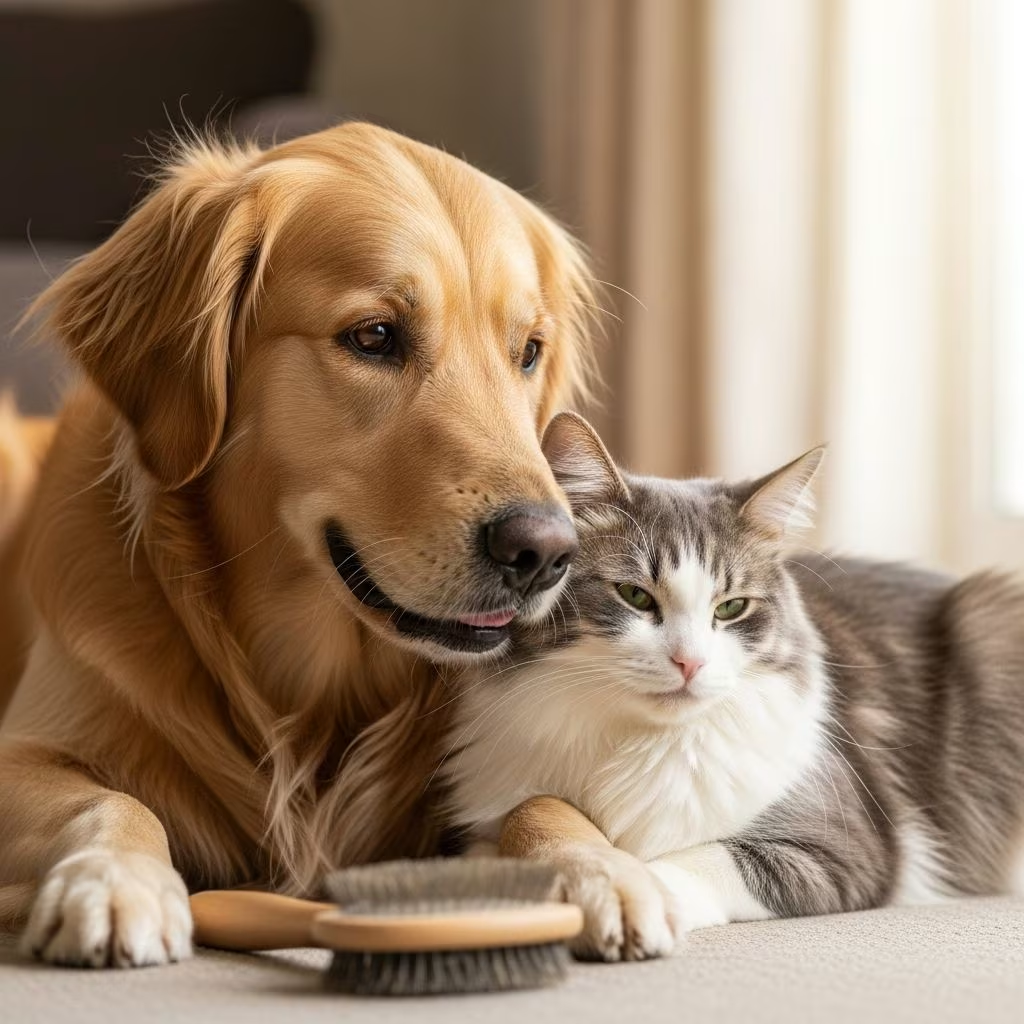
At this point, you’re probably wondering who Bailey is, and where she fits into my grooming predicament. Bailey is our 10-year-old Labrador, on whom Zelda has quite the crush. Sadly, hers is an unrequited love. Our raven-haired beauty regularly embarrasses herself with her wanton displays of affection, showering the nonplussed Bailey with head bumps and body rubs, even curling up against her when she falls asleep, but the yellow Lab remains indifferent to her shameless advances.
But that doesn’t stop me from using the situation to my advantage. Cats form strong bonds across species, especially when the dog is calm and non-threatening like Bailey. Zelda’s infatuation creates a natural relaxant—her presence lowers Zelda’s heart rate and cortisol levels, mimicking the effects of feline pheromones.
In an attempt to minimize stress and maximize my chances of success, I have gathered some of Zelda’s favorite things – catnip, treats, and Bailey. Interesting Factoid: Only around 60-70% of cats react to catnip due to a dominant gene, a statistic reflected in my own home. Zelda, Cyril, and Alex are all obsessed with it, whilst Clutch and Zazzles treat it with the same level of indifference that Bailey shows to Zelda.
Creating a Calming Environment for Grooming
- Choose a quiet room: Dim lights, no loud noises, familiar scents.
- Gather incentives: Catnip toys, high-value treats like tuna or chicken bits.
- Incorporate comfort anchors: Bailey’s bed or blanket for that doggy aroma Zelda adores.
- Timing is key: Sessions when Zelda is relaxed, post-meal or mid-nap.
Having created a calming environment, the trick is to groom sneakily, but not scarily. This is decidedly difficult when you’re dealing with the world’s most suspicious cat. Start with pets and treats, letting her explore the brush at her pace. Pair the tool with positives repeatedly until anticipation shifts from fear to reward.
Keeping It Short and Sweet
One of the most important aspects of dealing with a nervous cat and their least favorite activity is knowing when to call it quits. Sure, I could hold her down and get more brushing done, but that’s only going to traumatize her and make the next attempt that much more difficult. Fortunately, she didn’t seem to mind the feel of the new brush, and I’m pretty chuffed with it too!
Because I’m trying to recalibrate the way Zelda feels about grooming, I need to accept that success may be weeks, even months down the road. If the first session is just me, Zelda, and Bailey calmly sharing space with a brush, then that’s our starting point. And every time we finish on a positive note, we get one step closer to a longer session. Who knows, maybe she’ll start to enjoy grooming “Clutch style”—but probably not!
Why Zelda Hates Her Old Brush (And Loves the New One)
For many years, I have used a FURminator-style grooming tool because, well, they work. They slice through undercoat like butter, removing massive amounts of fur in minutes. But Zelda knows exactly what it looks like, and I think the harder comb surface could be part of why she hates it so much. The metal teeth feel invasive, like tiny pincers, triggering her flight response.
So I am enlisting the help of the Hepper Deshedding Cat Brush, which is much lighter, a different shape, and, as a bonus, way cheaper than my previous brush. The bristles feel strong but soft, with an angled design that scoops dead hair without pulling live fur. Dual-sided for versatility—one for deshedding, one for finishing—it’s ergonomic for human hands too.
| Feature | FURminator-Style | Hepper Deshedding Brush |
|---|---|---|
| Material | Metal teeth | Soft nylon/rubber bristles |
| Weight | Heavy | Lightweight |
| Cat Tolerance | Low for sensitive cats | High, gentle feel |
| Price | Premium | Affordable |
| Effectiveness | High volume removal | Effective daily maintenance |
Switching tools resets her memory—no prior trauma association. Veterinary behaviorists recommend novel items for counter-conditioning.
General Tips for Grooming Reluctant Cats
Desensitization works wonders. Follow these steps:
- Introduce brush visually without touch—reward proximity.
- Touch non-sensitive areas (back, sides) for 5 seconds max.
- Gradually increase duration, always ending before stress signs (tail flick, ears back).
- Use pheromone diffusers like Feliway for added calm.
- Professional grooming quarterly if home sessions lag.
For long-haired cats, focus on belly, armpits, and hindquarters where mats hide. Bathe rarely—dry shampoos suffice unless soiled. Nutrition matters: omega-3 supplements reduce shedding by 20-30%, per recent studies.
Health Benefits of Regular Brushing
Beyond aesthetics, grooming bonds you and your cat, distributing natural oils for shiny coats. It allows skin checks for lumps, fleas, or wounds early. Reduced hairballs mean fewer vet visits—hairball remedies cost $20+ monthly otherwise. In multi-pet homes, less loose fur means safer play for dogs like my Chihuahuas.
Zelda’s sessions are progressing: from 30 seconds to 2 minutes, with Bailey as MVP. Patience pays off.
Frequently Asked Questions (FAQs)
Q: Why do some cats hate being brushed?
A: Past negative experiences, sensitive skin, or tool discomfort. Start slow with soft brushes.
Q: How often should I brush a long-haired cat?
A: Daily 5-10 minutes prevents mats; weekly minimum otherwise.
Q: Can catnip help with grooming anxiety?
A: Yes, for responsive cats (60-70%)—it induces euphoria, distracting from stress.
Q: Is sedation ever okay for grooming?
A: Only vet-supervised for severe cases; risks outweigh benefits routinely.
Q: What if my cat still resists after weeks?
A: Consult a behaviorist; rule out pain like arthritis masking as aversion.
Read her previous article: How My Cat Helped Me Find Love: Dr. Karyn’s Valentine
Read her next article: Why I Love to Talk About My Cats: Dr. Karyn Tells Us More
References
- Grooming Recommendations for Cats — American Veterinary Medical Association. 2023-05-15. https://www.avma.org/resources-tools/pet-owners/petcare/grooming-cats
- Feline Grooming and Hairballs — Journal of Feline Medicine and Surgery. 2022-08-01. https://journals.sagepub.com/doi/full/10.1177/1098612X221099999
- Inter-Species Bonding in Pets — ASPCA Behavior Resources. 2024-02-20. https://www.aspca.org/pet-care/cat-care/common-cat-behavior-issues/animals-together
- Catnip Sensitivity Genetics — University of Nebraska-Lincoln Veterinary Science. 2021-11-10. https://vetmed.unl.edu/catnip-response-genetics
- Counter-Conditioning for Fearful Cats — International Cat Care. 2023-12-05. https://icatcare.org/advice/handling-fearful-cats
- Omega-3 and Feline Coat Health — Cornell University College of Veterinary Medicine. 2024-01-15. https://www.vet.cornell.edu/departments-centers-and-institutes/cornell-feline-health-center/health-information/feline-health-topics/nutrition-and-skin-health



