

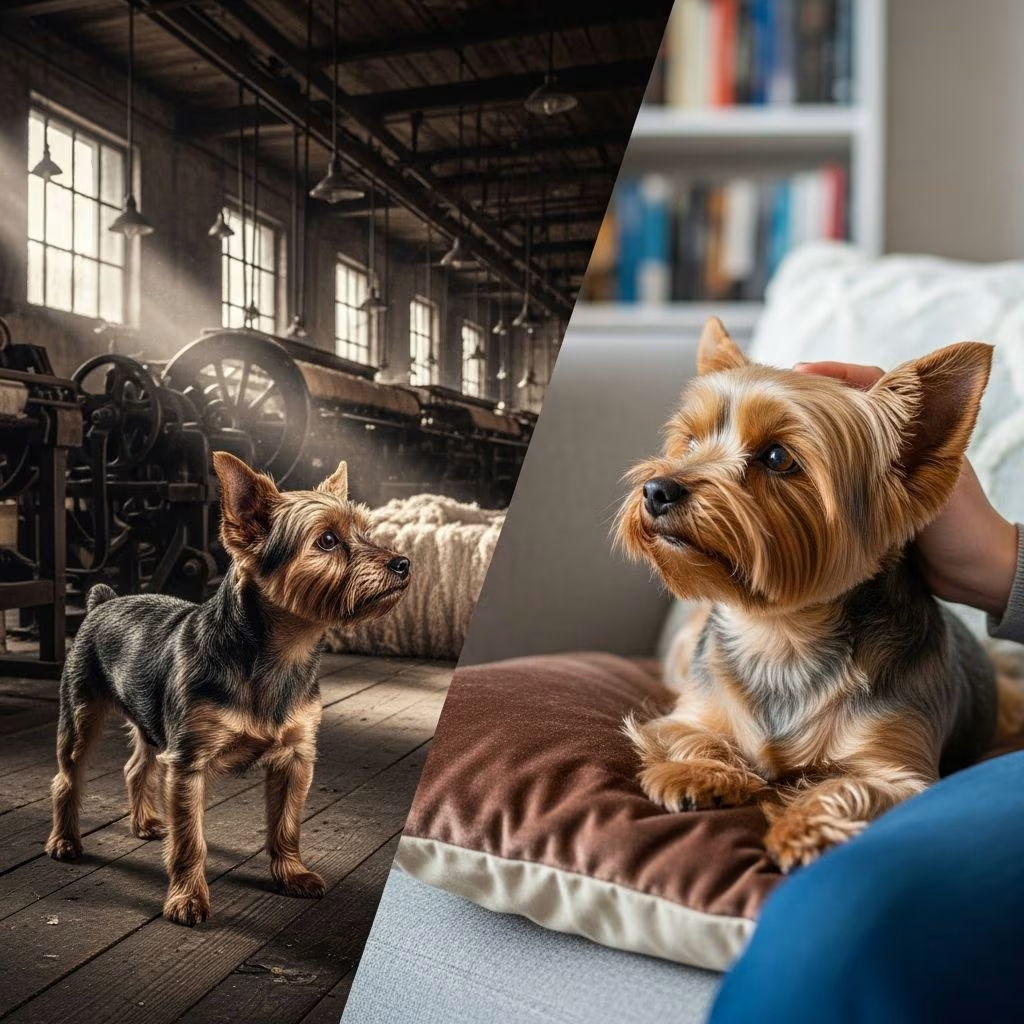
The Yorkshire Terrier represents one of the most remarkable transformations in canine history. What began as a practical working dog in the mills and mines of industrial England evolved into a pampered companion cherished by royalty and the upper classes. Understanding the Yorkie’s journey reveals how changing human circumstances, aesthetic preferences, and social status can fundamentally reshape a breed’s purpose and identity. Today’s diminutive, silken-haired Yorkshire Terrier bears witness to centuries of selective breeding, cultural shifts, and the enduring appeal of small dogs with outsized personalities.
The Scottish Foundation: Where It All Began
The roots of the Yorkshire Terrier extend deep into the Scottish Highlands and islands, long before the breed acquired its now-iconic English name. The breed’s ancestors include several Scottish terrier varieties that thrived in harsh, rugged terrain. The Skye Terrier, named for the weathered island off Scotland’s west coast, represented one foundational bloodline. Equally important was the Clydesdale Terrier, which distinguished itself through a notably different coat structure compared to the harsh exterior of the Skye. Where the Skye bore a rough, weather-resistant coat suited to Scottish conditions, the Clydesdale featured a silky, soft coat in the distinctive blue and tan coloring that would become the Yorkshire Terrier’s hallmark.
The Clydesdale’s refined appearance made it increasingly popular as a show dog during the nineteenth century. Exhibitors would display these dogs on elevated platforms, allowing judges to admire the full length and luster of their luxurious coats. This shift toward aesthetic appreciation marked an early step in the breed’s transition from purely utilitarian worker to objects of beauty and pride. Competition between Skye Terrier enthusiasts and Clydesdale admirers intensified, with Skye supporters questioning whether the Clydesdale’s soft coat could genuinely withstand Scottish weather or resulted from suspect crossbreeding.
Another significant Scottish ancestor was the Paisley Terrier, closely related to and often confused with the Clydesdale. The Paisley differed by displaying an entirely blue coat, and the two breeds eventually merged into regional variations shown at dog exhibitions. These Scottish terriers possessed natural hunting instincts and the courage to pursue small prey into burrows and confined spaces—qualities that would prove invaluable once Scottish workers brought these dogs southward.
The Industrial Migration: Scotland Moves to Yorkshire
The Industrial Revolution fundamentally altered textile production and dramatically reshaped the geography of labor in Britain. During the mid-nineteenth century, Scottish weavers and textile workers migrated southward to Yorkshire and Lancashire, where expanding mills and factories offered employment opportunities. These laborers brought cherished possessions with them, including their prized terrier dogs. The movement of these Scottish workers and their dogs to northern England created unprecedented opportunities for crossbreeding and experimentation.
In Yorkshire’s textile mills and surrounding communities, Scottish terrier bloodlines encountered established local dog varieties. The most significant local contributor was the Waterside Terrier, also known as the Otter Terrier, which had been developed locally for hunting small game along waterways. Scottish breeders also incorporated the Old English Terrier into their crosses, further diversifying the genetic foundation of what would become the Yorkshire Terrier. The precise breeding formulas remain lost to history—the exact proportions of Skye, Clydesdale, Paisley, Maltese, Black and Tan Manchester Terrier, Leeds Terrier, and possibly Dandie Dinmont Terrier contributions remain subjects of speculation.
What emerged from this unplanned and mostly undocumented breeding program was a small terrier of remarkable character: compact enough to serve practical purposes in cramped mill buildings and tight urban housing, yet possessed of a flowing coat that captivated observers. While these little dogs certainly earned their keep hunting rats and vermin in the mills where their owners worked, they simultaneously caught the attention of a changing society becoming more interested in dogs as companions and status symbols.
From Broken-Haired Scotch Terrier to Official Recognition
The breed underwent several official name changes as its identity crystallized and its reputation grew. Originally, these small, long-coated terriers were known as the Broken-Haired Scotch Terrier or the Toy Terrier, reflecting both their coat texture and increasingly diminutive size. The turning point came when a legendary dog named Huddersfield Ben emerged as the breed standard-bearer. Born in 1865 and owned by M.A. Foster (also referenced as Mary Ann Foster), Huddersfield Ben achieved unprecedented success in dog show competitions, winning more than seventy events and countless ratting contests. Though considered relatively large at eleven pounds, Ben possessed the remarkable ability to consistently produce smaller offspring, many under five pounds, that matched emerging breed ideals. When Ben passed away in 1871 at just six years old, he had already fundamentally shaped the breed’s future through his prolific and successful breeding career.
In 1870, the breed received its official designation: the Yorkshire Terrier, officially confirmed in 1874, appropriately named for the English county where Scottish immigrants had settled and developed this new variety. The name shift from Scottish designations to an English place name symbolized the breed’s transformation from regional Scottish creation to an established, officially recognized breed that belonged to no single nation but to the broader dog fancy.
Early breed standards accommodated considerable variation. In those formative years, “almost anything in the shape of a Terrier having a long coat with blue on the body and fawn or silver coloured head and legs, with tail docked and ears trimmed, was received and admired as a Yorkshire Terrier.” However, Huddersfield Ben’s consistent show success and his dominance in breeding circles gradually established more rigid breed type expectations, moving the breed toward the standardized appearance recognized today.
The Transformation: From Working Dog to High Society Companion
The Victorian Era witnessed the Yorkshire Terrier’s metamorphosis from utilitarian worker to luxury companion. As the breed’s reputation spread beyond mill towns and working-class neighborhoods, its appeal expanded dramatically among wealthy and aristocratic classes. Small dogs became fashionable status symbols, particularly among Victorian ladies who appreciated both the Yorkie’s confident, bold personality and its distinctive, glamorous appearance.
This shift in social context demanded significant changes in how breeders approached their craft. Rather than selecting exclusively for ratting ability and vermin-hunting courage, breeders increasingly prioritized appearance, particularly coat length and silkiness. The long, flowing coat that had served practical purposes in Yorkshire mills became an aesthetic attribute requiring constant maintenance and specialized grooming techniques.
Show exhibitors developed innovative methods to protect and display the breed’s prized coat. Handlers fitted their dogs with small “boots” made from linen or chamois leather on rear legs to prevent scratching and coat damage. The hair on the head was gathered into a distinctive topknot, a presentation style that became traditional for the breed and remains characteristic of properly groomed Yorkies today. These grooming conventions reflected the breed’s new identity as a companion and showpiece rather than a working terrier.
Transatlantic Journey and Wartime Revitalization
The Yorkshire Terrier’s popularity eventually crossed the Atlantic. American Victorian ladies became enchanted by the breed’s confident manner, charm, and exotic appearance, particularly following formal introduction to American dog shows and society. The Yorkie enjoyed considerable popularity in early-twentieth-century America among wealthy households and dog show enthusiasts.
However, the breed’s fortunes dimmed significantly during the 1940s. In a wartime-distracted America, the demanding grooming requirements of Yorkshire Terriers fell victim to practical concerns and shifting priorities. Breed registrations declined, and the Yorkie nearly faded from American consciousness.
The breed’s American revival came through an unexpected hero: Smoky, a four-pound Yorkie with an extraordinary military history. Discovered mysteriously in a foxhole in the New Guinea jungle, Smoky accompanied an American soldier on combat flights throughout the Pacific theater, surviving an astonishing 150 air raids. Beyond aerial combat, this courageous little dog warned of incoming enemy shells and even ran telegraph wire through narrow pipes to help construct a critical airbase. Following World War II, Smoky’s remarkable service record made headlines, and she became documented as the first official therapy dog, visiting veterans’ hospitals and performing an impressive repertoire of tricks that included walking a tightrope while blindfolded.
Smoky’s wartime heroics and postwar celebrity rekindled American interest in the Yorkshire Terrier breed. Her story transformed the Yorkie from a nearly-forgotten luxury lapdog into a symbol of courage and loyalty, demonstrating that small size and glamorous appearance concealed genuine capability and heart.
The Broader Significance: Understanding Breed Evolution
The Yorkshire Terrier’s history illuminates fundamental principles of dog breed development and human influence on animal populations. Beginning as a practical tool for controlling vermin in industrial settings, the breed was selectively reshaped by changing human preferences, economic circumstances, and cultural values. The migration of Scottish workers brought their dogs to new environments, where local breeding practices created something entirely new. Huddersfield Ben’s dominance demonstrated how individual dogs could profoundly influence entire breed populations when their traits aligned with emerging preferences.
The Yorkie’s journey also reveals how small dogs have held particular fascination for humans across historical periods and social classes. Whether prized for practical hunting skills in Scottish terrain or cherished as fashionable companions in Victorian drawing rooms, the Yorkshire Terrier fulfilled human desires and expectations—first as worker, then as status symbol, and finally as beloved family member.
Today’s Yorkshire Terrier carries forward this complex legacy. The breed retains the courage and confident temperament of its working ancestors while displaying the refined appearance cultivated by Victorian breeders and continuing through modern show traditions. A modern Yorkie may never chase a rat or walk a military perimeter, but it carries genetic and behavioral echoes of its industrial past, making it a living historical artifact of human-canine cooperation across centuries and continents.
Modern Yorkshire Terrier: Past and Present
Contemporary Yorkshire Terriers balance their historical identity with modern family life. These small dogs—typically weighing between four and seven pounds—retain the alert, fearless temperament that defined their ancestors. Despite their refined appearance and lapdog status, many Yorkies demonstrate surprising boldness and determination, traits that emerge unexpectedly in descendants of mill-working ratters.
The breed’s grooming requirements remain demanding, a direct consequence of selective breeding prioritizing coat length and quality over practical considerations. Modern owners typically choose between maintaining extensive home grooming regimens or regularly scheduling professional grooming services. This grooming commitment represents perhaps the most tangible connection between contemporary Yorkies and their Victorian-era predecessors, whose coats required similar dedication and care.
The Yorkshire Terrier’s evolution from vermin-hunting working dog to refined companion reflects broader transformations in human society, economic structures, and changing relationships with animals. From the mills of industrial Yorkshire to Victorian parlors to modern homes worldwide, the Yorkie has proven remarkably adaptable. This remarkable journey—spanning continents, centuries, and radically different human contexts—testifies to the breed’s fundamental resilience and its capacity to capture human affection across dramatically different eras and circumstances.
References
- Yorkshire Terrier History: From Working-Class to Luxury Lapdog — American Kennel Club. 2024. https://www.akc.org/expert-advice/dog-breeds/yorkshire-terrier-history/
- Yorkshire Terrier — Wikipedia. 2025. https://en.wikipedia.org/wiki/Yorkshire_Terrier
- Yorkshire Terrier Dog Breed | Origin, History, Personality & Care — Nylabone. 2024. https://www.nylabone.com/dog101/yorkshire-terrier
- Origin & History of the Yorkshire Terrier — Yorkie Info Center. 2024. https://www.yorkieinfocenter.com/yorkie-history-origin



