
Yellow-Naped Amazon Parrot: Care, Personality & Behavior
Complete guide to Yellow-Naped Amazon Parrots: personality, diet, care, and training tips.
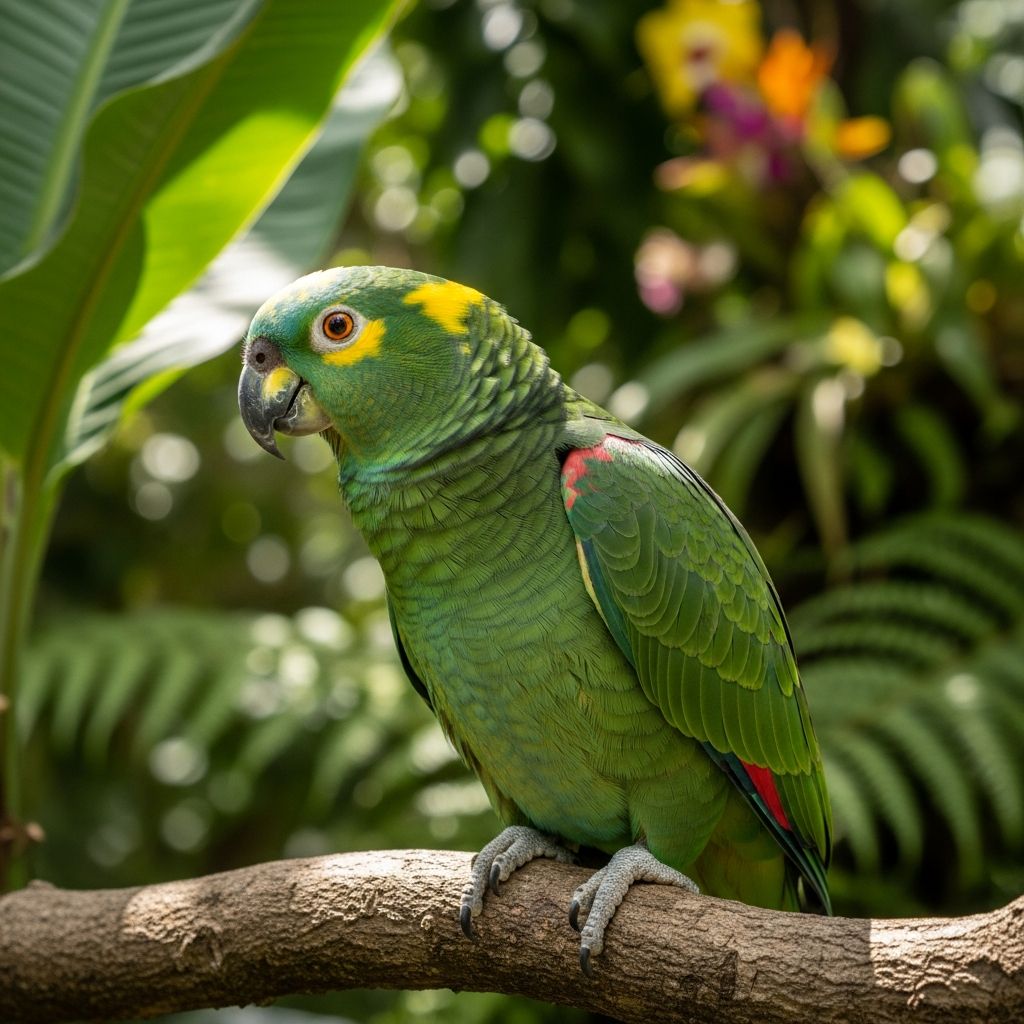
Yellow-Naped Amazon Parrot: A Complete Care and Personality Guide
The yellow-naped Amazon is one of the most captivating and popular Amazon parrot species, renowned for their striking appearance, exceptional intelligence, and remarkable ability to mimic human speech. These medium-sized parrots make wonderful companions for dedicated bird enthusiasts who understand their complex needs and behavioral patterns. With proper care and socialization, yellow-naped Amazons can become affectionate and loyal companions that will provide years of entertainment and interaction. Their outgoing personalities and social nature make them stand out among other Amazon species, though potential owners should be aware of their unique challenges and requirements.
Physical Characteristics and Appearance
The yellow-naped Amazon is instantly recognizable by its distinctive bright yellow patch of feathers on the nape of its neck—the area just above the base of the skull at the back of the head. This characteristic yellow marking develops as the bird matures and gives the species its distinctive name. Some yellow-naped Amazons also display a few tiny yellow feathers on the forehead or around the neck area, though the majority of their plumage consists of shimmering green feathers that provide excellent camouflage in their natural forest canopy habitat.
The bird’s overall body structure is notably stout and compact, with a prominent breast that tends to enlarge if the bird becomes sedentary in captivity. Yellow-naped Amazons have a black beak and dark eyes, with a short tail that features a distinctive band of reddish and dark green coloring across the middle of the underside. Their wings are rounded and powerful, allowing them to be excellent fliers in the wild. Interestingly, when the wings are unfolded, you can observe that the peak of the primary feathers displays blue coloring, while the four outermost secondary feathers are red.
These parrots do not present obvious sexual dimorphism, making it difficult to distinguish males from females by appearance alone. However, immature specimens lack the characteristic yellow nape and have gray irises, which differ distinctly from the yellow and red irises found in adult birds. A rare blue mutation exists with a white spot on the nape instead of yellow, producing a bird the color of the bluest summer sky—an extraordinarily rare and expensive variation.
Size and Physical Specifications
| Characteristic | Details |
|---|---|
| Color | Bright green with distinctive yellow nape |
| Size | Medium |
| Lifespan | 30+ years in captivity |
| Beak Color | Black, lighter at mandible base |
| Tail Type | Short with reddish and dark green band |
Personality and Behavioral Traits
Yellow-naped Amazons possess wonderfully complex personalities that make them exceptionally engaging companions. As young birds, they are typically delightful, playful, and curious, displaying affectionate behavior and strong bonds with their owners. Their outgoing personalities make yellow-naped Amazons one of the more popular Amazon species among bird enthusiasts. They enjoy playing with toys that challenge them both physically and mentally, and they thrive on interaction with their human companions.
However, potential owners should be aware of an important behavioral consideration: yellow-naped Amazons tend to become nippy and even outright aggressive as they mature, particularly males. They are notorious for temperament changes and can potentially attack their owners viciously during certain periods. Female yellow-naped Amazons tend to remain sweeter and more docile throughout their lives, which is why some experienced bird keepers recommend considering a hen when making a purchase decision. Individual birds vary significantly in temperament, so early socialization and consistent training are crucial for developing a well-behaved adult bird.
Speech and Sound Capabilities
Yellow-naped Amazons are prized among parrot owners for their exceptional talking ability. These birds will not be out-talked by any other Amazon species, both in terms of the quantity of words they can learn and the clarity of their speech. They demonstrate remarkable skill at imitating human speech and have been known to learn and repeat entire sentences with remarkable accuracy.
While yellow-naped Amazons are not the noisiest of the Amazon species, they do have their vocal moments. They use their parrot voices intermittently throughout the day, but when they do vocalize, they are quite loud. In addition to their speaking ability, they exhibit a reiterated screeching call, various metallic shrieks, and whistling calls. Pairs often perform duet calls with each other, particularly during certain times of day or when interacting with neighboring pairs.
Diet and Nutritional Requirements
In the wild, yellow-naped Amazons are highly social foragers that spend much of their time in the forest canopy searching for food. They consume a varied diet consisting of fruits, nuts, seeds, blossoms, berries, and leaf buds. These parrots are particularly fond of the seeds of the Honduras mahogany tree, which makes up a significant portion of their natural diet. They are both seed dispersers and pollinators—though they are not particularly effective seed dispersers because they grind up seeds and nuts before consuming them, they do help disperse some fruit and large seeds. During summer months when fresh flowers are abundant, they become pollinators as pollen attaches to their feathers while they visit flowers.
For captive birds, a high-quality parrot food specifically formulated for Amazon parrots should form the foundation of their diet. This should be supplemented with fresh fruits and vegetables to ensure nutritional variety and provide enrichment. Providing appropriate dietary variety not only meets nutritional needs but also encourages natural foraging behaviors that keep birds mentally stimulated.
Natural Behavior and Social Structure
In their natural habitat, yellow-naped Amazons are gregarious birds that live in flocks of varying sizes. They typically forage in groups during morning hours and take a mid-afternoon nap during the hottest part of the day before resuming foraging in the early afternoon. They roost together in large communal groups at night, which provides safety through numbers. These parrots are strong fliers and will gather into larger flocks at communal roosting areas and feeding sites.
Yellow-naped Amazons tend to be found in pairs or flocks throughout the year. Play behavior among group members may include biting at each other gently, hanging upside down, chewing sticks and branches, and interacting with each other’s feet. They are active and inquisitive, displaying behaviors that seem to indicate a sense of humor and curiosity about their environment.
Intelligence and Problem-Solving Abilities
One of the most remarkable characteristics of yellow-naped Amazons is their exceptional intelligence and outstanding problem-solving skills. These birds have been observed using tools to obtain food—a behavior that is not commonly seen in many other parrot species. Their cognitive abilities allow them to learn complex behaviors and tasks when trained with patience and positive reinforcement methods.
Their high intelligence means they require substantial mental stimulation to remain healthy and content in captivity. Toys and enrichment activities that challenge their minds are essential for preventing behavioral problems such as feather plucking or aggression caused by boredom. These birds thrive when given opportunities to solve puzzles, learn new tricks, and engage in interactive play with their owners.
Mating Behavior and Breeding
Yellow-naped Amazons are monogamous birds that form lifelong pair bonds with their mates. During the breeding season, which typically occurs between February and May in their natural range (or February to June during the dry season), pairs engage in elaborate courtship behaviors. These behaviors include specific vocalizations, bill touching, and mutual preening—intimate bonding activities that strengthen their pair bond.
During breeding season, females can lay 2-4 eggs per clutch. The pair will nest in natural tree cavities in either living or dead trees. Interestingly, yellow-naped Amazon nest cavities are subsequently used by several other species, such as various owl species and honey bees, making these parrots valuable contributors to their forest ecosystems.
Sex Determination and Sexual Dimorphism
Visually determining the sex of a yellow-naped Amazon can be challenging, as males and females appear very similar to human observers. However, several subtle differences may help distinguish them:
Physical Differences: Male yellow-naped Amazons tend to be slightly larger than females, with longer wings and a larger head. In some cases, males may have a lighter or more yellow eye color compared to females, which typically have darker eyes.
Behavioral Indicators: During breeding season, males may exhibit more aggressive or territorial behavior than females as they defend their mate and nest site.
Definitive Identification: DNA testing is the most accurate way to determine the sex of a yellow-naped Amazon parrot. This can be performed through a blood sample or feather follicle analysis, providing 100% certainty about the bird’s sex.
Care Requirements in Captivity
Yellow-naped Amazons require spacious accommodations to accommodate their active nature and need for exercise. Good flyers in the wild, these birds tend to become sluggish and overweight in captivity if they do not receive adequate space and exercise opportunities. Their prominent breasts can become disproportionately enlarged if they lack sufficient physical activity.
Daily interaction with their owners is essential for maintaining good psychological health and preventing behavioral problems. These social birds require significant time outside their cage for exercise, mental stimulation, and bonding. Training should begin early to establish good behaviors and prevent the temperament issues that can develop as the bird matures.
Frequently Asked Questions
Q: How long do yellow-naped Amazons typically live?
A: Yellow-naped Amazon parrots can live 30 years or more in captivity with proper care and attention. In the wild, they can live 40-60 years. Their longevity makes them a lifelong commitment for potential owners.
Q: Are yellow-naped Amazons good talkers?
A: Yes, yellow-naped Amazons are exceptional talkers and are prized for their speaking ability. They can learn extensive vocabularies and speak with remarkable clarity, often being able to learn and repeat entire sentences accurately.
Q: Do yellow-naped Amazons become aggressive?
A: Yes, yellow-naped Amazons are known to become nippy and potentially aggressive as they mature, particularly males. Early socialization and consistent training are crucial. Females tend to remain sweeter throughout their lives.
Q: How much space do yellow-naped Amazons need?
A: These parrots require spacious accommodations and daily out-of-cage time for exercise and interaction. They are active birds that need substantial space to prevent obesity and behavioral problems from developing.
Q: What should I feed my yellow-naped Amazon?
A: Provide a high-quality parrot food formulated for Amazon parrots as the dietary foundation, supplemented with fresh fruits, vegetables, nuts, and seeds to ensure nutritional variety and natural foraging opportunities.
Q: How can I tell if my yellow-naped Amazon is male or female?
A: While males may be slightly larger with lighter eye color and exhibit more aggressive behavior during breeding season, DNA testing through blood samples or feather follicles is the only definitive method for sex determination.
Q: Are yellow-naped Amazons loud?
A: While not the noisiest Amazon species, yellow-naped Amazons do vocalize regularly and can be quite loud when they do. Their calls include reiterated screeching, metallic shrieks, and whistling sounds.
References
- Yellow-Naped Amazon Parrot Personality, Food & Care — Lafeber Company. https://lafeber.com/pet-birds/species/yellow-naped-amazon-parrot/
- Yellow-Naped Amazon Parrots: Endangered Beauty of Central America — Pop Parrots. 2023-05-03. https://poparrots.com/2023/05/03/yellow-naped-amazon-parrots-endangered-beauty-of-central-america/
- Wildlife Catalog: Yellow-Naped Parrot — Toucan Rescue Ranch. 2021-08-01. https://toucanrescueranch.org/2021/08/wildlife-catalog-yellow-naped-parrot/
- Yellow-Naped Amazon Parrot — Oakland Zoo. https://www.oaklandzoo.org/animals/yellow-naped-amazon-parrot
- Yellow-Naped Amazon — Los Angeles Zoo and Botanical Gardens. https://lazoo.org/explore-your-zoo/our-animals/birds/yellow-naped-amazon/
Similar Articles








Read full bio of Sneha Tete


