
Yellow-Collared Macaw: Care, Personality & Guide
Complete guide to yellow-collared macaws: personality, diet, care requirements, and health tips.
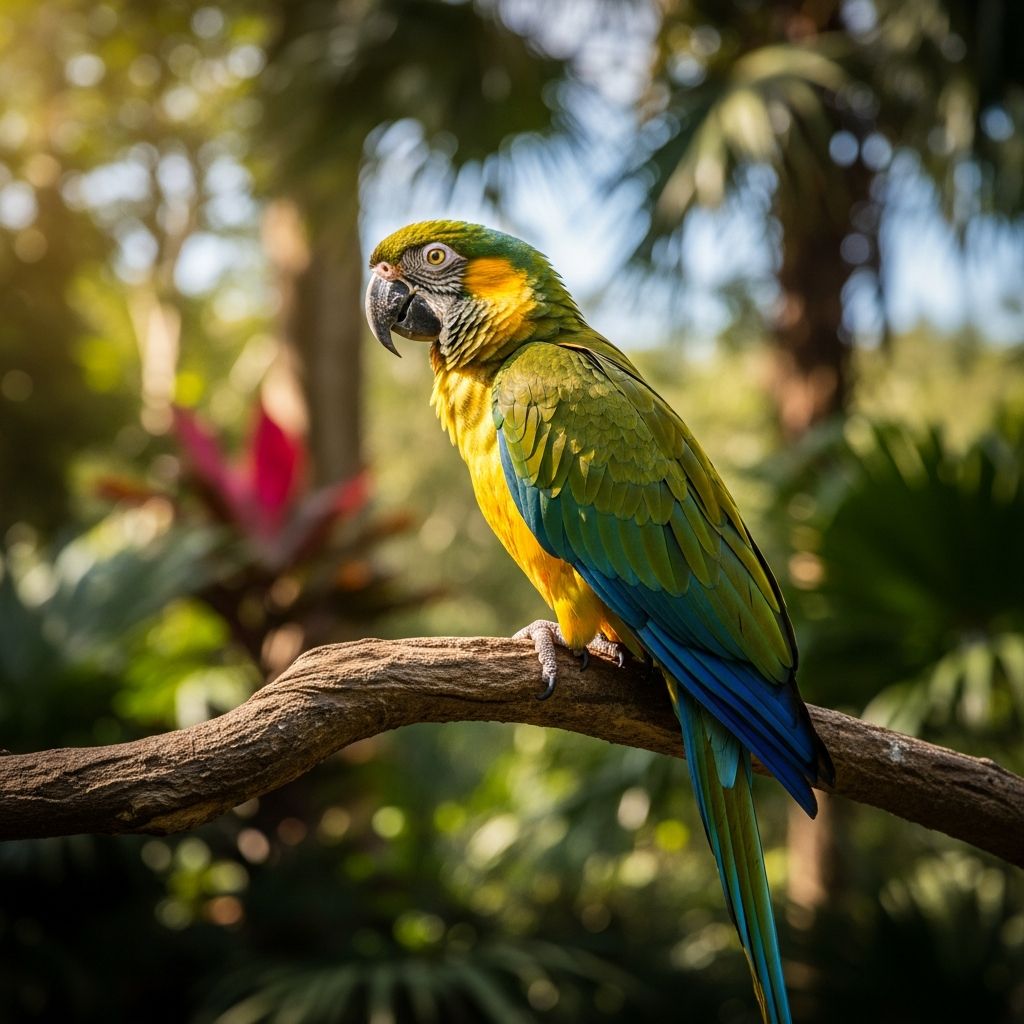
Yellow-Collared Macaw: A Complete Pet Owner’s Guide
The yellow-collared macaw is a captivating and intelligent member of the macaw family, belonging to a loosely defined group known as mini macaws. These small-to-medium-sized parrots bring the vibrant personality of larger macaw species into a more manageable size, making them an attractive choice for bird enthusiasts with space limitations. With their striking green plumage, distinctive yellow collar patch, and black forehead, yellow-collared macaws have become increasingly popular as companion birds. Despite their smaller stature compared to their larger cousins, these intelligent creatures possess a robust personality, impressive lifespan, and unique charm that makes them exceptional pets for dedicated owners.
Overview and Physical Characteristics
Yellow-collared macaws typically reach about 15 inches (38 centimeters) in length, making them considerably smaller than the larger macaw species that can grow to over 30 inches (76 centimeters). This compact size makes them ideal for owners who want the macaw experience without requiring massive aviaries. These mini macaws display a predominantly green coloration with distinctive features including a black forehead, a striking bright yellow collar-patch that gives them their common name, and white naked facial skin marked with rows of black feathers forming characteristic lines. The tail is long and tapered, displaying a beautiful combination of maroon, green, and blue hues.
Despite their smaller stature, yellow-collared macaws possess a vibrant and robust personality remarkably similar to larger macaw species. They are highly intelligent birds with impressive cognitive abilities, forming strong social bonds and demonstrating sophisticated problem-solving skills. In their natural habitat, these birds play an important ecological role as seed dispersers, helping in the growth and spread of many tree species throughout their ecosystems.
Native Region and Natural Habitat
Yellow-collared macaws are found in the wooded and savannah regions of central South America, particularly in Brazil, Bolivia, and Paraguay. These birds thrive in their natural environment, often seen in small flocks or pairs, especially during breeding season when they nest in tree cavities. Like most parrots, yellow-collared macaws are diurnal birds, remaining active primarily during daylight hours while foraging for food. In their native habitat, they consume a diet primarily composed of oil palm seeds, nuts, seeds, and fruits of forest trees, particularly drawing energy from nutrient-rich nuts and seeds.
Personality and Behavior
Yellow-collared macaws are recognized for their exceptional intelligence, affection, and playful antics that endear them to their human companions. These engaging birds are often described as resourceful, opportunistic, curious, and remarkably lively. Pet owners frequently report that these macaws are very inquisitive and mischievous, displaying animated behavior that keeps the household entertained. They genuinely enjoy positive interactions, have a notable fondness for chewing, and require substantial attention from their owners to maintain psychological well-being.
As highly social birds, yellow-collared macaws often form strong pair bonds with their mates in the wild and thrive on consistent social interaction when kept as pets. Young hand-raised macaws are typically very adaptable and can be easily handled by multiple people. However, they must be properly socialized and exposed to various experiences early in life to prevent fearful or aggressive behaviors. This includes veterinary visits, interactions with other pets, exposure to visitors, and handling during wing and nail trims.
While generally affectionate and capable of becoming excellent companions, yellow-collared macaws may exhibit strong-willed or mischievous behavior if not properly trained or socialized. Some individuals have a tendency to become nippy without appropriate handling and training. Importantly, young macaws do not enjoy handling as much as some other macaw species, such as blue and gold macaws, but their outgoing personalities and playful nature make them delightful pets and aviary subjects.
Speech and Vocalization
Although yellow-collared macaws aren’t considered as noisy as larger macaw species, their vocalizations can still be quite loud and distinctive. They produce a shriek-like call, and their in-flight contact calls are loud and gull-like, resembling notes of Aratinga species conures. This vocalization pattern should be considered by potential owners, as these birds may not be the best choice for apartment living or noise-sensitive households.
Unlike some larger macaw species, yellow-collared macaws have limited ability to mimic human speech. While some individuals can learn to speak and may pick up words and simple phrases, they are not known as prolific talkers. Most possess only modest capabilities for language acquisition, though each bird’s potential varies based on individual personality and training commitment.
Care and Feeding Requirements
Dietary Needs
Yellow-collared macaws require a carefully balanced and varied diet to maintain optimal health. A high-quality commercial pellet base should form the foundation of their daily nutrition, supplemented with an assortment of fresh fruits and vegetables to prevent vitamin and mineral deficiencies. Nuts including almonds and walnuts, along with sunflower seeds, can be offered but should be provided in moderation as they can contribute to obesity and other health complications.
A lack of proper nutrition can lead to serious health issues including vitamin-A deficiency, which causes skin and feather problems, and a weakened immune system that makes birds susceptible to infections and diseases. In preparation for breeding season, macaw pellets or specially formulated macaw food, combined with generous amounts of fruit and vegetables, should be provided to ensure birds receive adequate nutrition and energy for reproductive activities.
Housing Requirements
The care requirements for yellow-collared macaws are similar to those of larger macaw species. These birds are very active and should be provided with the largest cage that space and budget allows. Macaws must be allowed sufficient space to fully extend their wings, as inadequate space will result in muscle atrophy, rendering them unable to fly properly. Cage construction must be extremely durable, as macaws are powerful chewers capable of destroying standard materials. Many are also adept at opening cage latches, so escape-proof latches or locks may be necessary.
Beyond basic housing, yellow-collared macaws require plenty of mental and physical stimulation through toys, puzzles, and consistent interaction with their human companions to stay healthy and happy. Macaws are playful and love to chew, so they should always be provided with toys, especially wooden blocks that can be destroyed and branches from non-toxic trees. To ensure safety, companion macaws should not be allowed unsupervised freedom in the home, as they often encounter toxins or dangerous items that could cause serious injury or death.
Environmental Care
Along with good nutrition and spacious housing, spray baths and safe access to natural light are essential for maintaining feather health and overall well-being. Regular veterinary check-ups, a balanced diet, a clean and enriching environment, and proper social interaction help manage and prevent many health issues and ensure a longer, healthier life for your yellow-collared macaw.
Socialization and Training
Young macaws must be socialized extensively to many people and exposed to a variety of situations early in life. This includes new cages, toys, visits to the veterinarian, handling by friends, wing and nail clips, and various environmental exposures. Early socialization and consistent training are key to fostering positive behavior and minimizing potential behavioral challenges. Without proper socialization, these intelligent birds can develop fear of novel situations, leading to aggressive or defensive behaviors that compromise their quality of life and the safety of their human families.
Health Concerns and Disease Prevention
Like all macaws, yellow-collared macaws can be susceptible to various health conditions that require vigilant monitoring. Common diseases and disorders include Proventricular Dilatation Disease (also known as macaw wasting disease), feather picking and plucking problems, chewing of flight and tail feathers by juveniles, Psittacosis (a bacterial infection that can affect both birds and humans), and various bacterial, viral, and fungal infections. Additionally, these birds can suffer from constricted toe syndrome and beak malformations, particularly in chicks, as well as pancreatitis, kidney disease and gout, heavy metal toxicity, and Clostridium infections.
Respiratory issues can develop due to airborne toxins including cigarette smoke, strong perfumes, and fumes from certain types of cookware. To minimize these risks, maintain a clean living environment free from smoking and harsh chemical exposures. Regular veterinary check-ups with an avian specialist are essential for early detection and treatment of potential health problems.
Lifespan and Long-Term Commitment
Yellow-collared macaws typically live 30 to 40 years in captivity, with many living well beyond 30 years with proper care. This extended lifespan represents a significant long-term commitment, requiring owners to provide consistent care, attention, and financial resources throughout the bird’s entire life. Prospective owners should carefully consider whether they can commit to this decades-long relationship before acquiring a yellow-collared macaw.
Is a Yellow-Collared Macaw Right for You?
Yellow-collared macaws make excellent pets for dedicated, experienced bird owners who understand their needs and can provide appropriate environmental enrichment. These birds are ideal for individuals or families with moderate space compared to larger macaw requirements, yet who still want the personality and intelligence of a true macaw species. They thrive best with owners who can provide:
– Spacious, secure housing with durable construction- High-quality, varied nutrition including pellets, fresh produce, and occasional nuts- Consistent social interaction and mental stimulation- Regular veterinary care from an avian specialist- Long-term commitment spanning multiple decades- Safe indoor environments free from toxins and hazards- Tolerance for vocalization and occasional mischievous behavior
Frequently Asked Questions
Q: How long do yellow-collared macaws live?
A: Yellow-collared macaws typically live 30 to 40 years in captivity when provided with proper care, nutrition, and veterinary attention. Some individuals may live even longer.
Q: Are yellow-collared macaws good talkers?
A: Unlike some larger macaw species, yellow-collared macaws have limited ability to mimic human speech. While some can learn words and simple phrases, they are not considered prolific talkers.
Q: How much space do yellow-collared macaws need?
A: These active birds require the largest cage space possible within your budget and living situation. They must have room to fully extend their wings to prevent muscle atrophy. Escape-proof, durable construction is essential.
Q: What should I feed my yellow-collared macaw?
A: A balanced diet consists of high-quality commercial macaw pellets as the base, supplemented daily with fresh fruits, vegetables, and occasional nuts in moderation. Avoid avocado, chocolate, salt, and caffeine.
Q: Are yellow-collared macaws noisy?
A: While less noisy than larger macaw species, yellow-collared macaws can still produce loud vocalizations including shriek-like calls and gull-like contact sounds. They may not be suitable for noise-sensitive households or apartments.
Q: How social are yellow-collared macaws?
A: These birds are highly social and thrive on consistent interaction with their human companions. They form strong bonds with their owners and require substantial daily attention for psychological well-being.
Q: Do yellow-collared macaws need veterinary care?
A: Yes, regular veterinary check-ups with an avian specialist are essential for preventive health care and early disease detection. This contributes significantly to a longer, healthier life.
References
- Yellow-Collared Macaw Personality, Food & Care — Lafeber Company. 2024. https://lafeber.com/pet-birds/species/yellow-collared-macaw/
- Yellow-Collared Macaw — Full Profile, History, and Care — Dial A Vet. 2024. https://www.dialavet.com/blog/yellow-collared-macaw-full-profile-history-and-care
- Yellow-Collared Macaw — Susan Clubb Avian Medicine. 2024. https://susanclubb.com/knowledge-center/bird-species-profiles/18-macaws/74-yellow-collared-macaw
- Yellow-collared Macaw, Golden-collared Macaw, Breeding, Feeding — World Parrot Database. 2024. https://www.wwbirds.co.za/dir/yellow-collared-macaw/
- Choosing a Yellow-collared Macaw — PetPlace.com. 2024. https://www.petplace.com/article/birds/general/choosing-a-yellow-collared-macaw
Similar Articles








Read full bio of Sneha Tete


