

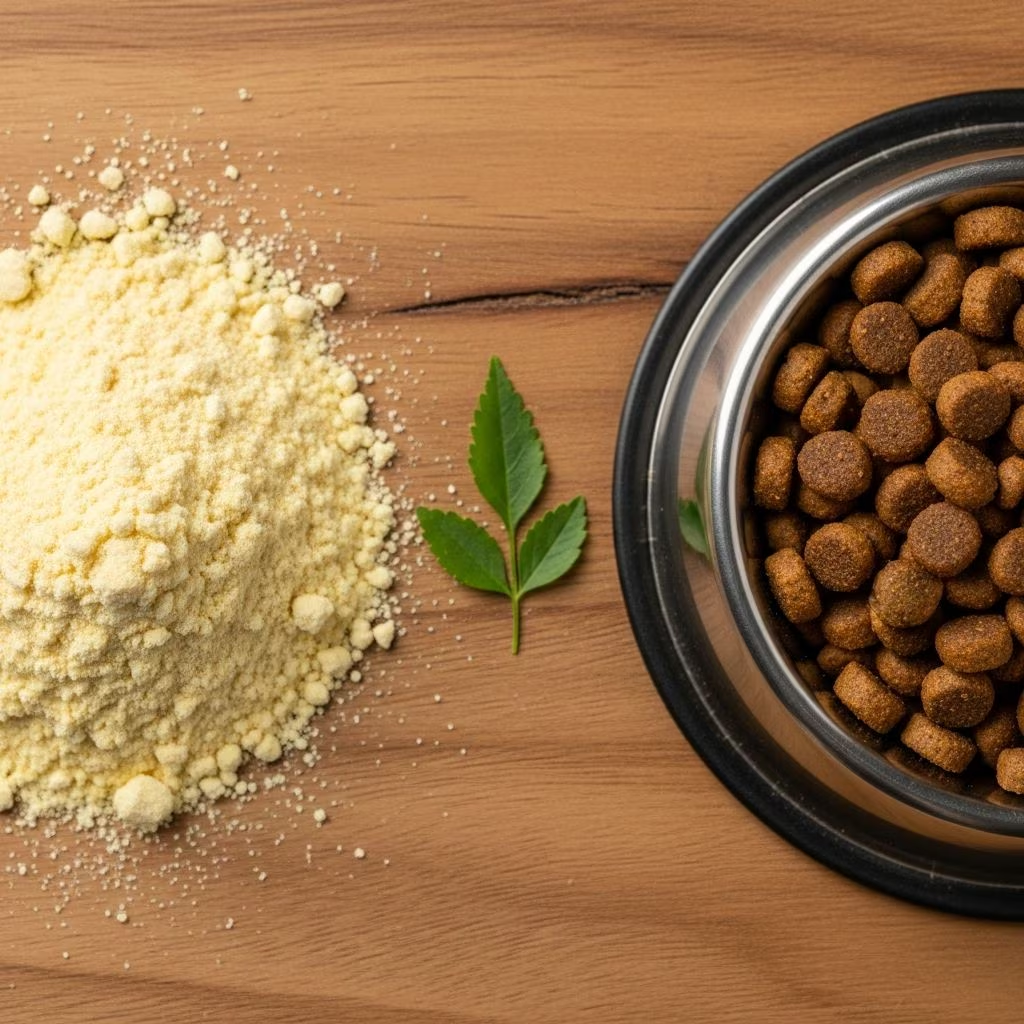
As a conscientious pet owner, you naturally scrutinize every ingredient listed on your dog’s food packaging. When you encounter xanthan gum on that label, questions inevitably arise: Is this substance beneficial or harmful? Will it compromise your dog’s health? Understanding the role of food additives in commercial pet nutrition helps you make informed decisions about what your canine companion consumes daily.
What Is Xanthan Gum and Why Is It Used?
Xanthan gum is a polysaccharide derived through bacterial fermentation, primarily used as a thickening and stabilizing agent in food products across both human and animal nutrition industries. In commercial dog foods, particularly wet and canned formulations, manufacturers incorporate this ingredient to achieve specific textural qualities and maintain ingredient consistency throughout product shelf life.
The primary functions of xanthan gum in pet food formulations include:
- Creating appropriate viscosity and mouthfeel in wet food products
- Preventing separation of diverse ingredients during storage and transport
- Enhancing palatability for dogs with selective eating preferences
- Stabilizing emulsions between proteins, fats, and carbohydrates
- Improving overall digestibility through enzyme stabilization
Rather than providing nutritional value itself, xanthan gum serves a functional role in food manufacturing, ensuring product quality and consistency across batches.
Examining the Scientific Safety Profile
The scientific evidence regarding xanthan gum’s safety in canines stems primarily from research conducted in the early 1970s. A notable study examined Beagles fed varying quantities of xanthan gum mixed into their daily food over an extended two-year observation period, with researchers documenting no toxic manifestations or adverse health outcomes. This foundational research provides reassurance about the ingredient’s fundamental safety when administered in typical food amounts.
Contemporary regulatory frameworks further support xanthan gum’s safety profile. The Food and Drug Administration (FDA) and the Association of American Feed Control Officials (AAFCO) have approved xanthan gum for use in animal feed products. Additionally, the European Food Safety Authority’s FEEDAP Panel has concluded that xanthan gum additives are safe for all target animal species under standard application protocols.
However, it’s important to acknowledge that comprehensive modern studies evaluating xanthan gum specifically in contemporary dog populations remain limited. The European Pet Food Industry Federation (FEDIAF) actively works to accumulate additional data and establish more robust evidence regarding this additive’s long-term effects in pet food manufacturing.
Dosage Standards in Commercial Pet Foods
Understanding proper dosage levels provides crucial context for safety discussions. Pet food manufacturers employ xanthan gum within specific concentration ranges that vary by product type:
| Product Type | Typical Dosage Range |
|---|---|
| Wet Dog Food | 0.05% – 0.3% |
| Dry Kibble | 0.02% – 0.1% |
| Canned Formulations | 0.05% – 0.2% |
| Semi-moist Foods | 0.03% – 0.2% |
| Dog Treats | 0.02% – 0.15% |
These carefully calibrated amounts fall well below thresholds that might produce adverse effects. The minimal concentrations used in commercial applications represent a fundamental safety feature of current industry practice.
Potential Digestive Concerns in Sensitive Dogs
Although xanthan gum is generally recognized as safe, certain dogs—particularly those with pre-existing digestive sensitivities—may experience mild gastrointestinal responses. In excessive quantities, xanthan gum can function as a mild laxative, potentially triggering mild digestive discomfort. However, reaching such problematic dosages through commercial pet foods would require consuming extraordinarily large quantities of food.
Symptoms potentially associated with xanthan gum sensitivity in susceptible dogs include:
- Loose stools or diarrhea
- Vomiting or regurgitation
- Excessive intestinal gas
- Abdominal bloating or distension
- Reduced appetite or food refusal
Dogs with diagnosed inflammatory bowel conditions, chronic pancreatitis, or documented food sensitivities warrant particular attention when introducing foods containing this additive. Consulting your veterinarian before switching to new food brands becomes especially prudent for these individuals.
Important Distinction: Xanthan Gum Versus Xylitol
A critical point of confusion frequently emerges among pet owners who mistakenly conflate xanthan gum with xylitol, an entirely different substance with dramatically divergent safety profiles. This distinction cannot be overstated.
Xanthan gum is a naturally derived thickening agent with an established safety record in pet nutrition. Conversely, xylitol represents an artificial sweetener incorporated into chewing gums, dental products, and sugar-free formulations. Xylitol poses severe toxicity risks for dogs, potentially triggering acute hypoglycemia (dangerously low blood sugar levels) and acute liver failure, sometimes with lethal consequences even in modest quantities. Always verify that your dog’s foods and treats do not contain xylitol rather than focusing excessive concern on xanthan gum presence.
Practical Guidance for Pet Owners
If your dog has been consuming commercial foods containing xanthan gum without observable adverse reactions, no cause for alarm exists. The ingredient’s widespread use across the pet food industry over decades suggests that serious complications would have become apparent through accumulated veterinary observation and reported cases.
Several practical approaches exist for managing xanthan gum in your dog’s diet:
- Acceptance approach: Continue feeding standard commercial diets without modification if your dog demonstrates good health and normal digestion
- Elimination approach: Switch to kibble-based formulas, which contain minimal xanthan gum compared to wet foods
- Alternative approach: Consider raw or home-cooked diets if you prefer avoiding processed additives entirely, though these require veterinary consultation to ensure nutritional completeness
- Monitoring approach: Observe your dog’s digestive response after introducing new foods and note any changes in stool consistency, appetite, or gastrointestinal comfort
When Xanthan Gum Becomes Problematic
Pure, concentrated xanthan gum consumed directly differs substantially from the trace amounts found in commercial dog foods. While xanthan gum lacks an appealing taste or aroma that would naturally attract dogs to consume it intentionally, accidental ingestion of pure product represents a different scenario than consuming properly formulated pet foods.
In situations involving pure xanthan gum ingestion, veterinary consultation becomes advisable. The risk of significant digestive upset increases substantially when concentrated quantities bypass the protective mechanisms of balanced food formulations. Your veterinarian can provide specific guidance based on the quantity consumed and your individual dog’s health status.
Comparing Xanthan Gum to Alternative Additives
The pet food industry employs various thickening and stabilizing agents, with differing safety profiles. Xanthan gum compares favorably to some alternatives commonly found in commercial formulations. Carrageenan, another frequently used additive, has demonstrated associations with inflammation and digestive disturbances in both human and animal populations, making xanthan gum a relatively safer selection for many formulations. Guar gum represents another option, though xanthan gum typically produces superior stability and consistency in shelf-stable products.
Nutritional Contribution and Realistic Expectations
While xanthan gum plays an important functional role in food manufacturing, pet owners should recognize that this ingredient provides minimal direct nutritional benefit to their dogs. It serves manufacturing purposes rather than contributing essential nutrients, vitamins, or minerals to canine diets. This reality should influence your decision-making: xanthan gum’s presence shouldn’t drive food selection, nor should its absence represent a primary advantage.
When evaluating dog foods, prioritize the protein sources, essential fatty acid profiles, vitamin and mineral content, and overall nutritional balance rather than fixating on individual additives like xanthan gum.
Individual Variation and Sensitivity Assessment
Just as humans display varying tolerances for different foods and additives, dogs exhibit individual digestive sensitivities. Some dogs tolerate xanthan gum-containing foods without any observable effects, while genuinely sensitive individuals might experience mild digestive changes. These individual differences don’t indicate that xanthan gum is inherently harmful—rather, they reflect normal biological variation in food tolerance.
If you suspect your dog may be experiencing adverse reactions to xanthan gum, implementing an elimination diet under veterinary supervision provides the most reliable diagnostic approach. Switching to xanthan gum-free foods for several weeks while monitoring digestive response can clarify whether this ingredient specifically triggers your dog’s symptoms.
Making Informed Decisions
The evidence collectively indicates that xanthan gum poses minimal risk to the vast majority of dogs when consumed in the quantities found in commercial pet foods. Regulatory approval by the FDA and AAFCO, historical safety data from animal studies, and decades of widespread use without documented epidemic harm all support this conclusion.
Your decision regarding xanthan gum in your dog’s diet ultimately rests on personal preference and your individual dog’s digestive characteristics. If you prefer minimizing processed additives, perfectly legitimate alternatives exist. If you find high-quality commercial foods containing xanthan gum that your dog thrives on, continuing their use presents no reasonable safety concern.
The most important dietary principle remains constant: select complete and balanced formulations that support your dog’s individual health status, maintain appropriate caloric intake for their activity level and metabolism, and monitor your dog’s physical condition, energy levels, and digestive health as the ultimate indicators of nutritional success.
Frequently Asked Questions
Can xanthan gum cause allergies in dogs?
True allergic reactions to xanthan gum appear extremely rare in the veterinary literature. Dogs may experience mild digestive sensitivity, but this differs mechanistically from allergic responses. If you suspect an allergy, your veterinarian can perform appropriate testing and recommend elimination diets.
How much xanthan gum would harm a dog?
Causing significant harm through xanthan gum in commercial dog foods would require consuming impractically large quantities of food. The concentrated product itself presents greater risk, but even then, acute toxicity appears unlikely—instead, excessive amounts might trigger temporary gastrointestinal upset comparable to overeating any food.
Should I switch foods to avoid xanthan gum?
This decision depends on your dog’s individual health and your personal philosophy regarding processed ingredients. If your dog demonstrates excellent health and digestion, switching offers minimal benefit. If your dog experiences digestive issues and you’ve identified xanthan gum as a potential trigger, switching merits consideration.
Is xanthan gum used in premium dog foods?
Xanthan gum appears across price points and quality tiers, from budget formulations to premium brands. Its presence doesn’t inherently indicate lower quality; rather, it reflects manufacturing preferences for achieving desired food consistency and stability.
References
- Safety of a feed additive consisting of xanthan gum — European Food Safety Authority (EFSA) FEEDAP Panel. 2025. https://efsa.onlinelibrary.wiley.com/doi/10.2903/j.efsa.2025.9466
- Pet Food Xanthan Gum: Essential Safety Guide for Owners — ThePetVet. 2024. https://thepetvet.com/pet-food-xanthan-gum/
- Is Xanthan Gum Safe for Dogs? — Niranbio Chemical. https://www.niranbio.com/is-xanthan-gum-safe-for-dogs.html
- FDA Pet Food Regulations and Safety Standards — U.S. Food and Drug Administration. https://www.fda.gov/animal-veterinary/animal-food-feeds/pet-food-safety
- AAFCO Official Publication — Association of American Feed Control Officials. https://www.aafco.org/



