

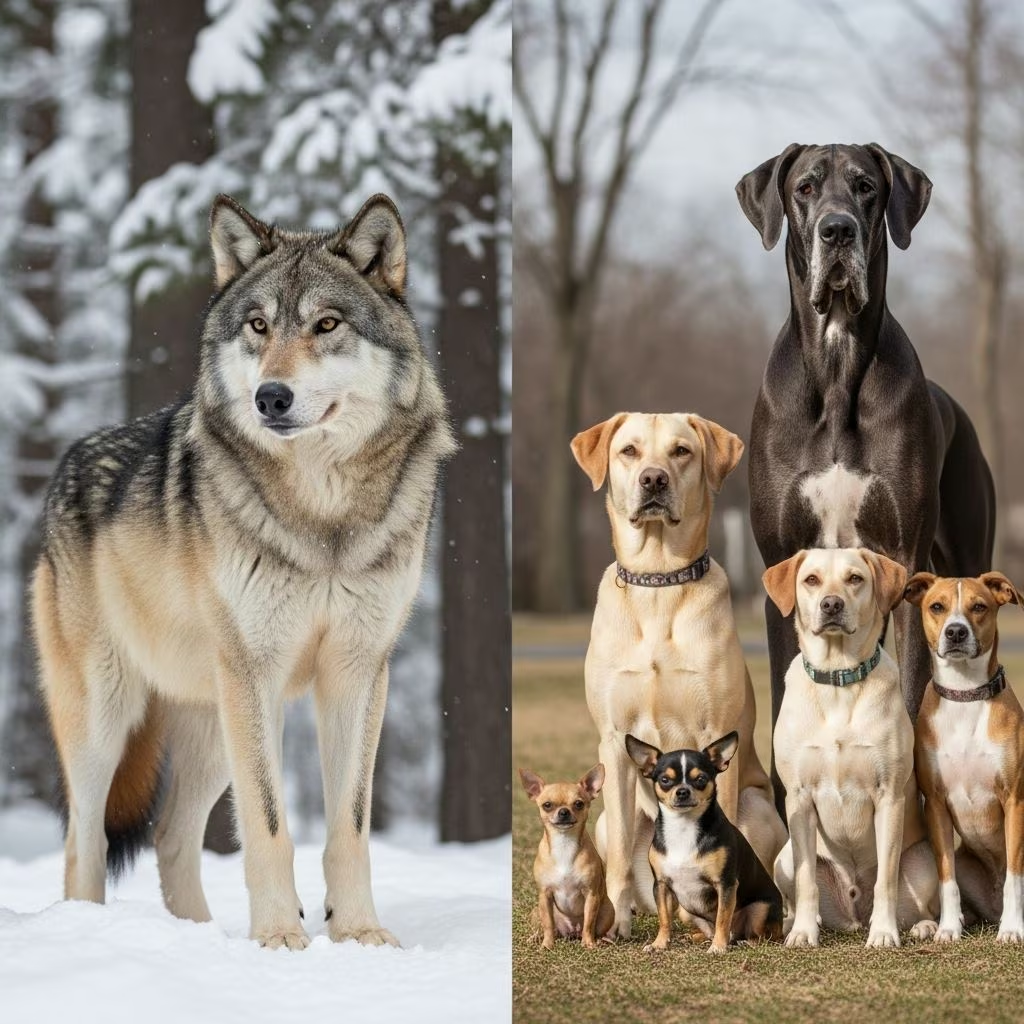
Gray wolves typically measure 26-32 inches at the shoulder and weigh 60-150 pounds, surpassing most dog breeds in overall robustness, though giants like Great Danes can match or exceed them in height and mass.
Understanding Canine Dimensions: Wolves in the Wild
Wolves represent the pinnacle of wild canine evolution, adapted for endurance hunting across vast territories. The gray wolf, or timber wolf, stands as the largest species, with males averaging 30 inches tall and up to 6.6 feet in length from nose to tail tip. Weights fluctuate regionally: northwestern wolves in Alaska and Canada push 150-175 pounds, while Arabian wolves max out at 45 pounds and 25 inches.
Subspecies variations highlight nature’s diversity. Mackenzie Valley wolves, among the bulkiest, rival extinct dire wolves at 175 pounds. Red wolves, confined to eastern U.S. pockets, reach 24-26 inches and 45-80 pounds, blending wolf and coyote traits.
- Gray Wolf (Canis lupus): 26-32 inches shoulder height, 60-145 pounds average, up to 175 pounds record.
- Northwestern Wolf: Largest subspecies, often exceeding 150 pounds.
- Arabian Wolf: Smallest, 25 inches max, 45 pounds.
- Red Wolf: 24-26 inches, 45-80 pounds, coyote-like.
Domestic Dog Diversity: From Teacups to Titans
Selective breeding over millennia has produced dogs spanning extremes unmatched in the wild. While wolves maintain uniform builds for survival, dogs range from 2-pound Chihuahuas to 300-pound Mastiffs. Most household breeds fall well below wolf averages, but working giants close the gap.
Largest breeds often originate from guardian or draft roles, echoing wolf-like proportions but optimized for human partnership.
Top Giant Breeds Matching Wolf Scale
| Breed | Shoulder Height | Weight Range |
|---|---|---|
| Great Dane | 28-32 inches (up to 44 inches record) | 110-175 pounds |
| English Mastiff | 27-30 inches | 150-250 pounds (343 pounds record) |
| Neapolitan Mastiff | 26-31 inches | 130-155 pounds |
| Saint Bernard | 27-30 inches | 140-260 pounds |
| Newfoundland | 26-28 inches | 100-150 pounds |
Great Danes like Zeus (44 inches) tower over average wolves, but females (28-32 inches, 130 pounds max) align closer to mid-sized wolves.
Direct Size Matchups: Wolf vs Breed Breakdown
Not all dogs compete with wolves. Medium and small breeds pale in comparison, underscoring domestication’s miniaturization effects.
| Canine Type | Height (inches) | Weight (pounds) |
|---|---|---|
| Gray Wolf | 26-32 | 60-150 |
| Red Wolf | 24-26 | 45-80 |
| Great Dane | 28-32 | 110-175 |
| German Shepherd | 22-26 | 50-90 |
| Australian Shepherd | 18-23 | 40-65 |
| Beagle | 13-15 | 20-30 |
| Chihuahua | 5-8 | 2-6 |
Visualize a wolf beside a German Shepherd: the wolf’s longer legs and broader frame dominate, despite similar heights. Huskies and Malamutes mimic wolf aesthetics but lack the mass.
Beyond Measurements: Structural Superiority of Wolves
Size tells only part of the story. Wolves boast larger skulls, stronger jaws (same 42 teeth count but amplified force), and paws twice coyote-sized for snow traction and sprinting. Narrower chests and longer legs enhance stamina over dogs’ stockier builds.
- Skull and Jaws: Wolves’ are bigger, delivering bite forces up to 1,200 PSI vs. dogs’ 200-700 PSI.
- Paws: Extended front toes for leaping; dogs’ are proportionally smaller.
- Legs and Chest: Wolves’ design prioritizes speed/endurance; dogs vary by breed purpose.
Dire wolves, prehistoric kin, outweighed gray wolves by 25% at 175 pounds, with bulkier skulls—modern Mackenzie wolves approximate this power.
Wolves Against Other Predators and Humans
Wolves dwarf coyotes (23-26 inches, 20-50 pounds; paws half the size) and match hyenas (30-32 inches, 88-190 pounds) but yield to lions. Standing bipedally, they eye-level adults, emphasizing their imposing presence.
Why Size Evolved Differently: Domestication’s Impact
Domestication shrank early dogs for companionship and utility, yielding today’s spectrum. Wolves, unbound, optimized for pack hunting large prey like elk. Endurance, not bulk alone, defines wolf supremacy— they outlast dogs in wilderness trials.
Practical Implications for Owners and Conservation
Owners of large breeds like Mastiffs must manage wolf-like space and strength needs. Wolf conservation underscores their wild exclusivity; hybrids risk health issues from mismatched genetics.
Frequently Asked Questions
Are wolves bigger than all dogs?
No, giants like Great Danes and Mastiffs often exceed average wolves in height/weight, but wolves surpass most breeds and hold wild advantages.
What’s the largest wolf on record?
A 175-pound gray wolf, comparable to top Great Danes.
Can dogs beat wolves in size?
Yes, records like Zorba the Mastiff (343 pounds, 8’3″ long) outstrip wolves.
How do wolf paws differ from dog paws?
Wolf paws are larger with longer central toes for propulsion; double coyote size.
Are wolf-dog hybrids bigger?
Typically not; they blend traits but lack pure wolf optimization.
References
- How Big Are Wolves Compared to Dogs? Size Chart & Key … — Hepper. 2023. https://articles.hepper.com/how-big-are-wolves-compared-to-dogs/
- Wolf Size Comparison: Just How Big are They? – Wolves – A-Z Animals — A-Z Animals. 2023. https://a-z-animals.com/animals/wolf/wolf-facts/wolf-size-comparison/
- How Big Are Wolves Compared to Dogs? (Size Chart & Comparison) — Dogster. 2023. https://www.dogster.com/lifestyle/how-big-are-wolves-compared-to-dogs
- Dogs vs wolves: understanding differences and similarities — Wisdom Panel. 2024. https://www.wisdompanel.com/en-us/blog/dogs-vs-wolves



