

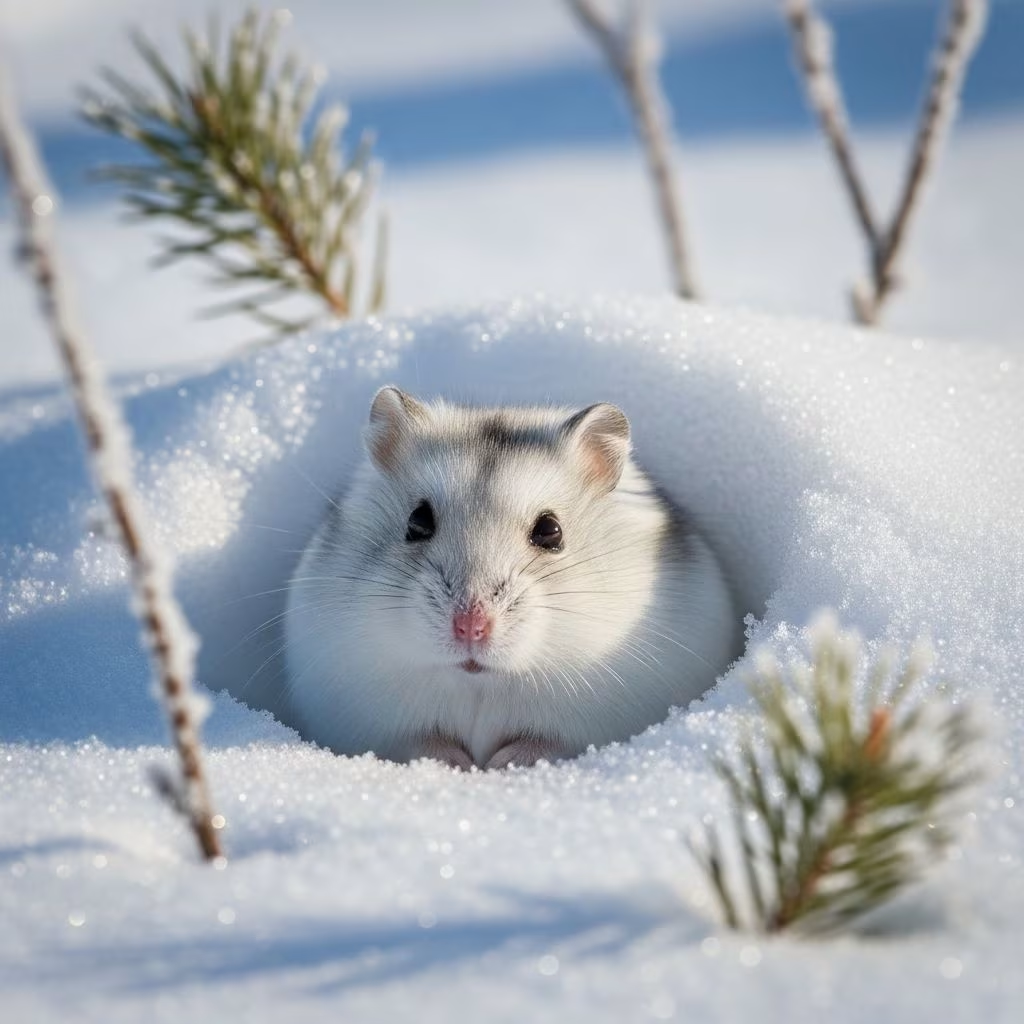
Introduction to the Winter White Dwarf Hamster
The Winter White Dwarf Hamster, also known as the Siberian or Russian hamster, is a popular pet in Europe, Asia, and North America. Its scientific name is Phodopus sungorus, and it is one of the five most popular hamster species in the United States. These hamsters are often confused with Campbell’s Russian Dwarf Hamsters (Phodopus campbelli), which have a similar size and appearance but lack the distinctive winter coat change.
Origins and Habitat
Winter White Dwarf Hamsters are native to Siberia, Kazakhstan, Mongolia, and Manchuria. They inhabit fields, meadows, and birch stands, as well as semi-arid areas in Central Asia. In the wild, these hamsters dig tunnels up to one meter deep, leading to ground burrows where they sleep, raise their young, and hide from predators. The burrows are lined with moss in the summer and animal fur or wool in the winter to keep warm.
Physical Description
Winter White Dwarf Hamsters are small, typically growing to 3-4 inches (8-10 cm) in length. They have a round, oval-shaped body with fur covering their feet and legs. The coat is less woolly than that of Campbell’s dwarf hamsters and can be found in several color varieties: sapphire, pearl, and natural pearl. The head and body length is 70–90 mm, the tail is 5–15 mm, and the hind legs are 11–15 mm. The body weight ranges from 19 to 45 grams for males and 19 to 36 grams for females. In captivity, they tend to be slightly heavier.
Coat Color and Seasonal Changes
One of the most distinctive features of the Winter White Dwarf Hamster is its ability to change its coat color. In the wild, as winter approaches and the days shorten, the hamster’s dark fur is almost entirely replaced with white fur. This adaptation helps them blend in with the snow and avoid predators. The change in color can take a few days to a few weeks, and some hamsters may change in waves from head to tail. In captivity, the color change is less pronounced due to the lack of exposure to seasonal light cycles.
Behavior and Temperament
Winter White Dwarf Hamsters are generally friendly and tame more easily than Campbell’s dwarf hamsters. They are considered more agile and energetic, so handling should be done with care. These hamsters are nocturnal and love running on their hamster wheels at night. They are also known for their curiosity and playfulness.
Lifespan and Health
The average lifespan of a Winter White Dwarf Hamster in captivity is 1½ to 2½ years, though they can live longer. In the wild, they typically live for about one year. These hamsters are not particularly prone to any specific illnesses but can suffer from the same health issues as other hamsters, such as dental problems, respiratory infections, and skin conditions.
Diet and Nutrition
Winter White Dwarf Hamsters are omnivores and require a balanced diet. Their diet should include a mix of commercial hamster food, fresh fruits and vegetables, and occasional protein sources like cooked eggs or mealworms. Fresh water should always be available. Overfeeding can lead to obesity, so portion control is important.
Housing and Environment
These hamsters need a spacious cage with plenty of bedding, hiding places, and toys. A solid-bottom cage is recommended to prevent foot injuries. The cage should be kept in a quiet, draft-free area away from direct sunlight. Regular cleaning is essential to maintain hygiene and prevent health issues.
Reproduction and Breeding
Winter White Dwarf Hamsters reach sexual maturity at around 4-6 weeks of age. The estrous cycle lasts four days, and the female may accept the male back to breed every four days. After mating, the female may become aggressive and try to attack the male to protect her babies. The male usually hides in holes or caves to escape. The gestation period is about 18-21 days, and the litter size is typically 4-8 pups.
Common Questions and Answers
Q: How do I tell the difference between a Winter White Dwarf Hamster and a Campbell’s Dwarf Hamster?
A: The main difference is the coat color change. Winter White Dwarf Hamsters turn white in the winter, while Campbell’s Dwarf Hamsters do not. Winter White Dwarf Hamsters also have a more prominent scent gland on the belly, which is directly in the center, resembling a belly button.
Q: What is the best diet for a Winter White Dwarf Hamster?
A: A balanced diet of commercial hamster food, fresh fruits and vegetables, and occasional protein sources is ideal. Fresh water should always be available.
Q: How often should I clean my hamster’s cage?
A: The cage should be cleaned at least once a week to maintain hygiene and prevent health issues.
Q: Can Winter White Dwarf Hamsters be kept together?
A: It is generally not recommended to keep Winter White Dwarf Hamsters together, as they can become aggressive, especially during breeding season.
Conclusion
The Winter White Dwarf Hamster is a fascinating and charming pet with unique traits and behaviors. Understanding their origins, physical characteristics, and care needs can help ensure a happy and healthy life for your hamster. Whether you are a beginner or an experienced pet owner, the Winter White Dwarf Hamster is a delightful addition to any household.
References
References
- Winter White Dwarf Hamster – Wikipedia — Wikipedia. 2023. https://en.wikipedia.org/wiki/Winter_white_dwarf_hamster
- Russian Dwarf Hamster Facts & Most Common Questions…Answered — RussianDwarfHamster.org. 2023. https://russiandwarfhamster.org/russiandwarfhamsterfacts/
- 10 Facts About the Winter White Dwarf Hamster – Chewy — Chewy. 2023. https://www.chewy.com/education/small-pet/hamster/10-facts-about-the-winter-white-dwarf-hamster
- Meet The Winter White Dwarf Hamster | Academy Pet Hospital — Academy Pet Hospital. 2022. https://www.fayettevilleveterinary.com/2022/04/01/fayetteville-nc-vets-meet-the-winter-white-dwarf-hamster/
- Winter White Hamster – PetSmart — PetSmart. 2023. https://www.petsmart.com/small-pet/live-small-pets/hamsters-guinea-pigs-and-more/winter-white-hamster-15331.html
- Winter White Hamster Behaviour – Crittery — Crittery. 2023. https://crittery.co.uk/species-list/winter-white-hamsters/winter-white-hamsters-behaviour
- Djungarian Hamster – Facts, Diet, Habitat & Pictures on Animalia.bio — Animalia.bio. 2023. https://animalia.bio/djungarian-hamster



