

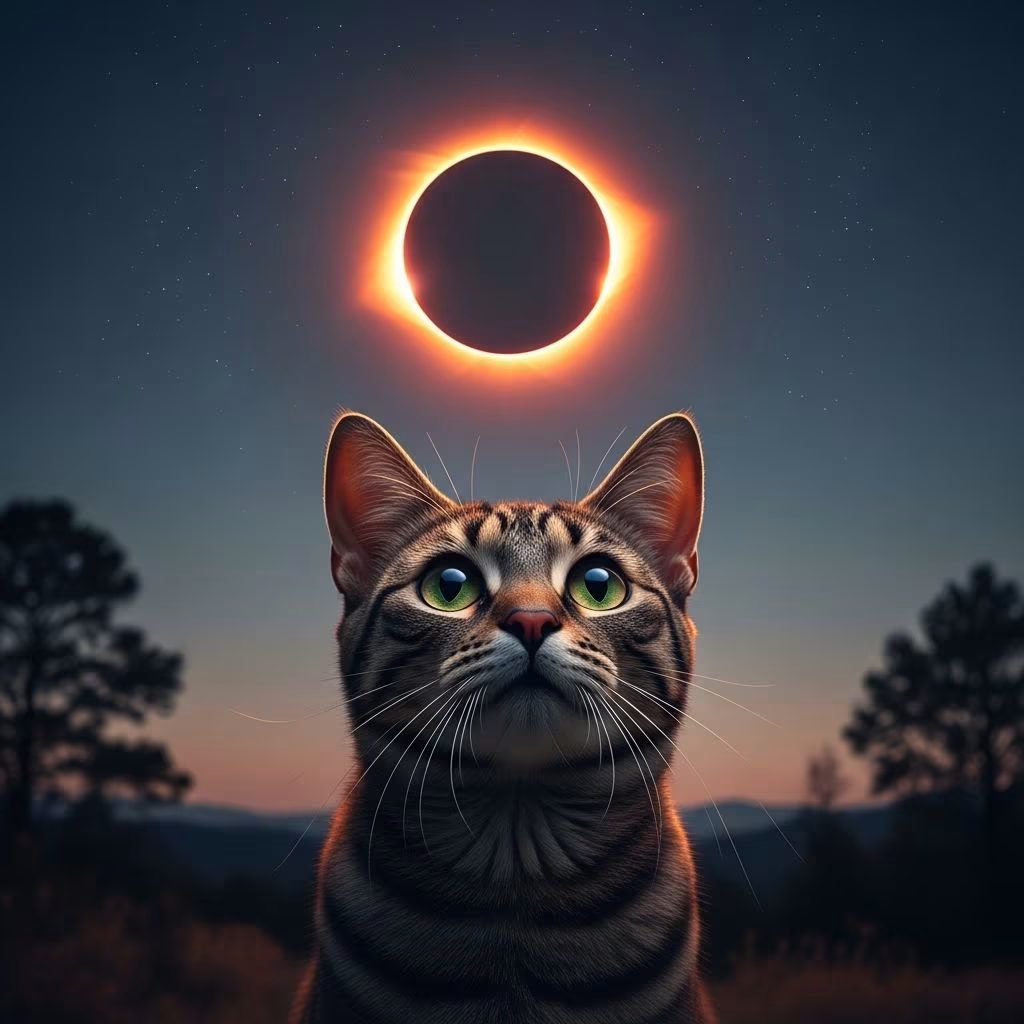
Solar eclipses can mildly disrupt cats’ routines due to sudden darkness, potentially causing confusion or anxiety, but most indoor cats show minimal reaction and face no serious harm if kept safe indoors.
How Do Cats React to a Solar Eclipse?
Cats, as crepuscular animals active primarily at dawn and dusk, may exhibit subtle behavioral shifts during a solar eclipse when daylight abruptly dims to twilight or darkness. Unlike dogs, whose reactions are more overt, cat behavior during these events tends to be understated, often involving seeking seclusion or increased affection rather than panic. Veterinary experts note that the sudden environmental change—cooling temperatures and dimming light—can confuse their internal circadian rhythms, mimicking nighttime despite human cues indicating daytime.
During partial phases, many cats continue normal activities like grooming or napping undisturbed. Totality, the peak where the sky darkens completely, prompts the most noticeable responses: some cats may vocalize more, pace briefly, or retreat to familiar spots. This stems from their sensitivity to light cues rather than temperature alone. Studies of past eclipses, such as the 2017 event, observed few felines altering patterns significantly, reinforcing that cats are less fazed than birds or farm animals.
Do Solar Eclipses Harm Cats’ Eyes?
No, solar eclipses pose negligible risk to cats’ eyes because felines rarely stare directly at the sun. Their natural aversion reflex prevents prolonged gazing, unlike curious humans. Veterinary ophthalmologists confirm dogs and cats are unlikely to sustain retinal damage from partial phases, as they do not fixate on bright lights.
However, avoid forcing your cat to view the eclipse, as this could lead to temporary discomfort or perceived threat. Indoor observation eliminates any minor risk, and no special eclipse glasses are needed for pets. Post-eclipse, monitor for unusual squinting or pawing at eyes, though such issues are exceedingly rare.
Will Cats Go Outside During Totality?
Cats should be kept indoors during solar eclipses to mitigate risks unrelated to the event itself. Increased traffic from eclipse viewers heightens accident dangers, while anxious cats may become aggressive toward strays, leading to fights. Disorientation from darkness could prompt wandering, exposing them to hazards like fleeing crowds or emergency road closures.
For outdoor-access cats, secure them inside well before partiality begins, providing litter boxes and resources. This prevents escape attempts triggered by confusion. Rural cats face fewer human-related risks but still benefit from supervision amid potential wildlife disruptions.
How to Prepare Your Cat for a Solar Eclipse
Preparation ensures minimal stress for your cat during an eclipse. Maintain routines to anchor their sense of normalcy amid celestial oddities.
- Stick to schedules: Feed, play, and rest at usual times to counteract circadian disruption.
- Create a calm space: Offer quiet retreats with bedding, toys, and pheromone diffusers for anxious felines.
- Minimize stimuli: Dim lights gradually if indoors viewing; avoid loud gatherings that amplify stress.
- Monitor anxiety: Watch for signs like hiding, dilated pupils, or tail flicking; comfort gently without overstimulating.
- Hydrate and nourish: Provide fresh water and stress-supportive nutrition, as tension affects appetite.
Texas A&M veterinarians recommend including cats in stay-home plans for high-traffic areas, treating the event like a storm prep.
Animal Behavior During Past Solar Eclipses
Historical observations from eclipses like 2017 and 2024 reveal patterns across species, informing cat expectations.
| Animal Type | Reaction During Partiality | Reaction During Totality |
|---|---|---|
| Cats & Dogs | Minimal; continue routines | Mild spooking, seeking comfort |
| Birds | Increased vocalization | Silence, roosting |
| Farm Animals | Normal | Evening behaviors: grooming, resting |
| Wild/Crepuscular | Heightened activity | Foraging, dusk routines |
Cats mirrored indoor dogs in low reactivity, with most resuming normalcy post-totality swiftly. Unlike reactive birds silencing abruptly, cats showed resilience tied to domestication.
Why Do Animals React to Solar Eclipses?
Reactions stem from disrupted zeitgebers—environmental cues like light and temperature syncing circadian clocks. Cats, evolutionarily tuned to twilight hunting, interpret midday darkness as evening onset, prompting rest-seeking. Conditioned storm associations exacerbate this in sensitive individuals.
Temperature drops during totality further cue behavioral shifts, more impactful on farm animals than indoor cats. Unlike wild crepuscular species activating fully, pets cue to human stability.
Solar Eclipse Safety Tips for Cats
- Keep indoors; block escape routes.
- Avoid eclipse parties with crowds/noise.
- No pet eclipse glasses—risk ingestion.
- Comfort without forcing interaction.
- Post-event, ensure routine resumption.
Frequently Asked Questions (FAQs)
Will my cat be scared of the solar eclipse?
Most cats experience mild confusion rather than fear, often hiding briefly during totality.
Can cats go blind from looking at a solar eclipse?
Unlikely; natural reflexes prevent staring, and damage risks are minimal.
Should I keep my cat inside during the eclipse?
Yes, due to traffic, crowds, and potential disorientation.
Do cats behave differently during totality?
Some seek comfort or rest early, but reactions are subtle and short-lived.
How can I calm my anxious cat during an eclipse?
Maintain routines, provide safe spaces, and offer gentle reassurance.
Conclusion
Solar eclipses intrigue cat owners, but with precautions, your feline will weather the event unscathed. Indoor security and routine adherence suffice for most.
References
- Solar Eclipse Effects on Animals & Plants — Rainbow Symphony. 2024. https://www.rainbowsymphony.com/blogs/blog/what-are-the-effects-of-a-solar-eclipse-on-plants-animals
- Animal Behavior During Solar Eclipses: What to Expect — Texas A&M VMBS News. 2024-04-08. https://vetmed.tamu.edu/news/pet-talk/animal-behavior-during-solar-eclipses/
- Understanding Your Pet’s Behavior During a Solar Eclipse — The Honest Kitchen. 2024. https://www.thehonestkitchen.com/blogs/pet-obsessed/understanding-your-pets-behavior-during-a-solar-eclipse
- How does the solar eclipse affect animals? Veterinarians share — CBS News. 2024-04-08. https://www.cbsnews.com/news/total-solar-eclipse-animals-behavior-2024/
- Tips for Pet Owners During an Eclipse — Ohio State University College of Veterinary Medicine. 2024. https://vet.osu.edu/news/tips-pet-owners-during-eclipse
- Solar Eclipse: The Effects It May Have On Our Pets’ Vision — Care Charlotte. 2024. https://carecharlotte.com/blog/solar-eclipse-effects-pets-vision/



