

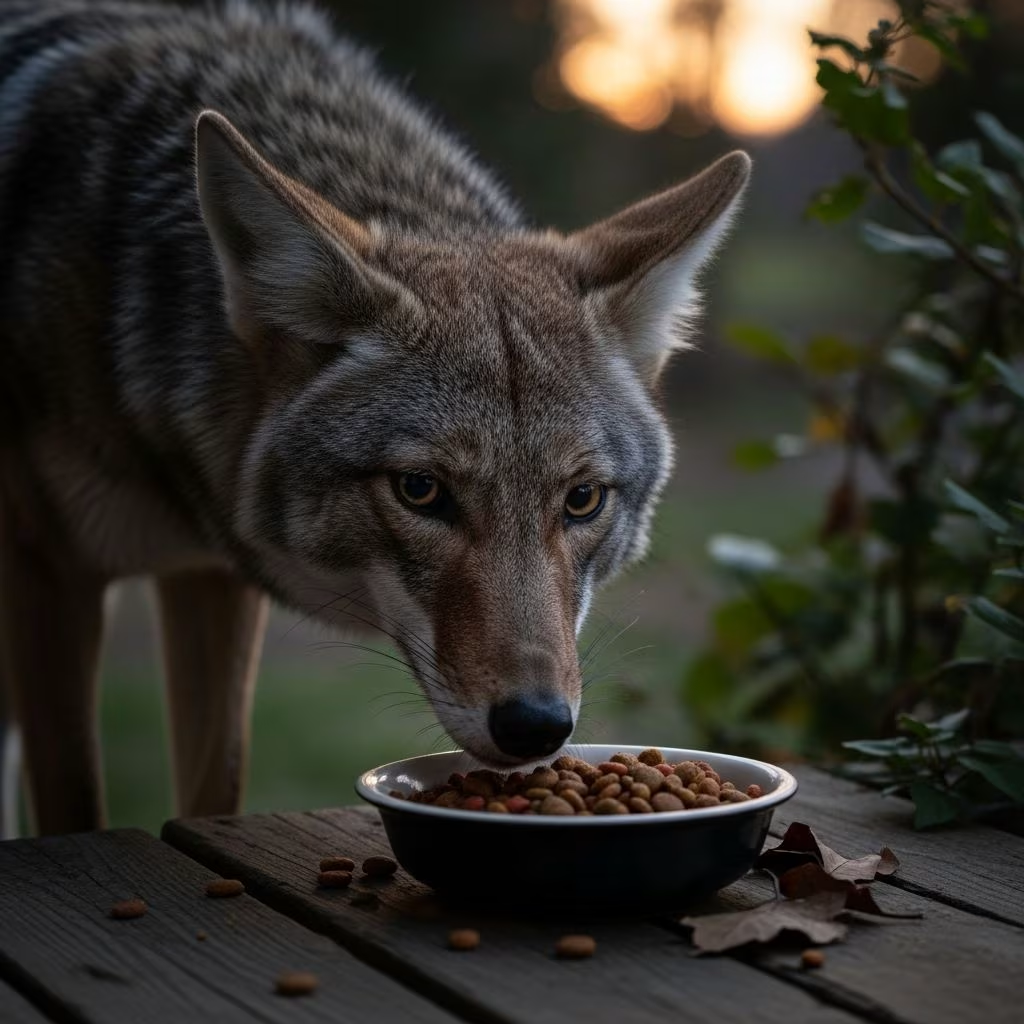
Coyotes are highly adaptable predators that thrive in urban and suburban environments by exploiting available food sources, including pet food like cat food left outdoors. Scientific studies confirm that human-provided foods, such as garbage, ornamental fruits, and domestic cat food, form a significant portion of their diet, often comprising 60-75% in urban areas.
What Do Coyotes Eat?
Coyotes are opportunistic omnivores with a diverse diet that includes small mammals, birds, insects, fruits, vegetables, and human-associated foods. In natural settings, they primarily hunt rabbits, rodents, squirrels, and gophers. However, in cities, they shift toward easier, abundant human-linked resources.
- Primary natural prey: Rabbits (leporids), rodents, pocket gophers, squirrels, and birds make up the bulk of rural coyote diets but less so in urban zones.
- Human foods: Garbage, fast food wrappers, corn-based processed items (detected via carbon-13 isotopes in whiskers), and pet food are staples. Stable isotope analysis shows up to 38% of their diet derives from corn-fed human food chains.
- Fruits and vegetation: Ornamental fruits like ficus, loquat, grapes, and palm fruits appear in 26% of urban scat samples.
Scat analysis from over 3,100 samples in Los Angeles revealed fast food wrappers in 22% of urban coyote feces, far higher than the 6% in suburban areas. This adaptability allows coyotes to inhabit nearly every U.S. city.
Do Coyotes Eat Cats?
Yes, coyotes do eat cats, particularly feral or outdoor domestic ones, with cat remains found in 20% of urban coyote scat compared to 4% in suburban samples. However, studies across U.S. cities show cats comprise only 1-2% of overall coyote diets on average, as they prefer smaller, easier prey like rodents.
| Study Location | Cat Remains in Scat (%) | Key Notes |
|---|---|---|
| Los Angeles (Urban) | 20% | Mostly feral cats; human foods dominate diet. |
| San Francisco/Chicago | 1.3% | Low frequency; natural prey preferred. |
| Multiple Urban Studies | 1-2% | Rabbits and rodents far more common. |
| Southern California (Highest) | 21% | Exceptional case; fruit still more prevalent. |
While not their top choice, urban coyotes opportunistically prey on cats, especially at night when pets roam. Keeping cats indoors is crucial for safety.
Will Coyotes Eat Cat Food?
Coyotes readily consume cat food left outside, as it mimics the pet food they scavenge alongside garbage and roadkill. Videos and studies note scavenging pet food as common behavior in urban coyotes, attracting them to neighborhoods with outdoor feeders. Cat food’s high protein and fat content makes it irresistible, contributing to their reliance on human subsidies—up to 75% of urban diets.
In Madison, Wisconsin, and Los Angeles studies, coyotes were observed eating unsecured pet food, reinforcing that any outdoor pet meals draw these intelligent learners. They associate human areas with reliable calories, staying where food is plentiful.
Are Coyotes Attracted to Cat Food?
Absolutely—cat food acts as a powerful attractant, signaling easy meals. Urban coyotes thrive because residents unwittingly provide unsecured resources like pet bowls, fallen fruits, and trash. In Los Angeles, researchers emphasize that coyotes remain in neighborhoods due to these foods, increasing human-wildlife conflicts.
- Attraction mechanisms: Smell draws them from blocks away; repeated access conditions them to return nightly.
- Seasonal shifts: Suburban coyotes eat more natural prey in winter but fruits and human foods in summer.
- Intelligence factor: Coyotes quickly learn profitable spots, persisting until sources are removed.
National Park Service ecologists note: “Coyotes are in urban Los Angeles because that’s where the food is.” Securing cat food prevents habituation.
How to Keep Coyotes Away from Cat Food
Prevention focuses on eliminating attractants. Coyotes are mobile and will leave if food dries up.
- Never feed outdoors: Feed cats indoors or supervised; remove bowls immediately after eating.
- Secure trash: Use tight lids; store in garage until pickup.
- Remove fruits: Pick up fallen ornamental fruits promptly.
- Hazing techniques: Yell, wave arms, throw objects to instill fear; never run.
- Fencing: Install 6-foot fences with coyote rollers; bury mesh 12 inches deep.
Communities reducing food sources see coyote populations decline naturally.
Coyote-Proofing Your Yard
A coyote-proof yard minimizes risks through layered defenses.
- Lighting and motion sensors: Illuminate perimeters; use sprinklers or lights to startle.
- Remove hiding spots: Trim bushes; clear debris piles.
- Pet protocols: Walk dogs on leashes; keep cats indoors permanently, especially dawn/dusk.
- Community action: Report bold coyotes to animal control; educate neighbors.
These steps, per NPS guidelines, reduce encounters by denying food and access.
What to Do If You See a Coyote
Stay calm but assertive. Do not approach or feed.
- Daytime sightings: Normal; make yourself big, yell “Go away!” and back away slowly.
- Bold/aggressive behavior: Haze aggressively; throw tennis balls or sticks.
- Attacking pets/people: Contact authorities immediately.
Coyotes avoid confrontation if unhabituated.
FAQs
Do coyotes eat cat food?
Yes, coyotes are attracted to and consume cat food left outdoors, as part of their opportunistic scavenging of human-provided foods.
Will coyotes kill my cat?
Coyotes may prey on outdoor cats, with remains in up to 20% of urban scat, but cats are not a primary food source. Keep cats indoors.
How do I stop coyotes from coming to my yard?
Secure garbage, remove pet food and fruits, haze aggressively, and use fencing. Consistency is key.
Are urban coyotes dangerous to humans?
Rarely; they avoid people but habituated ones may become bold. Hazing prevents issues.
What percentage of a coyote’s diet is human food?
In urban areas, 60-75%, including garbage (22%), fruits (26%), and cats (20%).
References
- Urban Coyotes Eat a Lot of Garbage—and Cats — Smithsonian Magazine. 2019-01-24. https://www.smithsonianmag.com/smart-news/urban-coyotes-eat-lot-garbageand-cats-180974461/
- Urban Coyotes: What They Really Eat and Do They Hunt Cats? — YouTube (Scientific Studies Review). Accessed 2026. https://www.youtube.com/watch?v=RnrkwhYSL9I
- Coyotes Don’t Eat Cats Very Often — Lost Pet Research and Recovery. 2011-02-01. https://lostpetresearch.com/2011/02/coyotes-dont-eat-cats-very-often/
- New Study Says Urban Coyotes Eat Garbage, Ornamental Fruit and Domestic Cats — National Park Service. 2019-11-20. https://www.nps.gov/samo/learn/news/new-study-says-urban-coyotes-eat-garbage-ornamental-fruit-and-domestic-cats.htm



