

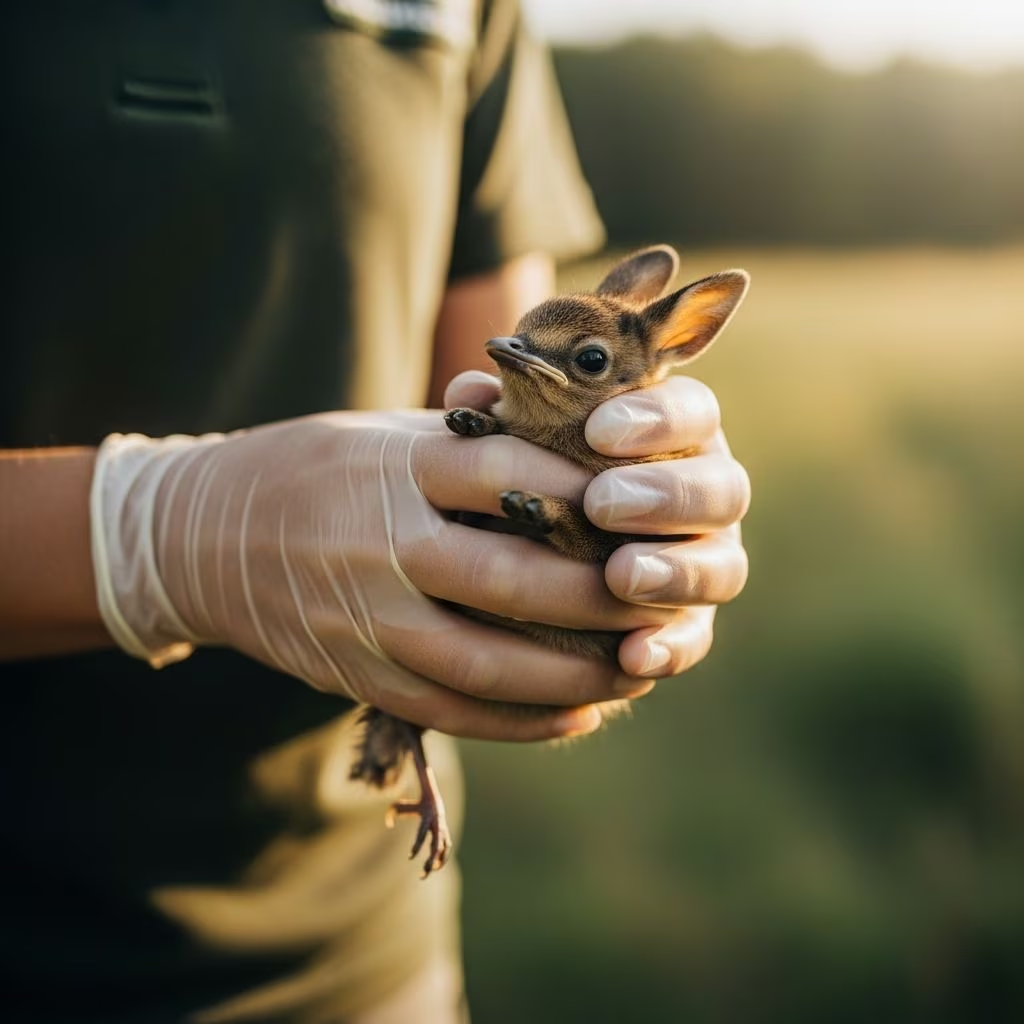
Wildlife Rescue: How to Help Orphaned or Injured Animals
Encountering a wild animal that appears to be orphaned or injured can be distressing, but knowing the right steps to take can make all the difference in that animal’s survival and recovery. Whether you’ve discovered a young fawn separated from its mother, a squirrel that has fallen from its nest, an injured bird unable to fly, or any other wildlife in need, this comprehensive guide will help you determine the best course of action.
Understanding when an animal truly needs help and how to respond appropriately is crucial. Many well-intentioned rescuers inadvertently cause harm by intervening when intervention isn’t necessary, while others hesitate to help when immediate assistance is vital. This guide covers the essential information you need to make informed decisions and provide compassionate care for orphaned or injured wildlife.
Recognizing Signs of Distress in Wild Animals
Before taking any action, it’s important to accurately assess whether an animal truly requires your help. Not all seemingly distressed animals are orphaned or injured. Young animals are often left alone by their parents while they forage for food, and fledgling birds naturally spend time on the ground learning to fly.
However, certain signs indicate that an animal genuinely needs assistance. These include visible wounds, bleeding, or broken limbs; difficulty standing, walking, or flying; unresponsiveness, disorientation, or weakness; the presence of flies, maggots, or ants on the body; or a very young bird without feathers that appears to need care. Additionally, a baby animal that has been attacked by a predator will require immediate intervention.
As a general rule, a wild adult animal that is not moving away from you is either ill or injured and likely needs professional help. Taking time to observe an animal from a safe distance before intervening is always the best first step.
Understanding Species-Specific Needs
Different species have different developmental patterns and parental care behaviors. Understanding these differences is essential for determining whether intervention is truly necessary. Young animals of some species are left alone throughout the day and rely on camouflage for protection, while others require constant supervision by their parents. Learning to recognize what’s normal for each species prevents unnecessary interventions that could separate healthy babies from their mothers.
How to Help Baby Squirrels and Chipmunks
Baby squirrels and chipmunks frequently cause concern when discovered on the ground or in accessible locations. Before assuming they are orphaned, observe the situation carefully. Stand at a distance—far enough that you won’t deter the mother from returning—and watch for at least 30 minutes. The mother squirrel or chipmunk might reappear during this observation period.
Even if the mother doesn’t reappear during your initial observation, you should leave the baby alone if they appear lively, active, and not in any distress. Young squirrels and chipmunks can survive for extended periods without their mothers, and maternal abandonment is rare. The mother is likely foraging nearby and will return.
There are specific situations where you may need to intervene with baby squirrels. These include scenarios where a baby squirrel has fallen from a nest, a nest has fallen from a tree, or a felled tree contains an intact nest. If the baby and/or nest fell from the tree today and is in a safe place away from roads or pets, give the mother squirrel a chance to reclaim her young and relocate them to a new nest.
If the baby is uninjured and the area is relatively safe, leave the youngster where they are, leave the area, keep people and pets away, and monitor from a safe distance. However, if the area presents too many dangers such as free-ranging dogs or cats, create a safer retrieval option for the mother by nailing a basket onto a nearby tree. Ensure the basket has small drainage holes; a berry basket works well. Place the baby inside and allow the mother time to retrieve the youngster.
If the babies are not retrieved by dusk, take immediate action. Wearing thick gloves, gather the squirrels and place them inside a thick, soft cloth such as a cloth diaper, fleece scarf, or hat. Place a chemical hand warmer inside a sock, a hot water bottle, or a heating pad set on the lowest setting beneath the cloth. Put the baby squirrels, cloth, and warmer inside a small cardboard box or carrier and contact a wildlife rehabilitator immediately.
How to Help Orphaned Baby Opossums
Opossums frequently become victims of road accidents, and tragically, many of these injured animals are mothers carrying small babies in their pouches. Opossums are marsupials that carry and nurse their young in pouches similar to kangaroos. If you encounter a dead or injured opossum, time is critical. Contact a wildlife rehabilitator immediately for assistance, as any baby opossums still alive in the mother’s pouch need emergency rescue.
The rehabilitator will provide specific instructions on how to safely examine the pouch and extract any surviving babies. Professional guidance is essential in these situations, as improper handling can harm the fragile infants.
How to Help Fawns
Finding a young fawn lying alone in grass or bushes often triggers rescue instincts, but fawns are frequently left by their mothers while the does forage for food. This natural behavior should not be mistaken for abandonment. A healthy fawn will remain still and quiet, relying on camouflage for protection while the mother is away.
Unless the fawn is visibly injured, bleeding, or showing signs of distress, it’s best to leave it undisturbed. The mother deer will return to nurse her fawn multiple times throughout the day. Intervening unnecessarily can actually harm the fawn’s chances of survival.
How to Help Injured Birds
Discovering an injured bird that seems to have trouble flying requires careful assessment. The bird might actually be a young fledgling that is simply learning to fly and does not require intervention. Fledglings naturally spend time on the ground as they develop their flying skills, and parental care continues during this vulnerable period.
If you’ve found a bird that truly appears injured and requires assistance, contact a wildlife rehabilitator for instructions on how to safely proceed. The rehabilitator can provide guidance on how to move the bird into a cardboard box for transport. For most songbirds, a brown paper bag is suitable for transport. For larger birds or other animals, use a cardboard box with air holes punched from the inside out. Line the box with an old T-shirt or other soft cloth to provide comfort and reduce stress.
General Wildlife Rescue Tips and Best Practices
Regardless of the species you’re trying to help, several universal principles apply to all wildlife rescue situations. These guidelines ensure both your safety and the animal’s wellbeing.
Avoid Handling Adult Animals: Never attempt to rescue large animals by yourself, even if you find them caught in a trap. Contact a licensed wildlife rehabilitator and keep an eye on the animal from a safe distance. Even small animals can inflict serious injuries with their teeth or claws, and some carry diseases transmissible to humans.
Minimize Stress and Injury: When transporting a wild animal, put on thick gloves and cover the animal with a towel or pillowcase as you gently scoop them up and place them in the container. Handle the animal as little as possible, as wild animals are under extreme stress when in captivity.
Create Appropriate Transport Containers: Place the animal in a safe, well-ventilated container that has been lined with a towel that has no frayed edges or holes. For mammals, place a second towel lightly over the animal like a tent. Put the animal and box in a semi-dark, quiet location to reduce stress.
Never Provide Food or Water: Do not give the animal food or water without specific guidance from a wildlife professional. Providing the wrong food can cause choking, trigger serious digestive problems, or cause aspiration pneumonia. Many injured animals are in shock, and force-feeding can actually kill them.
Assessing Orphaned Animals: The Tic-Tac-Toe Test
For ground-nesting birds, small mammals in nests, or other situations where you suspect orphaning, a simple monitoring technique can help determine whether the mother is still caring for her young. Use yarn, sticks, or string to create a tic-tac-toe pattern over the nest. This non-invasive method allows you to assess whether the mother is returning to nurse or feed her babies.
Check back 24 hours later to see if the pattern has been disturbed. If the yarn, sticks, or string were moved aside but the nest is still covered with fur, grass, or leaves, the mother has returned to care for the babies. If the pattern remains completely undisturbed for 24 hours, contact a licensed wildlife rehabilitator for guidance and assistance.
This technique is particularly valuable because it allows you to monitor maternal care without repeatedly disturbing the nest with your presence. Repeated human contact can potentially deter mothers from returning.
Special Considerations for Specific Situations
Skunks: When dealing with young skunks, remember that skunks are very near-sighted, so fast movements can startle them into spraying. If you move slowly and speak softly, you will likely avoid being sprayed. Skunks warn potential predators by stamping their front feet when alarmed, so if the mother doesn’t display this behavior, you’re generally safe to proceed.
Pets in the Area: Keep all pets out of the area when monitoring wild animals or attempting rescue. Domestic animals can frighten mothers away or injure young animals, complicating rescue efforts.
Foreign Smells: Avoid touching babies whenever possible, as foreign smells may cause the mother to abandon her young. This is particularly important during initial observation periods when maternal care can still be established.
Contacting Wildlife Professionals
Once you’ve determined that an animal genuinely needs your help, your next step is to contact a wildlife rehabilitator for assistance. These trained professionals have the expertise, equipment, and facilities necessary to provide appropriate care for injured and orphaned wildlife.
If you’re unable to locate a rehabilitator, try contacting an animal shelter, humane society, animal control agency, nature center, state wildlife agency, or veterinarian. Many areas maintain hotline numbers that provide specific information based on your location and the species you’re helping.
When you contact a professional, describe the animal and their physical condition as accurately as possible. Provide information about the species, apparent age, visible injuries, behavior, and location. Photos or videos can be particularly helpful in allowing professionals to assess the situation remotely and provide specific guidance.
Capturing and Safely Transporting Wildlife
After consulting with a wildlife professional, you may be instructed to safely capture and transport the animal to an appropriate facility for treatment. Here are the steps to follow:
First, prepare an appropriate transport container before attempting to capture the animal. Ensure it’s well-ventilated and lined with soft material. For most songbirds, a brown paper bag works fine for transport. For larger birds or other animals, use a cardboard box with air holes punched from the inside out and line it with an old T-shirt or other soft cloth.
Put on thick gloves to protect yourself from bites and scratches. Cover the animal with a towel or pillowcase as you gently scoop them up and place them in the container. Be aware that even very small animals might bite, and some might carry diseases, so protective equipment is important.
Never give the animal food or water during transport unless specifically instructed to do so by a wildlife professional. Place the animal in a quiet, semi-dark location to minimize stress during transport.
Understanding Limitations and Seeking Professional Help
It’s crucial to understand the limitations of at-home care for wild animals. While initial first aid and temporary stabilization are sometimes necessary, professional veterinary and rehabilitation care should be provided as quickly as possible. Only essential first-aid should be carried out before the animal is taken to a veterinarian or qualified wildlife carer.
Wildlife rehabilitation requires specialized knowledge about species-specific diets, medical care, behavioral needs, and long-term recovery protocols. Attempting to rehabilitate wild animals without proper training, equipment, and facilities can inadvertently cause harm.
Frequently Asked Questions
Q: How long should I observe a baby animal before deciding it’s orphaned?
A: For most species, observe for at least 30 minutes to several hours from a distance that won’t deter the parent from returning. For ground-nesting birds, you can set up the tic-tac-toe pattern and check back after 24 hours for more conclusive results.
Q: Can I keep an injured wild animal at home while waiting for professional help?
A: You should provide temporary care only to stabilize the animal until professional help arrives. Keep the animal in a dark, quiet, well-ventilated box with soft lining. Do not attempt long-term rehabilitation without professional guidance.
Q: What should I do if I find a fledgling bird on the ground?
A: If the bird is feathered and alert, it’s likely a fledgling learning to fly and the parents are nearby providing care. Leave it alone unless it’s in immediate danger from pets or traffic. Only intervene if the bird is visibly injured or in a dangerous location.
Q: Is it safe to handle wild animals without protective equipment?
A: No. Always wear thick gloves when handling wild animals, even small ones, as they can bite and carry diseases. Use additional protective measures such as towels or pillowcases to cover the animal and reduce stress.
Q: What if I can’t find a local wildlife rehabilitator?
A: Contact your local animal shelter, humane society, animal control agency, nature center, state wildlife agency, or veterinarian for referrals and guidance. Many areas have wildlife hotlines that can direct you to appropriate resources.
Q: Should I give water or food to an injured animal I’ve found?
A: No. Do not provide food or water unless specifically instructed by a wildlife professional. Incorrect food can cause choking, digestive problems, or aspiration pneumonia, and many injured animals in shock cannot safely consume food or water.
Q: How can I tell if a baby animal is truly injured or just resting?
A: Look for specific signs: visible wounds, bleeding, or broken limbs; difficulty moving; unresponsiveness or weakness; presence of flies or maggots; or lack of alertness. Many young animals naturally rest and remain still for extended periods.
References
- How to Help Orphaned or Injured Baby Wild Animals — Humane Society International. https://www.humaneworld.org/en/resources/how-help-orphaned-or-injured-baby
- I Found Injured Wildlife – What Should I Do? — Wild Welcome. https://www.wildwelcome.com/i-found-an-animal/injured-wildlife
- Wildlife Rescue: How to Help Orphaned or Injured Animals — Best Friends Animal Society. https://bestfriends.org/pet-care-resources/wildlife-rescue-how-help-orphaned-or-injured-animals
- What to Do if You Find an Injured Animal — Wildlife Center of Long Island. https://wildlifecenterli.org/what-to-do-if-you-find-an-injured-animal/
- Caring for Injured or Orphaned Wildlife — Wildlife Welfare. https://wildlifewelfare.org/injured-wildlife



