

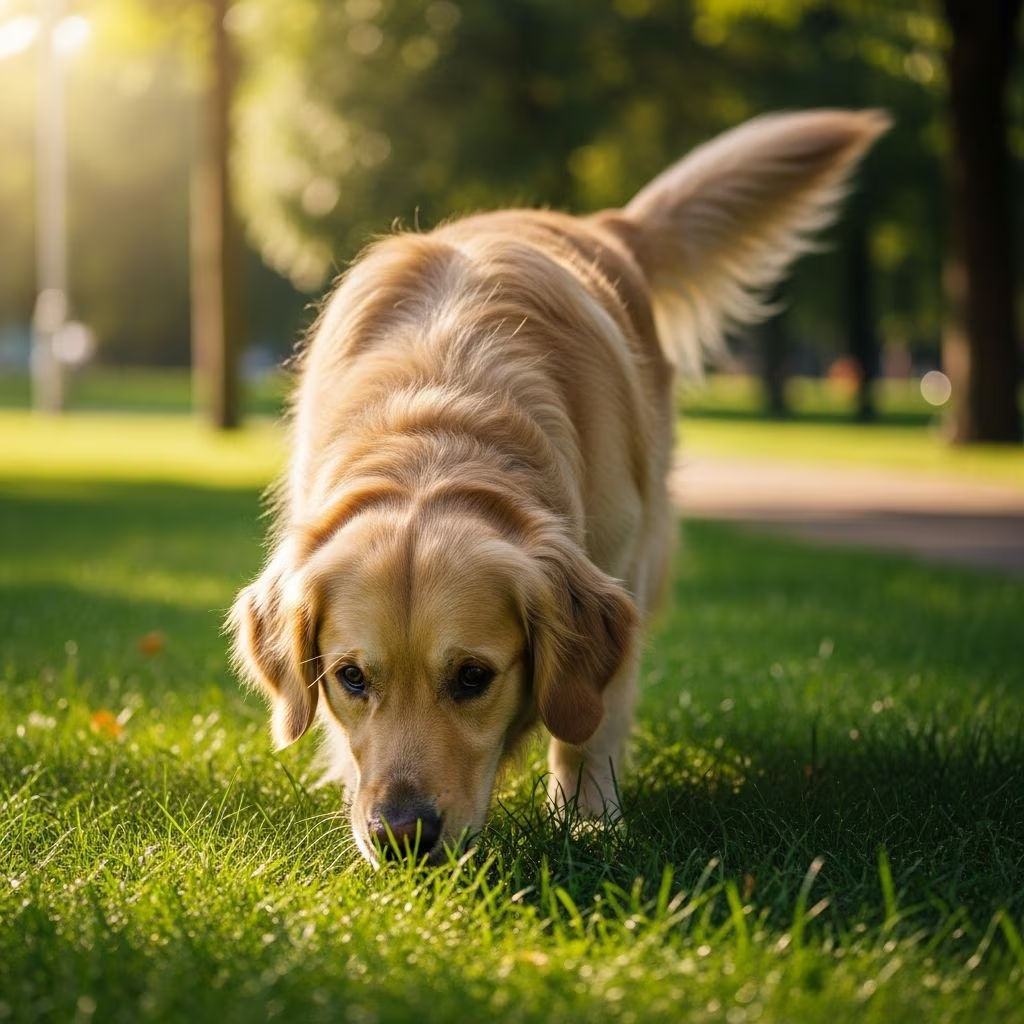
Most people think of walks as a way for dogs to burn off energy, stretch their legs, and get a bathroom break. But for your dog, a walk is also a rich sensory experience, and their nose is the main way they explore it. Allowing them time to sniff freely turns an ordinary outing into a deeply satisfying activity that supports their physical and emotional health.
This article explains what scent walks are, why they matter so much, why every dog can benefit from them, and how to start adding them to your routine in simple, realistic ways.
What Is a Scent Walk?
A scent walk (also called a smell walk, sniff walk, decompression walk, or sniffari) is a relaxed walk where your dog sets the pace and is encouraged to stop and sniff whatever safely interests them.
Instead of focusing on covering distance, perfect heel position, or strict obedience, the main goal of a scent walk is to let your dog:
- Engage their powerful sense of smell
- Gather information from their environment
- Enjoy mental and sensory enrichment
- Relax and decompress from daily stressors
On a scent walk, you are more of a calm guide and safety monitor than a drill sergeant. You still keep your dog safe and within reason, but you give them generous freedom to investigate scents along the way.
Dogs Are Built to Smell
To understand why scent walks are so beneficial, it helps to appreciate just how extraordinary a dog’s nose really is.
The canine nose versus the human nose
| Feature | Humans | Dogs |
|---|---|---|
| Olfactory receptors (smell detectors) | About 5–6 million | Up to 220–300 million, depending on breed |
| Brain area devoted to smell | Relatively small | Olfactory region is about 40 times larger proportionally than ours |
| Ability to detect faint odors | Limited | Estimated tens of thousands to 100,000 times more sensitive than humans |
| Independent nostril airflow | No | Yes, allowing stereo-like odor localization |
Research on canine olfaction shows that dogs rely heavily on smell to gather information about their surroundings, recognize individuals, make decisions, and learn about their environment. In everyday life, your dog’s nose is constantly at work, even when they appear relaxed.
Why scent matters so much to dogs
For dogs, sniffing is not just a hobby; it is a core part of how they experience and understand the world. Through scent, dogs can:
- Identify other animals and people who have passed by
- Learn about another dog’s sex, reproductive status, and even health
- Detect changes in the environment you would never notice
- Form memories linked to specific locations and individuals
Scientists have documented how dogs use sniffing when interacting with other dogs, particularly around areas like the rear and head, to collect detailed social information. This is one example of how essential smell is to their communication and decision-making.
When you prioritize sniffing on walks, you are giving your dog a chance to use the sense their brain is largely designed around. In the same way humans benefit from art, books, music, or conversation, dogs benefit from rich olfactory experiences.
Why Scent Walks Are So Beneficial
Letting your dog stop and sniff may look simple, but the benefits are surprisingly extensive. Scent walks support your dog’s wellbeing on several levels.
Mental enrichment and problem-solving
Sniffing and tracking smells are mentally demanding activities. They require your dog to focus, interpret complex information, and sift through overlapping odors. Animal welfare organizations describe sniffing on walks as a form of environmental enrichment that gives dogs a chance to perform natural, species-typical behaviors, which is important for their psychological health.
Mental enrichment can help:
- Reduce boredom and restlessness
- Lower the risk of destructive behavior at home
- Improve your dog’s ability to cope with new situations
- Support learning and training by exercising the brain
Stress relief and emotional balance
Sniffing does more than occupy the mind; it can help dogs relax. Animal welfare experts note that allowing a dog to sniff and explore can promote calm behavior and reduce signs of stress. Some studies suggest that sniffing and searching may be linked to the release of dopamine, a neurotransmitter associated with pleasure and motivation.
Benefits of regular scent walks can include:
- Lower arousal after exciting or stressful events
- More relaxed behavior at home after walks
- Better emotional recovery for anxious or sensitive dogs
Supporting behavior therapy and training
For dogs working through behavior issues—such as anxiety, reactivity, or overexcitement—scent walks are not a cure on their own, but they can be a valuable part of a broader plan. By giving the dog a predictable outlet for exploration and control over how they move and investigate their environment, you may help them feel safer and more confident, which is important in behavior modification programs.
Many trainers also incorporate sniffing into training games, such as:
- Find-it games: tossing treats into grass or leaves for the dog to search for
- Sniff breaks: using a release cue to allow sniffing after a short period of focused walking
- Search patterns: encouraging the dog to follow a trail of scattered treats or toys
These simple exercises harness a dog’s natural desire to sniff while building focus, confidence, and problem-solving skills.
All Dogs Can Benefit from Scent Walks
One of the best things about scent walks is that they are suitable for virtually every dog, regardless of age, size, or activity level.
Great for active dogs
High-energy dogs often need more than just physical exercise. Without enough mental stimulation, they can become frustrated, noisy, or destructive. Scent walks help channel that energy into a focused, mentally tiring activity that complements running, playing, or training.
Essential for older and mobility-limited dogs
For senior dogs or those with medical conditions that limit vigorous exercise, scent walks can be a safe way to keep them engaged. Even when an older dog cannot hike as far or play as intensely, they can usually still enjoy ambling along and spending time investigating smells. Animal behavior and welfare guidelines often highlight adapted, low-impact enrichment—like gentle sniffing outings—as an important part of quality of life for older or convalescing animals.
Helpful for anxious or sensitive dogs
Many anxious dogs benefit from predictable routines and activities that give them a sense of control. A slow, quiet scent walk in a less crowded area can provide:
- Time to process their surroundings at their own pace
- More distance from triggers like busy roads or unfamiliar dogs
- An opportunity to focus on exploring instead of scanning for threats
For dogs working with a qualified trainer or behavior professional, scent walks can be used alongside positive reinforcement and carefully planned training to support progress over time.
How to Do a Scent Walk
There is no single “correct” way to take a scent walk. The key is to shift your mindset from speed and mileage to curiosity and patience. Below are practical guidelines to help you get started.
Adjust your expectations
- Plan for a slower pace and shorter distance than your usual brisk walk.
- Expect frequent pauses as your dog investigates specific spots.
- View the outing as your dog’s time, not a workout for you.
Choose the right equipment
- Use a comfortable, well-fitted harness that does not restrict movement.
- Use a standard or longer leash (for example, 2–5 meters, where safe and legal) instead of a tight, short lead.
- Avoid harsh corrections or constant leash pressure; aim for a loose, relaxed line whenever possible.
Safety first
- Let your dog sniff safe, accessible surfaces, but prevent them from eating unknown objects or approaching hazards.
- Watch for signs of fatigue, pain, or stress, especially in older or medically fragile dogs.
- Follow local leash laws and respect private property.
Let your dog lead (within reason)
- Allow your dog to choose the direction when it is safe and practical.
- Pause and wait calmly when they stop to sniff.
- Use a consistent cue, such as “OK, let’s go,” when it is time to move on from a particular spot.
When and How Often to Take Scent Walks
One of the advantages of scent walks is their flexibility. You can adapt them to your schedule and your dog’s needs.
Flexible timing
- You can devote an entire outing to a scent walk, especially in quieter areas like parks or calm neighborhoods.
- Alternatively, you can add a 10–15 minute sniffing segment onto your regular walk—at the beginning, middle, or end.
- Many guardians find that evening is a good time for unhurried sniffing, because there may be less traffic and fewer distractions.
How often is ideal?
There is no rigid rule, but many dogs benefit from including some form of scent-focused activity most days of the week. This might mean:
- Two or three full scent walks per week, plus shorter sniff breaks on other days
- Daily walks that always include at least a few minutes for free sniffing
Even if you have a yard, it is still helpful to take neighborhood scent walks. The variety of odors and changing environment offer richer mental stimulation than the same space every day.
Balancing Exercise, Manners, and Sniffing
Some people worry that letting their dog sniff freely will undo leash training or make walks chaotic. With clear structure, you can have both polite walking and generous sniffing time.
Use different cues for different parts of the walk
You can teach your dog that certain cues and equipment mean, “We’re walking with focus now,” while others mean, “You’re free to explore.” For example:
- Use a shorter leash and a cue like “let’s walk” for focused walking between destinations.
- Switch to a longer leash or say “go sniff” when it is their turn to explore.
Over time, many dogs learn to understand the difference and adjust their expectations accordingly.
Simple rules to keep things manageable
- Do not allow lunging into unsafe areas, such as roads or private yards.
- Use gentle redirection—turning away or calling your dog back—rather than punishment.
- Reward checking in with you with praise or treats, even during sniff time, to keep the relationship strong.
Signs Your Dog Is Enjoying Scent Walks
Every dog is different, but many show similar signs when scent walks are meeting their needs.
- They show eager interest in sniffing and exploring at the start of the walk.
- Their body language looks loose and relaxed rather than tense.
- They may settle or rest more calmly at home after walks.
- Over time, they may show fewer signs of frustration, restlessness, or overexcitement.
If you notice your dog seems overwhelmed—constantly scanning, freezing, or trying to escape an area—consider choosing a quieter route or shorter outing next time.
Frequently Asked Questions (FAQs)
Q: Won’t stopping to sniff make my dog less obedient on walks?
Allowing sniffing does not have to undermine training. By using clear cues for when it is time to walk and when it is time to sniff, you can teach your dog that both behaviors are part of the routine. Many trainers recommend integrating structured sniff breaks into walks to improve overall focus and satisfaction.
Q: How long should a scent walk be?
There is no fixed length. For some dogs, 15–20 minutes of slow, sniff-heavy walking is very satisfying. Others may enjoy 30 minutes or more, depending on age, health, and environment. Focus on quality—opportunities to explore and investigate—rather than distance.
Q: Is it still worth doing scent walks if I have a big yard?
Yes. While yards provide valuable space, the smell environment tends to change less than the broader neighborhood. Short walks beyond your property allow your dog to encounter new odors and information, which animal welfare groups highlight as an important part of enrichment.
Q: Can scent walks replace regular exercise?
Scent walks are best viewed as a complement to, not a replacement for, appropriate physical exercise. Many dogs benefit from a combination of movement (such as playing or brisk walking) and mentally rich activities like sniffing and training games. For older or limited-mobility dogs, scent walks may make up a larger share of their daily activity, in consultation with your veterinarian.
Q: Are there dogs who should not go on scent walks?
Most dogs can enjoy some form of scent walk, but those with specific medical or behavioral concerns may need adjustments. For example, dogs recovering from surgery, with severe mobility issues, or with significant behavior problems should follow guidance from a veterinarian or qualified behavior professional when planning any new activity.
References
- Canine Olfaction: Physiology, Behavior, and Applications — Viitaniemi, V. et al., Animals. 2021-08-13. https://pmc.ncbi.nlm.nih.gov/articles/PMC8388720/
- Why Sniffing on a Walk Is So Important to Your Dog — Baypath Humane Society. 2023-05-10. https://baypathhumane.org/why-sniffing-on-a-walk-is-so-important-to-your-dog/
- Four Reasons to Take Your Dog for Sniff Walks — Animal Humane Society. 2022-06-01. https://www.animalhumanesociety.org/resource/four-reasons-take-your-dog-sniff-walks
- Walk or Sniff? How You and Your Dog Can Have a Meeting of the Minds — Fear Free Happy Homes. 2021-09-15. https://www.fearfreehappyhomes.com/walk-or-sniff-how-you-and-your-dog-can-have-a-meeting-of-the-minds/



