

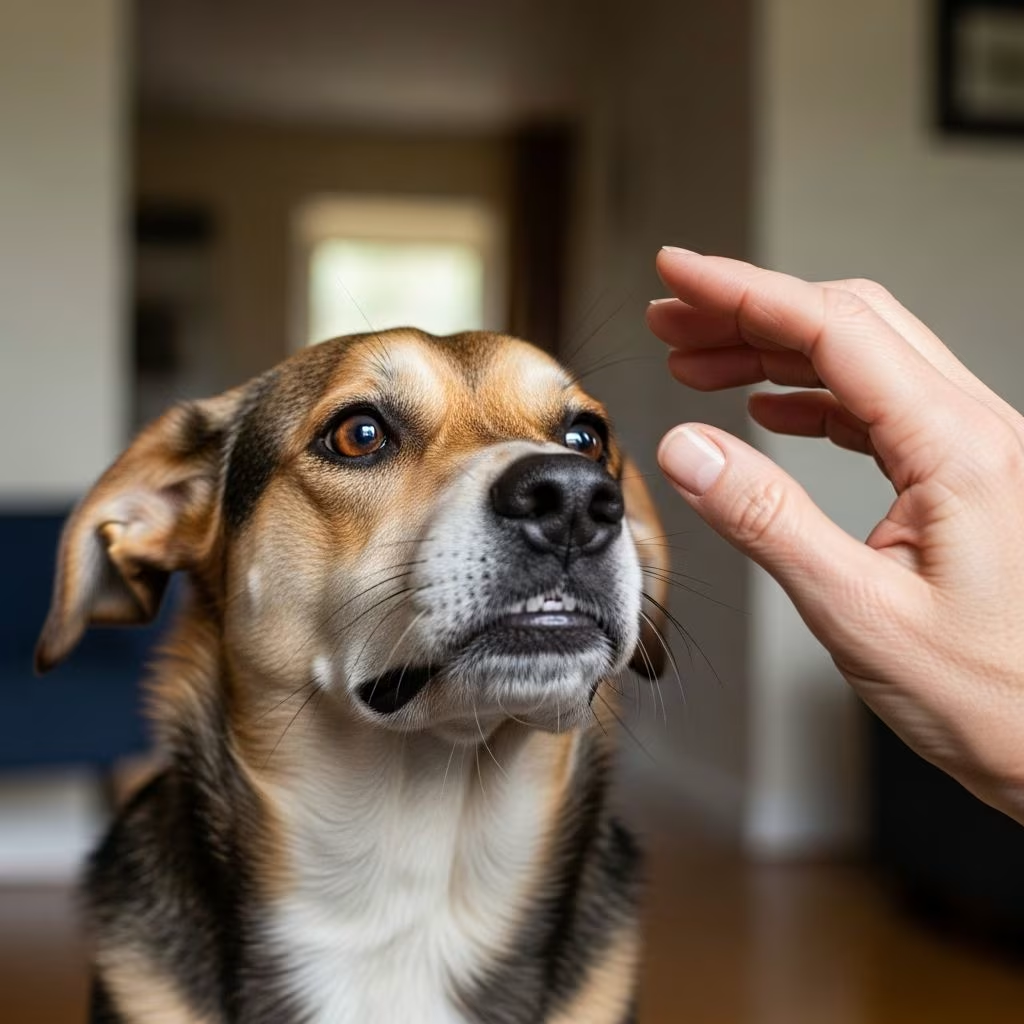
Hearing your dog growl when you reach out to pet them can be startling and upsetting. Many caregivers immediately worry they have an aggressive dog or that their bond is damaged. In reality, growling is usually your dog’s way of sending a clear message: something about this touch, situation, or moment does not feel right to them.
This article explains what that message might be, how to tell the difference between normal communication and a red flag, and what you can do to help your dog feel safer and more comfortable being handled.
Is It Normal for Dogs to Growl When Being Petted?
Growling is a normal part of canine communication. It is not automatically a sign of a “bad” or “mean” dog. Dogs growl for many reasons, including play, fear, frustration, pain, and resource guarding.
The key is to look at the context and your dog’s body language. In some situations, a growl during petting can be relatively harmless (for example, a playful rumble), while in others it can be an early warning before a bite.
Common reasons dogs growl when petted
- Pain or physical discomfort (injury, arthritis, dental disease, ear infections, etc.).
- Fear or anxiety, especially in dogs with traumatic histories or poor socialization.
- Disliking certain types of touch (rough petting, hugs, head pats, being restrained).
- Resource guarding of food, toys, sleeping spots, or people.
- Overstimulation during play or petting that goes on too long or is too intense.
- Conflict or frustration when a dog feels trapped or pressured.
Understanding which of these fits your dog will guide what you should do next.
Reading Your Dog’s Body Language When They Growl
To understand why your dog growls during petting, you first need to watch how the rest of their body is talking. Research shows that dogs use a combination of facial expressions, posture, tail movement, and vocalizations to communicate emotional states like fear, stress, and relaxation.
| Body Signal | What It May Mean |
|---|---|
| Lip licking, yawning, turning head away | Early signs of discomfort or stress |
| Stiff body, closed mouth, tense face | High arousal; dog is on edge and may escalate |
| Tail tucked, cowering, ears pinned | Fear or anxiety; dog feels unsafe |
| Showing teeth, hard stare, leaning forward | Clear warning; dog may bite if pressure continues |
| Loose body, wiggly tail, open mouth | More likely playful or attention-seeking vocalizations |
When you pet your dog, notice what changes right before the growl:
- Do their muscles suddenly tense?
- Do they freeze rather than lean into you?
- Does the growl stop as soon as you take your hand away?
Details like these help you distinguish between fear, pain, and simple preference.
Medical Reasons: When Growling Signals Pain or Illness
Any time a dog suddenly starts growling when touched — especially if it is new for them — a veterinary exam is the first step. Pain is one of the most common medical causes of touch sensitivity and defensive growling.
Common health issues that make dogs sensitive to touch
- Arthritis and joint disease – Older dogs or large breeds often experience joint pain that makes petting, lifting, or even brushing uncomfortable.
- Back or neck pain – Intervertebral disc disease or muscle strain can make spinal areas very sensitive.
- Ear infections – Dogs with inflamed ear canals may growl or snap if you touch their head or ears because it hurts.
- Dental disease – Tooth pain can make pressure around the muzzle or face intolerable.
- Skin conditions – Allergies, infections, or parasites can make skin extremely itchy or sore, so even gentle petting can be irritating.
- Neurological or cognitive changes – Some older dogs develop cognitive dysfunction (similar to dementia), which can change how they respond to touch and handling.
Your veterinarian may perform a full physical exam, look for tender spots, order blood work, or recommend imaging if they suspect a musculoskeletal or internal problem. Treating the underlying condition often reduces or eliminates the growling because the touch is no longer painful.
How to handle your dog safely if you suspect pain
- Avoid touching or moving areas that clearly cause a reaction.
- Use ramps or steps instead of lifting your dog when possible.
- Keep interactions calm and predictable to prevent sudden jolts.
- Follow your vet’s pain management plan exactly (medication, weight management, physical therapy, etc.).
Emotional Causes: Fear, Past Trauma, and Dislike of Handling
Not all growling when petted comes from pain. Many dogs growl because they feel emotionally uncomfortable with what is happening. Studies of fear-motivated aggression in dogs show that growling, snapping, and biting often appear when a dog cannot escape a situation it perceives as threatening.
Fear and past negative experiences
Dogs who have been punished, grabbed, or roughly handled in the past may associate a human hand reaching toward them with danger. Even if you are kind and gentle, their history can still be driving their reaction.
These dogs may:
- Cower, flinch, or duck away when you reach out.
- Growl when touched on specific areas where they were hurt.
- Be more reactive with unfamiliar people or in busy environments.
Dogs who simply do not enjoy certain touch
Just like people, dogs have individual preferences. Some enjoy firm pressure; others like soft strokes. Some love belly rubs; others feel vulnerable and exposed. A dog that does not enjoy certain kinds of contact may growl to say “please stop.”
Common triggers include:
- Head pats from above.
- Hugs or being tightly held.
- Petting that is too fast, firm, or persistent.
- Handling of paws, tail, ears, or collar.
Overstimulation and mixed emotions
Sometimes a dog can be both excited and stressed at the same time. During rough play or intense petting, arousal can rise so high that the dog tips into frustration or defensiveness. In these moments, growling is a way of saying, “That’s enough.”
Resource Guarding and Territorial Contexts
If your dog mainly growls when you pet them around certain objects, spaces, or people, resource guarding may be involved. Dogs can guard:
- Food bowls, chews, or toys.
- Resting spots like beds or couches.
- Doorways or access points.
- Specific people they feel attached to.
In these situations, the petting may be less of a problem than the fact that you are perceived as approaching “their” resource. The growl is a warning to keep your distance.
Because resource guarding can escalate to biting, especially if the dog feels cornered, it is wise to seek guidance from a qualified trainer or veterinary behaviorist who uses humane, science-based methods.
What You Should Not Do When Your Dog Growls
It can feel tempting to scold or punish a dog for growling, but this often makes the underlying situation more dangerous. Veterinary behavior experts caution that punishment-based methods increase fear and anxiety and can worsen aggression over time.
- Do not yell at, hit, or “alpha roll” your dog. These techniques do not teach safe behavior; they teach the dog to suppress warnings and may increase the chance of a sudden bite.
- Do not force physical contact. Forcing a dog to accept petting when they are clearly uncomfortable can damage trust.
- Do not ignore medical possibilities. Assuming the problem is purely behavioral may delay needed treatment.
- Do not remove the growl without addressing the cause. The growl is information; if you take it away through intimidation, the dog may skip straight to snapping or biting in the future.
What To Do Instead: Step-by-Step Handling Plan
Once your dog has been checked by a veterinarian and any medical issues addressed, you can work on helping them feel safer and more relaxed about being touched. Many behaviorists use a combination of desensitization (gradual exposure) and counter-conditioning (pairing touch with something the dog enjoys) to change the dog’s emotional response.
1. Identify triggers and safe zones
- Notice where on the body your dog reacts (head, back, hips, paws, etc.).
- Note contexts (on the couch, near food, when guests are over, when they are tired).
- Identify areas your dog enjoys being petted and use those as your starting point.
2. Create a predictable, calm environment
- Approach your dog slowly and from the side instead of looming over them.
- Speak in a soft, neutral voice.
- Avoid crowding, especially in narrow spaces where they have no easy escape.
3. Start with very gentle, brief touches
- Begin in an area your dog already tolerates or enjoys.
- Touch for one or two seconds, then remove your hand before your dog gets tense.
- Watch closely for early signs of stress and stop before a growl appears.
4. Pair touch with positive reinforcement
To change your dog’s feelings about being touched, follow a touch immediately with something they love, like a high-value treat.
- Touch lightly → feed treat → pause.
- Gradually repeat until your dog looks expectantly happy when you reach toward them.
- Over time, very slowly move closer to more sensitive areas, always staying under their stress threshold.
5. Respect your dog’s consent signals
Many dogs will clearly show when they want more petting and when they are done. Responding to these signals builds trust.
- If your dog leans in, nudges your hand, or relaxes, you can continue.
- If they move away, turn their head, stiffen, or lick their lips, stop and give them space.
6. Involve a professional when needed
If your dog’s growling is intense, frequent, or has ever escalated to snapping or biting, consult:
- A veterinary behaviorist (a veterinarian with advanced training in behavior).
- A certified professional dog trainer or behavior consultant who uses positive reinforcement–based, non-aversive methods.
They can design a customized behavior plan and keep everyone safe while you work through the problem.
Helping Your Dog Feel Safe During Everyday Handling
Even if your dog only growls in specific situations, it is helpful to build their comfort with routine handling for grooming and veterinary care. Evidence-based low-stress handling approaches emphasize going slowly, giving the animal choices, and rewarding cooperation.
- Practice mock vet visits at home: gently touch ears, paws, and tail, followed by treats.
- Teach a “consent” position (for example, your dog lying on a mat) that signals they are ready for gentle handling and can leave if they feel uncomfortable.
- Use equipment gradually (brushes, nail clippers) and pair their presence with rewards before using them.
- Break sessions into short, successful steps rather than pushing through to finish a full grooming task at once.
Frequently Asked Questions (FAQs)
Q: Is my dog being dominant when they growl at me during petting?
A: Current research and professional organizations explain most growling as communication about fear, discomfort, or conflict, not a bid for dominance. Focusing on dominance often leads to punishment-based responses that increase anxiety and aggression risk instead of resolving the underlying cause.
Q: Should I stop petting my dog completely if they growl?
A: You should immediately stop the specific interaction that triggered the growl, then work with your veterinarian and, if needed, a behavior professional to identify the reason. Many dogs can learn to enjoy or at least tolerate gentle handling when their pain is treated and their emotional needs are respected.
Q: How can I tell if the growling is playful or serious?
A: In play, the dog’s body is usually loose and bouncy, with a relaxed face and soft eyes. The growl tends to be rhythmic and occurs with play bows or chasing. Serious growls are often accompanied by stiffness, a closed mouth, hard stare, or attempts to move away. When in doubt, pause the interaction and give your dog space.
Q: When is it time to see a vet about growling when touched?
A: Any sudden change in your dog’s behavior, especially new sensitivity to touch, warrants a veterinary visit to rule out pain or illness. You should also seek veterinary care if the growling is accompanied by limping, changes in appetite, sleep, or activity levels.
Q: Can medication help if my dog growls from fear or anxiety?
A: In some cases, veterinarians or veterinary behaviorists may recommend medication or supplements alongside behavior modification to reduce severe anxiety or fear. Medication does not replace training, but it can lower the dog’s overall stress so they are better able to learn and cope.
References
- Fear-Motivated Aggression in Dogs: Patient Characteristics, Diagnosis and Therapy — Galac, S. & Knol, B. The Veterinary Quarterly. 1997-12-01. https://doi.org/10.1080/01652176.1997.9694765
- Behavior Problems of the Dog and Cat, 3rd ed. — Overall, K. Wiley-Blackwell. 2013-05-20. https://onlinelibrary.wiley.com/doi/book/10.1002/9781118704411
- What Dog Growling Means and What To Do — PetMD Editorial. 2021-10-19. https://www.petmd.com/dog/behavior/why-do-dogs-growl
- Why Dogs Growl and How to Handle It — American Kennel Club (AKC). 2022-06-15. https://www.akc.org/expert-advice/training/why-dogs-growl-and-how-to-handle-it/
- Touch Sensitive Dogs: Why Is My Dog Growling at Me When I Touch Him? — Honest Paws Editorial. 2023-08-10. https://www.honestpaws.com/blogs/health/dog-touch-sensitive



