

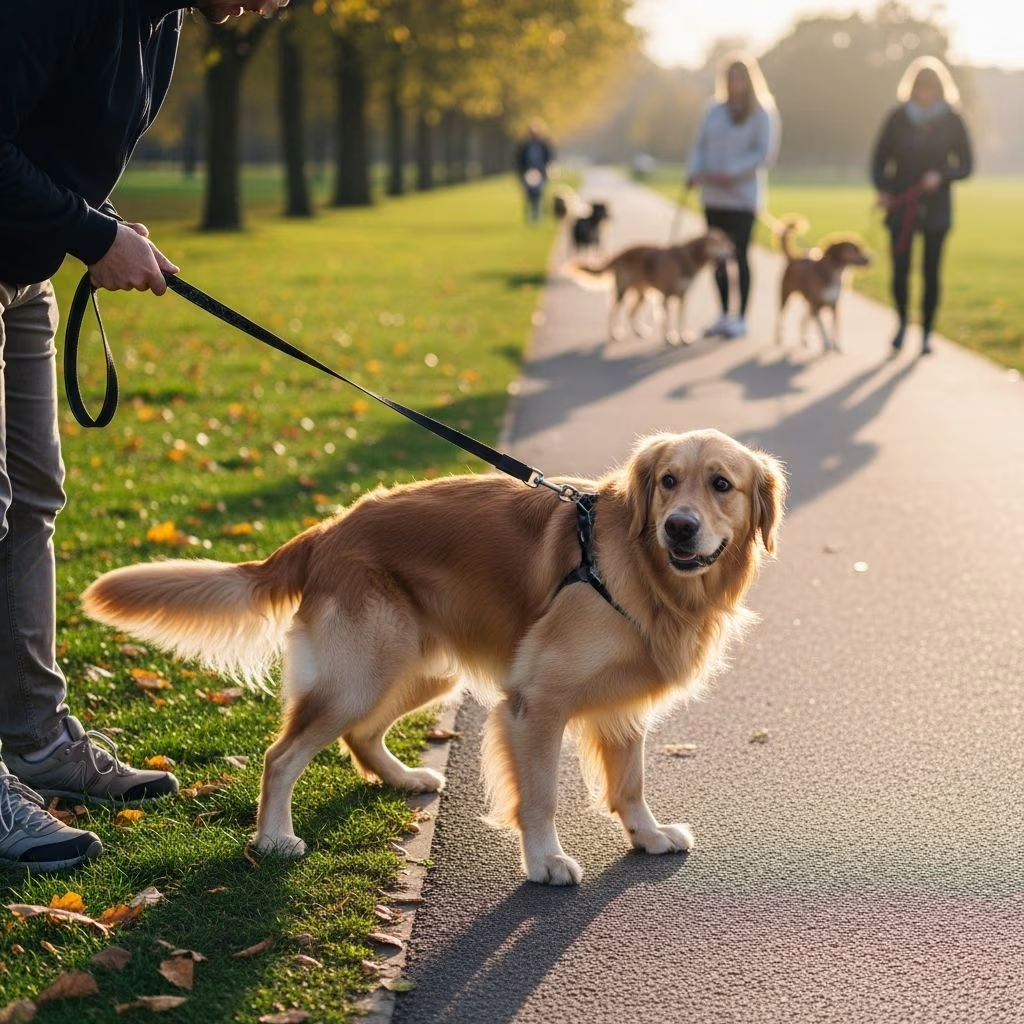
My Dog Freezes on Walks but Is Normal at Home: What’s Going On?
When a dog suddenly stops moving and freezes during a walk, but seems perfectly normal and relaxed at home, it can be confusing and worrying for guardians. This behavior is common and usually reflects a combination of emotion (like fear or uncertainty), environment (noises, crowds, surfaces), and sometimes physical discomfort such as joint pain or heat stress.
Understanding why your dog freezes is the first step to helping them feel safer outdoors, rebuilding their confidence, and protecting their health.
Why Dogs Freeze on Walks: The Science Behind Stillness
Freezing is a well-recognized part of the stress response in mammals, often grouped with fight, flight, and other strategies. In dogs, this can look like suddenly stopping, holding very still, tightening the body, or refusing to move.
According to veterinary and behavior sources, freezing on walks can be driven by several overlapping factors.
Common Emotional and Environmental Triggers
- Fear or anxiety about the environment (traffic, people, dogs, new places).
- Startling noises such as trucks, fireworks, construction, or loud voices.
- Visual triggers like bikes, strollers, or unfamiliar objects (trash bags, cones, flags).
- Olfactory overload when new or intense smells cause the dog to pause and collect information.
- Unfamiliar surfaces (metal grates, shiny floors, bridges, steep stairs) that feel unsafe.
Potential Physical or Medical Contributors
While fear and stress are frequent causes, veterinarians also note that pain and medical issues can make a dog reluctant to walk or cause them to stiffen and freeze.
- Joint pain such as osteoarthritis, hip or elbow dysplasia, or cruciate ligament injury.
- Muscle strains or soft tissue injuries making movement uncomfortable.
- Neurologic conditions or seizures that cause sudden stiffness and abnormal movement.
- Toxin exposure (such as antifreeze or rodenticide) leading to stiffness or collapse.
- Heat stress or heatstroke, especially on hot days or after exertion.
Freeze as an Information-Gathering Strategy
Freezing is not always panic. Behavior specialists describe it as a way for a dog to pause and gather information about something uncertain in the environment. The dog stops, looks, listens, and sniffs to decide whether it’s safe to move forward.
| Type of Freeze | What It Looks Like | Common Causes |
|---|---|---|
| Brief curiosity freeze | Dog pauses, body relatively loose, then moves on | New smell, object, or sound; mild uncertainty |
| Fear-based freeze | Stiff body, low posture, wide eyes, refusal to move | Loud noises, crowds, other dogs, past bad experience |
| Pain-related freeze | Hesitation, limping, yelping, or stiff gait | Joint pain, injury, arthritis, neurologic issues |
| Heat or fatigue freeze | Excessive panting, laying down, weakness | Hot weather, long or intense walks, poor conditioning |
Is It Normal if My Dog Only Freezes Outside?
Many dogs are completely relaxed at home yet become tense or overwhelmed outside, especially in busy, noisy, or unfamiliar neighborhoods. This contrast is common because home is predictable and safe, while the outdoors is full of constantly changing sights, sounds, and smells.
What matters is how often your dog freezes, how intense the behavior is, and whether there are any signs of pain or distress.
Signs It May Be More About Emotion Than Pain
- Dog moves freely, jumps, and plays normally at home.
- Freezing happens only in certain places (busy street, near specific houses, around other dogs).
- Body language shows fear: crouching, tail tucked, ears back, lip licking, yawning, or trying to turn away.
- Once moved away from the trigger, the dog relaxes and walks normally again.
Signs You Should Talk to a Veterinarian
Veterinarians recommend an exam when mobility changes are frequent, sudden, or accompanied by other symptoms.
- Limping, stiffness, or difficulty getting up or lying down.
- Whimpering, yelping, or showing pain when moving or being touched.
- Collapsing, falling over, or appearing disoriented.
- Shaking, muscle tremors, or seizure-like activity.
- Vomiting, excessive drooling, weakness, or collapse, which can signal toxin exposure or heatstroke.
Fear, Anxiety, and the Freeze Response
Behavior experts describe fear and anxiety in dogs as emotional states that drive powerful survival responses, including fight, flight, and freeze. When a dog freezes on a walk, it is often their safest available strategy: they cannot fight the perceived threat and may feel they cannot flee easily on a leash.
Behavioral Signs of Fear-Related Freezing
- Tense muscles and a rigid body.
- Tail tucked or held still and low.
- Ears pinned back or held very still.
- Wide, dilated pupils; lots of blinking or staring.
- Refusing treats, even favorite ones, in that moment.
When a dog is this stressed, behavior specialists emphasize that learning is limited. The priority is to help the dog feel safe again, not to push or punish them.
Immediate Steps When Your Dog Freezes on a Walk
When your dog stops and refuses to move, the safest response is to reduce pressure and help them retreat to a more comfortable distance from whatever is worrying or hurting them.
What to Do in the Moment
- Stay calm. Avoid scolding, dragging, or tightening the leash.
- Look around to identify possible triggers: loud vehicles, crowds, dogs, surfaces, heat, or obstacles.
- Softly encourage an “escape” direction away from the trigger, using a happy voice and gentle leash guidance.
- Offer distance first; once farther away, you can offer treats or praise if your dog is able to eat.
- If the dog seems physically unwell (limping, collapsing, panting heavily), stop the walk and seek veterinary advice as appropriate.
Using a Gentle Emergency U-Turn
Behavior programs often recommend practicing an emergency U-turn so you can calmly leave stressful situations before your dog hits their limit.
- Teach a cheerful cue, such as “this way!” at home with treats.
- Practice turning away and rewarding your dog for following you.
- Gradually use it outside when you notice potential triggers ahead, before your dog freezes.
Building Your Dog’s Confidence on Walks
Once immediate safety is managed, the long-term goal is to help your dog feel more comfortable in the world. Experts recommend a mix of environmental management, gradual exposure, and positive reinforcement to support fearful dogs.
Plan Easier, Dog-Centered Walks
- Choose quieter routes with fewer triggers (parks, quiet streets over busy roads).
- Walk at less busy times of day to minimize noise and crowding.
- Keep walks short and successful at first, rather than long and overwhelming.
- Let your dog sniff and explore at their own pace, which can help reduce stress.
Use Positive Reinforcement to Change Emotions
Reward-based training can help dogs form new, more positive associations with once-scary situations.
- Carry high-value treats and reward any brave behavior: a few steps forward, glancing at a trigger then looking back at you, or relaxed walking.
- Pair triggers with treats at a distance where your dog notices them but is not yet frozen or panicked.
- Avoid forcing your dog closer; instead, gradually shrink the distance over many sessions.
Health, Weather, and Equipment: Other Reasons Dogs Stop
Not every freeze is emotional. Veterinary sources highlight that dogs may stop walking when they are in pain, overheated, or physically uncomfortable.
Heat, Fatigue, and Overexertion
- Dogs cool themselves mainly through panting and are vulnerable to heat stress on hot days.
- Walking on hot pavement can burn paw pads and cause discomfort.
- Signs of heat-related distress include heavy panting, drooling, weakness, collapse, or confusion; these require immediate cooling and veterinary care in severe cases.
Joint Pain and Mobility Problems
Osteoarthritis and other joint problems are among the most common causes of mobility changes in dogs. Pain can make a dog reluctant to continue walking, especially on inclines, stairs, or uneven ground.
- Large and senior dogs are especially at risk of osteoarthritis and hip dysplasia.
- Watch for stiffness after rest, difficulty jumping, or favoring one leg.
- Early veterinary diagnosis allows for pain management and lifestyle changes that can improve comfort.
Uncomfortable Gear
- A collar that tightens or presses on the throat can increase anxiety and discomfort.
- An ill-fitting harness may rub, restrict movement, or create pressure points.
- Switching to a well-fitted, Y-shaped harness often helps sensitive dogs move more freely.
Preventing Freezing in Newly Adopted or Sensitive Dogs
Newly adopted dogs, especially those with limited prior exposure to busy environments, often need a thoughtful adjustment period. Gentle, structured approaches can reduce the likelihood of freezing and help them develop resilience.
Go Slow With New Environments
- For the first days or weeks, keep walks short, simple, and predictable.
- Introduce one new element at a time: a slightly busier street, a new park, or a different time of day.
- Monitor your dog’s body language closely and step back to easier situations if they show signs of stress.
Match Walks to Your Dog’s Resilience
- Some dogs thrive on busy city walks; others do better in quiet, natural settings.
- For very sensitive dogs, prioritize calm, low-stimulation routes while you work on confidence.
- If your home has multiple dogs who are bonded and relaxed together, parallel walking can help a nervous dog feel safer.
When to Involve Professionals
If freezing on walks is frequent, intense, or worsening, or if you suspect pain or medical issues, seeking professional support is essential.
Veterinarian
- Rule out pain, joint disease, neurologic problems, or other medical causes.
- Discuss any sudden behavioral changes, especially if associated with physical symptoms.
- Ask about pain management, mobility support, or further diagnostics if needed.
Certified Behavior Professional
- Look for a certified behaviorist or credentialed, force-free trainer experienced with fear and anxiety.
- They can help you design a step-by-step behavior plan tailored to your dog’s triggers and history.
- They may collaborate with your veterinarian if medication for anxiety is appropriate.
Frequently Asked Questions (FAQs)
Q: My dog freezes on walks but then runs and plays at home. Is that normal?
A: Many dogs feel safe and relaxed at home but find the outside world overwhelming. If your dog moves normally at home and only freezes in specific outdoor situations, this often points to fear or environmental stress rather than general mobility problems. Still, if you notice limping, stiffness, or other physical changes, a veterinary checkup is recommended.
Q: Should I drag my dog when they stop walking?
A: Dragging or forcing a dog to move can increase fear and damage your relationship. Behavior experts advise reducing pressure, moving away from triggers, and using gentle encouragement and rewards instead. If freezing is frequent or severe, consult a veterinarian and a qualified trainer.
Q: How can I tell if my dog is freezing from fear or pain?
A: Fear-based freezing usually appears in specific contexts (noisy streets, near other dogs) and is accompanied by anxious body language like tucked tail and tense posture. Pain-related reluctance to walk may show as limping, stiffness, difficulty rising, or yelping with movement and can occur in many settings. Any suspicion of pain should be evaluated by a vet.
Q: My dog only freezes near one particular spot on our route. Why?
A: Dogs have excellent memories and may associate a location with a past scare, such as a loud noise or a confrontation with another dog. Try avoiding that area for a while, then reintroduce it gradually with high-value treats and at times when the environment is calmer.
Q: Can my dog outgrow freezing on walks?
A: With patient, positive experiences, many dogs become more confident and freeze less often over time. This process is helped by careful management of triggers, gradual exposure, and positive reinforcement. However, if anxiety or pain is significant, professional support can make progress faster and safer.
References
- Supporting a Greyhound That Freezes During Walking — Greyhound As Pets NSW (GAP NSW). 2023-05-13. https://www.gapnsw.com.au/news/2023-05-13/supporting-a-greyhound-that-freezes-during-walking
- Freezing or Stillness – Dog Body Language — Silent Conversations (Canine Behavior Education). 2021-08-10. https://www.silentconversations.com/freezing-or-stillness-dog-body-language/
- What to do if my dog gets stiff and is not moving normally — Vetster, Jo Myers DVM. 2023-06-21. https://vetster.com/en/wellness/what-to-do-if-my-dog-gets-stiff-and-is-not-moving-normally
- Dog Stops Walking and Won’t Move! Reasons & What to do — South Hillsdale Animal Hospital. 2023-02-28. https://www.southhillsdaleah.com/site/blog/2023/02/28/dog-stop-walking-reasons
- Why Do Dogs Freeze on Walks? — Walking Dogs in Weber County (behavior article). 2024-10-05. https://walkingdogsinwebercounty4.wordpress.com/2024/10/05/why-do-dogs-freeze-on-walks/
- Why Your Dog Randomly Freezes Mid-Walk Like a Tiny Statue — Parade Pets. 2023-08-15. https://paradepets.com/dogs/why-dogs-suddenly-stop-on-walks
- Holy sh*t your dog isn’t walking for a REASON — YouTube, veterinary education video. 2022-07-18. https://www.youtube.com/watch?v=Ue304udItjU



