

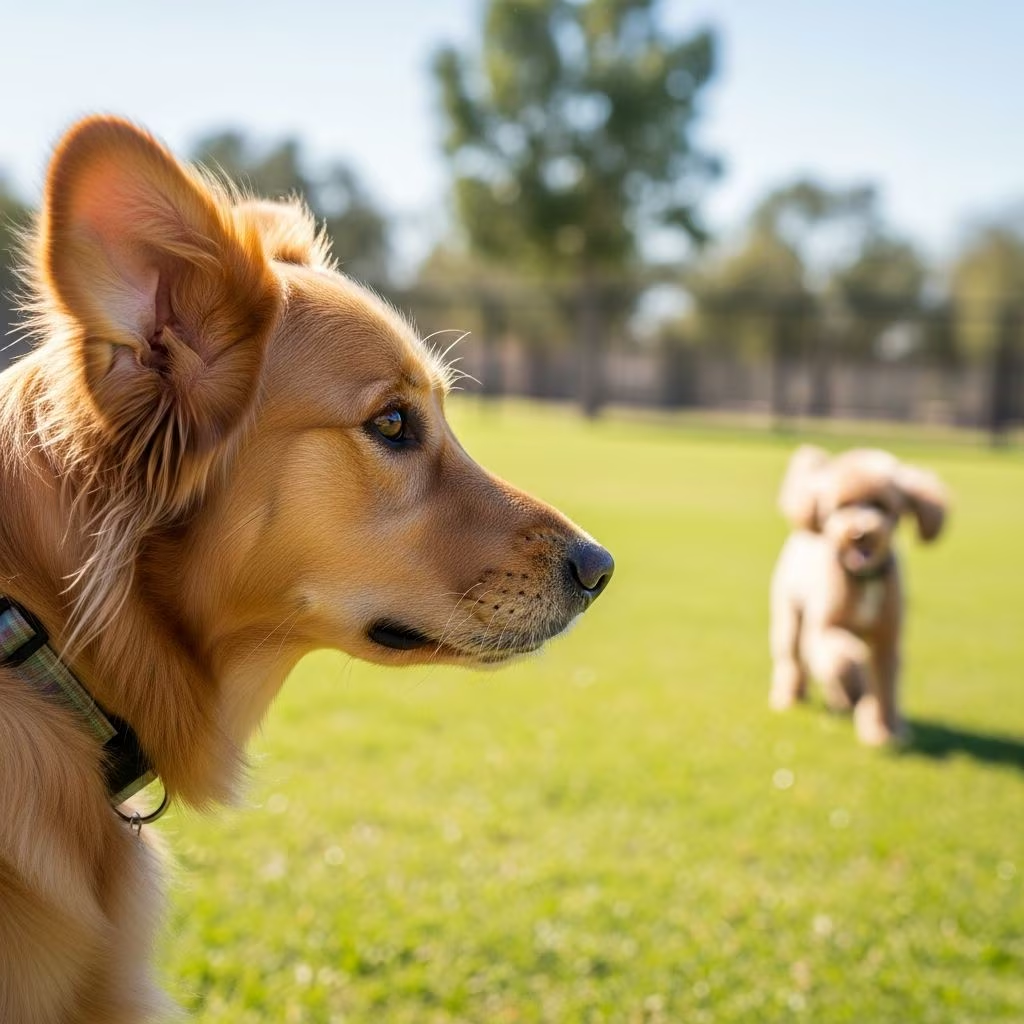
When a dog locks onto another dog and cannot look away, it can be stressful, embarrassing, and sometimes dangerous for guardians. Fixation can appear as intense staring, straining at the leash, freezing, whining, or explosive barking the moment another dog is in sight. Understanding what this behavior really means is the first step to helping your dog feel safer and behave more calmly around other dogs.
This guide explains why dogs fixate on other dogs, how to recognize the early warning signs, and what you can do—right now and long term—to change this behavior using kind, reward-based methods informed by modern behavioral science.
What Does It Mean When a Dog Fixates on Another Dog?
Fixation is not just casual interest. It is a state where your dog’s attention becomes tightly locked onto another dog, often making it hard for them to respond to cues, eat treats, or disengage on their own.
Behaviorists describe this as a combination of hyper-focus and high arousal—your dog’s nervous system is activated, their body is ready to move, and their brain is filtering out everything except the other dog.
Common Signs of Fixation on Another Dog
- Hard, unblinking stare at the other dog
- Body frozen or leaning forward, muscles tense
- Weight shifted toward the other dog, often with a tight leash
- Whining, high-pitched vocalizing, or low growling
- Sudden lunging, barking, or snapping when the distance closes
- Ignoring their name, cues, toys, or treats
- Continuing to scan for dogs long after one has passed
Fixation itself is not a diagnosis. It is a visible behavior that can come from excitement, frustration, fear, or, in some cases, true aggression.
Why Dogs Fixate on Other Dogs
There is no single reason every dog fixates. According to veterinary and behavior research, behavior is influenced by a mix of genetics, early experiences, learning history, current environment, and human handling.
| Underlying Cause | Typical Motivation | Common Body Language |
|---|---|---|
| Fear / anxiety | Create distance or avoid perceived threat | Tense, low body, lip licking, yawning, scanning |
| Over-excitement | Get to the dog to play or greet | Bouncy, whining, tail wagging fast, pulling forward |
| Frustration | Blocked from access to other dogs | Leash pulling, barking, pawing, straining |
| Learned habit | Fixation has been unintentionally rewarded | Fast orientation to dogs, ignoring handler |
| Pain or discomfort | Protect self, avoid interaction | Sudden irritability, snarling, stiff movement |
1. Fear and Anxiety
Many reactive or fixated dogs are afraid, especially if they have been previously bullied, attacked, or overwhelmed by other dogs. Fear-based dogs often try to create more space by barking or lunging, which successfully makes other dogs go away—reinforcing the behavior.
Studies on attention bias in anxious animals show that they tend to scan for potential threats and stay locked onto them, making disengaging harder without help. For these dogs, fixation is a survival strategy, not stubbornness.
2. Over-Excitement and Social Motivation
Some dogs simply love other dogs so much that they find them more rewarding than anything else. If they have frequently been allowed to pull toward dogs and then greet or play, they quickly learn that fixation + pulling = access to friends.
These dogs usually show:
- Loose or wiggly body posture
- Fast wagging tail at body level or above
- Whining or high-pitched barking
- Very little interest in food or toys when another dog is nearby
3. Frustration on Leash
“Frustration reactivity” happens when a dog wants to go to another dog but the leash, harness, or situation prevents it. Over time, the physical restraint pairs with emotional overload, and the dog begins to bark or lunge—sometimes looking aggressive even if they are not.
Common contributors include:
- Repeated on-leash greetings that are suddenly stopped later
- Group classes where dogs frequently meet nose-to-nose on leash
- Dog parks or daycare with very high-arousal play
4. Genetics and Early Life Experiences
Genetics influence traits like energy level, sensitivity, and how quickly a dog reacts to triggers. Poor or chaotic early socialization—especially before 16 weeks—can also set the stage for fear or over-arousal around other dogs.
Dogs that were attacked, bullied, or chronically overstimulated around other dogs when young are more likely to display fixation as adults. In some cases, fixation may be directed specifically at dogs that resemble the one that frightened them, or at certain places where negative events happened (such as a park or vet clinic).
5. Pain, Medical Issues, and Stress
Pain can lower a dog’s threshold for reactivity and make them more likely to fixate or lash out, especially if another dog might jostle or bump them. Chronic stress from changes at home, lack of sleep, or inconsistent routine can also make reactions stronger.
If fixation appears suddenly, worsens quickly, or appears in a dog that was previously calm, a veterinary exam is important to rule out pain, neurologic issues, or systemic illness.
Is Fixation the Same as Aggression?
No. Fixation is a behavioral pattern, not a diagnosis of aggression. Many fixated dogs never bite and may be desperate to play or create space, not harm. However, fixation can escalate into aggressive behavior if the dog feels cornered, overwhelmed, or if their warning signals are ignored.
Red Flags That Fixation May Escalate
- Stiff, tall posture with slow, deliberate movement
- Hard stare with pupils very dilated or very small
- Lips pulled tight, teeth visible, growling that deepens as the dog approaches
- Repeated lunges that connect with the other dog if given the chance
- History of bites or near-bites toward dogs
Because the risk of injury is higher when these signs appear, consulting a qualified veterinary behaviorist or certified behavior professional is strongly recommended.
Immediate Steps When Your Dog Fixates on Another Dog
When you see your dog lock on to another dog, your first priorities are safety and reducing intensity. You are not trying to train a perfect heel in that moment—you are simply trying to avoid rehearsal of the unwanted behavior.
1. Increase Distance Right Away
- Calmly turn and walk away, creating more space between the dogs.
- Use arcs or diagonals rather than walking straight past another dog.
- If space is limited, step behind a parked car, hedge, or doorway to break the visual line.
Research on behavior modification for fear and reactivity emphasizes the importance of staying below threshold—the level at which the dog can still think, eat, and respond. Distance is your quickest tool for this.
2. Avoid Punishing or Yanking
Harsh corrections, shouting, or jerking the leash may suppress visible behavior in the moment, but they can also increase fear or frustration, especially if the dog already associates other dogs with stress. Punishment near other dogs can teach your dog that their presence predicts discomfort.
3. Use Management Tools Wisely
- Use a well-fitted harness or front-clip harness to reduce strain on the neck.
- Attach the leash to equipment your dog cannot slip out of.
- Consider a basket muzzle for dogs with a bite history or strong lunge-and-grab behavior—introduced positively and never as a punishment.
Long-Term Training: Teaching Your Dog to Disengage
Long-term improvement relies on changing your dog’s emotional response to other dogs and teaching new skills that are more rewarding than fixation. Effective plans typically combine desensitization and counterconditioning (gradually pairing dogs with good things at safe distances) plus clear, practiced behaviors like “Look at me” or “Let’s go.”
Core Training Strategies
- Pattern games and focus exercises that are rehearsed at home and in easy environments.
- Reinforcing calm disengagement from other dogs, even if it is just a brief head turn at first.
- Changing default routines so your dog does not expect to greet every dog they see.
- Strategic use of food or toys to reward the behaviors you want—turning away, checking in, walking with a loose leash.
Example: “Look at That” to “Look Back at Me”
One widely used approach, often adapted from behavior modification protocols, is to teach your dog that noticing another dog calmly earns a reward for checking back in with you.
- Start at a distance where your dog can see another dog but is not yet barking or lunging.
- When your dog glances at the other dog, calmly mark (with a word like “yes”) and then feed a treat.
- Over time, wait for your dog to look back at you after seeing the dog before you mark and reward.
- Gradually work closer, only as long as your dog stays relaxed and responsive.
This turns the sight of another dog into a predictable cue: “I see a dog; I look at my person; good things happen.”
Teaching Voluntary Disengagement
Rather than constantly cueing your dog, you want them to choose to disengage. Training plans that focus on self-control and voluntary check-ins have been shown to improve outcomes for anxious and reactive dogs.
Practice in low-stress environments first:
- Put a mildly interesting item nearby (not another dog yet).
- Wait silently for your dog to glance back at you.
- Mark and reward that choice generously.
- Gradually increase the difficulty of distractions before adding real dogs at a distance.
Management: Setting Your Dog Up for Success
Training works best when your dog is not constantly rehearsing fixation. Management reduces triggers while you build new skills.
Modify Walks and Environments
- Walk at quieter times of day to reduce surprise encounters.
- Choose routes with more space to move off-path when needed.
- Avoid dog parks or tight indoor spaces (like narrow pet store aisles) during early training.
Rethink Daycare, Dog Parks, and Group Classes
High-arousal settings can reinforce fixation and reactive behavior in some dogs, even if they seem to “love” the chaos.
- Avoid dog parks for dogs who fixate, bully, or are easily overwhelmed.
- Choose daycares that match dogs by play style and limit group sizes.
- Look for training classes that use ample distance and visual barriers, not repeated on-leash meet-and-greets.
Support Emotional Health
Because fixation is closely tied to arousal and anxiety, broad strategies that reduce stress can support training progress.
- Provide predictable routines for meals, walks, and rest.
- Offer mental enrichment through sniffing games, scent work, puzzles, and gentle training.
- Ensure your dog has quiet, safe spaces in the home where they will not be disturbed.
When to Seek Professional Help
If your dog’s fixation leads to bites, repeated near-bites, or intense lunging, or if you feel unsafe, it is important to work with a qualified professional.
Who to Look For
- Diplomate of the American College of Veterinary Behaviorists (DACVB) or equivalent specialist for medical and behavioral integration.
- Certified behavior professionals who use humane, evidence-based methods (for example, those following guidelines from the American College of Veterinary Behaviorists or the American Veterinary Society of Animal Behavior).
These professionals can:
- Assess whether fear, anxiety, pain, or learned habits are driving the behavior.
- Design a step-by-step plan tailored to your dog and your environment.
- Coordinate with your primary veterinarian if medication or further diagnostics are indicated.
Frequently Asked Questions (FAQs)
Q: Is my dog being dominant when they stare at other dogs?
A: Modern veterinary behavior research does not support “dominance” as a useful explanation for most pet dog behavior. Fixation is more often related to fear, excitement, or frustration than a desire to dominate.
Q: Can a reactive or fixated dog ever become friendly with other dogs?
A: Many reactive dogs can learn to feel safer and behave calmly around other dogs with structured behavior modification and careful management. Some may never enjoy close contact but can still learn to tolerate dogs at functional distances.
Q: Should I let my dog greet every dog to “get it out of their system”?
A: No. Consistently allowing a dog to pull toward and greet others can strengthen fixation and frustration. It is usually more effective to teach that most dogs will be calmly passed, not greeted, while reinforcing check-ins and loose-leash walking.
Q: Will my dog grow out of this behavior on their own?
A: Unlikely. Without intervention, fixation and reactivity often become stronger with practice. Early, consistent training and management greatly improve long-term outcomes.
Q: Is medication ever needed for dogs who fixate on other dogs?
A: In some cases, especially when severe anxiety is present, veterinarians or veterinary behaviorists may recommend behavior medication as part of a broader plan. Medication alone is not a cure but can lower arousal enough for training to be effective.
References
- Help! My Dog is Dog Reactive to Other Dogs! — Homeskooling 4 Dogs. 2023-05-10. https://www.homeskooling4dogs.com/help-my-dog-is-dog-reactive-to-other-dogs
- AVSAB Position Statement on Humane Dog Training — American Veterinary Society of Animal Behavior. 2021-03-18. https://avsab.org/resources/position-statements
- When Your Dog Can’t Look Away: Coping With Canine Fixation — Lighten Up Dog Training. 2022-11-02. https://lightenupdogtraining.co.uk/when-your-dog-cant-look-away-coping-with-canine-fixation/
- Why is Your Dog Obsessed With Other Dogs? — Louise Glazebrook. 2021-08-15. https://louiseglazebrook.com/why-is-your-dog-obsessed-with-other-dogs
- Behavior Problems in Dogs: An Overview — American College of Veterinary Behaviorists. 2020-01-01. https://www.dacvb.org/page/Behavior-Problems-in-Dogs
- Behavioral Medicine for Dogs and Cats — Overall, K. Elsevier. 2013-01-01. https://doi.org/10.1016/C2010-0-67475-2



