

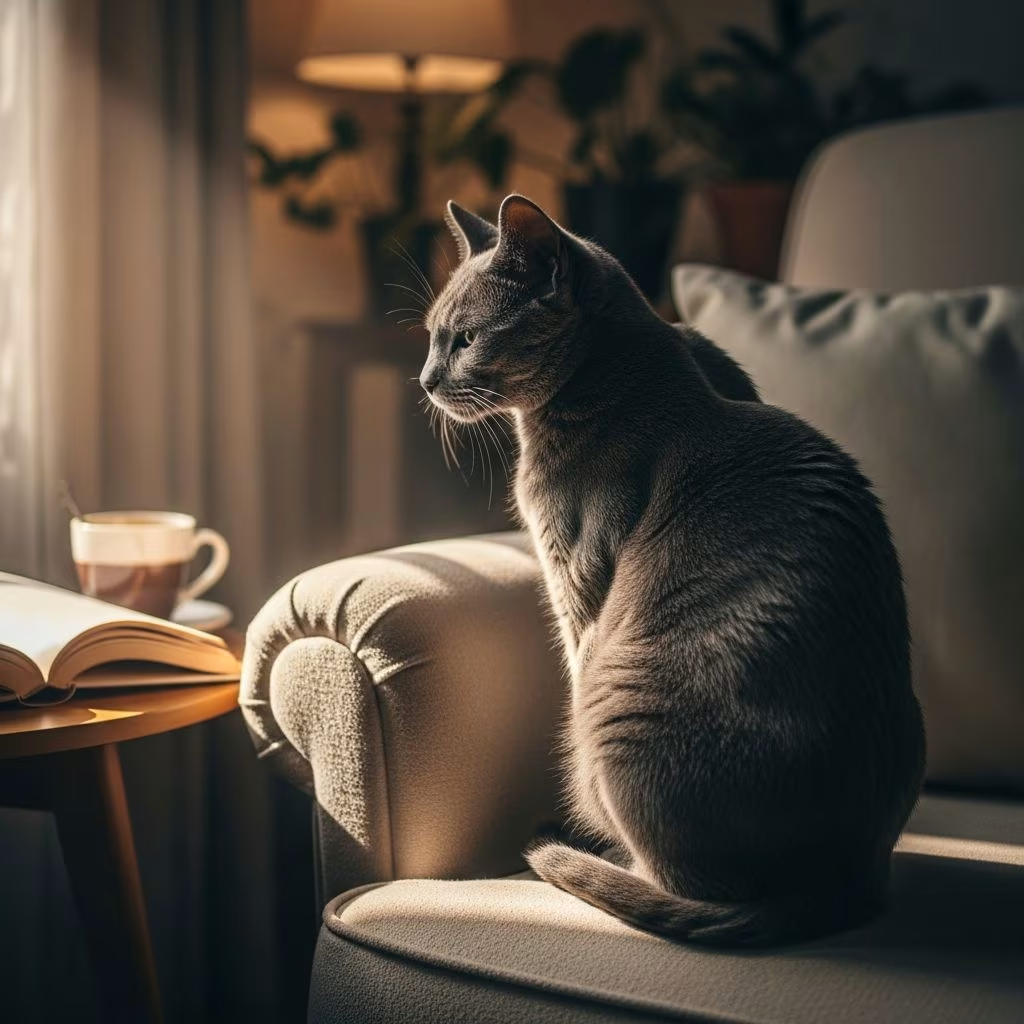
Cats in the same household often display independent behaviors, choosing solitude over shared naps or mutual grooming sessions that humans might expect from social pets. This stems from their evolutionary roots as territorial hunters adapted to group living under specific conditions.
Understanding Feline Social Foundations
Domestic cats descend from solitary wild ancestors but have evolved flexible social structures in environments with reliable resources. Free-living cats form colonies primarily around matrilineal lines, where related females and their offspring cooperate in raising young. These groups thrive when food is plentiful and members are familiar, allowing behaviors like allogrooming—mutual grooming that reinforces bonds—and shared resting spots.
In contrast, unrelated cats introduced into homes face challenges mimicking these natural setups. Without familial ties, they may not develop strong affiliative relationships, leading to tolerance rather than intimacy. Cats recognize familiar individuals and react defensively to strangers, a trait that persists indoors.
The Myth of Strict Cat Hierarchies
Unlike pack animals with rigid dominance ladders, cats exhibit complex, networked social bonds rather than linear hierarchies. Some cats control resources like prime perches or first access to food, appearing ‘top cat’ based on age, sex, or assertiveness, but this is fluid and context-dependent.
Dominance manifests subtly: a higher-status cat might eat first or groom subordinates to mark them, fostering group cohesion. However, not all cats fit neatly into ranks; laid-back individuals avoid conflict, while assertive ones test boundaries through play or swats. In multi-cat homes, this can mean peaceful coexistence without close physical contact, as cats prioritize personal territories over constant companionship.
- Resource Control: Top cats claim high spots and initiate activities.
- Grooming Signals: Allogrooming spreads scents, claiming group members.
- Flexible Roles: Positions shift based on situations, not fixed ranks.
Personality Clashes in Your Home
Individual temperaments heavily influence interactions. Bold cats may dominate spaces, deterring cuddles from timid housemates who retreat to avoid tension. Shy or independent personalities prefer solo resting, viewing proximity as a threat rather than comfort.
Play sessions reveal dynamics: one cat consistently ‘winning’ suggests subtle power plays, discouraging relaxed bonding. Age gaps exacerbate this—adults often lead, juveniles follow, but mismatched energies lead to avoidance.
| Personality Type | Impact on Cuddling | Example Behaviors |
|---|---|---|
| Assertive/Dominant | Low; controls space | Claims beds, swats intruders |
| Laid-Back | Medium; tolerant | Allows proximity but no initiation |
| Timid/Subordinate | Low; avoids conflict | Hides, eats last |
| Playful/Social | High; seeks bonds | Initiates grooming, shared naps |
Territorial Instincts at Play
Cats remain fiercely territorial, even with ample space. They mark areas with rubs and scents, defending personal zones within the home. Shared resources like litter boxes or bowls spark competition, reducing willingness for vulnerable cuddling positions.
In feral colonies, territories overlap minimally among bonded cats, but domestic setups force proximity, heightening stress. Unfamiliar scents from neighborhood cats can further agitate indoor dynamics, making household mates wary.
When Family Ties Foster Closeness
Littermates or mothers with kittens often cuddle due to early bonds. Kittens nurse from multiple queens and play across litters, building lifelong affiliations. Adopting siblings preserves this, as they recognize each other’s scents from birth.
However, separated litters or adults paired later rarely replicate this. Time and familiarity can bridge gaps, but genetics play a key role in natural affinity.
Age, Sex, and Health Influences
Maturity affects sociability: kittens are playful cuddlers, adolescents test limits, adults prioritize efficiency. Spayed/neutered cats show less aggression, potentially increasing tolerance, though intact ones defend mating rights aggressively.
Health issues like pain or illness make cats withdraw, interpreting touch as discomfort. Monitor for signs like hiding or appetite loss, as these amplify isolation.
Resource Management for Better Bonds
Insufficient litter boxes, food stations, or vertical spaces fuel tension. Aim for n+1 rule (number of cats plus one per resource type) to minimize bullying. Dispersed feeding prevents dominant cats from gatekeeping.
- Multiple high perches for escape.
- Separate feeding zones.
- Clean litter trays daily.
Signs Your Cats Are Actually Fine
Absence of cuddling doesn’t mean discord. Parallel play, ear twitching greetings, or mutual rubbing indicate harmony. Tolerance—coexisting without hissing—suffices for many cats.
True issues involve chronic fights, spraying, or avoidance of shared areas. Observe body language: relaxed tails and slow blinks signal peace.
Encouraging Optional Closeness
Forced proximity backfires; let bonds form naturally. Provide communal toys or puzzle feeders to spark cooperative play. Pheromone diffusers mimic colony scents, easing tensions.
Slow introductions for new cats—scent swapping, supervised meets—build familiarity. Patience yields gradual grooming or pillowing (shared sleeping).
Frequently Asked Questions
Will my cats ever cuddle if they don’t now?
Possibly, with time and reduced stress, but many thrive independently. Focus on harmony over enforced affection.
Is it bad if my cats fight over food?
Yes, separate stations to prevent escalation into broader conflicts.
How do I know if one cat bullies another?
Look for chasing, blocking resources, or puffed fur. Increase resources and consult a vet for aggression.
Can unrelated adult cats bond closely?
Rarely like littermates, but tolerance is common. Match personalities when adopting.
Does neutering make cats cuddlier?
It reduces fights, potentially allowing more neutral proximity, but personalities dominate.
Real Household Scenarios
Consider a home with a senior female and young male: she claims the couch, he perches nearby—peaceful but distant. Adding vertical towers gives him space, occasionally leading to side-by-side naps.
In a trio of unrelated rescues, initial hissing fades to parallel lounging. One grooms sporadically, signaling loose bonds.
Long-Term Harmony Strategies
Enrich environments with scratching posts, window perches, and rotation toys to curb boredom-fueled spats. Routine vet checks rule out medical triggers. Track interactions in a journal to spot patterns early.
Ultimately, respect cats’ autonomy. Their version of companionship—quiet coexistence—fulfills social needs without obligatory snuggles.
References
- Cat Hierarchy – The “Top Cat” at Home — Cattitude Adjustment. Accessed 2026. https://www.cattitude-adjustment.com/blog/who-is-the-top-cat-in-your-home
- Do cats have a dominance hierarchy? — Vet Help Direct. 2023-06-06. https://vethelpdirect.com/vetblog/2023/06/06/do-cats-have-a-dominance-hierarchy/
- The Social Dynamics of Cats: Balancing Community and Solitude — Cat Mamas Sanctuary. Accessed 2026. https://www.catmamassanctuary.org/post/the-social-dynamics-of-cats-balancing-community-and-solitude
- The social structure of cat life — International Cat Care. Accessed 2026. https://icatcare.org/articles/the-social-structure-of-cat-life
- Social organization in the cat: A modern understanding — PMC (NCBI). 2024. https://pmc.ncbi.nlm.nih.gov/articles/PMC10822437/
- Feline Social Behaviors — Oregon Humane Society. Accessed 2026. https://www.oregonhumane.org/feline-social-behaviors/



