

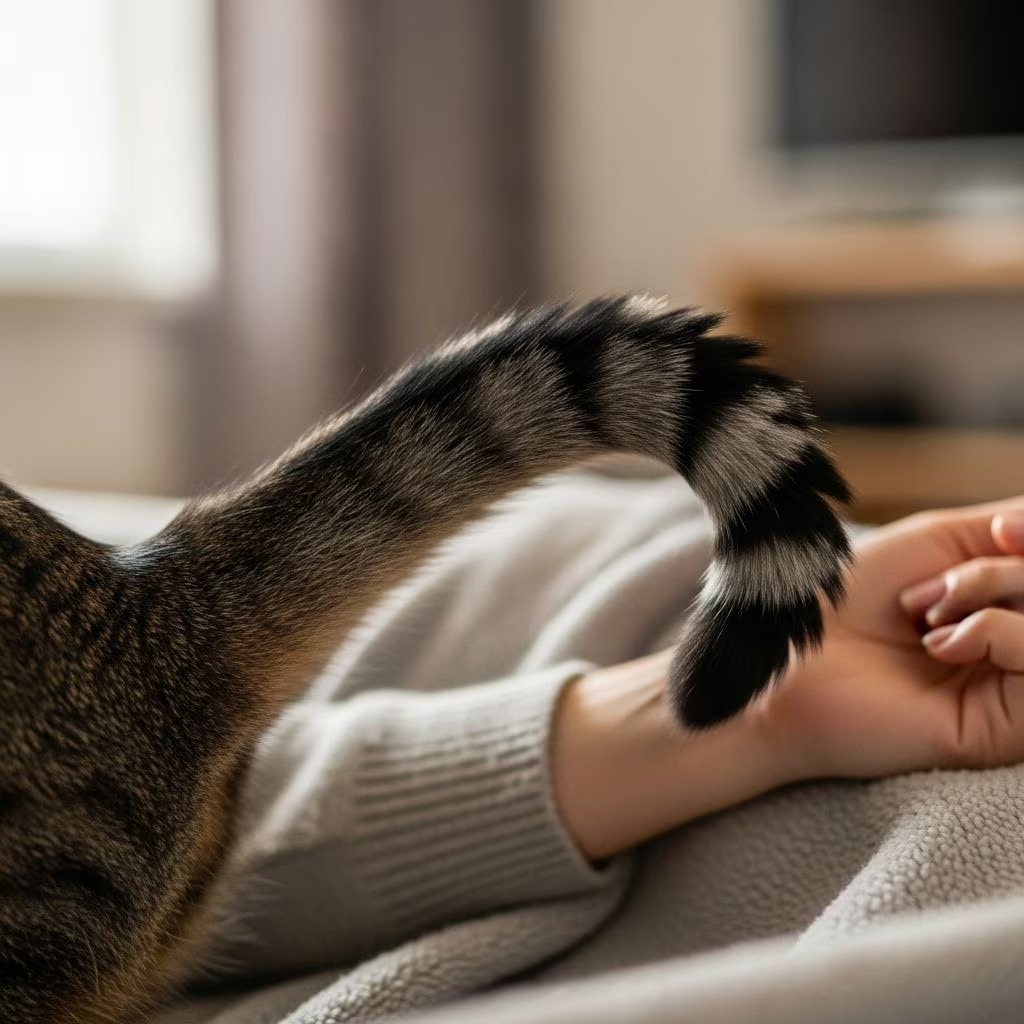
Cats rarely do anything without a reason, and that includes the moments when your usually dignified feline starts tapping, slapping, or wrapping her tail around you. Understanding what your cat is saying with her tail can deepen your bond and help you avoid bites or scratches when your pet has had enough interaction.
Veterinary behavior experts confirm that a cat’s tail is a powerful form of body language, used to signal interest, affection, fear, irritation, and bids for attention. When your cat makes tail contact with you, she is almost always communicating something specific in that moment.
This guide explains the five main reasons your cat hits you with her tail, how to tell them apart, and what you can do to respond in a way that keeps both of you comfortable and safe.
The 5 Main Reasons Cats Slap You With Their Tail
While every cat has a unique personality, most tail-contact behaviors fall into one of these broad categories:
- Showing interest in what you are doing
- Expressing affection and emotional closeness
- Feeling scared but wanting to stay near you
- Signaling anger or irritation
- Seeking your attention for interaction, food, or play
The key is to read your cat’s whole body—ears, eyes, posture, and tail movement—together, not just the tail in isolation.
1. Showing Interest: Your Cat Wants to Be Involved
Cats are naturally curious animals whose ancestors survived by closely monitoring movement, sound, and changes in their territory. Indoors, that instinct often translates to your cat placing herself right where the action is—on the counter as you unpack groceries, on the bed as you fold laundry, or under your feet while you clean.
When you gently nudge or step around your cat during these activities, she may respond by lightly tapping your leg with her tail or positioning her tail so it brushes against you repeatedly. This is often her way of saying:
- “I see what you’re doing, and I’m interested.”
- “Don’t move me away; I want to be part of this.”
- “I’m comfortable being this close to you while things are happening.”
In this context, tail contact is more of a soft reminder than a warning. Your cat may:
- Stand or sit beside you, lightly brushing you with the tail tip
- Position her tail against your calf while watching your hands or the objects you’re handling
- Follow you from room to room, tail gently touching you when she catches up
If the rest of her body looks relaxed—ears in a neutral position, whiskers at ease, and eyes soft—this tail behavior typically reflects curiosity and engagement, not irritation.
2. She Loves You: Tail Taps as Feline Affection
Cats seldom show affection in the same obvious ways that dogs do. Many cats prefer low-key, indirect contact over full-body cuddles. Tail contact can be one of those subtle affectionate gestures.
Veterinary behavior sources note that cats use slow tail movements and gentle touches when they are calm and comfortable around familiar humans or animals. When your cat sits close and repeatedly taps or rests her tail against you, she may be using her tail the way you use your hand—to extend a soft, reassuring touch.
Common Affectionate Tail Behaviors
- Gentle tail taps on your leg or arm while she sits or lies nearby
- Tail wrapped loosely around your ankle when she’s relaxed
- Slow, sweeping tail that occasionally brushes your side when you share a couch or chair
These behaviors are often accompanied by other signs of affection and contentment, such as:
- Slow blinking in your direction
- Soft purring or kneading
- A loose, comfortable body posture
Many guardians interpret this as their cat trying to “pet them back”—a way of mirroring your affection. While we cannot know your cat’s exact thoughts, it is reasonable to view these gentle tail contacts as signs of trust and emotional closeness.
3. Scared: Tail Contact as “Holding Hands”
When cats are uneasy, they often stay close to familiar people or safe locations while still keeping their body ready to flee if necessary. In those moments, your cat may walk tightly beside you in a hallway or doorway, wrapping or pressing her tail against your legs.
This kind of tail behavior often appears when:
- You walk into a dark or unfamiliar room
- There is a loud noise elsewhere in the home
- Your cat senses something unusual, like a new smell or movement outside
Rather than asking to be picked up, she wants to stay mobile but “connected” to you. The tail acts almost like holding hands—close enough to feel supported, free enough to run if needed.
How to Recognize Fear-Based Tail Hitting
Look for these fear indicators along with tail contact:
- Tail held lower or closer to the body than usual
- Body crouched or tense, ready to move
- Eyes wide, pupils dilated
- Ears swiveling or partially flattened
If you see these signs, it helps to:
- Move slowly and speak in a calm voice
- Avoid grabbing or restraining your cat
- Offer an easy escape route back to a safe room or hiding spot
By allowing your cat to stay near you without forcing closer contact, you reinforce the idea that you are a reliable, non-threatening presence when she feels nervous.
4. Angry or Irritated: Tail Slaps as a Warning
Not all tail contact is friendly. Veterinary behavior references explain that tail thrashing, lashing, or thumping is a classic sign of feline irritation or anger. If that tail happens to hit you, consider it an early warning.
| Tail Behavior | Likely Emotion | Recommended Response |
|---|---|---|
| Slow, gentle swish touching you | Interest, mild arousal | Observe; interaction may still be welcome |
| Quick, sharp flicks that slap you | Irritation, overstimulation | Pause petting or activity; give space |
| Heavy tail thumping on the surface | Agitation, anger | Stop touching; increase distance immediately |
Pet behavior sources emphasize that when a cat’s tail is thrashing or thumping, something is bothering her, and she is trying to increase distance between herself and the source of discomfort. If you keep petting or handling her after this warning, the next step may be hissing, swatting, or biting.
Common Situations That Trigger Irritated Tail Hitting
- Prolonged petting sessions when the cat has reached her tolerance limit
- Unwanted handling, such as being held too tightly or restrained for grooming
- Competition or frustration around food, toys, or other pets
- Environmental stress, such as loud noises or unfamiliar visitors
In these scenarios, tail slaps against your arm or leg are best interpreted as: “Stop now.” Respecting this communication helps prevent escalation and builds trust over time.
5. They Want Attention: Tail as a Built-In Reminder
It is very difficult to ignore a cat who is deliberately whacking your leg over and over with her tail. Many cats quickly learn that this behavior is an effective way to make humans:
- Look at them
- Talk to them
- Offer petting, food, or play
Over time, this can become a reliable attention-seeking strategy. If your cat has discovered that tail-hitting leads to treats or play, she may repeat it whenever she wants something.
Typical Attention-Seeking Tail Behaviors
- Standing beside you at the computer or table, tail repeatedly slapping your arm
- Walking in front of you and intentionally brushing or thumping your legs
- Combining tail hitting with meowing, rubbing, or staring directly at you
To avoid encouraging excessive nagging, it is helpful to:
- Establish predictable feeding times and stick to them
- Schedule daily interactive play sessions with toys
- Reward calm, polite behavior instead of persistent tail-slapping demands
If you suspect your cat is seeking treats specifically, consider using a puzzle feeder or slow-dispensing toy so she can work for rewards in a more mentally stimulating way, rather than relying on tail-smacks to get your attention.
How to Read Your Cat’s Tail in Context
Because cats communicate with their whole bodies, tail contact should always be interpreted alongside other signals. Veterinary guides to feline body language highlight the importance of ear position, eye shape, posture, and movement speed when assessing tail meaning.
Quick Tail Language Guide
| Tail Position & Movement | Common Meaning |
|---|---|
| Upright tail, slight curve at tip, soft swish | Friendly, confident, possibly affectionate |
| Tail gently wrapped around your leg | Affection, comfort, or seeking reassurance |
| Tail low or tucked, pressed lightly to you | Uneasy or scared but wanting your presence |
| Rapid, forceful lashing or thumping | Irritation, anger, or overstimulation |
Because tails also play a major role in balance and coordination, quick tail flips can sometimes be connected to rapid movement or play, rather than emotional communication alone. Watching for patterns over time with your individual cat will give you the clearest picture.
When Tail Hitting Might Signal a Problem
Most tail contact is normal social behavior, but sudden changes in how your cat moves or uses her tail can hint at medical issues. Veterinary sources note that conditions like tail injuries, skin disease, arthritis, and nerve sensitivity can all affect tail movement and comfort.
Signs It Is Time to Call the Vet
- New or sudden onset of intense tail thrashing or self-biting
- Growling, hissing, or crying when the tail is touched
- Visible swelling, wounds, or hair loss on or near the tail
- Reluctance to jump or move normally
- Repeated, prolonged episodes of tail-chasing or attacking
In these cases, a veterinarian can check for:
- Injuries (sprains, fractures, or nerve damage)
- Skin problems such as allergies, infections, or parasites
- Painful conditions like arthritis that change how the tail is carried
- Less common issues such as feline hyperesthesia syndrome, where cats may become extremely sensitive along the back and tail.
Any unexplained behavioral change that persists or causes distress is worth discussing with your vet, even if it appears to be “just a tail thing.”
Strengthening Your Bond by Listening to the Tail
Once you start paying attention, you will likely notice clear patterns in when and how your cat hits you with her tail:
- During chores or tasks she finds fascinating
- When relaxing together on the couch or bed
- As she walks with you through spaces she finds a little scary
- Right before she has had enough petting
- Just before mealtimes or play sessions
By adjusting your response—rewarding calm interest, honoring warnings, and giving reassurance during fear—you show your cat that you are paying attention to her signals. Over time, this can lead to a more trusting, cooperative relationship.
Tail hitting may seem like a small, quirky habit, but to your cat it is an important part of communicating how she feels about you, your shared environment, and the moment you are experiencing together.
Frequently Asked Questions (FAQs)
Q: Why does my cat gently hit me with her tail when I sit down?
A: Gentle, rhythmic tail taps when you are sitting or lying still often signal affection and comfort. Your cat is probably relaxed and choosing to maintain casual, friendly contact while sharing space with you.
Q: My cat wraps her tail around my leg when I walk. Is that a good or bad sign?
A: A loosely wrapped tail around your leg is usually a positive sign—either affection or mild nervousness with a desire to stay close. If her body is relaxed, it is more likely affectionate; if she seems tense or alert, she may be using you as a source of security.
Q: What does it mean when my cat’s tail is thumping against me while I pet her?
A: A tail that starts to thump or lash during petting is a clear request to stop. Many cats enjoy petting only up to a point; continuing after the tail warning can lead to swats or bites.
Q: Should I scold my cat for hitting me with her tail?
A: No. Tail-hitting is a form of communication, not misbehavior. Instead of scolding, observe the context and your cat’s other signals to understand whether she is curious, affectionate, fearful, irritated, or seeking attention, and respond accordingly.
Q: When is tail-hitting a reason for medical concern?
A: If tail behavior changes suddenly, seems linked to pain, self-injury, or extreme agitation, or is accompanied by other signs like limping, vocalizing, or skin changes, schedule a veterinary exam to rule out injury, skin disease, or other health problems.
References
- 8 Reasons Why Cats Attack Their Tails — Rover.com editorial team, reviewed by N. Savageau, DVM & A. Quandt, DVM. 2023-09-12. https://www.rover.com/blog/why-do-cats-attack-their-tails/
- How to Read Your Cat’s Tail Language and Meaning — PetMD, reviewed by T. Welsh, DVM. 2021-10-05. https://www.petmd.com/cat/behavior/cat-tail-language
- The Tail of the Tale: Why Your Cat’s Tail Wags, Lashes, and Thumps — Rutherford Veterinary Clinic. 2022-06-15. https://rutherfordvet.com/cat-tails/
- Why Do Cats Thump Their Tails? — Cat Clinic at Cherry Hill. 2022-03-10. https://catclinicatcherryhill.net/why-do-cats-thump-their-tails/



