

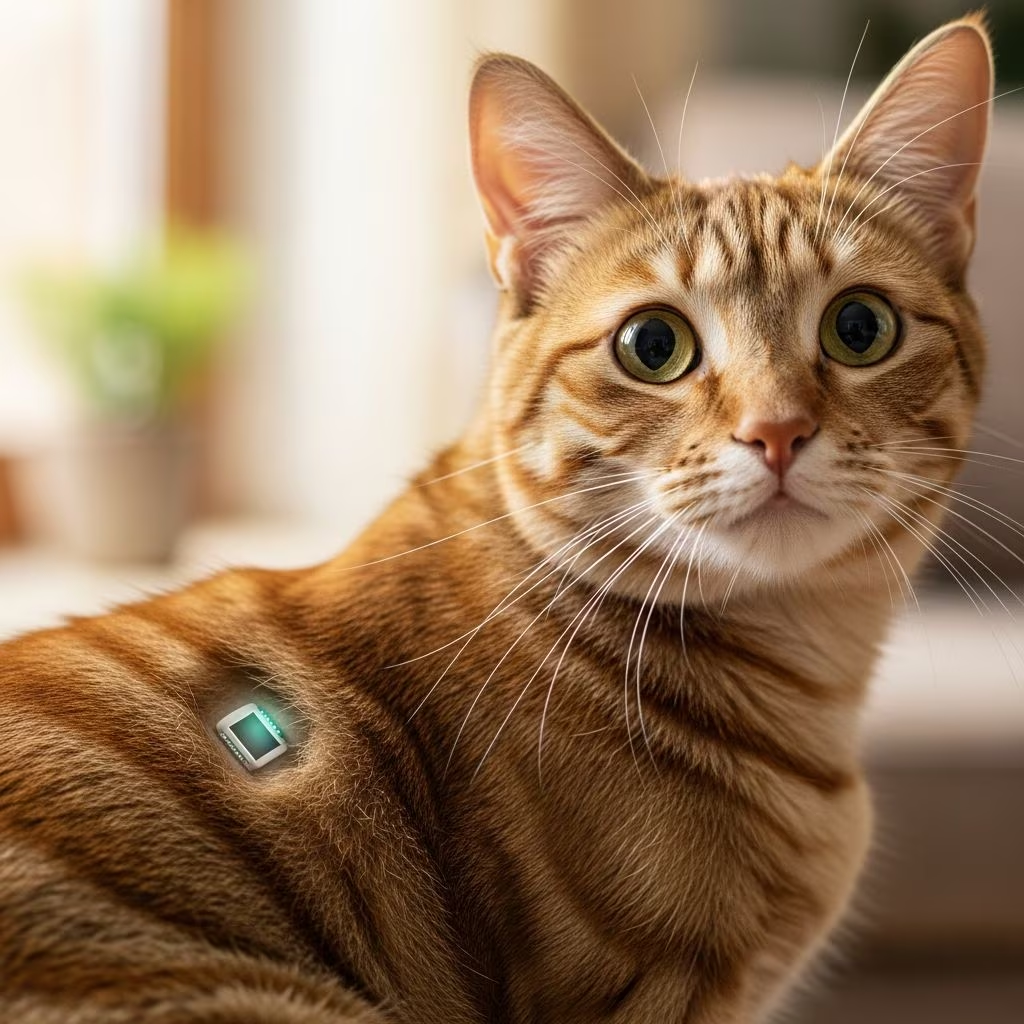
Microchipping your cat is one of the most effective ways to ensure they can be identified and returned home if they ever get lost. This tiny device, no larger than a grain of rice, is implanted under the skin and contains a unique code linked to your contact information in a national database. Vets, shelters, and animal control can scan it to reunite you with your pet quickly.
What Is a Cat Microchip and How Does It Work?
A **cat microchip** is a small electronic device, about the size of a grain of rice, implanted under your cat’s skin, typically between the shoulder blades. It holds a unique alphanumeric identification number that emits a low-frequency radio signal when scanned by a compatible reader.
The procedure is straightforward: a veterinarian shaves a small patch of fur, disinfects the area, and uses a needle to insert the chip, often applying surgical glue to secure it and promote healing. Many vets perform this during spay or neuter surgeries around 5-6 months old, minimizing stress for the kitten. Once implanted, the chip is passive—no battery required—and lasts a lifetime in the vast majority of cases.
Scanning is simple: when a lost cat is found, professionals use a handheld scanner that detects the chip’s signal. The ID number is then checked against databases like the AAHA Universal Pet Microchip Lookup to find the registered owner’s details. This technology has dramatically improved lost pet recovery rates.
- Key Benefits of Microchips:
- Permanent ID: Unlike collars or tags that can be lost or removed.
- Non-invasive post-procedure: Cats rarely notice it after healing.
- Universal compatibility: Most scanners read standard 15-digit ISO chips.
Why Microchipping Is Incredibly Important
Cats are natural explorers, and even indoor cats can escape through an open window or door. Without identification, millions of lost cats are euthanized in shelters annually because owners can’t be contacted. Microchips bridge this gap by linking your cat’s physical presence to your contact info.
Statistics show microchipped pets are far more likely to be reunited: shelters report return rates up to 20 times higher for chipped animals. In urban areas, where stray populations are high, this is crucial. Programs combining sterilization, vaccination, and microchipping have reduced feral cat issues while aiding owned pets.
Beyond recovery, microchips aid in emergencies. If your cat is injured and taken to a vet, the chip provides medical history and owner contacts. They’re also useful for proving ‘keeper’ status under new laws, though not sole proof of ownership—vet records or insurance help there.
The Microchipping Procedure: What to Expect
The implantation takes seconds and causes minimal discomfort, akin to a vaccination. Dr. Hauser notes: “I often insert microchips during spay/neuter at 5-6 months, as early chipping reduces risks if kittens escape young”.
Step-by-Step Process:
- Anesthesia if combined with surgery; otherwise, no sedation needed.
- Skin disinfection and small shave.
- Chip insertion via needle-deposited syringe.
- Surgical glue application to prevent migration.
- Registration: Vet provides chip number; you register online with details.
Post-procedure, monitor for swelling (rare). Chips can sometimes be felt but aren’t visible. Faulty chips are replaceable by manufacturers.
Legal Requirements: Microchipping Laws for Cats
In **England**, cat microchipping became law on June 10, 2024. All cats must be chipped and registered by 20 weeks old on a government-approved database. Keepers (not necessarily owners) are responsible.
| Region | Status | Fine for Non-Compliance |
|---|---|---|
| England | Mandatory since June 2024 | Up to £500 after 21-day grace |
| Scotland, Wales, NI | Strongly recommended | None yet |
| US (varies) | Not federal; some local laws | Varies |
Enforcement: Local authorities, police, or officers can request proof. Non-approved databases trigger a 21-day compliance window. Exemptions include feral/farm cats with no human dependency. Buy from chipped breeders: check certificates, vet records, or passports.
How Much Does It Cost to Microchip a Cat?
Costs range from **$50-$70 in the US** or **£10-£30 in the UK**, often bundled with wellness plans or surgeries—far cheaper than fines or lost pet searches. Some rescues chip for free. Annual database fees may apply (~£10/year).
- Shop around: Vets vs. shelters.
- Includes registration in some cases.
- Update details promptly if moving.
Common Myths and Misconceptions About Cat Microchips
Myth 1: Microchips are trackers. No—they’re passive ID only, no GPS.
Myth 2: They cause cancer. Decades of use show no link; vetted by FDA/AVMA.
Myth 3: All scanners read them. Use ISO-standard chips; universal tools like AAHA lookup help.
Myth 4: Proves ownership alone. Supports but needs backup docs.
Enhancing Microchips: Microchip Cat Flaps
Pair chipping with **microchip cat flaps** using RFID to read chips, granting access only to your cats. Models like Sure Petcare’s Cat Door Connect app-control habits remotely. Perks: Security (no strays), convenience, activity monitoring. Ideal with 2024 laws.
Best Practices: Registering and Maintaining Your Cat’s Microchip
After implantation:
- Get the 15-digit number.
- Register on approved databases (e.g., UK government list).
- Include name, photo, medical info, multiple contacts.
- Update for moves/life changes.
- Scan annually at vet visits.
For multi-cat homes or ethics, chips clarify ‘keepers’ in disputes.
Frequently Asked Questions (FAQs)
Is microchipping painful for cats?
No, it’s quick like a shot; done under anesthesia if during surgery.
At what age should I microchip my kitten?
Ideally before going outdoors, around 5-6 months or earlier for safety. In England, by 20 weeks.
What if my cat’s microchip fails?
Rare; manufacturers replace free. Insert alongside original.
Do indoor cats need microchips?
Yes—escapes happen. Laws may apply regardless.
How do I prove my cat is microchipped?
Show certificate, vet records, or scan on-site.
Final Thoughts: Microchip Today for Peace of Mind
Microchipping is a small step with lifelong benefits—legal compliance, higher recovery odds, and cat safety. Don’t wait for loss; act now. Your cat thanks you.
References
- Cat Microchipping Law: What happens if You Don’t Comply — Kinship. 2024-06-10. https://www.kinship.com/uk/cat-lifestyle/microchip-cat-law-uk
- Microchip Cat Flap Reviews — Kinship. 2024. https://www.kinship.com/uk/cat-shopping/microchip-cat-flap-review-uk
- Why You Should Get Your Cat Microchipped — Kinship. 2024. https://www.kinship.com/cat-lifestyle/why-you-should-microchip-your-cat
- Cat Microchips 101: A Guide to Keeping Your Feline Friend Safe — Cat Care Society. 2024. https://www.catcaresociety.org/cat-microchips-101/
- Microchips, Ownership, & Ethics — Clinician’s Brief. 2023. https://www.cliniciansbrief.com/article/microchips-ownership-ethics
- Solutions-Based Approach to Urban Cat Management — PMC (NCBI). 2023-11-01. https://pmc.ncbi.nlm.nih.gov/articles/PMC10648193/



