
Why Won’t My Parrot Come Out Of The Bird Cage?
Understand why your parrot refuses to leave its cage and learn effective training strategies.
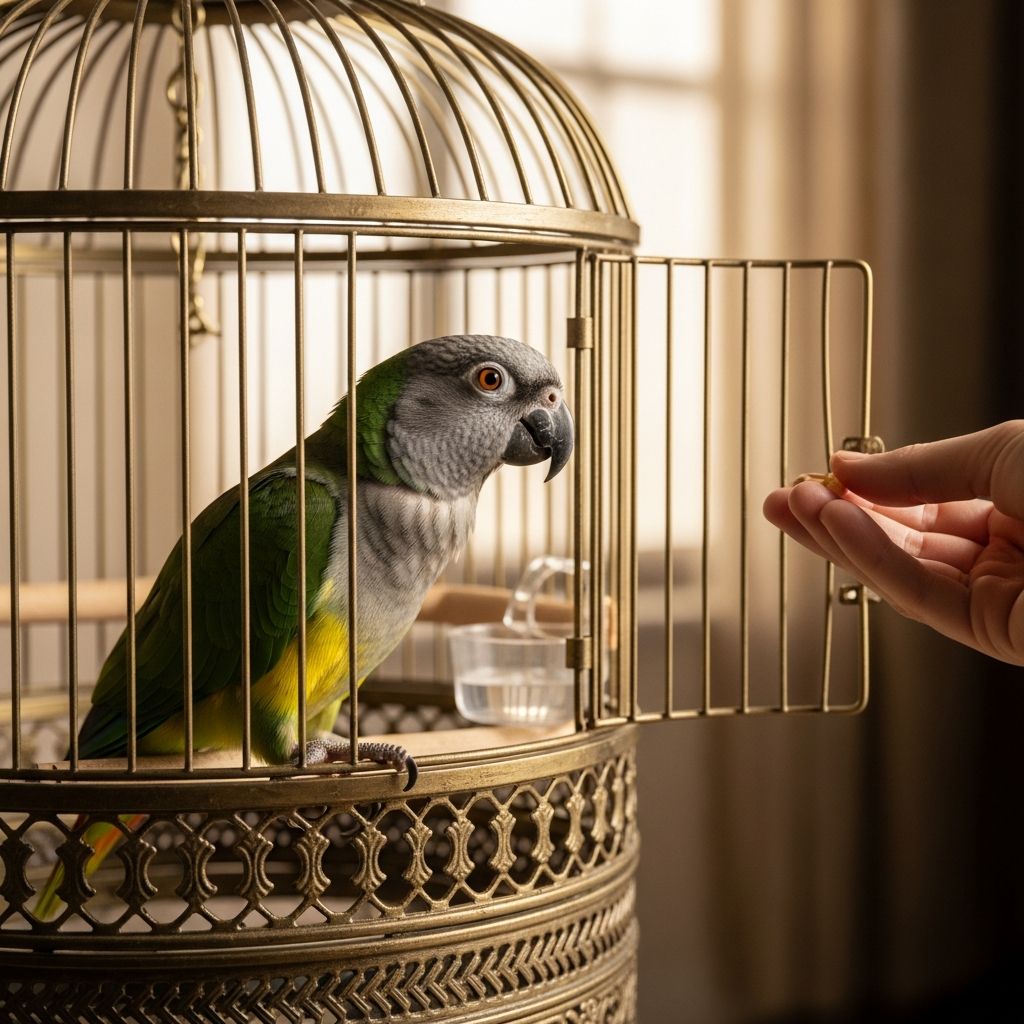
Understanding Why Your Parrot Won’t Leave The Cage
Many parrot owners face the frustrating challenge of their feathered companions refusing to exit their cages, even when doors are left wide open. This behavior can be concerning and may indicate underlying issues that require careful attention and patient intervention. Understanding the root causes of cage avoidance is essential for developing effective strategies to encourage your parrot to engage more actively with its environment and with you.
Common Behavioral Scenarios
Scenario 1: Sudden Changes in Behavior
Consider the case of Andrew, a 3-year-old male green-winged macaw who had been consistently eager to exit his cage each morning. Recently, this behavior has changed dramatically. Instead of enthusiastically leaving the cage, Andrew now retreats to the back of the enclosure when the door opens, avoiding hands that attempt to interact with him. He has also begun lunging aggressively at hands when they come near during routine feeding, watering, and cage cleaning activities. This sudden behavioral shift has left family members confused and hurt, potentially jeopardizing the long-term relationship between the bird and its human caregivers.
Scenario 2: Persistent Aggression
Dobby, a 2-year-old male quaker parrot, demonstrates a different but equally challenging situation. When his owners attempt to service his cage or remove him from it, Dobby becomes incredibly aggressive. The situation has become so severe that family members joke about the cage resembling a functioning garbage disposal. Evidence of the parrot’s aggressive behavior is visible on the hands and arms of all family members, who bear scabs and bruises from regular interactions.
Scenario 4: Fear-Based Avoidance
Angel, a 15-year-old-plus female umbrella cockatoo, represents a distinctly different behavioral profile. Unlike Andrew or Dobby, Angel shows no aggressive tendencies. Instead, she exhibits profound fear when anyone attempts to remove her from her cage. She freezes and quakes visibly at any human approach. When the cage door is left open and no one is nearby, Angel will eventually creep out very cautiously and perch quietly on top of the cage toward the back. However, any human attempt to approach her sends her scurrying quickly back inside, where she sits trembling with terror. Angel’s history is largely unknown, but it is assumed she experienced serious abuse prior to her arrival at a local parrot rehoming facility.
The Two Main Categories Of Cage-Related Behavior Issues
Territory-Based Behaviors
One primary reason parrots refuse to leave their cages relates to territorial behavior. In the wild, according to Charles Munn, a renowned expert on wild macaws, the lack of a suitable nest site represents the number one obstacle to the reproduction of large South American macaws. This insight translates to captive birds as well. A macaw or similar species may develop a strong attachment to its cage, viewing it as a critical territorial resource. In these cases, the bird has become bonded to its cage environment and views leaving it as a threat to its security and control of resources.
Territorial cage behavior is often linked with hormonal responses and can manifest as aggressive displays, lunging, biting, and attempts to prevent human interaction. Birds exhibiting this behavior may have previously experienced positive reinforcement for aggressive displays or may be responding to environmental stressors that trigger territorial responses.
Fear-Based Behaviors
Distinct from territorial aggression, fear-based behaviors represent a fundamentally different psychological state. Birds experiencing cage-related fear exhibit avoidance rather than aggression. They perceive the area outside the cage as unsafe and their enclosure as the only secure location. This behavioral pattern was commonly observed in imported parrots that were not properly and gently tamed during the acclimation process.
Birds displaying fear-based cage avoidance have often concluded that they are only safe within their cages. Previous traumatic experiences, improper handling, inadequate socialization, or sudden environmental changes can all trigger this defensive response. Unlike aggressive territorial birds, fearful birds require an entirely different approach focused on building trust and gradually expanding their comfort zone.
Root Causes Of Cage Reluctance
Fear and Trauma
The most common reason birds refuse to leave their cages is fear. This fear may stem from various sources, including previous trauma, inadequate early socialization, or negative experiences with human handlers. Rescue birds frequently exhibit pronounced fear responses due to their unknown or difficult histories. Parrots are highly intelligent creatures with excellent memories, and negative experiences can create lasting behavioral changes.
Broken Trust
Trust serves as the foundation for healthy human-bird relationships. When trust is compromised—such as after a visit to an avian veterinarian or through repeated forceful handling—birds may become reluctant to engage with their owners. A bird that has experienced restraint for medical procedures may associate human hands with discomfort and fear, leading to avoidance behaviors.
Environmental Changes
Parrots are sensitive to environmental modifications. Changes in cage location, cage design, household routine, family composition, or even seasonal light variations can trigger anxiety and cage-avoidance behavior. Birds that were previously confident may become withdrawn and hesitant when their environment becomes unfamiliar or stressful.
Lack of Socialization and Stimulation
Insufficient out-of-cage time and inadequate mental stimulation can contribute to behavioral problems. Birds require social interaction, cognitive challenges, and opportunities to explore their environment. Without these essential elements, they may withdraw into their cages, where they feel secure, even if this represents a limiting and unhealthy lifestyle.
Territorial and Hormonal Factors
Territorial behavior often connects to hormonal cycles, particularly during breeding season. Birds may develop cage-bonded territorial behavior if their environment encourages nesting behaviors or if they have become sexually triggered through inappropriate human interaction.
Effective Training Techniques and Solutions
The Respectful Approach
Parrot behavior consultant Chris Davis advocates for a respectful methodology that fundamentally respects the bird’s autonomy. Rather than forcefully removing a bird from its cage, the human should approach calmly and politely ask the bird, “Would you like to come out?” The parrot will answer this question eloquently through its body language. A positive response may include moving forward eagerly, displaying a hopeful and friendly expression, and lifting a foot. If these signals appear, the handler can open the cage door and offer a hand or perch while saying, “Step up.”
Door Perch Installation
Installing a perch on the inside or outside of the cage door—sometimes called a “patient perch”—significantly facilitates easier cage exits. This modification gives birds an intermediate location where they can rest before fully committing to leaving the cage environment. Door perches reduce the intimidation factor associated with a sudden transition from the safe cage interior to the open outside space.
Target Training
Target training represents an effective positive reinforcement technique for encouraging cage exit. By teaching your bird to follow a target stick or other training tool, you can guide it out of the cage through a game-like, rewarding experience. This method transforms the cage-exit process into something the bird chooses to participate in, rather than something imposed upon it.
Managing Cage Environment
The cage itself should be a positive, enriching space that the bird enjoys spending time in, not a prison or punishment location. However, to reduce excessive territoriality, regularly changing the cage layout, rotating toys, and modifying the interior environment can help. Additionally, reducing items that trigger nesting or breeding behaviors—such as removal of cuddle huts or certain enclosed spaces—can help minimize hormonal-driven territorial responses.
Positive Reinforcement Strategies
Using lavish verbal praise, treats, and edible rewards whenever your bird exhibits desired behaviors creates powerful positive associations. When your bird steps up, exits the cage, or approaches you voluntarily, immediate reward reinforces these behaviors. Patience is essential; rushing the process will undermine progress and potentially cause regression.
Low-Energy Interaction
Maintaining a calm demeanor, using gentle vocalizations, and keeping movements deliberate and slow encourages birds to feel safe. Loud noises, sudden movements, and energetic behavior can frighten birds and reinforce their preference for remaining in their cages. Whispering softly to your bird and maintaining a still, peaceful presence creates an environment where cage exit becomes appealing rather than frightening.
Strategic Timing
Scheduling out-of-cage time around feeding periods can enhance success. Birds are naturally motivated by food, and scheduling cage time around meal times creates positive associations. For example, taking your bird out before breakfast when it knows a meal is imminent increases the likelihood of cooperation and makes returning to the cage—where the reward awaits—equally appealing.
Building Trust With Your Parrot
For fearful birds, the first essential step involves establishing trust. This requires consistent, patient, and pressure-free interaction. Teach your bird that wonderful things happen when it conquers its fears. Start with small steps—perhaps rewarding a bird for simply moving closer to the cage door or accepting a treat near the entrance. As confidence builds, gradually expand the bird’s comfort zone.
Never force a frightened bird out of its cage. Doing so creates trauma, reinforces fear, and severely damages the human-bird relationship. Instead, use positive reinforcement exclusively, celebrate small victories, and allow the bird to progress at its own pace.
Avoiding Common Mistakes
Never use the cage as a place of punishment or timeout. If birds learn that the cage is associated with negative consequences, they will develop additional negative associations with the enclosure and reduce their willingness to remain in it voluntarily. The cage should represent safety, comfort, and positive experiences.
Avoid rewarding aggressive or undesirable behavior. If a bird bites viciously when you offer your hand, do not react with fear or anger, as this rewards the behavior. Instead, calmly withdraw and try again when the bird is in a calmer state.
Do not force training sessions. If your bird shows no interest in participating, stop the session immediately and try again later. Forcing interaction will create negative associations and undermine your training goals.
Creating An Enriching Environment
Beyond addressing cage-exit issues, providing ongoing enrichment is crucial. Keep your cage stocked with toys for foraging, shredding, and cognitive engagement. Rotate toys regularly to maintain novelty and interest. Provide opportunities for exploration, social interaction, and varied experiences outside the cage.
The enclosure itself should balance safety with stimulation. Include perches of varying sizes and materials, toys appropriate for your bird’s size and species, and access to natural light. Make the cage an appealing place to spend time, but ensure your bird also desires to spend time with you and exploring the broader home environment.
When To Seek Professional Help
If your parrot’s behavior does not improve with consistent training efforts over several weeks, or if aggressive behavior poses a safety risk, consider consulting with an avian behaviorist or experienced avian veterinarian. These professionals can conduct thorough assessments, identify underlying medical or psychological issues, and provide customized behavioral modification plans.
Frequently Asked Questions
Q: How long does it take to train a fearful parrot to come out of its cage?
A: The timeline varies considerably depending on the bird’s history, age, and individual temperament. Some birds may show improvement within weeks, while others—particularly those with serious trauma histories—may require months of patient, consistent work. Progress should be celebrated in small increments rather than expecting rapid transformation.
Q: Can aggressive cage-related behavior be completely resolved?
A: Many cases of cage-related aggression can be significantly improved or resolved through proper training, environmental management, and hormonal management. However, some deeply ingrained behaviors may only be managed rather than completely eliminated. Consistency and patience are essential.
Q: Should I leave my parrot’s cage door open all day?
A: Leaving the cage door open depends on your home safety, your bird’s training level, and your ability to supervise. For birds learning to be more comfortable outside the cage, supervised open-door time can be beneficial. However, full-time free-roaming requires a thoroughly bird-proofed home and may not be suitable for all situations.
Q: What if my bird is aggressive toward me but not toward other family members?
A: This situation often indicates that the bird has developed negative associations with you specifically. Try having other family members handle primary feeding and care duties temporarily while you focus on positive, reward-based interactions without expectations. Gradually rebuild trust over time.
Q: How important is the cage size in relation to cage-exit behavior?
A: A properly sized cage with adequate space, enrichment, and proper ventilation is important for overall bird health. However, cage size alone does not determine whether a bird will be cage-avoidant or cage-territorial. Behavior is primarily driven by individual temperament, history, and learned associations rather than cage dimensions alone.
Q: Can medical issues cause a parrot to refuse to leave its cage?
A: Yes, pain, illness, or physical discomfort can cause behavior changes including cage reluctance. If your previously social bird suddenly becomes withdrawn, consult an avian veterinarian to rule out health issues before assuming the problem is purely behavioral.
References
- Why Won’t My Parrot Come Out Of The Bird Cage? — Chewy Education. 2024. https://www.chewy.com/education/bird/health-and-wellness/why-wont-my-parrot-come-out-of-the-bird-cage
- How to Get Your Bird OUT of the Cage! — BirdNerdSophie. YouTube. https://www.youtube.com/watch?v=wCT18roCroc
- How Do I Get My Bird To Go Back In Its Cage Without Biting? — Bird Tricks. https://birdtricksstore.com/blogs/birdtricks-blog/how-do-i-get-my-bird-to-go-back-in-its-cage-without-biting
Similar Articles








Read full bio of medha deb


