

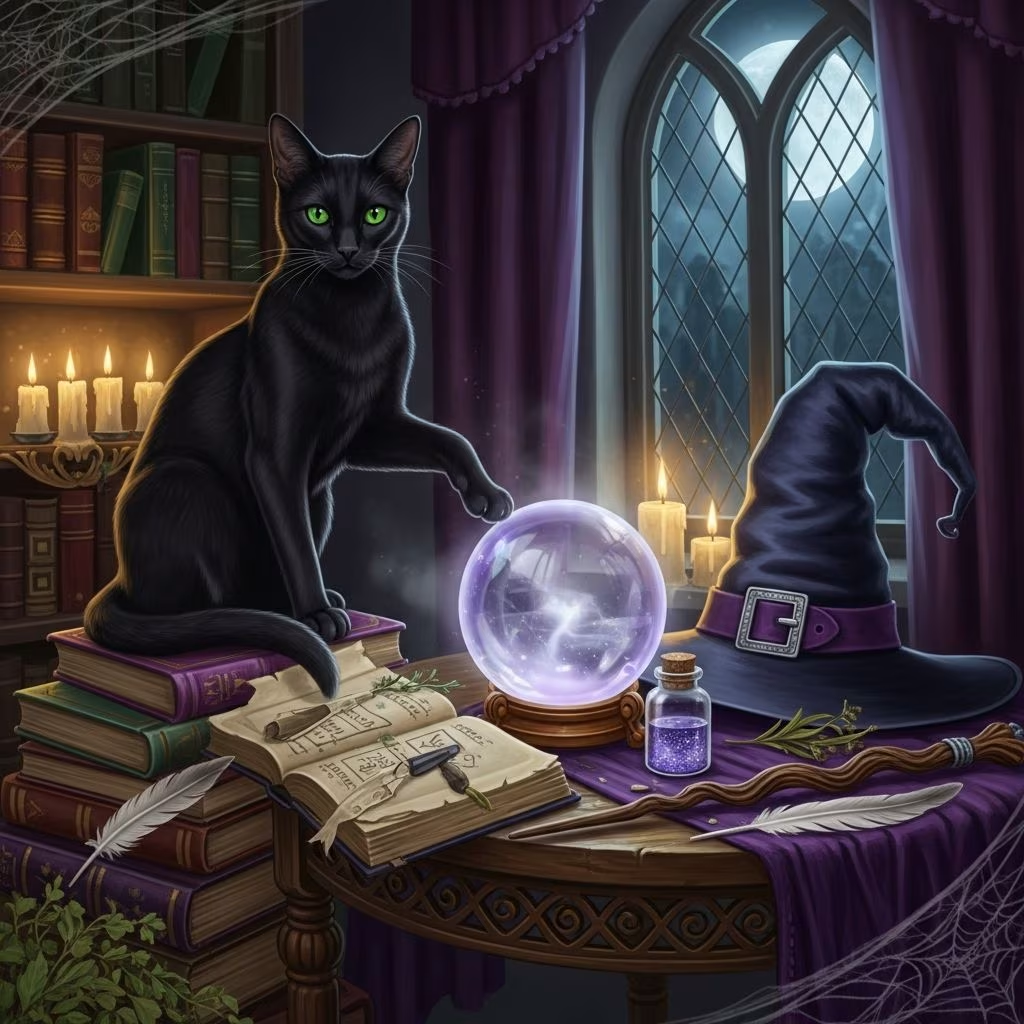
Cats have long captivated human imagination, evolving from sacred guardians in ancient civilizations to sinister companions of witches during Europe’s witch hunts. This association, particularly with **black cats**, stems from a mix of religious fears, cultural myths, and historical persecutions that peaked in the 16th and 17th centuries.
The Dark Origins: When Cats Became ‘Evil’
The connection between cats and witchcraft solidified during the **witch trials of the 16th and 17th centuries**, when felines were branded as demonic familiars—spirits in animal form serving witches. In England, this notion was uniquely tied to witchcraft lore, leading to laws like the 1604 statute that made consulting, aiding, or feeding an evil spirit punishable by death.
Puritan cleric John Gaule, known for his skeptical views on witch hunts, sarcastically noted in the 17th century: “Every old woman… a dog or cat by her side, is not only suspect but pronounced for a witch.” While dogs escaped lasting stigma, cats endured as symbols of the occult.
This shift marked a dramatic fall from grace. Earlier, cats were valued in monasteries for controlling vermin, appearing positively in religious manuscripts like the Luttrell Psalter, where they chase mice. But the **16th-century witch craze** recast them as pagan emblems of sorcery and evil, either the Devil incarnate or witches in disguise.
Why Cats Specifically?
Cats stood out as ideal familiars due to their enigmatic traits: nocturnal hunters blending domestication with wild predation, carnivorous by nature, and visually akin to devils depicted with fur in period art. Historian Diane Purkiss explains that cats embodied a savage otherness—unpredictable, crepuscular creatures linked to diabolism.
Unlike obedient dogs, cats’ independence mirrored solitary witches, often healers or midwives. Their ability to “shadow” owners at night fueled beliefs they absorbed and carried magic, especially black cats in British folklore, once seen as lucky night guardians.
Papal Bulls and Early Persecutions
The cat-witch link traces to the 13th century, when Pope Gregory IX’s 1233 papal bull **Vox in Rama** condemned German Luciferians for satanic rites involving kissing a black cat’s rear, summoning a half-man, half-cat devil. This document cemented cats—especially black ones—as devilish in Christian eyes.
Issued amid crusades against heretics like the Cathars, Vox in Rama described rituals where initiates venerated toads and black cats, blending real fears with exaggerated confessions extracted under torture by inquisitors like Conrad of Marburg.
Pre-Christian roots amplified this: Cats symbolized goddesses like Egypt’s **Bastet** (protection and fertility) and Greece’s **Hecate** (underworld, magic, witchcraft), later demonized by Christians. Hecate’s myths, including Galinthias transformed into a polecat (weasel-like), tied felines to darkness. Celtic lore featured **Cat Sith** (fairy cats), **Cailleach**’s black cats, and **Grimalkin**—powerful spirits wandering between worlds at Samhain, precursor to Halloween.
The Witch Trials: Sathan and Infamous Cases
One of the earliest documented cases was the 1566 Chelmsford trial of **Elizabeth Francis**, **Agnes Waterhouse**, and her daughter **Joan Waterhouse**. Elizabeth claimed her grandmother gave her a cat named **Sathan** (echoing Satan), fed on bread, milk, and her blood for black magic. Sathan allegedly shapeshifted into a toad or dog, tormenting victims.
Agnes was executed for sending Sathan to harm a neighbor’s livestock and child, confessing under duress to save Joan, who was spared but imprisoned. Notably, Sathan was white-spotted, not black, challenging modern stereotypes.
Trials escalated: Cats were persecuted alongside witches, decimating populations and boosting rats, arguably worsening plagues. By the 17th century, owning a cat was evidence of witchcraft in England, Germany, and Scotland.
Ancient Reverence to Medieval Shifts
Cats’ journey began in **Ancient Egypt** around 2600 BCE, domesticated by priests for temple pest control. Revered as sacred, they were mummified, and harming one warranted death. Mourners shaved eyebrows in grief.
In medieval Islam, Prophet Muhammad praised cats’ cleanliness, contrasting Christian suspicion possibly fueled by this “otherness.” Early Christians tolerated cats for utility, but heresy waves recast them as demonic, untamable predators toying with prey—mirroring Satan’s cruelty.
Folklore persisted: Killing black cats broke curses, but they protected witches at rituals.
Modern Legacy and Superstitions
Today, the witch-cat trope thrives in Hollywood (e.g., Sabrina’s Salem) and Halloween iconography, but shadows real impacts: Black cats remain harder to adopt due to superstitions.
| Superstition | Origin | Modern Impact |
|————–|——–|—————|
| Black cats = bad luck | 13th-century papal bulls, witch trials | Shelters restrict adoptions on Halloween |
| White cats as familiars | Chelmsford trials (Sathan) | Less stigmatized than black |
| Cats cross worlds | Celtic Samhain myths | Halloween symbols |
| Nocturnal magic carriers | British folklore | Pop culture familiars |
Frequently Asked Questions (FAQs)
Why are black cats associated with witches more than other colors?
Black cats symbolized night and the occult in folklore, amplified by Pope Gregory IX’s 1233 bull describing devil worship with black cats. Their stealthy, shadowy nature fit witch stereotypes.
Were all witch familiars cats?
No, familiars could be dogs, toads, or birds, but cats were favored for independence and nocturnal habits, especially in English trials.
Did the witch hunts really kill many cats?
Yes, exterminating “witch cats” alongside accused witches reduced populations, spiking rats and plagues in 16th-17th centuries.
Are cats still seen as magical today?
In modern paganism and Wicca, cats are familiars for their intuition. Ancient Egyptian and Celtic reverence echoes in neopagan practices.
What’s the origin of cats at Halloween?
Celtic Samhain beliefs that cats ferried spirits between worlds, plus witch trial legacies, made them spooky staples.
This enduring bond reflects humanity’s ambivalence toward cats: beloved pets or mystical enigmas. From sacred mummies to trial victims, their story intertwines with our darkest fears and fascinations.
References
- Cats, Symbolism and the 16th Century Witch Craze — Cheshire & Wain. 2023-10-15. https://www.cheshireandwain.com/en-us/blogs/journal/cats-and-the-16th-century-witch-craze
- The Cat in Magick: Familiars of Witches & Priestesses — Setjataset (WordPress). 2020-07-15. https://setjataset.wordpress.com/2020/07/15/the-cat-in-magick-familiars-of-witches-priestesses/
- Here’s Why We Associate Cats With Witches — Kinship. 2024-01-01. https://www.kinship.com/uk/cat-lifestyle/why-we-associate-cats-with-witches
- The Bewitched History of Black Cats — Valhalla Cats. 2023-10-20. https://valhallacats.com/the-bewitched-history-of-black-cats/
- How Cats Came to be Associated with Witchcraft — The Vintage News. 2018-10-16. https://www.thevintagenews.com/2018/10/16/cats-in-the-middle-ages/



