

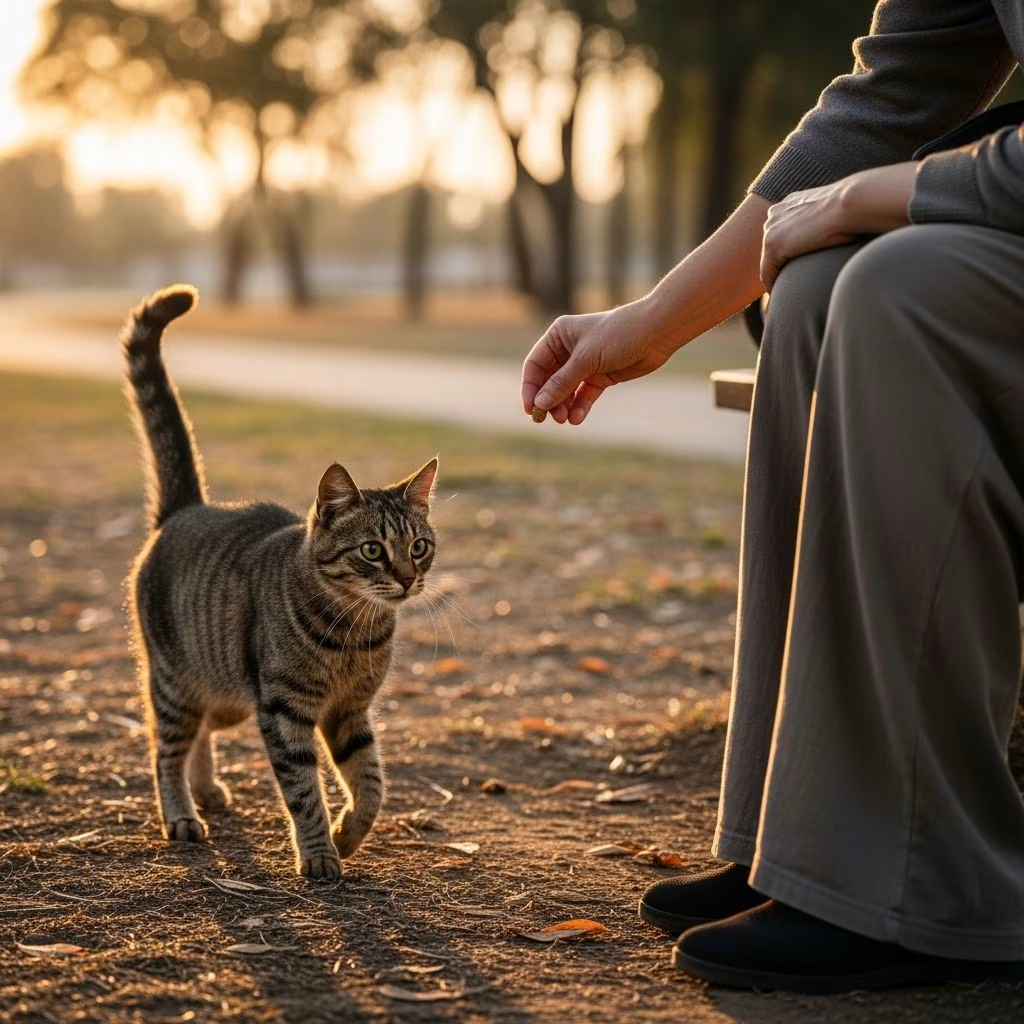
Stray cats often select specific individuals for close encounters, revealing insights into feline social dynamics and human-cat bonds. This phenomenon stems from a mix of innate cat traits, learned behaviors, and subtle human cues that signal safety and positivity.
Understanding Stray and Feral Cats: Key Distinctions
Before delving into attraction factors, it’s essential to differentiate stray from feral cats. Stray cats are typically domesticated animals that have lost their homes or been abandoned, retaining some socialization to humans. Feral cats, born in the wild without human contact, behave more like untamed wildlife. Over time, strays can shift toward feral traits if isolated from people, but many remain approachable due to prior positive interactions.
Observing body language helps assess socialization levels: relaxed strays may meow, rub against legs, or accept touch, while ferals stay tense and distant. This continuum influences how readily they approach humans.
Natural Friendliness in Community Cats
Some stray cats possess an inherently sociable personality, making them eager to engage with any non-threatening human. These friendly felines, often semi-socialized, seek out petting, play, or lap time from passersby. Unlike fully feral cats, which avoid contact, sociable strays view humans as potential companions rather than predators.
Research on free-ranging cats (FRCs) shows they exhibit affiliative behaviors like approaching for contact or play, especially if previously exposed to people. In campus colonies, cats with high socialization scores actively seek human proximity, influenced by factors like weather and the person’s demeanor.
- Friendly strays often initiate contact with purring or head-butting.
- They thrive in human-populated areas, drawn to routine interactions.
- Socialization during kittenhood—handling, playing, and gentle exposure—builds lifelong trust in people.
The Role of Human Body Language and ‘Vibes’
Cats are masters at reading subtle signals. They gravitate toward people who exude calm energy, avoiding those who stare intensely or lunge forward. The stereotype of cats loving “cat haters” holds truth: disinterested individuals pose less threat, allowing cats to approach comfortably.
Avoiding direct eye contact, moving slowly, and crouching low mimic non-predatory behavior, inviting curious strays closer. Tense or overly enthusiastic people trigger flight responses in wary cats. Studies confirm cats respond more positively to relaxed humans, with affiliative actions increasing in low-stress encounters.
| Human Behavior | Cat Response |
|---|---|
| Calm, indirect gaze | Approach and rub |
| Staring or sudden movements | Avoidance or hissing |
| Slow blinking | Mutual trust signals |
| Ignoring the cat | Increased curiosity |
Scent and Pheromone Communication
Felines communicate volumes through pheromones—chemical signals from facial glands marking territory and sharing personal info like health and mood. When a stray approaches and rubs against you, it’s not just affection; it’s depositing scent to claim you as safe territory or invite kinship with the local cat community.
Humans carrying appealing scents, such as from petting other cats or natural odors, can draw strays. These markers convey emotional states, making you a beacon for social felines seeking alliances.
Curiosity as a Driving Force
Renowned for curiosity, cats investigate novel stimuli, including unfamiliar people. A stray spotting you in its path may follow to sniff, observe, or solicit food. This exploratory drive is amplified in cats habituated to human presence, blending boldness with innate inquisitiveness.
Even cautious strays test boundaries if you appear non-threatening, turning encounters into potential friendships.
Food and Resource Opportunities
Strays surviving on streets associate certain people with sustenance. Regular feeders become trusted figures, prompting approaches for meals. Even without prior feeding, cats detect food smells or kind gestures as provisioning cues.
In managed colonies, human-provided food reduces inter-cat aggression and boosts sociability toward caretakers, fostering repeated visits.
Past Experiences Shape Trust
Positive human interactions imprint lasting preferences. A stray rescued, fed, or gently handled remembers and seeks similar “safe” people. Trauma from abuse creates aversion, but recovery through Trap-Neuter-Return (TNR) programs can rehabilitate trust.
Socialization windows in kittens (up to 8 weeks) are critical; early handling yields adults comfortable with diverse humans.
Social Hierarchies and Group Dynamics
Free-ranging cats form loose social groups with hierarchies influencing behavior. Dominant cats may boldly approach confident humans mirroring their status, while subordinates seek gentle ones. Affiliative bonds, like grooming or proximity, extend to preferred humans in colonies.
Factors like kinship and familiarity dictate alliances, with higher-ranked cats showing more initiative.
Unexpected Therapeutic Bonds
Strays sometimes integrate into human spaces, offering emotional support. Case studies show feral cats in therapy offices evolving into “co-therapists,” aiding patients with trauma by providing safe touch and empathy-building interactions. Their resilience symbolizes recovery, enhancing sessions.
How to Respond When Strays Approach
Meeting a friendly stray? Extend a slow hand for sniffing, use soft voices, and offer water or shelter ideas. Avoid forcing contact to prevent fear. Support TNR to manage populations humanely.
- Assess health: Check for injuries or fleas.
- Scan for microchip if very friendly.
- Provide temporary aid without encouraging dependency.
FAQs
Why do stray cats follow me home?
They sense safety, seek food, or claim you via scent-marking. Observe from afar first.
Are approaching strays safe to pet?
Let them initiate; watch for aggression signs like ears back or tail thrashing.
Can I adopt a stray cat?
Yes, if socialized. Vet check, spay/neuter, and gradual introduction recommended.
What if strays seem aggressive?
High-rank or stressed cats may act out. Give space and contact local rescuers.
How does weather affect approaches?
Colder or rainy days increase seeking warm, dry humans.
Ethical Considerations for Community Cats
Approaching strays highlights TNR’s value: trap, neuter, vaccinate, return stabilizes populations. Socialized strays suit adoption; ferals thrive outdoors with care. Understanding these dynamics promotes compassionate coexistence.
References
- The Social Lives of Free-Ranging Cats — PMC – PubMed Central. 2022-01-11. https://pmc.ncbi.nlm.nih.gov/articles/PMC8749887/
- Why Do Stray Cats Like Me? 7 Interesting Reasons — Catster. Accessed 2026. https://www.catster.com/lifestyle/why-do-stray-cats-like-me/
- Feral and Stray Cats: An Important Difference — Alley Cat Allies. Accessed 2026. https://www.alleycat.org/resources/feral-and-stray-cats-an-important-difference/



