

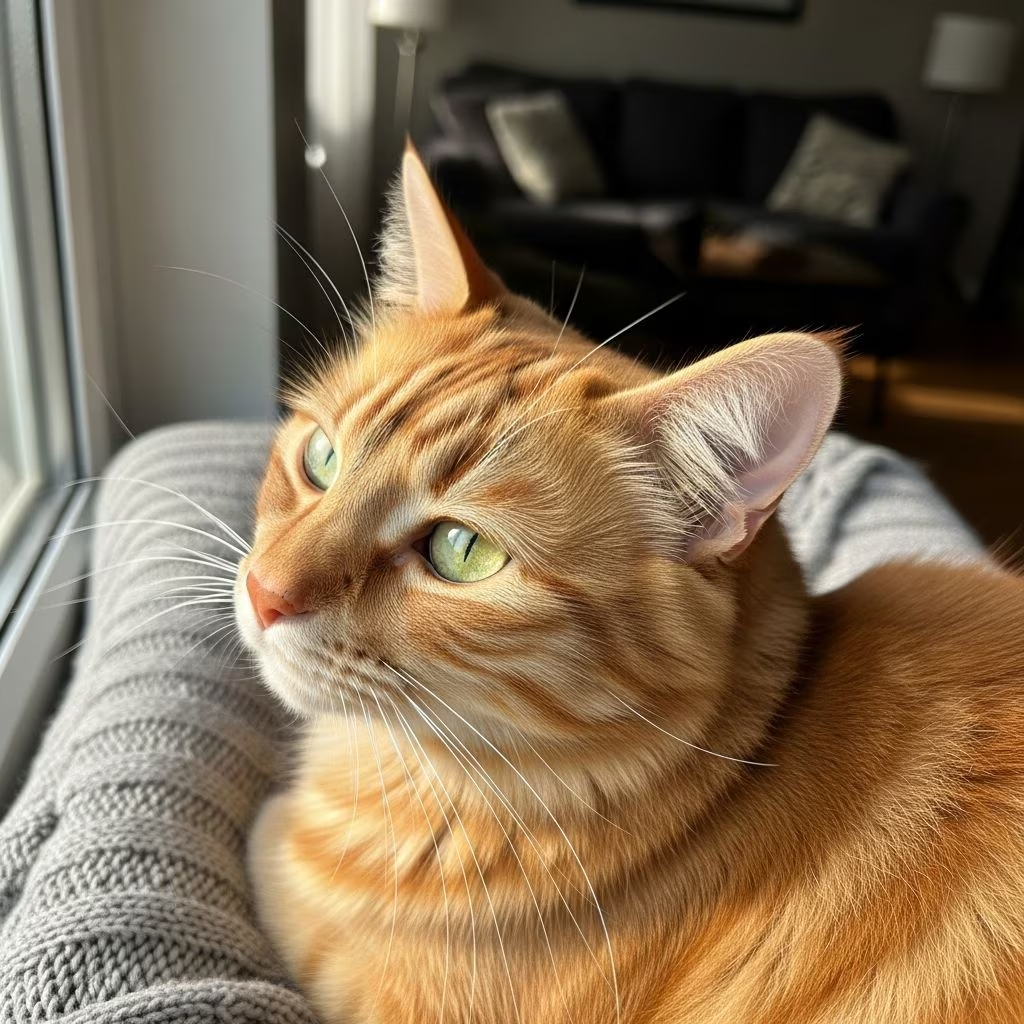
While many cat owners dream of a lap cat that curls up for endless snuggles, not all felines embrace physical affection. Some cats prefer independent lounging over close contact, leaving owners wondering if their pet truly loves them. This behavior stems from a mix of genetics, early experiences, and individual temperament rather than a lack of love. Understanding these factors helps owners foster trust without forcing intimacy, leading to stronger, more genuine bonds.
Reasons Why Your Cat Might Not Cuddle
Cats are descendants of solitary hunters, wired for independence unlike pack-oriented dogs. This evolutionary background explains why **some cats avoid cuddling**—they simply prefer autonomy. Key reasons include:
- Personality and Temperament: Just as humans vary from extroverted to introverted, cats have unique personalities. Some are naturally **cuddle bugs** seeking warmth and attention, while others are aloof explorers who view close contact as unnecessary.
- Improper Socialization: Kittens handled gently by humans between 2-7 weeks develop trust in people. Those isolated or roughly handled during this critical window may grow wary of touch, associating it with stress.
- Trust Issues or Past Trauma: Rescued cats or those with negative human encounters might resist cuddles due to mistrust. They show love through subtler signs like slow blinks or head bunting instead.
These factors highlight that non-cuddly behavior doesn’t mean rejection—your cat may still adore you but on its terms.
Cat Attachment Styles and Cuddling
Recent research reveals cats form **attachment styles** similar to humans: secure, anxious, and avoidant. These influence cuddling preferences profoundly.
In a study published in Applied Animal Behaviour Science, researchers observed cats in unfamiliar rooms and during home interactions. Securely attached cats (about one-third) explored confidently and initiated contact, showing oxytocin boosts post-cuddling. Anxiously attached cats clung close but recoiled from touch, with oxytocin dropping after forced interactions. Avoidant cats kept distance, with no oxytocin change.
| Attachment Style | Cuddling Behavior | Oxytocin Response |
|---|---|---|
| Secure | Initiates and enjoys | Increases after interaction |
| Anxious | Seeks proximity but resists touch | Decreases after forced contact |
| Avoidant | Avoids physical contact | No significant change |
Secure cats’ owners used fewer forced cuddles, suggesting respectful approaches promote secure bonds. Forcing affection on anxious or avoidant cats heightens stress, eroding trust.
The Science of Cat Cuddling (and Why Some Skip It)
Cuddling triggers **oxytocin**—the ‘love hormone’—in many cats, fostering bonds like allogrooming in colonies. However, only willing participants benefit; stressed cats experience cortisol spikes instead.
A Nottingham Trent University study developed ‘CAT’ guidelines: Comply with cat’s signals, Allow choice in interactions, Terminate if signs of discomfort appear. Following these reduced aggression (hissing, swiping) by observing body language: tail swishing, ear flattening, or rapid grooming signals ‘stop’. Cats responded with more affection like rubbing and kneading when humans respected boundaries.
Interactions decrease owners’ emotional arousal and boost heart rates positively, but only mutual ones yield benefits. Non-cuddlers opt for safer affection displays.
Signs Your Non-Cuddly Cat Loves You Anyway
Independent cats express love subtly. Watch for these **signs of feline affection**:
- Head Bunting/Rubbing: Transfers scent pheromones, marking you as family.
- Slow Blinking: A ‘cat kiss’ signaling trust.
- Grooming You: Allogrooming shares scents and shows you’re colony-mates.
- Kneading: ‘Making biscuits’ indicates contentment from kittenhood.
- Belly Exposure: Ultimate vulnerability trust (observe, don’t touch).
- Gifts: Toys or prey as tokens of appreciation.
- Greeting Rituals: Leg weaving, tail curling upon return.
- Sleeping Nearby: Chooses your presence for safety without direct contact.
These behaviors prove devotion without lap-sitting.
How to Encourage Cuddling (Without Forcing It)
Building cuddle tolerance requires patience. Strategies include:
- Respect Autonomy: Let cat initiate. Use ‘CAT’ rules to read signals.
- Positive Reinforcement: Offer treats/pets during voluntary approaches.
- Play Therapy: Wand toys build trust through fun, mimicking hunt.
- Warm Spots: Heated beds near you invite proximity.
- Scent Familiarity: Sleep with toys for your scent.
- Short Sessions: Brief, gentle pets on cheeks/shoulders; avoid belly/tail.
Progress slowly—some cats warm up over months.
Health Issues That Make Cats Avoid Cuddles
Sudden cuddle aversion signals **health problems**. Pain from arthritis, dental issues, or hyperthyroidism causes touch sensitivity. Monitor for:
- Hiding, aggression, or litter avoidance.
- Weight loss, excessive vocalizing.
- Consult vets promptly—early detection restores affection.
Age-related cognitive decline in seniors mimics aloofness; check-ups rule out issues.
Why Cats Cuddle Each Other (But Not Always You)
Feral cats cuddle for warmth, scent-sharing, and oxytocin bonding via allogrooming. Preferred colony members groom mutually, reinforcing hierarchies. Pet cats extend this selectively—your ‘outsider’ status requires earned trust.
Final Thoughts
Non-cuddly cats aren’t unloving; they bond differently. Honor their style for mutual joy. Secure attachments yield happiest cats and owners. Embrace head bunts over lap time—your cat’s way is perfect.
Frequently Asked Questions (FAQs)
Q: Why is my cat suddenly not cuddly?
A: Check for pain, stress, or changes. Vets rule out health issues; respect boundaries otherwise.
Q: Can I train my cat to cuddle more?
A: Yes, via positive reinforcement and choice. Force backfires, per attachment studies.
Q: Do all cats release oxytocin when cuddling?
A: Only secure, willing ones. Avoidants show no change; anxious drop levels.
Q: Is my independent cat unhappy?
A: No—many thrive solo. Affection signs confirm contentment.
Q: How do I read my cat’s cuddle signals?
A: Ears back/tail swish = stop. Forward ears/rubbing = more.
References
- Cat Cuddles: Vet-Verified Facts About Kitty Snuggling — Catster. 2023-10-15. https://www.catster.com/cat-behavior/cats-cuddling/
- Cats Release Oxytocin When Cuddling With Humans—But Not All of Them — Kinship. 2023-11-20. https://www.kinship.com/news/cats-release-oxytocin-cuddling
- Study: Letting cats decide when to be petted avoids hostility and increases their affection — Phys.org (Nottingham Trent University). 2021-07-28. https://phys.org/news/2021-07-cats-petted-hostility-affection.html
- Does Your Cat Love You? How to Interpret Bonding Behavior — Kinship. 2024-02-10. https://www.kinship.com/cat-behavior/does-my-cat-love-me
- How Cats Show Affection: Signs Your Cat Loves You — Kinship. 2023-09-05. https://www.kinship.com/cat-behavior/cat-signs-of-affection
- Effects of Interactions with Cats in Domestic Environment on Human Emotions — PMC/NIH. 2023-07-01. https://pmc.ncbi.nlm.nih.gov/articles/PMC10340037/



