

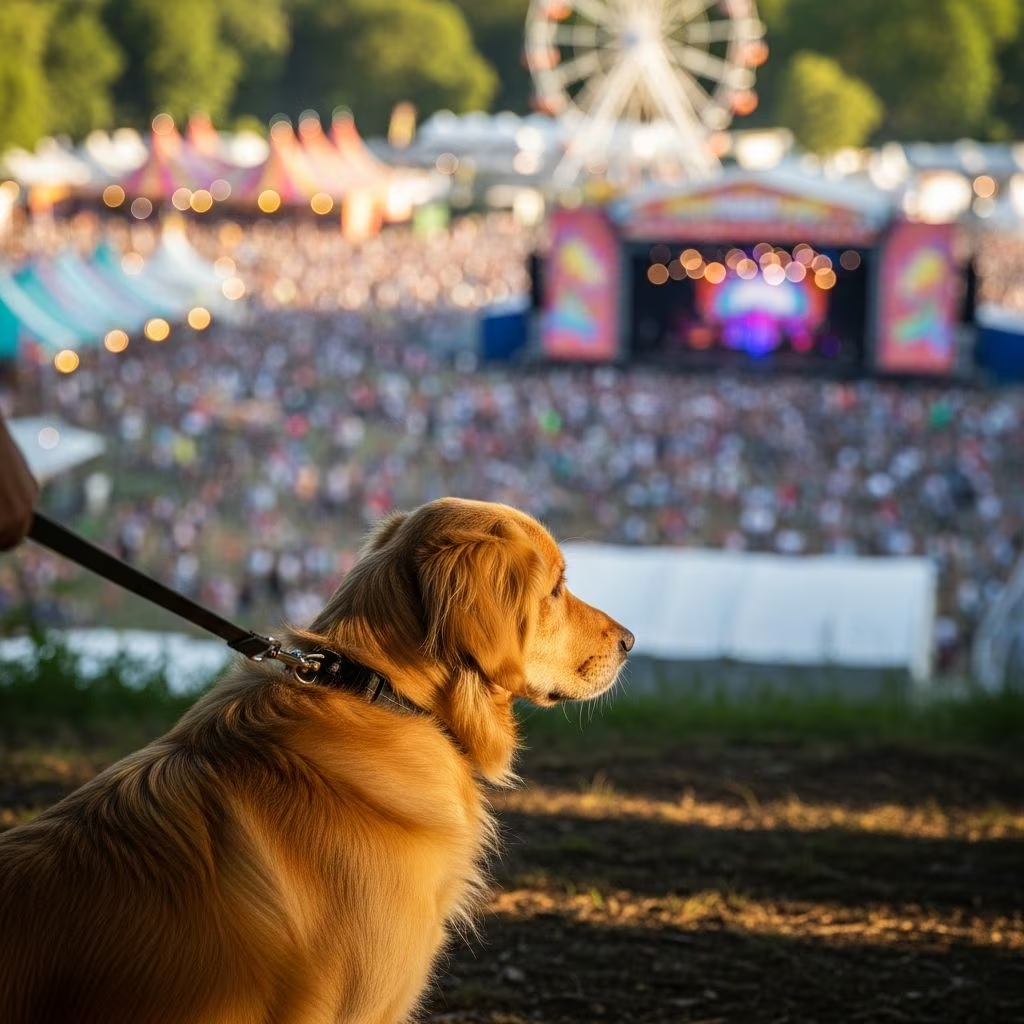
Dogs thrive in predictable, low-stimulation environments, and large social gatherings often introduce overwhelming noise, crowds, and unpredictability that can trigger anxiety or reactive behavior. Instead of risking your pet’s comfort or safety, consider leaving them at home with proper setup or supervised alternatives.
Understanding Canine Stress in Crowded Settings
Many dogs experience heightened anxiety during parties or family events due to sudden arrivals, loud conversations, and unfamiliar faces. Research indicates that approximately 30% of dogs show anxiety symptoms in such scenarios, with signs including excessive panting, pacing, and tucked tails. These reactions stem from their instinctual response to perceiving crowds as potential threats, much like how wild canids avoid large groups of strangers.
Owners often misinterpret excitement as joy, but dilated pupils, shaking, or hiding signal distress. Purdue University’s Canine Welfare Science notes that while dogs have adapted to human social circles, excessive interactions can overload their senses, leading to avoidance or aggression.
Common Dangers of Including Dogs in Social Gatherings
Bringing a dog to a big event heightens risks beyond stress. Unsupervised pets may knock over guests, especially larger breeds over 50 pounds, or react poorly to children and intoxicated adults. PetMD highlights how anxiety can escalate to biting or fleeing, endangering everyone involved.
- Physical injuries: Tripping hazards from leashes or excited lunging.
- Toxic exposures: Guests offering table scraps or spilled drinks containing alcohol or chocolate.
- Escape attempts: Stressed dogs bolting through open doors amid arrivals.
- Overstimulation bites: Defensive snaps at intrusive petting or crowding.
These issues compound in holiday settings where alcohol flows and schedules loosen, reducing vigilance.
Recognizing Subtle Signs Your Dog is Overwhelmed
Early detection prevents escalation. Monitor for these behavioral cues, as outlined by veterinary experts:
| Stress Signal | Description | Action Needed |
|---|---|---|
| Excessive panting | Rapid breathing without exercise | Remove to quiet area |
| Pacing or circling | Restless movement | Provide space and calm voice |
| Tail tuck or low wag | Body language shutdown | End interactions immediately |
| Yawning or lip licking | Displacement behaviors | Offer water and retreat |
| Avoidance or hiding | Seeking solitude | Respect boundaries |
These indicators appear before overt aggression, allowing proactive intervention.
Pre-Event Preparation: Building Resilience
Even if skipping the event, preparatory training enhances your dog’s coping skills for future mild exposures. Start weeks ahead with daily sessions reinforcing commands like “sit,” “stay,” and “leave it.” Dog Star Daily recommends short-leash drills for greeting simulations, rewarding calm orientations with treats.
Exercise is crucial: Aim for 30+ minutes of vigorous play pre-event to burn energy. Gradually expose to controlled crowds via playdates, monitoring body language to avoid sensitization.
- Practice doorbell drills: Have helpers ring and enter calmly while dog stays leashed.
- Use high-value rewards for focus on you amid distractions.
- Desensitize to party sounds with recordings at low volume, increasing gradually.
Guest Communication: Setting Expectations
Inform attendees in advance via email or group chat about your dog’s absence or limited involvement. For minimal greetings, provide clear instructions:
- Ignore the dog upon entry—no eye contact, bending, or calling their name.
- Hand out pre-approved treats only if participating in training.
- Report any concerns about the dog’s demeanor immediately.
This fosters cooperation and positive associations for the dog.
Creating a Dog-Free Sanctuary at Home
The best strategy? Exclude your dog from the chaos entirely. Designate a quiet room with familiar bedding, toys, and puzzle feeders stocked with kibble. White noise machines or calming music mask party sounds.
For separation-sensitive dogs, enlist a pet sitter for walks or use pheromone diffusers. Post-event reunions reinforce that home remains safe.
Alternatives to Full Attendance for Social Dogs
Not all dogs need total isolation. For well-adjusted pets, structured mingling works:
- Outdoor rotations: Leashed yard time post-dinner for controlled guest interactions.
- Short leashed intros: 4-6 seconds per person, rewarding disengagement.
- Mid-event breaks: 10-15 minute walks to decompress.
Keep criteria low—reward eye contact or touches to preempt jumping. Limit to 10-15 minutes total mingling.
Special Considerations for Challenging Breeds
Large or high-drive dogs (50+ lbs) demand stricter management due to injury potential. Dog Trainer College advises close leashing in crowds to prevent surprises or trips. Anxious breeds benefit from “roll call” protocols, ensuring focus before group entries.
Handlers must stay vigilant, using guest greetings as rewards for compliance while scanning for stressors like loud laughter or clinking glasses.
Post-Gathering Recovery and Reflection
After any exposure, observe for lingering stress: refusal to eat, clinginess, or sleep changes. Resume routine promptly with extra enrichment. Journal the event—what triggered reactions?—to refine future plans.
If anxiety persists, consult a veterinary behaviorist; medications like trazodone may aid severe cases, per recent studies.
FAQs: Dog and Gatherings
Can my friendly dog handle a party?
Even sociable dogs overload in crowds. Watch for subtle stress and prioritize breaks.
What if guests insist on petting?
Politely redirect: “Thanks, but he’s resting today for everyone’s safety.”
Is crating during events cruel?
No, if pre-trained as a positive space with comforts—it’s a refuge.
How much exercise before guests arrive?
At least 30 minutes to promote calm.
What about puppy socialization needs?
Opt for controlled, positive outings over chaotic parties.
Long-Term Strategies for Confident Canines
Build resilience year-round with progressive training. Enroll in group classes mimicking mild crowds, emphasizing handler focus. Positive reinforcement creates lasting calm amid distractions. Over time, dogs learn parties signal good things without direct involvement.
Ultimately, responsible ownership means reading your dog’s needs. Large events rarely suit them—opt for exclusion with engaging solo activities for mutual enjoyment.
References
- Party Protocols for Big Challenging Dogs — Dog Star Daily. Accessed 2026. https://www.dogstardaily.com/blogs/party-protocols-big-challenging-dogs
- A Guide to Introducing Your Dog to Large Holiday Family Gatherings — Puptown Spaw. Accessed 2026. https://www.puptownspaw.com/blogs/pet-health-plus-with-nevetica/a-guide-to-introducing-your-dog-to-large-holiday-family-gatherings
- How to Keep Your Pet Calm During Social Gatherings — PetMD. 2022-12-13. https://www.petmd.com/dog/behavior/how-to-keep-pets-safe-during-holiday-gatherings
- Helping Dogs Manage Big Crowds — Dog Trainer College. Accessed 2026. https://www.dogtrainercollege.us/helping-dogs-manage-big-crowds/
- Daycare: Managing Large Groups of Dogs — K9 Turbo Training. Accessed 2026. https://k9turbotraining.com/daycare-managing-large-groups-of-dogs/
- Social Interactions — Purdue University Canine Welfare Science Center (.edu). Accessed 2026. https://caninewelfare.centers.purdue.edu/behavior/social-interactions/



