

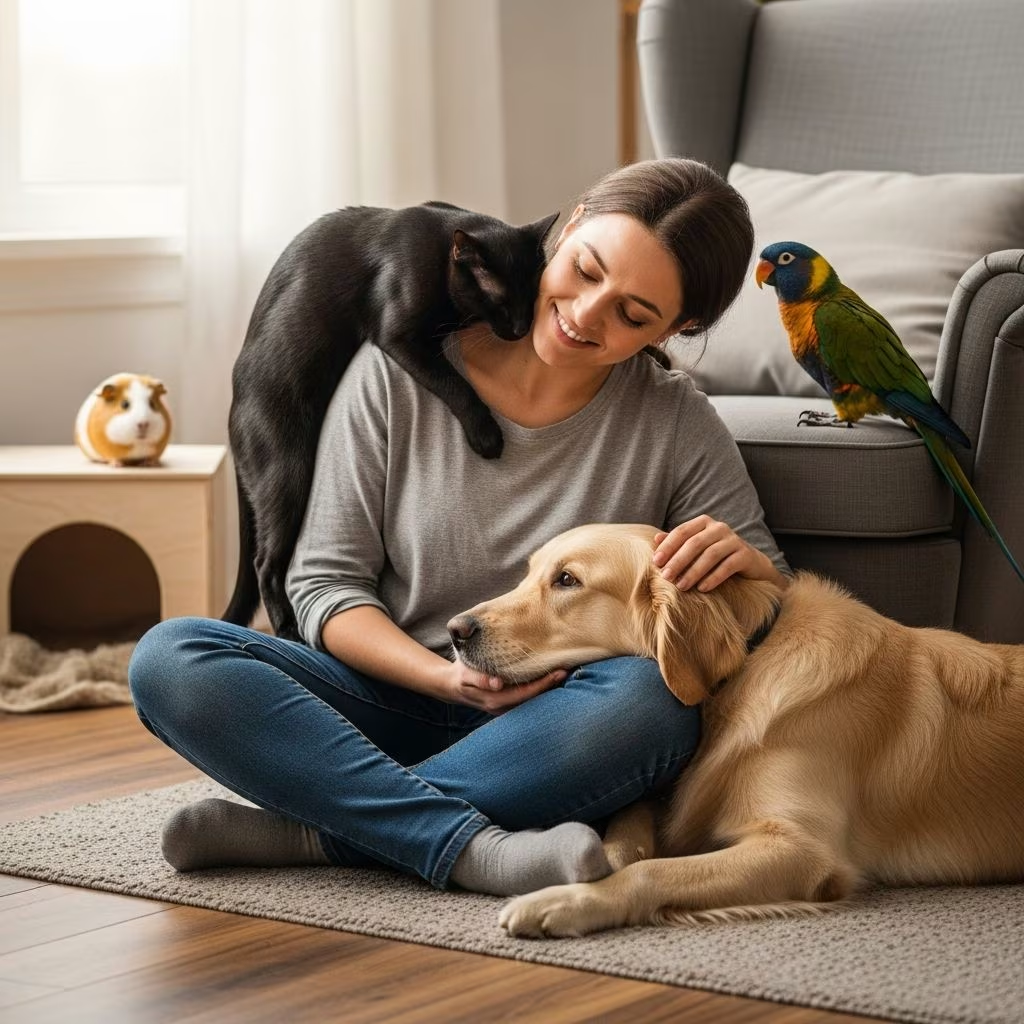
Why Pets Pick Favorites and How to Be the Chosen One
If you’ve ever felt like the ‘spare human’ in your household while your pet gravitates toward someone else, you’re not alone. Many pet owners wonder why their beloved cats or dogs seem to have a clear preference for one family member over another. The answer lies in a combination of factors including trust, predictability, time spent together, and past experiences. Understanding these dynamics can help you strengthen your bond with your pet and potentially become their preferred human.
Do Pets Really Pick Favorites?
Yes, pets genuinely do form stronger bonds with specific individuals in their households. Cats are often stereotyped as aloof and solitary creatures, but research shows they are fully capable of forming strong attachments with humans and other animals. Rather than being indifferent, cats bond with what clinical animal behaviorists call their “preferred individuals.” Similarly, dogs regularly claim one person in their household as their favorite, and once they’ve made their choice, that preference tends to remain stable over time.
These bonds aren’t arbitrary. They develop based on specific behavioral patterns and environmental factors that create deeper connections between pets and their chosen humans. Understanding what drives these preferences can help you recognize why your pet behaves differently with different family members.
What Makes Someone a Pet’s Preferred Individual?
The relationship between a pet and their preferred individual is built on three fundamental foundations: trust, predictability, and positive associations. These elements work together to create a secure attachment that makes one person stand out from the rest.
Trust and Boundary Respect
According to clinical animal behaviorists, the preferred individual is typically someone who respects the pet’s boundaries and reads their body language effectively. This is particularly important for cats, who value having control over their interactions. A person who allows a cat to approach them on the cat’s own terms, rather than forcing affection, is more likely to become the preferred human. Dogs also appreciate people who give them space and don’t overwhelm them immediately upon arrival home.
Comfort and Positive Associations
Pets prefer people who offer comfort, food, or fun without applying pressure. This means the preferred individual is often the one who provides meals, treats, playtime, and positive reinforcement in ways the pet actually enjoys. Different pets have different preferences—some enjoy vigorous play while others prefer calm companionship—so the person whose interaction style matches the pet’s temperament often becomes the favorite.
Key Factors That Influence Pet Preference
Time and Frequency of Interaction
One of the most significant factors determining pet favoritism is simply spending more time with the animal. Dogs tend to form stronger bonds with the person who spends the most time with them, plays with them regularly, feeds them, and takes them for walks. The same principle applies to cats—a cat is more likely to gravitate toward the family member who is around more often, engages in interactive play, or provides regular feeding routines.
Quality of Interaction Style
Beyond mere quantity of time, the quality and style of interaction matters tremendously. Dogs choose favorite humans based on three main categories:
- Quality time: Dedicated attention and engagement
- Positive reinforcement: Rewards through play, attention, food, and toys
- Past experience: Previous relationships that create patterns and expectations
Interestingly, dogs often respond positively to people who give them space rather than those who immediately attempt intense interaction. This counterintuitive behavior stems from dog communication styles—dogs use appeasement behaviors like avoiding eye contact or angling their bodies away to signal friendliness and lack of threat. Therefore, a person who adopts a more relaxed, non-confrontational approach may actually become the favorite over someone who is constantly trying to engage.
Early Imprinting and First Experiences
Early experiences create lasting impressions on pets, particularly for puppies or newly adopted animals. The first person to meaningfully interact with a young or newly adopted dog may form what behaviorists call a “first imprint,” creating a lasting preference even if other household members are equally loving and involved. This is especially true for rescue animals or strays who may have experienced mistreatment in the past. If a rescued cat was previously harmed by a man, for example, they may be less inclined to form strong bonds with male family members moving forward.
Personality Compatibility
Dogs also bond based on personality fit. Some pets connect with “the human whose energy, routine, and communication style feels most comfortable or predictable.” This compatibility makes that person feel easier for the dog to understand and interact with. For anxious, shy, or rescue dogs, the strongest bond often forms with the person who helps them feel “safest, understood, and protected.”
Why Some Pets Prefer People Who Ignore Them
An interesting phenomenon occurs when pets seem to gravitate toward people who don’t actively seek their affection. Some cats prefer people who don’t offer as much direct affection, instead valuing their personal space. This is often because these pets are sensitive to unwanted attention or have experienced stress from overly familiar interactions. When someone respects a pet’s independence, the pet may actually choose to engage more freely.
Understanding this helps explain why the person who claims “I don’t even like cats” often finds themselves as the cat’s favorite. By not making direct eye contact, ignoring the cat, and allowing the animal to approach first, these individuals inadvertently create the exact conditions cats find most appealing.
The Role of Consistency and Routine
Pets thrive on predictability. When one family member maintains consistent routines—regular feeding times, play sessions, grooming, or walks—the pet develops confidence in that person. Consistency builds trust more effectively than sporadic bursts of attention. A pet learns that this particular human is reliable and responsive to their needs, making them feel secure.
In households where family members have different schedules, the person who is around more frequently and maintains more predictable patterns naturally becomes the preferred individual. This explains why a work-from-home parent often becomes a pet’s favorite, even if other family members also provide excellent care.
Overcoming Pet Preference: Building Bonds with Other Family Members
If you’re not your pet’s favorite person, there are evidence-based strategies to build a stronger connection and develop trust across your household.
Share Positive Routines
The bonded human can help by sharing positive routines like grooming, playtime, and feeding with other family members. When multiple people engage in these enjoyable activities, the pet begins to associate positive experiences with all of them. This gradual exposure helps build trust without pressure.
Interact in Similar, Respectful Ways
Ensure that all family members interact with the pet in similar, respectful ways. If one person respects boundaries while another doesn’t, the pet will notice and form preferences based on these differences. Consistency in approach across household members helps pets feel safe with everyone.
Avoid Dependent Attachment
Building a secure bond means helping your pet feel safe both with you and independently. When dogs learn they can feel confident on their own as well as with their favorite person, they become more well-adjusted. This creates a healthy attachment rather than anxious dependence, allowing pets to thrive whether their preferred human is present or away.
Respect the Pet’s Temperament
Different pets have different attachment styles. Work within your pet’s natural temperament rather than against it. An introverted cat needs different interaction patterns than an extroverted dog. By observing what genuinely appeals to your pet and adjusting your approach accordingly, you’re more likely to develop a meaningful connection.
Signs Your Pet Considers You Their Favorite
If you want to know whether you’re your pet’s preferred human, watch for these behavioral indicators:
- Following behavior: They follow you from room to room and keep their eyes on you
- Seeking physical closeness: Licking, nudging, leaning, making eye contact, and seeking proximity
- Vulnerability displays: Sleeping belly-up, offering their belly for rubs, or sleeping near you
- Responsive listening: They listen to you more readily than other family members
- Protective behavior: Guarding you from other people or pets
- Separation distress: Showing mild distress, whining, or appearing sad when you leave
The Difference Between Favorite and Most Obedient
It’s important to note that the family member a dog listens to best isn’t necessarily the favorite. A dog might respond immediately to someone who uses swift punishment for disobedience, simply because they’ve learned that ignoring this person results in negative consequences. This obedience doesn’t reflect preference or bonding—it reflects fear or avoidance learning. True preference is based on positive associations and trust, not compliance motivated by punishment avoidance.
Understanding Anthropomorphization and Pet Bonds
Research shows that pet owners tend to attribute human-like qualities to their animals in ways that reflect their relationship with the pet. Dog owners anthropomorphize more than cat owners, partly because dogs display more symmetrical social behaviors with humans. When owners think of their pets as family members with specific roles, their attachment deepens and their behavior toward the pet changes accordingly. The social role a pet occupies in the household—whether viewed as a mouser, a family member, or a child—influences both the owner’s perception of the pet’s abilities and the quality of the bond that develops.
Frequently Asked Questions
Q: Can a pet’s favorite person change over time?
A: While first impressions and early bonding are powerful, pets can develop stronger bonds with other family members over time if those members significantly increase their quality time and positive interactions with the pet. However, deep preferences formed early tend to remain relatively stable.
Q: Is it unhealthy for a pet to have a clear favorite person?
A: Not inherently. However, if the preference creates separation anxiety or causes the pet to ignore other family members entirely, this may indicate an overly dependent attachment that should be addressed with behavioral training. A healthy preference means the pet feels secure with their favorite while still being able to function well with others.
Q: How long does it take to become a pet’s favorite person?
A: Building trust with a pet varies significantly based on the animal’s personality and past experiences. Typically, consistent, positive interaction over weeks to months can strengthen your bond substantially. Rescue animals may need longer periods to develop deep trust.
Q: Can cats bond as strongly as dogs?
A: Yes, cats are fully capable of forming strong bonds with humans, though their expression of attachment may differ from dogs. Cats often show affection more subtly and prefer less constant interaction, but they clearly develop preferences for specific individuals.
Q: What if my pet seems to prefer someone who mistreats them?
A: This likely indicates the pet has learned association patterns from their past or is responding to that person’s energy. If you suspect mistreatment, prioritize the pet’s safety and consult with a veterinary behaviorist. Pets need supportive, respectful care to develop healthy attachments.
References
- Owner’s Anthropomorphic Perceptions of Cats’ and Dogs’ Abilities — PMC/NIH National Center for Biotechnology Information. 2024. https://pmc.ncbi.nlm.nih.gov/articles/PMC10705108/
- How Dogs Really Choose Their Favorite Human — Kinship. 2024. https://www.kinship.com/dog-behavior/how-do-dogs-choose-favorite-person
- Why Pets Pick Favourites – and How to Be the Chosen One — Kinship UK. 2024. https://www.kinship.com/uk/pet-behaviour/why-pets-pick-a-favourite-human
- 7 Signs You Are Your Dog’s Favorite Person — Kinship. 2024. https://www.kinship.com/dog-behavior/signs-you-are-your-dogs-favorite-person



