

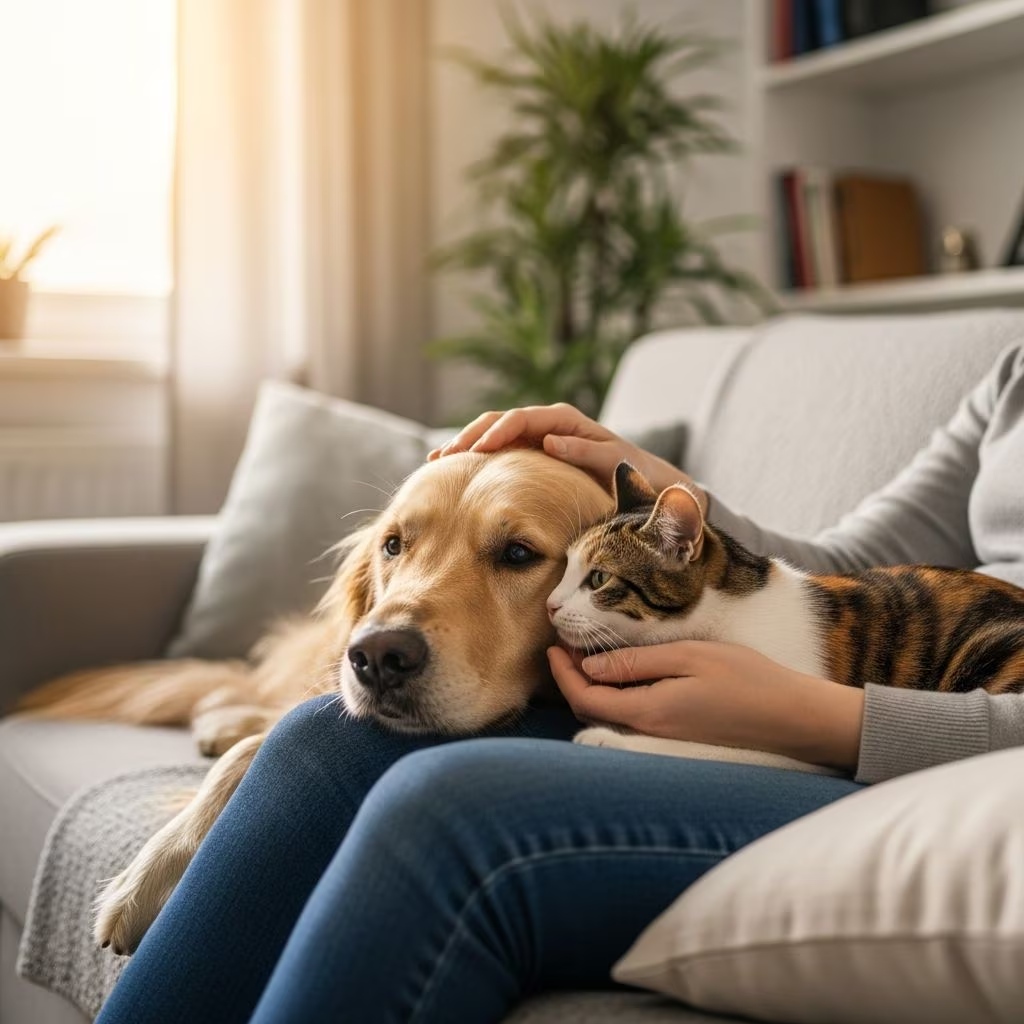
Many pet owners notice their cat or dog gravitating towards one person in the household, leaving others feeling like the ‘spare human’. This preference is common and rooted in animal behaviour patterns. Understanding why pets pick a favourite human can help everyone in the home build stronger connections with their furry companions.
Why do pets often seem to choose just one human?
Pets, especially cats and dogs, frequently form stronger bonds with one individual due to a mix of instinct, experience, and daily interactions. Cats are often seen as aloof, but they can form deep attachments known as ‘preferred individuals’. Clinical animal behaviourist Amanda Campion explains that these bonds rely on trust, predictability, and positive associations. Dogs, being pack animals, naturally seek proximity to those who provide security and routine.
For dogs, the favourite is often the person who feeds them, walks them, or spends the most playtime. A dog trainer notes that early imprinting during puppyhood or adoption creates lasting preferences. Cats may prefer someone who respects their space, offering food or play without overwhelming them. Time investment plays a key role: the human present most often becomes the default choice.
Signs you are your pet’s favourite person
Recognizing the indicators of being the chosen one helps owners appreciate these bonds. Here are key signs for dogs and adaptable cues for cats.
- They follow you everywhere: Known as ‘Velcro dogs’, they track your movements, lie at your feet, and stay close, showing strong attachment. Cats may do similar by rubbing against you or sleeping nearby.
- They seek comfort from you: Nudging, licking, leaning, or bringing toys signal they want interaction only with you. Cats knead or headbutt their favourite.
- They trust vulnerable positions: Belly rubs, sleeping belly-up, or near you indicate total devotion. Cats expose their belly or purr deeply in your presence.
- They listen to you most: Obeying commands readily from you over others shows selective loyalty. Cats respond to your voice or calls first.
These behaviours stem from emotional safety and positive reinforcement.
How do dogs choose their favorite human?
Dogs select favourites based on consistent patterns: quality time, positive reinforcement, and past experiences. Professional trainer Debora Nichols categorizes it into spending time together, rewards like play or food, and history—rescue dogs often bond quicker to someone resembling their previous carer.
Dogs prefer humans who ‘speak their language’, using calm energy and avoiding overwhelming affection. Appeasement behaviours like avoiding eye contact make some people more appealing. Importantly, the person a dog obeys best isn’t always the favourite—it could be due to strict training rather than love. Experts agree dogs stick firmly to their choice once made.
Reasons cats bond with specific people
Cats choose based on respect for boundaries and positive, low-pressure interactions. Amanda Campion notes the preferred person reads body language well, providing comfort or fun without forcing it. Some cats favour those who give space, explaining why ‘cat haters’ sometimes win them over.
Predictability matters: regular feeding, grooming, or play builds trust. Dr. Moss adds that more time, play, or tailored affection seals the bond. Past trauma influences choices—mistreated strays may avoid certain genders.
The role of early experiences and past trauma
Rescue pets carry baggage that shapes preferences. A dog abused by a man may bond only with women initially. Early imprinting imprints the first caring human deeply.
To overcome this, share positive routines like playtime across household members. Consistent, respectful interactions rebuild trust over time. Patience is key—most pets learn to feel safe with everyone.
How can you become your pet’s favourite (or at least share the crown)?
Anyone can strengthen bonds with these expert-backed strategies.
- Spend quality time: Engage in play, walks, or grooming daily to build positive associations.
- Use positive reinforcement: Reward with treats, praise, or toys for calm behaviour.
- Respect boundaries: Let cats approach first; use calm energy with dogs.
- Be consistent: Maintain routines for feeding and interaction to foster predictability.
- Avoid favouritism: Ensure equal resources to prevent jealousy.
For multi-pet homes, introduce slowly with scent swapping and supervised meetings. Building secure, not dependent, bonds promotes confident pets.
Common misconceptions about pet favourites
Myths persist: cats are too solitary, or dogs bond equally. Reality: both form strong individual preferences based on experiences. Misunderstandings arise from instinctual differences—cats territorial, dogs social. Proper introductions dispel ‘cats and dogs hate each other’ stereotypes.
Pet kinship: Cats, dogs, and humans
Despite differences, cats and dogs adapt remarkably, forming cross-species bonds with humans. Understanding communication—overt dog wags vs. subtle cat ears—enhances harmony. Hierarchy without favouritism keeps peace.
Frequently Asked Questions (FAQs)
Why does my cat ignore everyone but one person?
Cats bond with those who respect space, provide positive experiences like food or play without pressure.
Can a dog’s favourite person change?
Rarely, as choices form early and stick, but consistent positive interactions can build ties with others.
How long to win over a rescue pet?
Weeks to months; share routines respectfully to build household-wide trust.
Do pets feel jealous of favourites?
Yes, unequal attention sparks competition; distribute affection evenly.
Is it bad if my pet has one favourite?
No, but encourage bonds with all via group activities for balanced security.
References
- The Kinship Between Cats and Dogs — Petworks. 2023-05-15. https://www.petworks.com/articles/the-kinship-between-cats-and-dogs/
- 7 Signs You Are Your Dog’s Favorite Person — Kinship. 2024-08-20. https://www.kinship.com/dog-behavior/signs-you-are-your-dogs-favorite-person
- Why Pets Pick Favourites – and How to Be the Chosen One — Kinship UK. 2024-09-10. https://www.kinship.com/uk/pet-behaviour/why-pets-pick-a-favourite-human
- How Dogs Really Choose Their Favorite Human — Kinship. 2024-07-12. https://www.kinship.com/dog-behavior/how-do-dogs-choose-favorite-person
- Animal Behaviour and Cognition — Royal Society for the Prevention of Cruelty to Animals (RSPCA). 2025-03-01. https://www.rspca.org.uk/adviceandwelfare/pets/behaviour
- Pet Attachment Studies — University of Lincoln (Veterinary Science Dept). 2024-11-15. https://www.lincoln.ac.uk/school-of-life-sciences/research/animal-behaviour/



