

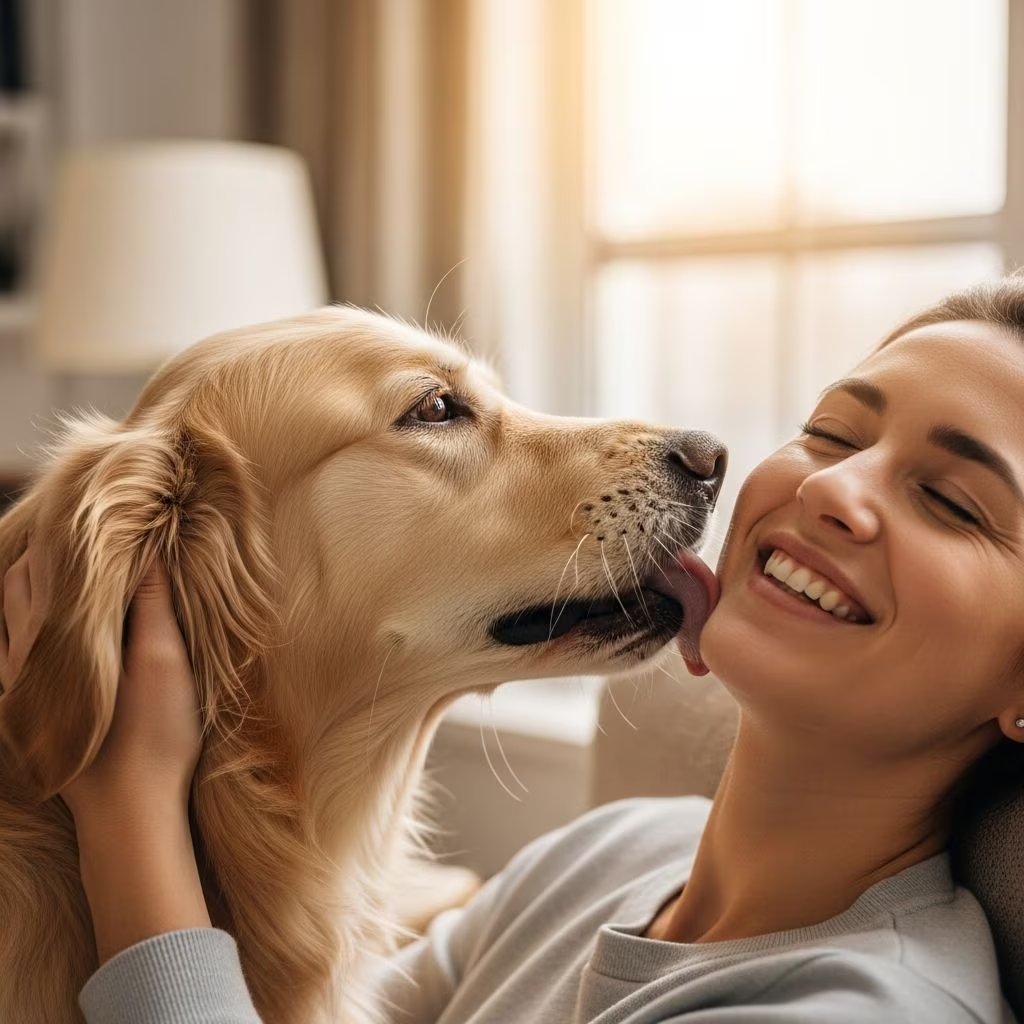
The relationship between humans and dogs is one of the most profound connections in the animal kingdom. Dogs have evolved alongside us for thousands of years, becoming not just our companions but integral members of our families. But what makes this bond so special? Why do we fall so deeply in love with our canine companions, and more importantly, do they love us back? These are the questions that drive canine cognition experts like Brian Hare, a Duke University professor and founder of the Duke Canine Cognition Center, to uncover the mysteries of the dog-human relationship.
Understanding Individual Dog Personalities
One of the most important lessons in understanding our relationship with dogs is recognizing that each dog is a unique individual. “The question is, ‘Who is your dog and what makes them so wonderful?'” Brian Hare explains. “Because each of them is an individual, and it’s those little personalities that we fall so deeply in love with.” This perspective challenges the common misconception that all dogs are the same. Every dog brings their own personality, quirks, and characteristics that shape how they interact with their human families.
When we adopt a dog, we’re not simply welcoming a generic pet into our homes. We’re inviting a distinct personality with specific needs, preferences, and emotional capacities. Some dogs are playful and exuberant, while others are calm and contemplative. Some are social butterflies, eager to meet everyone they encounter, while others prefer the comfort of their immediate family. Understanding and appreciating these individual differences is crucial to building a strong, fulfilling relationship with our dogs.
The Evolutionary Story: How Wolves Became Our Best Friends
The journey from wolf to beloved family pet is a fascinating evolutionary tale that spans thousands of years. According to canine cognition research, it all began when “a population of wolves chose us.” Rather than humans domesticating wolves in the traditional sense, these early wolves were drawn to human settlements, attracted by food scraps and the relative safety of living near foragers and hunter-gatherers.
What made this arrangement so appealing to early humans? The answer lies in survival. “The No. 1 cause of mortality in foraging populations is intergroup aggression — so threats from strangers, another group of people.” Early dogs served a critical function in their communities. As they bonded with the people they lived near, they retained their natural wariness of strangers while developing loyalty to their own groups. This made them invaluable as alert systems, warning their people when unfamiliar individuals or groups were approaching. In essence, dogs provided security and protection to early human settlements.
This mutually beneficial arrangement didn’t end with the ancient past. “That would be the beginning of that useful relationship, and it was very mutual,” Hare explains. “And I think that relationship continues for thousands and thousands of years, and it becomes more intimate until it is the most intimate it could be today, where now it’s not strange at all for a dog to be in someone’s bed and be part of their family.” Over millennia, our relationship with dogs has evolved from practical partnership to deep emotional bonds that define our modern lives.
The Power of Puppy Dog Eyes
One of the most defining elements in dog evolution is a seemingly simple feature: puppy dog eyes. Unlike their wolf ancestors, dogs have evolved a unique muscle around their eyes that allows them to expose more of the sclera — the white part of the eye. This anatomical difference has profound implications for how dogs communicate with humans and how we respond to them emotionally.
The Science Behind the Soulful Gaze
When a dog gives you that classic “sheepish” look with big, soulful eyes and raised eyebrows, there’s actually sophisticated evolutionary strategy at work. This expression triggers an emotional response in humans because it taps directly into how we communicate with each other. Humans naturally use eye contact as a primary form of non-verbal communication. Even infants instinctively take cues from the whites of other people’s eyes to determine where someone is looking and what they might be thinking. Dogs have evolved to leverage this deeply ingrained human communication pattern.
“Sighted people, even infants, constantly take cues from the whites of other people’s eyes to gain insight into where they’re looking and what they might be thinking. And dogs have evolved to use this unspoken language with us.” This represents a remarkable adaptation that allows dogs to communicate with humans on a level that feels natural and emotionally resonant to us.
The Chemistry of Love: The Oxytocin Loop
Beyond the emotional impact of puppy dog eyes, there’s actual chemistry happening when we interact with our dogs. The bond between humans and dogs triggers the release of oxytocin, often called the “love hormone.” This is the same neurochemical that creates bonds between human parents and their infants, and it operates in what scientists call the “oxytocin loop.”
When a human parent and infant look into each other’s eyes, it triggers the release of oxytocin in both of them, creating a biochemical feedback loop that strengthens their emotional connection. Remarkably, the same oxytocin loop can occur between people and dogs. When you look into your dog’s eyes, you’re not just experiencing an emotional moment — you’re initiating a biochemical process that releases feel-good hormones in both you and your canine companion. “It’s like they are hugging you with their eyes,” as described by those studying canine cognition.
This eye contact is particularly important because it operates on multiple levels simultaneously. On one level, it’s an evolutionary adaptation that helps dogs manipulate our emotions for their benefit. On another level, it reflects a genuine emotional connection that both species experience. The oxytocin loop ensures that when we gaze lovingly at our dogs, they’re experiencing genuine neurochemical changes that reinforce their affection for us, just as we’re experiencing genuine changes that deepen our love for them.
Modern Life With Dogs: Evolving Expectations and Roles
The role of dogs in human society has undergone dramatic transformation, especially in recent decades. Today, dogs occupy a far more intimate place in our lives than at any point in their evolutionary history. “In the book and in the Netflix documentary, one of the things we really wanted to communicate is as the cultural shift has happened where dogs have become family members and they’ve gone from sleeping outside to in our beds, what we hope and expect of our dogs has changed really rapidly over the last couple of decades.”
The Many Roles Dogs Play Today
Modern dogs serve in numerous capacities throughout our society:
– Service animals assisting people with disabilities- Disease detection dogs identifying medical conditions- Search-and-rescue dogs saving lives in emergencies- Therapy dogs providing emotional support in hospitals and care facilities- Travel buddies accompanying families on adventures- Pet-friendly dining companions in restaurants and cafes- Emotional support animals helping with mental health challenges
Each of these roles reflects how deeply dogs have integrated into human society. We’ve come to rely on them not just for practical assistance but for emotional fulfillment and psychological support. This represents a significant shift from the guard-dog role dogs played in early human settlements to the multifaceted relationships they maintain today.
Learning to Recognize Individual Needs
Despite all our knowledge about dog behavior and canine cognition, one of the most important lessons researchers continue to learn is that “a dog is not a dog is not a dog.” Each individual canine comes with distinct needs, preferences, and personality traits that can’t be addressed with a one-size-fits-all approach.
Those who work extensively with dogs often discover this lesson through experience. “That’s like our No. 1 learning of raising all these dogs is we kept thinking, OK, we got the recipe … but every dog is going to bring something new.” This recognition is crucial for anyone bringing a dog into their life. Success in dog ownership requires flexibility, patience, and a willingness to adapt your approach based on what your specific dog needs.
Some dogs require extensive exercise and mental stimulation, while others thrive in calm, quiet environments. Some dogs are highly social and need frequent interaction with other dogs and people, while others become stressed in busy environments. Some dogs respond well to positive reinforcement training, while others need different approaches. Understanding your specific dog’s needs is the foundation of a healthy, happy relationship.
The Development of Mutual Love and Trust
When we first bring a dog into our homes, a natural question often arises: “Does my dog love me?” This uncertainty is completely understandable, especially in those early weeks when the relationship is still forming. “In the beginning, you’re sort of thinking like, ‘Does he love me? Do we love each other?’ It’s natural because you’re so excited and you’re totally in love with this dog. And so you’re wondering is the dog in love with you?”
However, patience typically reveals the answer. “But after let’s say a month or a couple of months, all of a sudden you realize, ‘Oh my gosh, this dog is totally in love with me, and we’re buddies now!'” This realization often comes as a profound relief and joy. The initial uncertainty gives way to absolute certainty about the mutual affection you share. Your dog’s love becomes unmistakable in the way they greet you, the enthusiasm they show when you come home, the comfort they seek from you when stressed, and the joy they express in your presence.
The Deeper Meaning of the Human-Dog Bond
Beyond the practical, evolutionary, and chemical reasons why humans and dogs love each other lies a deeper truth about what this relationship means. Dogs embody qualities that we aspire to cultivate in ourselves and in our communities. They demonstrate unwavering loyalty, unconditional love, genuine enthusiasm for life, and acceptance of others without judgment.
A relationship with a dog has the power to make us better people — more of the person we aspire to be. Dogs teach us about commitment, patience, compassion, and the joy found in simple moments. They remind us that life’s value extends beyond productivity and achievement to include connection, presence, and genuine affection. In loving our dogs and receiving their love in return, we’re participating in one of the most profound relationships available to us.
Frequently Asked Questions
Q: Do dogs actually love their owners, or are they just responding to evolutionary conditioning?
A: Dogs experience genuine emotional connection with their owners, supported by the oxytocin loop that triggers when you make eye contact with your dog. While evolution shaped their ability to bond with humans, the love they feel is real and measurable on a neurochemical level.
Q: How long does it take for a dog to bond with their new owner?
A: While every dog is different, most dogs begin showing clear signs of mutual love and bonding within a month or two of joining a new family. This timeline can vary based on the individual dog’s personality and past experiences.
Q: What is puppy dog eyes, and why does it affect us emotionally?
A: Puppy dog eyes refers to the distinctive expression dogs can make by raising their eyebrows and exposing more of the white part of their eyes. This expression evolved to trigger emotional responses in humans because it mimics human communication patterns and activates our caregiving instincts.
Q: Can dogs sense human emotions?
A: While eye contact and the oxytocin loop are key to bonding, dogs are also highly attuned to human emotional states. They can recognize stress, sadness, and happiness through various cues including body language, tone of voice, and scent.
Q: Why is it important to recognize that each dog is an individual?
A: Recognizing individual differences ensures that you can meet your specific dog’s unique needs, preferences, and personality traits. A one-size-fits-all approach to dog care and training can lead to frustration and an unfulfilled relationship.
References
- Why people love dogs — and they love us right back — Best Friends Animal Society. https://bestfriends.org/stories/features/why-people-love-dogs-and-they-love-us-right-back
- Benefits of Having a Dog — Best Friends Animal Society. https://bestfriends.org/pet-care-resources/benefits-having-dog
- Reflections on our relationship to pets — Best Friends Animal Society. https://bestfriends.org/stories/best-friends-magazine/reflections-our-relationship-pets



