

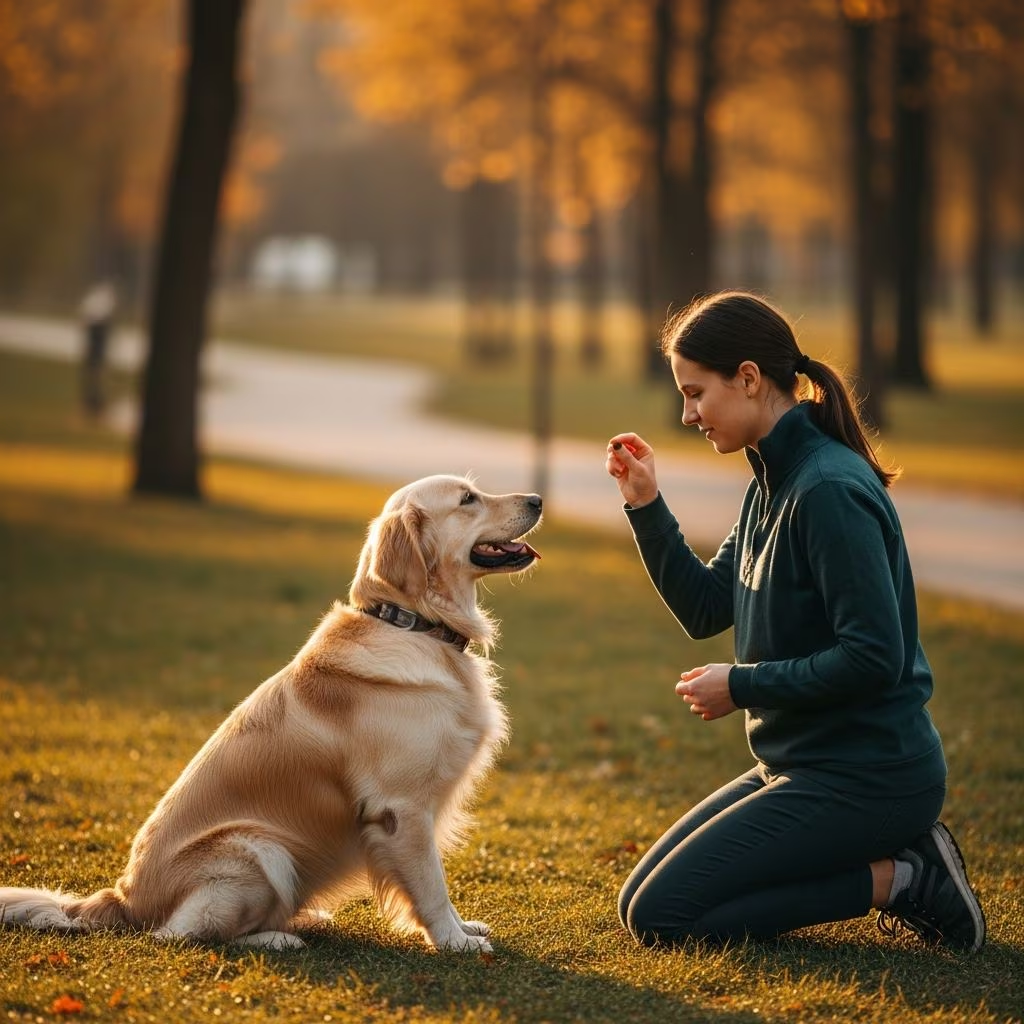
Why Patience Is Necessary in Dog Training
Training a dog is not an overnight transformation but a gradual journey of communication, trust, and repetition. Patience is the quality that keeps you showing up, calmly and consistently, while your dog slowly turns new skills into reliable habits. Without patience, training becomes frustrating for both you and your dog; with it, learning becomes clearer, kinder, and far more effective.
Modern canine behavior science shows that dogs learn best through repetition, timely reinforcement, and clear, consistent signals rather than pressure or punishment. Positive reinforcement methods—rewarding desired behaviors with food, toys, or praise—are widely recommended by veterinary behavior organizations because they improve learning and reduce fear and anxiety.
The Big Picture: Dog Training Is a Gradual Process
Behavior change in dogs, especially when you are teaching manners or replacing long-standing habits like jumping or pulling, usually takes weeks to months, not minutes. Expecting instant results often leads people to switch methods too quickly, becoming inconsistent just when the dog needs clarity the most.
Patience lets you:
- Accept that your dog needs time to understand what you’re asking.
- Stick with a training plan long enough for it to work.
- Celebrate small improvements instead of only waiting for perfection.
- Protect your relationship by avoiding anger, harsh corrections, or giving up.
How Dogs Learn: Why Time and Repetition Matter
Canine learning follows principles similar to human learning. Dogs form associations between their behavior and its consequences: behaviors that lead to something good are likely to be repeated. With consistent practice, these behaviors become stronger and more automatic.
Key elements of how dogs learn include:
- Repetition: Rehearsing the same cue–response–reward pattern helps the dog connect the dots and store the behavior in long-term memory.
- Timing: Rewards need to come within seconds of the behavior so the dog knows which action is being reinforced.
- Gradual difficulty: Skills must be practiced first in easy environments, then slowly in more distracting places.
- Motivation: High-value rewards increase focus and effort, especially in challenging situations.
None of this happens instantly. The brain physically changes as new connections form, and that takes repetition over time. Staying patient gives those changes a chance to solidify.
Every Dog Is Unique
No two dogs share the same learning speed, personality, history, or motivation. Some puppies pick up “sit” in an afternoon, while others need days of short, simple sessions. Rescue dogs, or those with a history of fear or stress, may require even more time to feel safe enough to learn.
Patience means adjusting your expectations to your dog, not to a generic timeline. Consider:
- Age: Puppies have short attention spans and limited impulse control; older dogs may have entrenched habits but can still learn.
- Temperament: Bold, energetic dogs may rush ahead and make more mistakes; sensitive dogs may shut down if pressured.
- Past experiences: Dogs who have been punished or poorly socialized may need extra time to trust and focus.
| Dog Type | Common Training Needs | Patience Strategy |
|---|---|---|
| Young puppy | House training, basic cues, bite inhibition | Very short sessions, frequent breaks, generous rewards |
| Adolescent dog | Impulse control, recall, leash manners | Consistent rules, daily practice, calm repetition |
| Rescue dog | Building trust, social skills, confidence | Slow introductions, predictable routine, low-pressure training |
| Fearful dog | Counterconditioning, desensitization | Tiny steps forward, never forcing, pairing scary things with rewards |
Why Rushing Training Can Backfire
Impatience often shows up as repeating cues quickly, raising your voice, yanking the leash, or changing methods every few days. While these reactions are common, they can slow learning and damage your bond.
Possible effects of rushing include:
- Confusion: The dog hears the cue over and over without understanding it, so the word loses meaning.
- Stress and anxiety: Being pressured, scolded, or physically corrected can make dogs anxious, which interferes with learning.
- Inconsistent behavior: Without enough repetition, the dog may perform a cue only sometimes, especially under distraction.
- Reduced trust: Frustration, anger, or rough handling teaches the dog that training is unsafe or unpredictable, making them less willing to engage.
In contrast, a patient, positive approach supports emotional safety, which research shows is critical for effective animal learning.
Realistic Expectations for Common Behaviors
Some behaviors are easier to teach than others. Knowing what is realistic can prevent discouragement. While timelines vary, many dogs follow patterns like these when owners are consistent:
- Basic cues (sit, down, hand target): Often recognizable within days, but true reliability under distractions can take several weeks of practice.
- Loose-leash walking: Typically requires daily sessions over weeks; pulling is often self-rewarding because it gets the dog where it wants to go.
- Jumping on people: May take weeks or longer to fade, especially if the dog has been rewarded by attention for a long time.
- Counter-surfing: Can be one of the hardest behaviors to completely eliminate, because even a single success (finding food) is highly rewarding.
Understanding that these issues are normal and often slow to change helps you stay committed rather than deciding “it doesn’t work” after a few days.
Celebrating Small Wins
Patience grows when you learn to see and celebrate small signs of progress instead of only looking for the final result. This mindset shift makes training more enjoyable and keeps motivation high for both you and your dog.
Examples of small wins include:
- Your dog hesitates instead of instantly jumping when someone enters the room.
- A shorter pulling episode before they check back in and loosen the leash.
- Quicker response to their name or a recall cue in the yard.
- More eye contact when unsure, instead of reacting automatically.
Each small improvement is a signal that your training is working and that patience is paying off.
Strategies to Cultivate Patience as an Owner
Patience is a skill you can practice. Building it intentionally makes training smoother and more humane. Behavior specialists emphasize that your emotional state influences your dog’s behavior: calm, predictable interactions help dogs feel safe and capable of learning.
Try these strategies:
- Set clear, achievable goals: Break big objectives (like “walk politely”) into small steps, such as “take five calm steps by the front door,” then “across the driveway,” then “down the block.”
- Use short, frequent sessions: Several 3–5 minute sessions spaced through the day are more effective than one long, exhausting session.
- Plan before you train: Decide what cue you’ll work on, what reward you’ll use, and how you’ll respond to mistakes so you’re not improvising in the moment.
- Manage the environment: Set your dog up for success by removing temptations (like food on the counter) and practicing in low-distraction settings before moving to harder ones.
- Notice your own frustration early: When you feel irritation rising, pause, take a breath, and either lower the difficulty or end on an easy success.
Using Positive Reinforcement and Consistency
Patience is most effective when combined with humane, science-based training methods. Major veterinary and behavior organizations recommend positive reinforcement as a first-line approach because it is associated with better welfare and fewer behavior problems.
Key principles include:
- Reward what you like: Mark and reward desirable behaviors immediately so your dog knows what “worked.”
- Be consistent with cues: Use the same word and the same body language each time so your dog does not have to guess.
- Avoid harsh punishment: Techniques that rely on fear or pain can increase anxiety and aggression and are not needed for effective training.
- Practice in different contexts: Dogs don’t automatically generalize; they need practice in various places and situations to understand that a cue always means the same thing.
When Progress Feels Slow
Even with good techniques and solid effort, some dogs progress more slowly than expected. Factors like medical issues, chronic stress, or underlying anxiety can affect behavior and learning. If patience and consistent training still do not lead to improvement, consider:
- Scheduling a veterinary checkup to rule out pain or health problems.
- Consulting a qualified, reward-based trainer or certified behavior professional.
- Reviewing your routine for consistency: Are rules the same for all family members? Are rewards truly motivating for your dog?
Asking for help is not a failure; it is another way of being patient and realistic about what you and your dog need.
Frequently Asked Questions (FAQs)
Q: How long does it usually take to train a dog?
A: Simple cues like “sit” can be learned within a few sessions, but building reliable behavior—especially with distractions—typically takes weeks of consistent practice. More complex issues, such as leash pulling or jumping on guests, can take weeks or months, depending on your dog’s history and how consistently everyone follows the training plan.
Q: My dog isn’t improving. Does that mean training isn’t working?
A: Not necessarily. Progress is often gradual and can be easy to overlook. Look for small improvements, like shorter pulling episodes or more frequent check-ins. If you see no change over time, review your consistency, reward value, and training steps, and consider consulting a reward-based trainer or your veterinarian.
Q: How can I stay patient when I feel frustrated?
A: Plan short sessions, work at a level where your dog can succeed, and pause as soon as you feel irritation rising. Ending on one easy success—like asking for a simple “sit” and rewarding generously—can help you both finish on a positive note. Developing self-awareness and preparing mentally before training are key strategies used by experienced trainers to maintain patience.
Q: Is it too late to train an adult or rescue dog?
A: No. Adult and rescue dogs can absolutely learn new skills and habits, though they may need extra time to unlearn previous patterns or to feel safe in a new environment. A patient, structured routine, combined with positive reinforcement and gentle exposure to new situations, helps them catch up and build confidence.
Q: Does using punishment make training faster?
A: Research and professional guidelines indicate that methods relying on pain or fear can increase anxiety and aggression and may damage the human–animal bond. While punishment might suppress behavior temporarily, it does not teach the dog what to do instead and can slow long-term learning. Positive reinforcement paired with patience is safer and more effective for lasting results.
References
- Practice Patience: Understanding that Dog Training is a Gradual Process — American College of Dog Training Academy (ACDT Academy). 2023-08-10. https://www.acdtacademy.com/post/practice-patience-understanding-that-dog-training-is-a-gradual-process
- Patience Is a Secret Ingredient in Dog Training — Destination Dog Training. 2023-06-01. https://www.destinationdogtraining.com/patience-is-a-secret-ingredient-in-dog-training
- Give It Time! When it Comes to Dog Training, Patience is Important — American Kennel Club (AKC). 2017-02-15. https://www.akc.org/expert-advice/training/dog-training-patience-important/
- Importance of Patience & Your Dog Training — Argos Dog Training. 2019-09-05. https://argostraining.com/patience/
- How to Train a Rescue Dog—Guidelines to Follow — Kinship. 2022-03-11. https://www.kinship.com/dog-behavior/rescue-dog-training



