

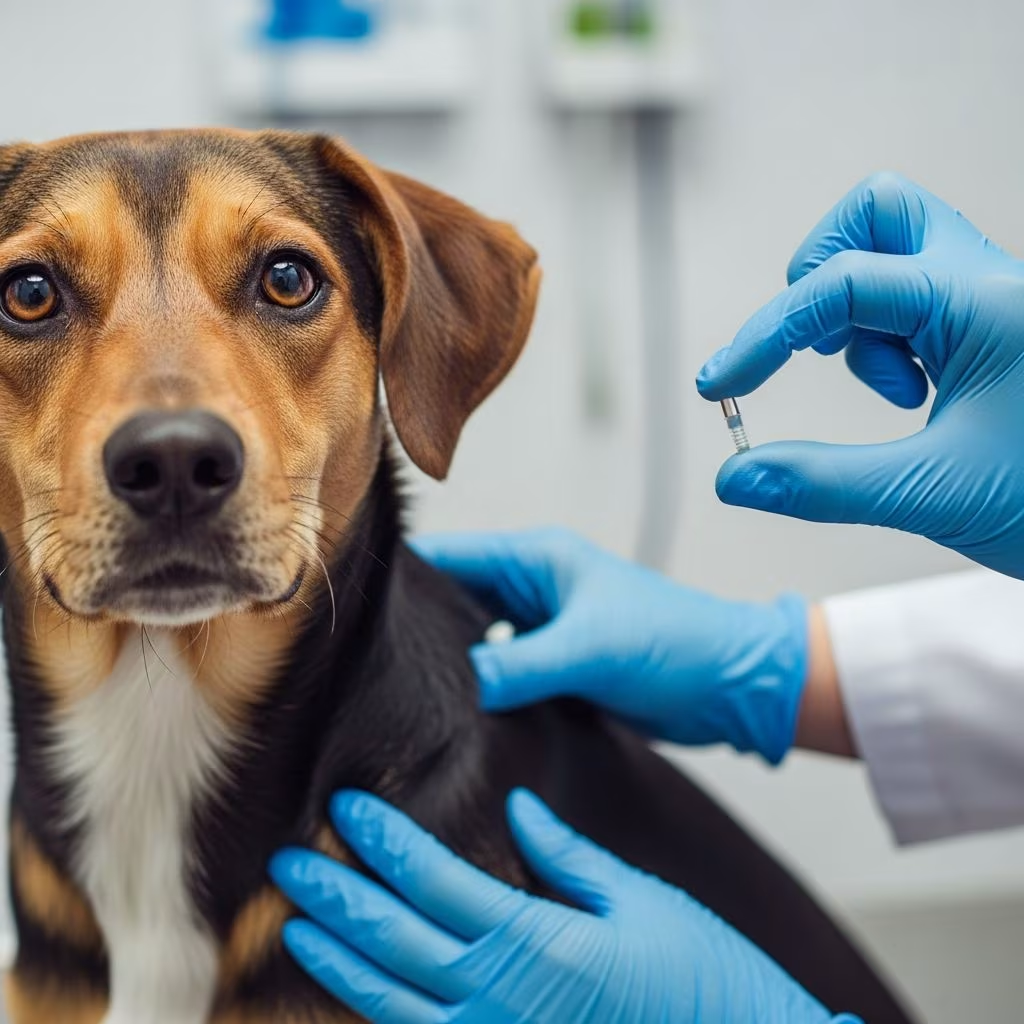
Microchipping provides dogs with a permanent, tamper-proof form of identification that dramatically boosts the chances of reuniting with owners if they get lost. This small device, implanted under the skin, links to a database with your contact details, offering reliability beyond collars and tags.
The Science Behind Microchip Technology
Microchips are tiny electronic devices, roughly the size of a grain of rice, containing a unique identification number. They remain dormant until scanned by a handheld reader that emits a low-frequency radio wave, activating the chip to transmit its code. No battery powers the chip, ensuring it lasts a dog’s lifetime without maintenance.
Veterinary organizations worldwide endorse this technology for its simplicity and effectiveness. The procedure involves a quick injection between the shoulder blades, comparable to a vaccination in discomfort level. Professional implantation by a vet minimizes any risks associated with placement.
Permanent and Secure Identification Method
Unlike collars or tags that can be removed, lost, or damaged, microchips stay embedded under the skin, making them impossible to tamper with casually. Thieves cannot alter the chip’s unique ID without accessing secure databases, which require verification processes.
This permanence proves vital during incidents like escapes during storms or fireworks, when dogs might slip collars in panic. Shelters and vets routinely scan found animals, often discovering chips that lead to swift returns.
Boosting Lost Pet Recovery Rates
Statistics highlight microchipping’s impact on reunions. Shelters report that chipped dogs are identified and returned up to 20 times more often than those relying solely on tags. In emergencies, such as natural disasters, this ID method facilitates rapid owner contact, preventing permanent shelter placement or euthanasia.
- Chipped pets returned home within days in 73% of cases at major shelters.
- Non-chipped lost dogs face lower reunion odds, often below 10%.
- Universal scanners now detect multiple chip frequencies, reducing scan failures.
Simple, Painless Implantation Process
Implanting a microchip takes under a minute and requires no anesthesia. The vet uses a large-gauge needle to place it subcutaneously, and most dogs show no reaction beyond brief tenderness. Puppies can receive chips as early as 8 weeks, with no age upper limit.
Post-procedure care is minimal—no bandages or restrictions needed. Owners receive registration details to activate the chip in a national or global database, ensuring rescuers can reach them 24/7.
Lifelong Reliability Without Replacements
These passive RFID devices have no moving parts or power source, eliminating battery failures or wear. Once implanted correctly, they function indefinitely, providing consistent identification through a dog’s entire life.
Regular scanning at vet visits confirms proper function, though migration—rare shifting from the insertion site—occurs in under 1% of cases. Vets scan the whole body if needed to locate it.
Mandatory in Many Regions for Responsible Ownership
Numerous countries and some U.S. localities require microchipping for licensing, breeding, or travel. Airlines and kennels often mandate it for boarding. Compliance avoids fines and supports community-wide lost pet recovery efforts.
| Region | Microchip Requirement |
|---|---|
| United Kingdom | Mandatory for all dogs over 8 weeks |
| Parts of Europe | Required for cross-border travel |
| Some U.S. Cities | Local ordinances for licensing |
| Australia | Nationwide compulsory registration |
Addressing Potential Health Concerns
While overwhelmingly safe, microchipping carries minimal risks. Rare side effects include temporary swelling, infection, or chip migration. Veterinary bodies like the AVMA state benefits far exceed these issues, with adverse events below 0.01% in millions of implants.
Studies on tumor links, often from rodent models, show rates of 0.8-10% in lab animals, but real-world canine data reveals no significant cancer increase. Manufacturers and vets emphasize proper technique prevents complications like improper depth leading to rejection.
- Monitor site for redness post-implant; contact vet if persists.
- Choose ISO-standard chips for broad scanner compatibility.
- Benefits in lost pet recovery outweigh rare health events.
Privacy and Database Management Best Practices
Chips store only a serial number; personal data resides in secure online registries. Owners control updates, adding vet info or allergies if desired. Reputable databases employ encryption and verification to protect against unauthorized access.
Update contact details immediately after moves or number changes. Multiple family registrations ensure redundancy. Avoid sharing chip numbers publicly to maintain security.
Cost-Benefit Analysis for Dog Owners
Initial costs range $20-60 at clinics, often bundled with vaccines. Lifetime value manifests in potential avoidance of replacement pet expenses, averaging thousands. Insurance discounts sometimes apply for chipped dogs, offsetting fees.
Compare to collar tags ($10-20, frequently lost) or GPS trackers (subscription-based), microchips offer unbeatable permanence at lower long-term cost.
Steps to Microchip Your Dog Today
- Consult your vet for scheduling and chip brand options.
- Provide accurate contact info for registry activation.
- Verify implantation and test scan on-site.
- Update records annually or as life changes occur.
- Educate family on chip location for emergencies.
Real-World Success Stories and Statistics
Countless tales underscore microchipping’s power. A dog lost in a hurricane was scanned at a shelter 1,000 miles away, reuniting via database match. Another survived a car accident, identified unconscious at an ER.
Global registries like PetLink report over 90% return rates for scanned chips. British data: 391 adverse reactions in 4 million+ chips since 1996, affirming safety.
Frequently Asked Questions (FAQs)
Is microchipping painful for dogs?
No, it’s a quick injection like a shot, with minimal discomfort.
Can microchips cause cancer?
Risk is extremely low in dogs; vet consensus favors benefits over rare tumor associations from lab studies.
What if the chip moves?
Rare, but full-body scans locate it; proper insertion prevents this.
Do all scanners read every chip?
Universal scanners cover major frequencies; adoption grows yearly.
How do I register my dog’s chip?
Your vet provides ID; activate online with chosen registry.
Expert Recommendations from Vets
Organizations like AVMA and WSAVA urge microchipping as standard care. Vets note it’s especially critical for adventurous breeds, apartment dwellers, or travel-prone owners. Pair with ID tags for layered protection.
References
- Microchipping FAQ — American Veterinary Medical Association (AVMA). 2023. https://www.avma.org/resources-tools/pet-owners/petcare/microchips-reunite-pets-families/microchipping-faq
- Dog Microchips: Common Questions and Answers — PetMD. 2023. https://www.petmd.com/dog/general-health/dog-microchips-common-questions-and-answers
- 5 Things You Need to Know About Microchipping Your Pet — Virginia Tech College of Veterinary Medicine. 2023-01-01. https://vetmed.vt.edu/news/2023/microchipping-your-pet.html
- Microchip Safety and Efficacy — World Small Animal Veterinary Association (WSAVA). 2020. https://wsava.org/wp-content/uploads/2020/01/Microchip-Safety-and-Efficacy.pdf
- Pros and Cons of Microchipping Dogs — Pets Best Insurance. 2023. https://www.petsbest.com/blog/pros-and-cons-of-microchipping-dogs
- What Are the Pros and Cons of Dog Microchipping? — Madison Animal Care. 2023. https://www.madisonanimalcare.com/pros-cons-dog-microchipping



