

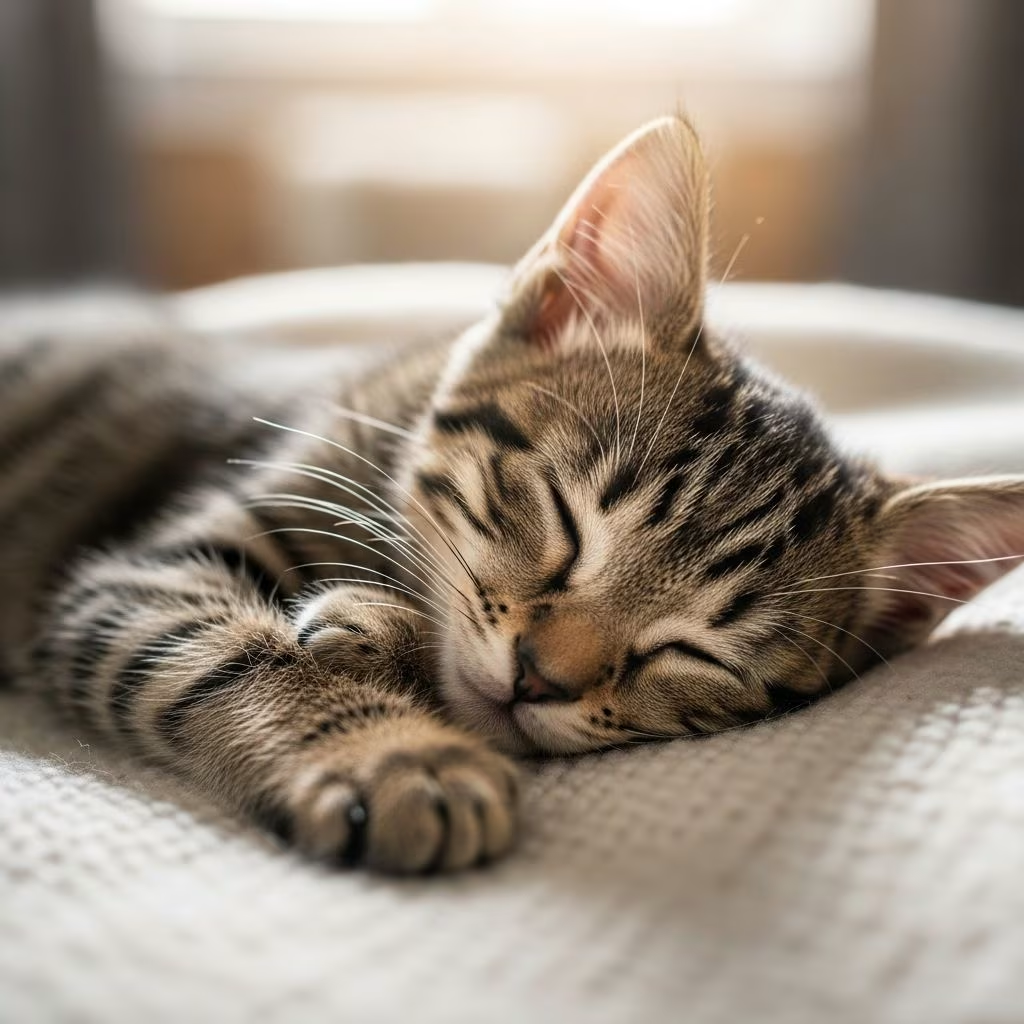
Kittens dedicate the majority of their early days to sleeping, often clocking 20 hours or more per day. This intense rest is essential for their explosive growth, neurological maturation, and overall vitality. Unlike adult cats, young felines prioritize recovery over activity to build strong bodies and sharp minds.
The Biological Imperative of Kitten Slumber
During the neonatal phase, kittens’ bodies undergo rapid cellular division and organ development, demanding vast energy reserves. Sleep serves as the primary mechanism for channeling nutrients toward these processes rather than locomotion or play. Research on kitten sleep patterns reveals distinct maturational sequences, with early increments in quiet sleep and later emergence of deeper EEG patterns.
Newborns, from birth to two weeks, slumber nearly around the clock, awakening solely for nursing. This pattern aligns with their limited mobility and dependence on maternal care. As eyes open and senses sharpen around week two, exploratory bursts interrupt the sleep cycle, yet rest remains dominant at over 90% of their time.
Age-Specific Sleep Requirements
Kitten sleep needs evolve predictably with milestones. Understanding these benchmarks helps owners distinguish normal behavior from potential concerns.
| Age Range | Average Daily Sleep | Key Characteristics |
|---|---|---|
| Birth to 2 weeks | 22 hours | Neonatal rest; wakes only to feed; 92% sleep time. |
| 2 weeks to 3 months | 18-22 hours | Exploration begins; short energy bursts; growth-focused naps. |
| 3-6 months | 16-20 hours | Increased play; crepuscular activity peaks; transitioning patterns. |
| 6+ months | 13-16 hours | Adult-like cycles; more waking hours for socialization and hunting instincts. |
These figures, drawn from veterinary observations, highlight a gradual decline as kittens mature. By adulthood, cats average 12-16 hours, reflecting conserved energy for their crepuscular lifestyle—most active at dawn and dusk.
Decoding Kitten Sleep Cycles: REM vs. NREM
Felines cycle through non-rapid eye movement (NREM) and rapid eye movement (REM) phases, mirroring human patterns but with shorter, polyphasic bouts. NREM dominates light dozing, where kittens remain alert to stimuli like maternal calls or littermate movements. Brain waves slow, facilitating easy arousal.
REM sleep, marked by twitching whiskers, paddling paws, and rapid eye flicks under closed lids, occupies a larger proportion in kittens—up to 50% of total sleep. This phase supports neural wiring, memory consolidation, and motor skill refinement. Twitching is commonplace and signals healthy dreaming, not distress.
Polygraphic studies confirm developmental shifts: quiet sleep (QS, akin to NREM) rises first (10-20 days), followed by active sleep (AS, REM-like) reductions and slow-wave emergence by 40 days. State transitions lengthen over time, stabilizing patterns.
Crepuscular Rhythms and Polyphasic Naps
Cats aren’t nocturnal but crepuscular, priming activity during twilight hours when prey stirs. Kittens inherit this, napping in clusters rather than consolidated blocks. This polyphasic strategy—multiple short sleeps—optimizes energy for growth spurts and play pounces.
- Daytime Naps: Frequent 1-2 hour dozes recharge after feeding or frolicking.
- Nighttime Patterns: Partial nights awake align with human schedules as they age, though dawn choruses may ensue.
- Energy Conservation: Wild ancestry favors rest to preserve calories between hunts.
Creating an Optimal Sleep Sanctuary for Your Kitten
A supportive environment amplifies rest quality, curbing disruptions and promoting deeper cycles. Key elements include:
- Cozy Bedding: High-sided caves or blanket nests mimic den security; position away from food/litter zones.
- Quiet Corners: Low, undisturbed spots prevent falls; crates work for multi-pet homes.
- Temperature Control: 75-80°F ideal; kittens can’t regulate body heat well initially.
- Play Scheduling: Daytime exertion tires them for nighttime slumber; avoid evenings.
Post-meal drowsiness is normal—wet food 30 minutes before bed aids settling with a full belly.
Signs Your Kitten’s Sleep Is Healthy or Concerning
While prolific sleeping is standard, vigilance spots anomalies. Healthy indicators:
- Responsive upon gentle waking.
- Balanced eat-play-sleep cycles.
- Occasional twitching or soft purrs.
Worrisome flags demand vet attention:
- Sudden lethargy beyond age norms.
- Refusal to eat/play.
- Unusual postures or vocalizing during rest.
Environmental stressors like loud noises or new pets can fragment sleep; monitor adjustments.
From Kitten Naps to Adult Cat Siestas: The Transition
Around 6-7 weeks, social play surges, compressing sleep into adult-like polyphasic rhythms. By teething (5-7 months), 13-16 hours suffice, with more alert periods for litter interaction.
This shift reflects nervous system maturation: motor skills, socialization, and EEG sophistication emerge. Owners note reduced daytime inertia, increased mischief at crepuscular peaks.
Practical Tips to Sync Kitten Sleep with Your Routine
Encourage nocturnal alignment without forcing:
- Fatigue Through Fun: Interactive toys midday exhaust reserves.
- Consistent Feeding: Scheduled meals regulate circadian cues.
- Dim Lighting: Soften evenings to signal wind-down.
- Patience: Under 3 months, prioritize growth over schedule.
Frequently Asked Questions (FAQs)
Is it normal for my newborn kitten to sleep 24/7?
Yes, up to 22 hours supports vital growth; they wake briefly for feeds.
Why does my kitten twitch while sleeping?
REM dreaming refines reflexes; harmless unless excessive.
How can I get my kitten to sleep through the night?
Daytime play, cozy beds, and bedtime feeds help; full alignment takes months.
When should I worry about too much sleep?
If paired with appetite loss or unresponsiveness, consult a vet promptly.
Do all kittens sleep the same amount?
Breeds vary slightly, but age drives primary differences.
Supporting Long-Term Health Through Better Sleep
Quality rest bolsters immunity, curbing illness risks during development. Owners fostering serene havens raise resilient adults. Track patterns via journals to share with vets during checkups.
In summary, your kitten’s somnolence is a superpower for thriving. Embrace it, optimize conditions, and watch them blossom into vibrant companions.
References
- Polygraphic studies of kitten development: sleep state patterns — Research Support, U.S. Gov’t, P.H.S. 1979-12-01. https://pubmed.ncbi.nlm.nih.gov/199512/
- Cat Sleep Cycle: Patterns, Health Signs, and Tips for Owners — Welltayl. Accessed 2026. https://welltayl.com/blogs/news/cat-sleep-cycle
- A guide to kitten sleeping habits — Vets4Pets. Accessed 2026. https://www.vets4pets.com/pet-health-advice/cat-advice/kitten/a-guide-to-kitten-sleeping-habits/
- How To Help Your Kitten Sleep Through the Night — Sheba UK. Accessed 2026. https://www.uk.sheba.com/blog/health/how-to-help-your-kitten-sleep-better
- Why Is My Kitten Sleeping So Much? — Lemonade Insurance. Accessed 2026. https://www.lemonade.com/pet/explained/why-is-my-kitten-sleeping-so-much/
- Everything you need to know about kitten sleeping habits — Untamed. Accessed 2026. https://untamed.com/blogs/cat-care/kitten-sleeping
- Tracking your kitten’s development and growth stages — Royal Canin. Accessed 2026. https://www.royalcanin.com/nz/cats/kitten/kitten-development-from-birth-to-adulthood



