

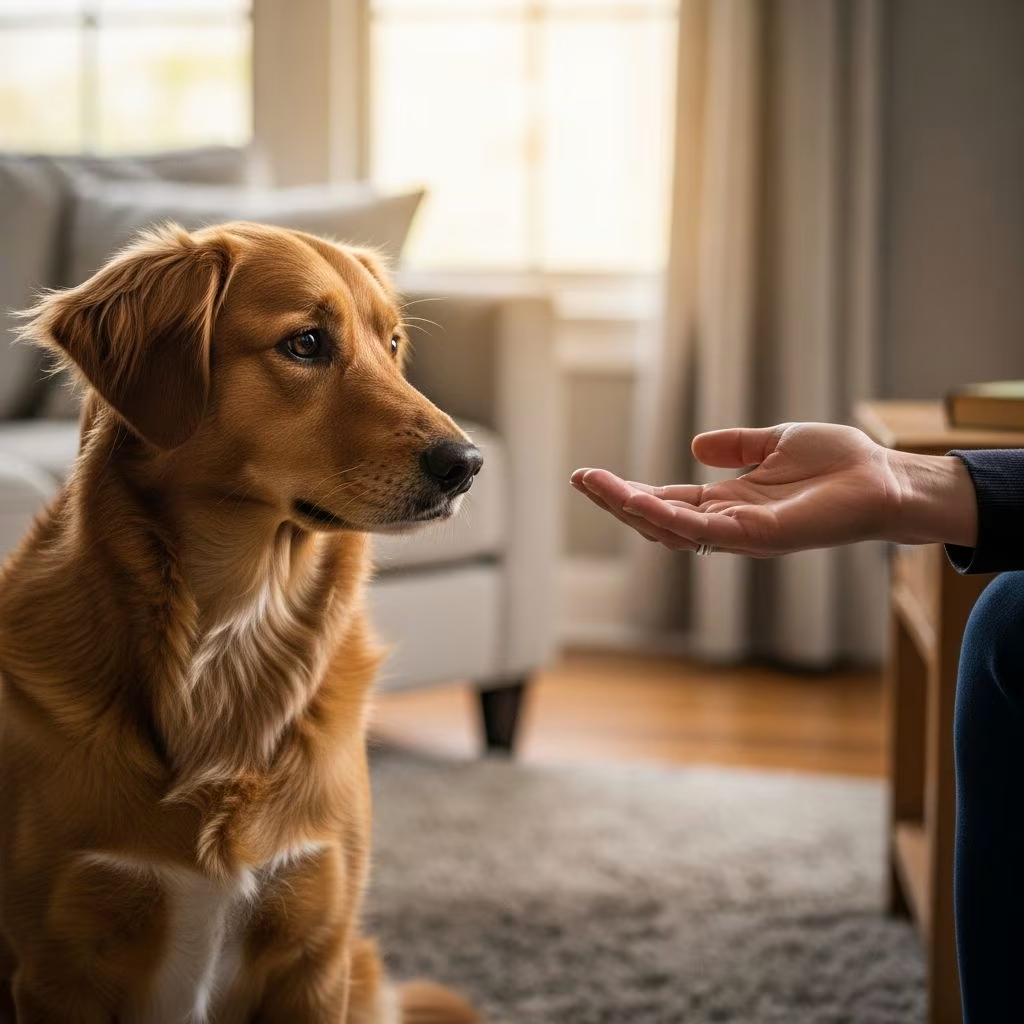
Dogs express affection in diverse ways, but when your furry friend appears distant or uninterested in cuddles, it can feel disheartening. Scientific research reveals that dogs form deep emotional bonds with humans, akin to parent-infant attachments, yet individual personalities, past experiences, and health factors influence how openly they display warmth. This article delves into the underlying causes of subdued affection and offers actionable steps to strengthen your relationship.
Understanding Canine Emotional Capacity
Dogs develop a full range of emotions by 4-6 months of age, mirroring early childhood stages in humans up to about 2 years old. This includes the ability to feel love, trust, and attachment, driven by hormones like oxytocin—the same chemical that fuels human bonding during hugs or parental care. Studies show that mutual gazing between dogs and owners elevates oxytocin levels in both, creating physiological parallels to human romantic or familial love.
Unlike humans, dogs prioritize social cues from familiar people, paying closer attention to their caregivers’ actions, expressions, and intentions. This attentiveness stems from domestication, which selected for traits like social tolerance and cooperation, enabling dogs to synchronize behaviors with humans. However, not all dogs broadcast affection through obvious gestures; some convey it subtly through proximity or shared activities.
Signs Your Dog Loves You Quietly
Even reserved dogs demonstrate attachment through non-verbal cues. Recognizing these can reassure owners that affection exists beneath the surface.
- Leaning or physical contact: Dogs often lean against or nap near trusted humans, signaling safety and comfort.
- Heart rate synchronization: Upon reunion after separation, bonded dogs and owners experience aligned heart rate drops, indicating emotional harmony.
- Overimitation: Dogs mimic unnecessary actions from their owners to please or affiliate, a behavior linked to strong bonds.
- Proximity seeking: Staying close during petting or play shows enjoyment and trust.
- Empathetic responses: Approaching when an owner is upset suggests prosocial helping motivated by concern.
These behaviors highlight that love in dogs is often action-based rather than performative, rooted in evolutionary hypersociability toward humans.
Common Reasons for Limited Affection
Several factors can dampen a dog’s outward displays of warmth. Understanding them helps address root causes effectively.
| Factor | Description | Impact on Affection |
|---|---|---|
| Personality Traits | Independent breeds like Akitas or Shiba Inus naturally seek less physical closeness. | Prefers quality time over constant cuddles. |
| Past Trauma | Abuse or neglect history leads to wariness. | Trust must be rebuilt gradually. |
| Health Issues | Pain from arthritis or illness causes withdrawal. | Vet check recommended first. |
| Age-Related Changes | Senior dogs may become less playful due to reduced energy. | Affection shifts to calmer interactions. |
| Environmental Stress | New homes or loud noises heighten anxiety. | Separation behaviors mimic attachment but appear distant. |
Research confirms that the quality of the dog-human bond directly influences attentiveness and prosocial behaviors, with insecure attachments leading to avoidance.
Health Checks: Ruling Out Physical Causes
Before assuming behavioral issues, consult a veterinarian. Conditions like hypothyroidism, dental pain, or joint problems can make dogs irritable or reclusive, mimicking aloofness. Regular wellness exams ensure underlying issues aren’t masquerading as emotional distance. For instance, painful mobility might prevent enthusiastic greetings, but pain relief can restore normal interactions.
Building Trust Through Positive Interactions
Fostering affection requires patience and consistency. Dogs respond best to reward-based approaches that reinforce the attachment bond.
- Respect personal space: Allow your dog to initiate contact, avoiding forced hugs that breed resentment.
- Use high-value rewards: Pair treats, toys, or praise with your presence to associate you with positivity.
- Engage in joint activities: Walks, training sessions, or play build cooperation and oxytocin release.
- Maintain routines: Predictable schedules reduce anxiety, encouraging relaxed affection.
- Practice gentle desensitization: For touch-averse dogs, start with brief, positive petting sessions.
Studies on assistance dogs demonstrate that cooperative problem-solving enhances social attentiveness, translating to family pets through shared daily tasks.
Decoding Body Language for Better Connection
Misreading signals can erode trust. Key indicators include:
- Relaxed ears and tail: Loose wags or neutral positions signal comfort.
- Soft gaze: Direct eye contact from a dog shows confidence in the bond.
- Yawning or lip-licking: Stress signs; back off to prevent escalation.
- Play bows: Invitations to interact, a clear affection cue.
Observing these helps tailor interactions, as dogs integrate human facial expressions, vocal tones, and gestures into multi-modal understanding.
Breed-Specific Affection Styles
Genetics play a role in expression. Herding breeds like Border Collies show love through work and focus, while lap dogs like Cavaliers crave constant touch. Research on domestication underscores how selective breeding amplified human-oriented traits, but variations persist. Match expectations to breed tendencies for fulfillment.
Addressing Separation Anxiety Links
Paradoxically, intense attachment can manifest as distress when alone, leading to avoidance upon return to self-protect. Tests mirroring human attachment studies—distress on separation, joy on reunion—confirm dogs form secure or insecure bonds. Calming aids like puzzle toys during absences strengthen resilience.
Advanced Bonding Techniques
For deeper connections, incorporate scent games or massage therapy. Allowing dogs to “work” for food via enrichment mimics natural behaviors, boosting endorphins and affiliation. Mutual gazing exercises, proven to spike oxytocin, can be done briefly during calm moments.
FAQs
Why does my rescue dog avoid cuddles?
Rescues often carry trauma, requiring time to rebuild trust. Consistent positive reinforcement helps.
Can older dogs become more affectionate?
Yes, with health optimizations and gentler interactions, seniors often seek more lap time.
Is tail wagging always a love sign?
No; broad, full-body wags indicate joy, while stiff ones signal alertness.
How long to see affection changes?
Weeks to months, depending on consistency and history. Patience is key.
Should I punish lack of affection?
Never; punishment erodes bonds. Focus on rewards instead.
Long-Term Relationship Nurturing
Sustaining affection involves lifelong commitment. Annual training refreshers, socialization, and health monitoring keep bonds vibrant. Remember, dogs view owners as family pack leaders, deriving security from clear leadership. By aligning with their emotional world—rooted in cooperation, hormones, and observation—you unlock their innate capacity for devotion.
References
- How Dogs Perceive Humans and How Humans Should Treat Their Dogs — Kubinyi E et al., PMC. 2020-12-01. https://pmc.ncbi.nlm.nih.gov/articles/PMC7772310/
- Here’s how to tell if your dog actually loves you, according to science — BBC Science Focus. 2023-05-15. https://www.sciencefocus.com/nature/does-your-dog-really-love-you
- Do Dogs Feel Love? How to Know If Your Dog Loves You — Holiday Barn. 2022-08-10. https://holidaybarn.com/blog/do-dogs-feel-love/
- Five ways your dog shows you affection — BC SPCA. 2024-03-20. https://spca.bc.ca/news/five-ways-your-dog-shows-you-affection/
- Is My Dog Happy? 13 Signs of a Happy Dog — PetMD. 2025-01-12. https://www.petmd.com/dog/behavior/is-my-dog-happy



