

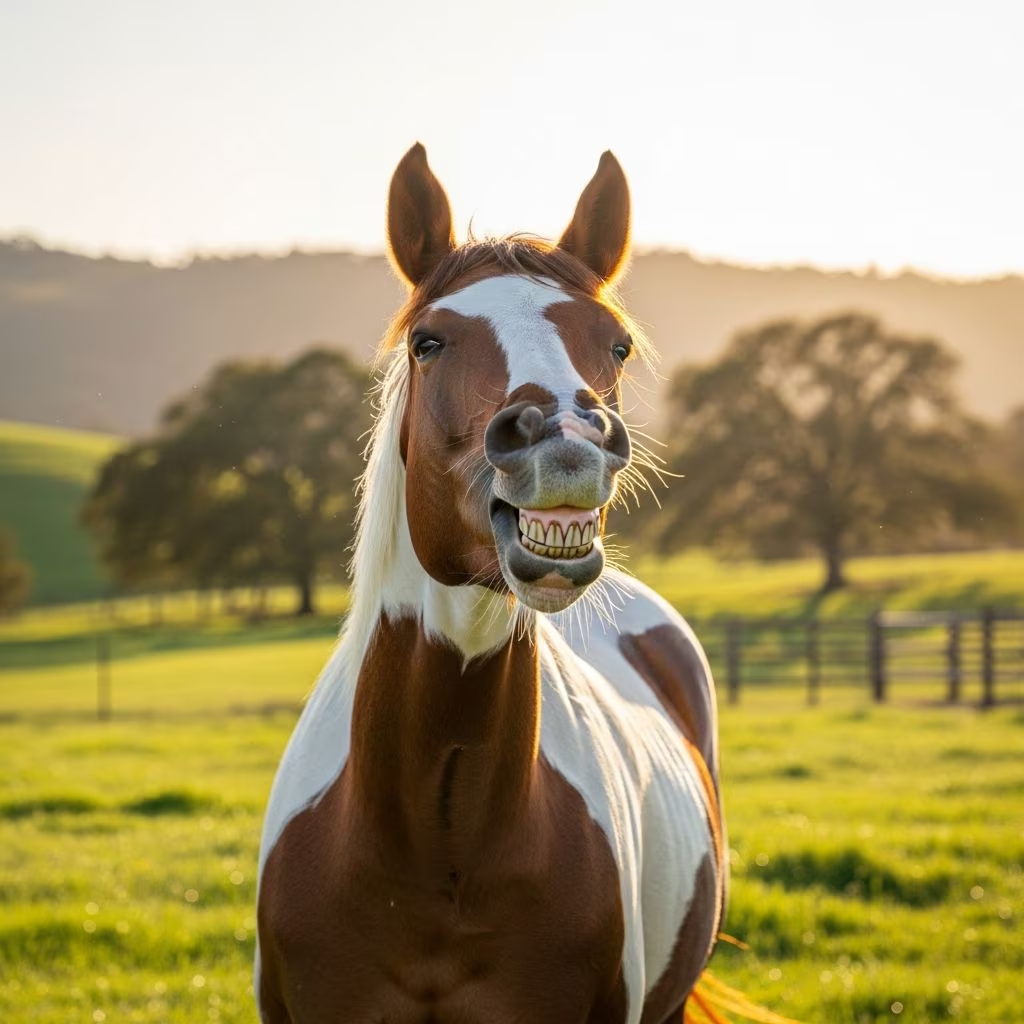
Why Is My Horse Laughing? Is This Normal?
Have you ever caught your horse making what looks like a giant grin or heard what sounds like laughter emanating from the paddock? If so, you’re not alone in wondering whether horses possess the ability to laugh like humans do. While the sight of a horse with its lip curled back or engaging in playful antics might seem like unmistakable evidence of equine humor, the reality behind these behaviors is far more nuanced and rooted in biology rather than comedy appreciation. Animal behaviorists have determined that horses don’t laugh in the way humans do, yet they do display remarkable emotional depth through various body language cues and vocalizations that we can learn to interpret.
Can Horses Actually Laugh?
The straightforward answer is no—horses cannot laugh the way humans do. Despite what viral videos and humorous memes might suggest, horses lack the vocal and neurological mechanisms necessary to produce laughter-like sounds. From a scientific standpoint, laughter is fundamentally tied to specific brain functions and vocal structures that horses simply don’t possess. However, this doesn’t mean horses lack emotions or the capacity to experience joy and amusement.
Horses have evolved sophisticated communication systems that rely heavily on body language, facial expressions, and distinct vocalizations such as neighs, whinnies, and nickers. These methods of expression are far more meaningful to horses than any audible laughter would be. Research demonstrates that horses can distinguish between joyful and angry human facial expressions and voices, suggesting they do experience emotional responses that parallel some of our own. However, they likely don’t express these emotions through laughter-like sounds.
The distinction is important: while horses may experience some of the emotions we associate with laughter, they communicate them through entirely different mechanisms. Dr. Natalie Lord, a large and small animal veterinarian, humorously notes that horses might be “laughing internally” at human behavior, recognizing that much of what humans do appears odd from an equine perspective. Nevertheless, their method of expressing amusement differs fundamentally from human laughter.
Why Do People Think Horses Laugh?
Despite scientific evidence that horses don’t actually laugh, many people continue to believe they do. This misconception arises primarily because certain equine behaviors can genuinely resemble human laughter when captured in photographs or videos. These images spread rapidly on social media, creating a widespread perception that horses possess a sense of humor similar to humans. Understanding the actual explanations for these behaviors helps horse owners distinguish between genuine equine communication and anthropomorphic interpretation.
The Flehmen Response or “Stud Laugh”
The most famous behavior misinterpreted as horse laughter is the Flehmen response, often colloquially referred to as the “stud laugh.” When a horse lifts its upper lip, wrinkles its nose, and holds this distinctive pose for several seconds, it creates an almost comical image that resembles a hearty human laugh or wide grin. However, this appearance is entirely deceptive regarding the horse’s actual emotional state or intentions.
In reality, the Flehmen response is a specialized sensory behavior. When a horse exhibits this response, it’s opening up its nasal passages to direct scents more effectively toward the vomeronasal organ, also called Jacobson’s organ, which is located on the roof of the mouth. This organ plays a crucial role in analyzing unusual or unfamiliar scents, allowing horses to gather detailed chemical information about their environment. The behavior is triggered by strong smells and serves an important biological function rather than indicating humor or joy. Interestingly, this behavior is more commonly observed in male horses than females.
Rolling on the Ground
Another behavior that might appear to be laughter-induced is when a horse drops to the ground and rolls side to side with legs flailing in the air. From a distance, this exuberant display can look like a horse is laughing uncontrollably. In truth, rolling serves several important purposes for horses. Horses roll to scratch an itch, shed loose hair, or simply enjoy the comfort and sensation of the earth beneath them. This behavior is also a sign of contentment and relaxation, indicating that a horse feels safe enough to lie down in its environment.
Head Tossing and Playful Movement
When a horse is turned out into a pasture after being confined to a stall, it may run, buck, and toss its head in movements that seem like gleeful laughter. These energetic actions are expressions of freedom and the release of pent-up energy rather than manifestations of humor. However, they do highlight the genuine happiness and contentment a horse experiences when given the opportunity to move freely. The exuberance displayed during these moments reveals the emotional satisfaction horses derive from physical activity and environmental stimulation.
Long Yawning or “Release”
Research indicates that horses may yawn when receiving calming medications, but they may also yawn during periods of stress. Without definitive scientific explanations for horse yawning, many trainers and equine care professionals refer to this behavior as a “release”—a type of behavior that can help horses relieve tension and stress. After bodywork, acupuncture, or other therapeutic treatments, horses often display head shaking and yawning, which appears to be related to endorphins and oxytocin release. These horses might experience a tingling or cascading sensation down their spine, which they express through these distinctive movements.
The neck-stretching, mouth-opening gesture that resembles a human yawn signals the release of stress rather than drowsiness, distinguishing it from a typical yawn humans might experience.
Dry Choking
In rare cases, horses experiencing dry choking might display what appears to be dramatic laughter. Normally, choking in horses involves large amounts of fluid coming from the nose, but in unusual situations where a dry stick or wad of dry hay becomes lodged in the esophagus, horses may exhibit different symptoms. They might snake their neck back in an S-shape and then stretch it out in an unnatural manner that could superficially resemble head-throwing laughter. This is a medical concern that requires veterinary attention and should never be mistaken for humor.
Understanding Authentic Equine Communication
Rather than focusing on behaviors that might resemble laughter, horse owners benefit greatly from learning to interpret the authentic signals horses use to communicate their emotional states and intentions. Horses are remarkably expressive animals, and their true communication methods are far more reliable indicators of their well-being than any behavior resembling human laughter.
Ear Signals
A horse’s ears provide clear windows into its emotional state. Ears pricked forward indicate curiosity or attention, signaling that the horse is interested in something in its environment. Conversely, ears flattened against the head signal anger, fear, or discomfort. The position and movement of a horse’s ears change rapidly based on its attention and emotional responses, making them one of the most reliable indicators of a horse’s feelings at any given moment.
Eye Signals
The eyes are equally expressive. Wide, tense eyes may reveal fear or anxiety, whereas soft, half-closed eyes indicate relaxation and contentment. The quality of a horse’s gaze—whether it appears hard and focused or soft and gentle—communicates volumes about its emotional state. A horse making direct eye contact with relaxed eyes displays confidence and trust, while wide eyes with visible whites suggest fear or alarm.
Body Language and Posture
The overall posture and body language of a horse convey comprehensive information about its emotional state. A horse standing with relaxed muscles, ears forward, and soft eyes is content and confident. Conversely, a horse with tense muscles, raised tail, and alert posture may be excited, anxious, or preparing to flee. Understanding these subtle expressions is critical because misinterpretation can lead to safety risks or miscommunication between horse and handler.
Can Horses Recognize Human Emotions?
Research has shown that horses possess a remarkable ability to read and respond to human emotional cues. They can detect human facial expressions, vocal tones, and body language, allowing them to assess whether a person is calm and happy versus tense or upset. This sensitivity helps strengthen the bond between horses and their owners, as horses often mirror or respond to the emotional states of the humans around them. Understanding this capacity underscores the importance of approaching horses with awareness of one’s own emotional state, as horses are keen observers of their environment and highly responsive to human behavior.
Playfulness and Social Bonding in Horses
While horses don’t laugh, they do engage in play, especially younger horses. In social groups, young horses often test boundaries and engage in playful challenges, suggesting that humor-like behavior may play a role in learning and social bonding. These playful interactions help horses develop social skills, establish hierarchies, and strengthen relationships within their herds. However, it’s important to remember that horses’ “humor” is rooted in instinct and communication rather than in an understanding of jokes or irony. What we perceive as funny behavior may simply be a horse exploring its environment, seeking attention, or engaging in natural social behaviors.
Frequently Asked Questions
Q: Why do horses curl their lips up?
A: The most common reason for horses to curl their lips up like they’re “smiling” is the Flehmen response, which is one way horses get more information about an unusual odor. This behavior helps them analyze scents through the vomeronasal organ and is not a sign of humor or happiness.
Q: Is a horse laughing ever a sign of pain or illness?
A: In most cases, behaviors that resemble laughing indicate normal equine communication and emotional expression. However, the rare exception is dry choking, where a horse might display unusual neck and head positioning that could superficially resemble laughter. If you’re concerned about your horse’s health or notice unusual behaviors, consult with a veterinarian.
Q: Can horses understand when humans are happy?
A: Yes, studies show that horses can read human facial expressions and emotional cues. They may respond differently when you’re calm and smiling versus when you’re tense or upset. This sensitivity helps strengthen the bond between horses and their owners.
Q: Do other animals laugh like humans do?
A: Some animals, such as chimpanzees, gorillas, dogs, and even rats, have been shown to produce laughter-like sounds, especially during play. Horses, however, are not on that list. Instead, they express joy through body language, movement, and vocalizations like nickers and whinnies.
Q: What does it mean when my horse nickers at me?
A: Nickers are soft vocalizations that horses use to communicate affection, recognition, and contentment. When a horse nickers at you, it’s expressing positive emotion and may indicate that it recognizes and values your presence.
Conclusion: Understanding Your Horse’s True Expressions
While horses don’t giggle at jokes or burst into laughter during play, they are far from emotionless creatures. What we often interpret as a smile or laugh is usually the Flehmen response or another playful behavior rooted in equine biology and communication. Instead of laughter, horses rely on body language, vocalizations, and subtle cues to express themselves and interact with their environment and social groups.
By learning to recognize and interpret these authentic signals—ear positions, eye expressions, body posture, and vocalizations—horse owners can develop a deeper understanding of their animals and strengthen their relationships. The next time your horse displays a seemingly amusing expression or behavior, remember that behind that “grin” lies a complex communication system far more sophisticated than simple laughter. Appreciating horses for what they truly are—highly intelligent, emotionally aware animals with their own unique ways of expressing themselves—is the key to meaningful and safe human-horse interactions.
References
- Do Horses Laugh or Smile? Truth Behind Equine Expressions — BayeQuest. https://www.bayequest.com/do-horses-laugh-or-smile/
- Why do horses LAUGH and smile – the use of flehmen response — Datacube. 2015-07-16. https://www.youtube.com/watch?v=6b2psqHa-2E
- Why Is My Horse Laughing? Is This Normal? — Chewy. https://www.chewy.com/education/horse/training-and-behavior/horse-laughing
- Enhanced Understanding of Horse–Human Interactions to Optimize Equine Performance — National Center for Biotechnology Information (NCBI). https://pmc.ncbi.nlm.nih.gov/articles/PMC8151687/



