

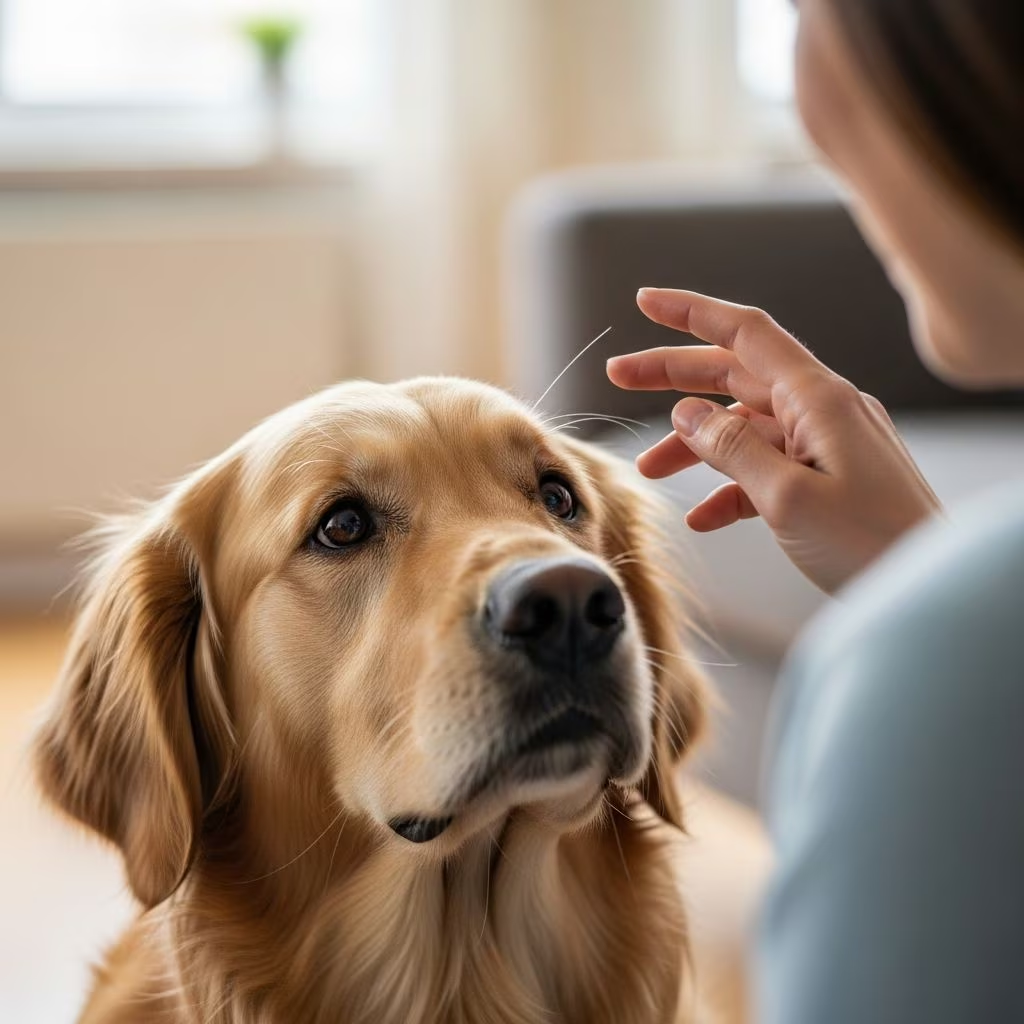
Why Is My Dog Staring at Me? Understanding Pet Body Language
Have you ever noticed your dog watching you intently, their eyes locked on yours without breaking contact? Whether you’re eating dinner, working at your desk, or simply relaxing on the couch, your dog’s unwavering gaze can feel both endearing and puzzling. Many dog owners wonder what goes through their pet’s mind during these moments of intense eye contact. The truth is, dog staring is a complex form of communication that can mean many different things depending on the context and accompanying body language.
Unlike humans who use words to express themselves, dogs rely heavily on body language, facial expressions, and eye contact to communicate with us. Staring is one of the most common ways dogs try to tell us something—whether they need food, want to play, or simply crave our attention. Understanding what your dog’s stare means is key to strengthening your bond and responding appropriately to their needs.
The Meaning Behind Dog Eye Contact
When your dog stares at you, it’s important to recognize that this behavior doesn’t have a single, universal meaning. Instead, eye contact in dogs serves multiple purposes depending on the situation and the dog’s emotional state. Dogs are incredibly perceptive animals that constantly monitor our behavior, reading our facial expressions and body language to understand what we might do next. This attentiveness has developed over thousands of years of living alongside humans, making dogs uniquely attuned to our moods and movements.
A dog’s stare can communicate everything from affection and trust to uncertainty and discomfort. Context is absolutely crucial when interpreting what your dog is trying to tell you. By learning to read the subtle signals accompanying their stare—such as ear position, body posture, tail movement, and facial tension—you can decode what your dog is really thinking and feeling.
Five Common Reasons Your Dog Stares at You
1. They Want Something From You
One of the most straightforward reasons dogs stare is to get what they want. Dogs are quick learners, and they soon discover that eye contact often leads to action from their owners. If your dog gazes intensely at you whenever you approach the treat cupboard, reach for the leash, or head toward the kitchen, they’re likely communicating their desire for a reward, walk, meal, or playtime. This type of stare is often accompanied by other attention-seeking behaviors such as whining, pacing, or nudging. Your dog has learned that staring catches your attention and frequently results in getting what they desire.
It’s important to understand that rewarding this behavior—by giving your dog what they want immediately after they stare—can reinforce the habit. While this isn’t necessarily problematic, you may want to teach your dog alternative ways to request things, such as sitting politely or bringing you a toy, to avoid excessive staring-based manipulation.
2. They’re Looking to You for Guidance
Dogs that have been trained using positive reinforcement methods often learn that paying attention to their owners is rewarding. In uncertain situations or new environments, your dog may stare at you while waiting for your next cue or signal. This is actually a positive behavior that trainers often encourage through dedicated training. When your dog checks in with you by making eye contact, they’re essentially asking, “What’s next? What do you want me to do?”
This type of stare demonstrates that your dog trusts you and looks to you as their guide. It’s particularly common in well-trained dogs during obedience practice or when navigating unfamiliar situations. Rewarding this focused attention helps strengthen your dog’s tendency to look to you for direction, making training sessions more effective and deepening the partnership between you and your pet.
3. They’re Trying to Connect With You
Soft, relaxed eye contact between dogs and humans can trigger the release of oxytocin—often called the “love hormone”—in both species. This neurochemical plays a crucial role in bonding, trust, and feelings of affection. When your dog makes gentle, warm eye contact with you, they’re expressing their fondness and strengthening your emotional connection. This type of stare is your dog’s way of saying, “I enjoy being with you and I feel safe in your presence.”
Mutual staring between you and your dog during calm moments can reinforce your bond just as it does between a mother and newborn. It’s one of the most heartwarming forms of canine communication and a reminder of why dogs are called “man’s best friend.” Reciprocating this soft eye contact by returning their gaze with kindness and calm affection deepens the trust and love between you.
4. They’re Unsure or Uncomfortable
Not all stares are positive. A tense, hard stare accompanied by a stiff posture, pinned ears, or closed mouth can signal stress, anxiety, or discomfort in your dog. This type of staring is very different from the soft gaze of affection and should be taken seriously. A dog giving a hard stare may be feeling threatened, uncomfortable, or uncertain about a situation. This is especially important to recognize when your dog is staring at another dog, as prolonged eye contact between canines is often interpreted as rude or confrontational in the dog world.
When you notice a hard stare combined with other tension indicators, it’s best to give your dog space and avoid staring back. Instead, redirect their attention to something positive like their favorite toy or a fun activity. Understanding the difference between an affectionate stare and a stressed stare is essential for keeping your dog safe and maintaining peaceful interactions with other pets.
5. They’re Reading Your Body Language
Dogs are extraordinarily attuned to human body language and facial expressions. Since dogs and humans don’t share a common language, dogs have learned to interpret our nonverbal cues to predict what might happen next. Your dog may stare at you to gather information about your intentions and emotional state. For example, if you often pick up the leash before going for a walk, your dog will watch for this signal and may stare while anticipating the upcoming walk. Similarly, dogs watch for cues related to feeding time, playtime, and car rides.
This constant observation and reading of your behavior is a survival strategy that dogs have developed over millennia. By paying attention to your movements and expressions, your dog can better prepare for what comes next and react appropriately to their environment. This attentiveness is one of the reasons why dogs are so responsive to training and so deeply integrated into human society.
Understanding Hard Eye and Threatening Stares
While most dog staring is harmless and often endearing, it’s crucial to recognize when a stare transitions into something more serious. A “hard eye” or threatening stare is characterized by an intense, unblinking, fixed gaze that often indicates dominance, aggression, or a warning. In these situations, the dog’s entire body may appear tense and frozen, with ears positioned forward or to the side with visible tension. The whiskers may appear flared, and the dog’s body might be oriented directly toward the person or animal receiving the stare.
This type of stare should never be encouraged or engaged with through staring back. Never stare down a strange dog or try to hold a dog still while staring into their eyes, as this can escalate tension and potentially lead to aggression. If you encounter a dog giving this type of stare, slowly look away, avoid making direct eye contact, and back away calmly. A hard stare and freeze may be the final warning before escalation or even a bite.
The Curious Case of Staring While Toileting
One of the most amusing—and sometimes awkward—instances of dog staring occurs while your pet is having a bowel movement. It’s a common phenomenon that many dog owners experience but few understand. Dogs often maintain eye contact with their owners during toileting because they feel vulnerable during this time and are seeking reassurance and protection from you. Your dog’s stare during this moment is their way of saying, “I trust you to keep me safe while I’m in this vulnerable position.”
This behavior is perfectly normal and actually reflects the strong bond between you and your dog. Rather than finding it strange or uncomfortable, it can be viewed as a sign of trust and confidence in your ability to protect them. Simply returning a warm, reassuring gaze or offering verbal encouragement can provide comfort to your dog during these private moments.
Should You Stare Back at Your Dog?
The answer to whether you should return your dog’s stare depends on several factors. If your dog is giving you a soft, affectionate look, mutual eye contact is wonderful and can strengthen your bond through oxytocin release. However, the intensity and context of the stare matter greatly. For anxious, fearful, or reactive dogs, a prolonged direct stare can feel intimidating and increase stress rather than comfort.
Rather than engaging in a staring contest with these dogs, look for alternative ways to connect and show affection. Reaching for their favorite toy, offering a treat, or engaging in play can create positive interactions without the intensity of direct eye contact. The goal is to make your dog feel safe and loved, and for some dogs, that means respecting their preference for less direct forms of attention.
Dog-to-Dog Staring: A Different Story
While a dog’s stare directed at you might be sweet and affectionate, the same behavior between two dogs carries very different significance. In the canine world, prolonged eye contact is considered rude, disrespectful, and potentially confrontational. What appears to be curious interest or friendly behavior in a young puppy can quickly escalate into tension, conflict, or even aggression if left unchecked.
If your dog stares intently at other dogs, it’s important to redirect their attention and teach them appropriate social behavior. This habit can cause stress for other dogs and may lead to confrontations that could result in injury or trauma for either animal. Teaching your dog to look away from other dogs and redirect their focus to you is an essential part of responsible dog ownership and canine social etiquette.
Using Dog Staring to Your Advantage in Training
Rather than trying to discourage your dog’s natural tendency to stare, you can harness this behavior as a powerful training tool. Most dog staring is a combination of affection and attention-seeking, which makes focused eye contact an excellent foundation for training success. A dog that is looking at you is less likely to be distracted by environmental stimuli, making them more responsive to commands and instructions.
Consider teaching your dog a specific cue for eye contact, such as “look at me” or “watch me.” When your dog responds to this cue and maintains focus on you, reward them generously with treats and praise. This creates a strong association between eye contact and positive outcomes, making your dog more likely to offer their attention when you request it. Over time, you can use this focused attention to improve obedience, reduce distractions during walks, and strengthen your overall communication.
Reading the Full Picture: Body Language Context
To accurately interpret your dog’s stare, you must consider their entire body language rather than focusing solely on their eyes. A soft stare combined with relaxed ears, loose body posture, and a wagging tail sends a completely different message than a tense stare accompanied by pinned ears, raised hackles, and a rigid stance. The position of your dog’s ears, the tension in their face, their tail position, and their overall body posture all contribute to the meaning of their stare.
Take time to observe your dog’s body language during different situations. Notice how they look at you when they want a treat versus how they look at another dog they’re unsure about. Notice the difference between their expression during calm moments and during stressful situations. Developing this observational skill will greatly enhance your ability to understand your dog’s communication and respond appropriately to their needs and emotions.
Frequently Asked Questions About Dog Staring
Q: Is it bad if my dog stares at me constantly?
A: Constant staring isn’t necessarily bad, but it may indicate that your dog is anxious, seeking attention, or hoping for something from you. If accompanied by panting, pacing, or other signs of stress, consult your veterinarian to rule out anxiety issues. You can also redirect this behavior by establishing specific times for focused interaction and teaching your dog other ways to communicate their needs.
Q: What does it mean if my dog averts their gaze?
A: When a dog looks away from you, it can indicate submission, lack of confidence, or anxiety about interaction. Some dogs avoid eye contact due to past negative experiences with people. This is often a sign that your dog is uncomfortable or uncertain, and it’s important to build their confidence through positive interactions and patient training.
Q: Can I train my dog to stare on command?
A: Yes, absolutely. Teaching your dog to maintain eye contact on command is an excellent training skill. Use a consistent cue like “look at me” and reward your dog immediately when they make eye contact. This controlled staring can improve your dog’s focus and obedience while strengthening your bond.
Q: Why does my dog stare at me when I’m eating?
A: Dogs often stare at their owners while eating because they want to share the food. This learned behavior develops when owners reward the stare by sharing table scraps. If you want to discourage this, avoid looking at or feeding your dog while you’re eating, and consider having your dog rest in another area during meals.
Q: Is my dog staring at me because they love me?
A: Often yes. Soft, mutual eye contact releases oxytocin in both dogs and humans, which strengthens bonding and trust. However, staring can also indicate your dog wants something or is reading your body language. The context and your dog’s overall body language will help you determine the true meaning.
References
- 5 Common Reasons Your Dog Stares At You — Tug-E-Nuff. 2025. https://us.tug-e-nuff.com/blogs/news/why-dogs-stare
- Why Does My Dog Stare at Me: Top 8 Reasons — Purina UK. 2020-11-26. https://www.purina.co.uk/articles/dogs/behaviour/common-questions/why-do-dogs-stare
- Why Does My Dog Stare At Me? — American Kennel Club. https://www.akc.org/expert-advice/advice/why-does-my-dog-stare-at-me/
- Canine Body Language — Animal Hospital of North Asheville. 2020-03-30. https://www.ahna.net/site/blog-asheville-vet/2020/03/30/canine-body-language
- Hard Eye – Dog Body Language — Silent Conversations. https://www.silentconversations.com/dog-body-language-eyes-hard-eye/



