

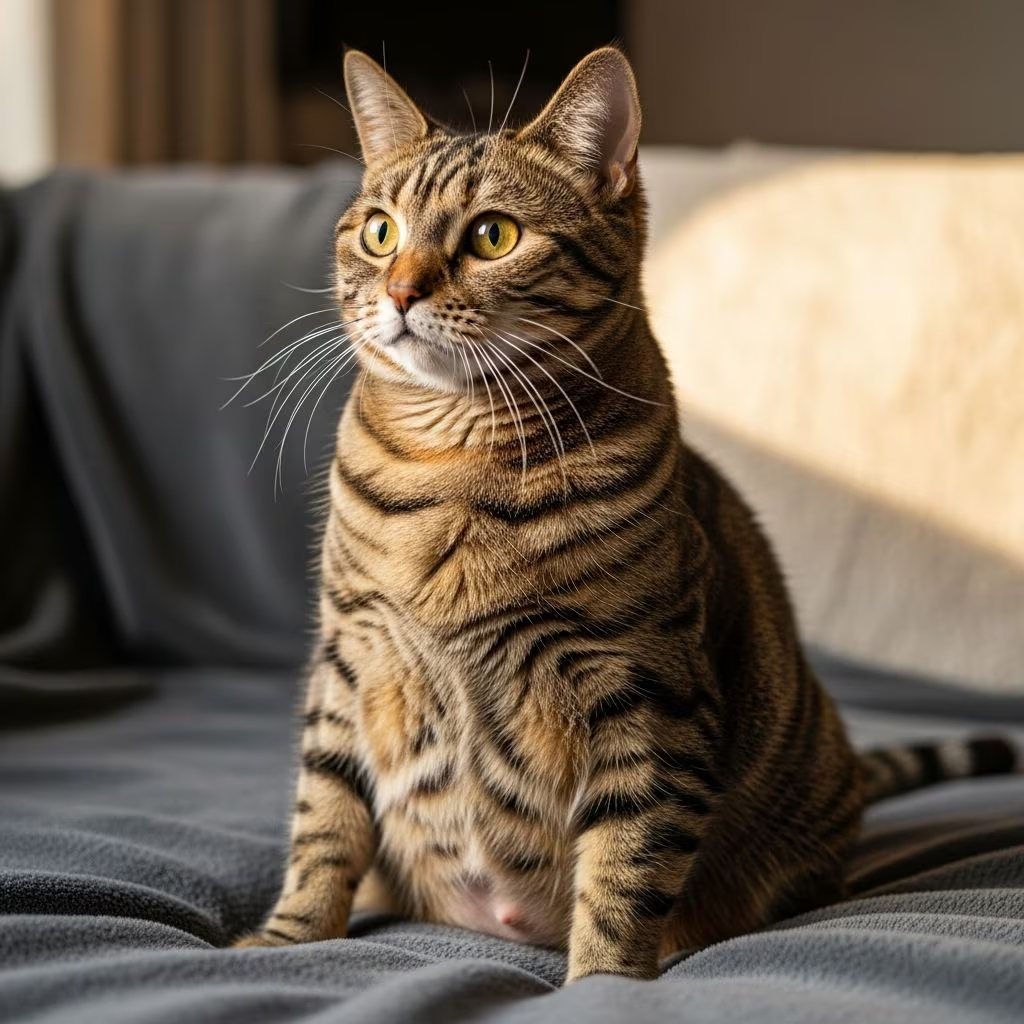
The **primordial pouch**, also known as the cat’s belly flap, is a natural feature on every cat’s abdomen, but its size can vary greatly, sometimes appearing prominently large. This loose flap of skin, fat, and fur located between the hind legs raises common concerns among cat owners wondering if it’s a sign of overeating or something else entirely. Understanding its purpose and characteristics helps distinguish normal anatomy from health issues like obesity.
What Is a Primordial Pouch?
The primordial pouch is a flap of loose skin that hangs from a cat’s lower belly, typically becoming noticeable between the hind legs and extending toward the abdomen. Present in all cats—domestic, wild, male, and female—it forms part of the feline body’s fundamental structure from early development, though it becomes more visible as kittens mature around 6 months to 1 year old.
This pouch consists of extra skin, fatty tissue, and fur, resembling the scruff on a cat’s neck that mothers use to carry kittens. Even big cats like lions and tigers exhibit this trait, underscoring its evolutionary roots. While not all pouches are equally prominent—varying by breed, genetics, age, and individual factors—it’s a standard anatomical feature, not a defect.
Why Do Cats Have a Primordial Pouch?
Experts propose several theories for the primordial pouch’s existence, though its exact purpose remains unproven and may serve multiple roles or be a vestigial trait from wild ancestors. These functions highlight cats’ adaptations for survival in the wild, even benefiting modern house cats.
- Protection: The pouch acts as a cushion, shielding vital abdominal organs during fights, hunting, or rough play like ‘bunny kicking.’ Its stretchy skin absorbs impacts without tearing, preventing serious injuries.
- Flexibility and Agility: Loose skin allows the abdomen to extend during running, jumping, climbing, or twisting, enabling longer strides, sharper turns, and higher leaps—crucial for chasing prey or evading predators.
- Food Storage: It provides elasticity for the belly to expand after large meals, useful for wild cats eating infrequently. This ‘energy reserve’ stores fat for times of scarcity.
- Heat Regulation: The flap may improve airflow under the belly, aiding temperature control in hot environments.
These benefits explain why a swinging pouch often indicates a healthy weight, as it remains distinct in fit cats.
Is My Cat’s Hanging Belly a Primordial Pouch or Obesity?
A prominent pouch can mimic a ‘hanging belly,’ prompting worries about weight gain. Key distinctions include feel, location, and body shape: a true pouch is loose and jiggly near hind legs, while obesity creates a firm, rounded abdomen everywhere.
| Feature | Primordial Pouch | Obesity |
|---|---|---|
| Location | Lower belly near hind legs | Entire abdomen, flanks, back |
| Texture | Loose, floppy, jiggly skin with some fat | Firm, thick fat layer |
| Body Profile | Visible waist from above; palpable ribs | No waist; hard-to-feel ribs; rounded shape |
| Age/Spay Factor | Prominent with maturity; unrelated to neutering | May increase post-spay/neuter due to metabolism changes |
| Other Signs | Sways when walking; no lumps (except pregnancy) | Overall weight gain; potential health risks |
To assess, gently feel the area: a pouch feels like a bag of soft skin, possibly with minor fat but no hard masses. Check from above for an hourglass figure and easily felt ribs. Breeds like Pixiebob show larger pouches, while Thai cats have smaller ones per TICA standards.
When Does the Primordial Pouch Develop?
Kittens lack a noticeable pouch at birth, as it’s a developmental feature. It emerges around 6 months to 1 year, becoming more defined in adulthood. Size can increase with age due to skin losing elasticity, common in seniors—similar to human skin sagging. Neutering doesn’t cause it but may contribute to fat gain if diet isn’t adjusted.
In wild or feral cats, it persists lifelong, aiding survival. Indoor cats retain it as an evolutionary remnant, visible regardless of lifestyle.
Is a Big Primordial Pouch Normal or a Concern?
A larger pouch is typically normal, especially in healthy, active cats. Prominence varies by genetics, with some cats naturally having bigger flaps without health issues. However, monitor for obesity signs: if the pouch obscures waistline or feels firm, consult a vet.
Vets note no need for worry if the cat maintains agility, appetite, and energy. Aging amplifies visibility, but sudden changes warrant checks for lumps, pregnancy, or illness. Regular weigh-ins and body condition scoring help track health.
How to Manage Your Cat’s Weight and Pouch Health
Even with a normal pouch, prevent obesity through balanced care:
- Feed portion-controlled, high-quality diet suited to age, activity, and neuter status.
- Provide daily play for 15-30 minutes to mimic hunting.
- Schedule vet check-ups for body condition assessments.
- Avoid free-feeding; use puzzle feeders for mental stimulation.
A healthy cat with a big pouch stays lean elsewhere, ensuring the flap enhances rather than hides vitality.
Frequently Asked Questions (FAQs)
What is a cat’s primordial pouch?
A flap of loose skin, fat, and fur on the lower belly near hind legs, present in all cats for potential protection, flexibility, or storage.
Why is my cat’s primordial pouch so big?
Size varies by genetics, age, and breed; larger in adults/seniors due to skin elasticity loss. It’s normal if the cat is otherwise fit.
Is the primordial pouch a sign of obesity?
No, if loose and localized with visible waist/palpable ribs. Obesity shows firm, widespread fat.
Do all cats have a primordial pouch?
Yes, including big cats; prominence differs.
Can I reduce my cat’s primordial pouch size?
You can’t eliminate it—it’s anatomical—but manage surrounding fat via diet/exercise to prevent obesity.
Does neutering cause a big pouch?
No, but it slows metabolism, risking fat gain if overfed.
References
- What Is a Cat’s Primordial Pouch? — VCA Animal Hospitals. 2023. https://vcahospitals.com/pediatric/kitten/health-wellness/what-is-the-primordial-pouch
- Primordial Pouch in Cats: What is it and what is its function? — Sanicat. 2023. https://www.sanicat.com/sanis-corner/articles/primordial-pouch-cat/
- What Is a Cat’s Primordial Pouch? — Hill’s Pet Nutrition. 2023. https://www.hillspet.com/cat-care/behavior-appearance/primordial-pouch-in-cats
- What Is a Cat’s Primordial Pouch? — PetMD. 2023. https://www.petmd.com/cat/general-health/cat-primordial-pouch
- Understanding the Cat Primordial Pouch: Vet Guide 2025 — AskAVet. 2025. https://askavet.com/blogs/news/understanding-the-cat-primordial-pouch-vet-guide-2025-%F0%9F%90%B1%E2%9C%A8



