

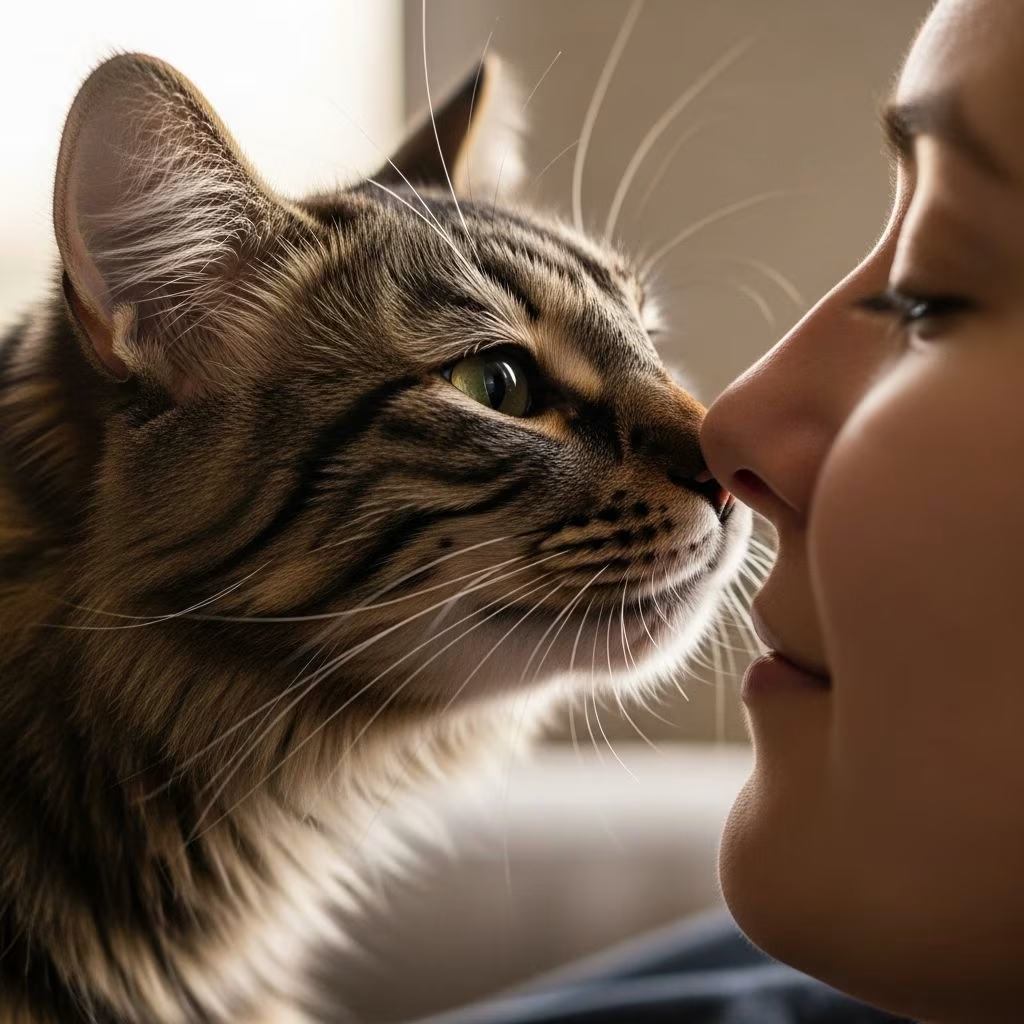
Cats sniff their owners’ faces as a primary way to gather information, recognize familiar scents, and strengthen social bonds, relying on their highly developed sense of smell far more than vision for identification and communication.
Why Do Cats Sniff Faces? A Cat’s Super Sense of Smell
Cats possess an extraordinary olfactory system, with approximately 200 million scent receptors compared to humans’ mere 5 million, enabling them to detect pheromones, emotions, and environmental changes through sniffing. This sense dominates their perception, allowing face sniffing to serve as a ‘hello,’ identity confirmation, and safety assessment. Unlike humans who prioritize sight, cats use smell to navigate social interactions, making your face a key data point upon waking, returning home, or during close contact.
When a cat sniffs your face, it processes unique markers like breath, skin oils, and residual food scents to reaffirm your identity as a trusted companion. This behavior underscores their world as scent-driven, where facial proximity facilitates detailed analysis.
10 Reasons Why Your Cat Sniffs Your Face
Your cat’s face-sniffing stems from instinctual needs. Here are the top reasons:
- Scent Recognition: Cats memorize human scents for reliable identification, even if appearances change, treating familiar smells as safe.
- Social Greeting: Sniffing acts as a feline handshake, especially in the morning or after absences, signaling ‘I missed you.’
- Affection and Bonding: Close sniffing releases oxytocin in both cat and owner, fostering emotional ties similar to human hugs.
- Health Check: Cats detect illness via subtle odor shifts from sweat or breath, a survival trait from wild ancestors.
- Territorial Marking: Face glands deposit pheromones on you, claiming you as part of their territory and mixing scents for group identity.
- Curiosity About Changes: New perfumes, foods, or medications alter your scent profile, prompting investigation.
- Food Detection: Breath scents from meals intrigue them, linking to their appetite drive.
- Comfort Seeking: Your familiar smell provides reassurance during stress or environmental shifts.
- Mating or Hormonal Cues: Unsterilized cats may sniff for reproductive signals, though less common with humans.
- Personality Expression: Calm cats sniff briefly; anxious ones repeatedly, reflecting emotional processing.
How Cats Use Their Nostrils to Recognize You
Cats employ nostrils asymmetrically: the right nostril processes novel scents via the left brain hemisphere (alertness/threat), shifting to the left nostril for familiar ones via the right brain (comfort). Studies show cats quickly identify owners’ scents as non-threatening, reducing investigation time compared to strangers. Neurotic cats sniff obsessively, while agreeable ones are efficient, highlighting personality in olfactory behavior.
Why Cats Are Not Great with Faces (They Prefer Your Scent)
Feline vision excels in low light for hunting but struggles with facial details in daylight, making scent paramount for recognition. Research confirms cats prioritize olfactory cues over visual ones for humans, confirming identity through smell alone.
The Cat Flehmen Response (That Funny Face They Make)
The flehmen response occurs when cats curl their lips, open their mouth, and flick their tongue to direct scents to the vomeronasal organ (Jacobson’s organ) above the hard palate. This enhances pheromone analysis for social, territorial, or mating cues. Triggered by intriguing odors like other animals or strong smells, it appears as a ‘stinky face’ but indicates fascination, not disgust.
For face sniffing, flehmen may activate if your scent carries novel elements, aiding deeper processing.
Rubbing and Bunting: Related Scent-Marking Behaviors
Cheek-rubbing (bunting) deposits sebaceous gland pheromones from cheeks, chin, and lips, marking you as family. This complements sniffing by blending scents, reinforcing bonds and territory. Head-butting follows, escalating affection.
Is It Normal if Your Cat Constantly Sniffs Your Face?
Occasional face sniffing is normal and beneficial for bonding. However, constant or sudden increases may signal issues:
- Stress/Anxiety: Routine changes prompt reassurance sniffing alongside hiding or vocalizing.
- Health Problems: Respiratory infections cause excessive sniffing with sneezing/discharge; dental issues link smell refusal to eating; anosmia halts sniffing.
Monitor for clusters of symptoms; consult a vet if persistent.
When to Worry: Excessive Sniffing and Health Concerns
| Behavior | Possible Cause | Signs to Watch |
|---|---|---|
| Excessive face sniffing | Upper respiratory infection | Sneezing, nasal discharge, congestion |
| Sniffing but not eating | Dental/oral pain | Drooling, pawing mouth, weight loss |
| Sudden sniffing cessation | Anosmia/neurological issue | Disorientation, appetite loss |
| Intense, repetitive sniffing | Anxiety/stress | Hiding, overgrooming, aggression |
Seek veterinary care for these red flags, as early intervention prevents complications.
How to Encourage (or Discourage) Face Sniffing
To Encourage:
- Stay still and let them approach.
- Use consistent scents (same soap/shampoo).
- Offer face time during calm moments.
To Discourage:
- Gently redirect with toys or hands.
- Use citrus sprays (cats dislike).
- Trim nails if scratching occurs.
- Consult trainer for persistent issues.
Balance respects their instincts while setting boundaries.
Frequently Asked Questions (FAQs)
Why does my cat sniff my face in the morning?
Your scent changes overnight; morning sniffing reconfirms identity and greets you.
Is cat face sniffing a sign of love?
Yes, it indicates trust, affection, and bonding through scent sharing.
Why does my cat sniff my breath?
Breath carries food/health info; it’s curiosity or health-checking.
What if my cat sniffs my face aggressively?
Rare; may indicate stress/overstimulation. Redirect and observe for anxiety.
Do all cats sniff faces?
Most do, but shy cats may sniff less; personality varies.
Can face sniffing indicate illness in my cat?
Excessive sniffing with symptoms like sneezing suggests respiratory issues—vet check needed.
References
- Why is my Cat Sniffing Everything? — PrettyLitter. 2023. https://www.prettylitter.com/blog/why-is-my-cat-sniffling-everything
- Why Your Cat Sniffs You (and What It Means) — Bark & Whiskers. 2025-08-09. https://www.barkandwhiskers.com/2025-08-09-why-your-cat-sniffs-you/
- 7 Common Cat Behaviors Explained — The Comforted Kitty. 2024. https://comfortedkitty.com/7-common-cat-behaviors-explained/
- Why Do Cats Open Their Mouths When They Smell Something? — Chewy. 2023. https://www.chewy.com/education/cat/training-and-behavior/why-do-cats-open-their-mouths-when-they-smell-something-is-this-normal
- What Is the Flehmen Response in Cats? — PetMD. 2024. https://www.petmd.com/cat/general-health/cat-sneering-what-flehmen-response



