

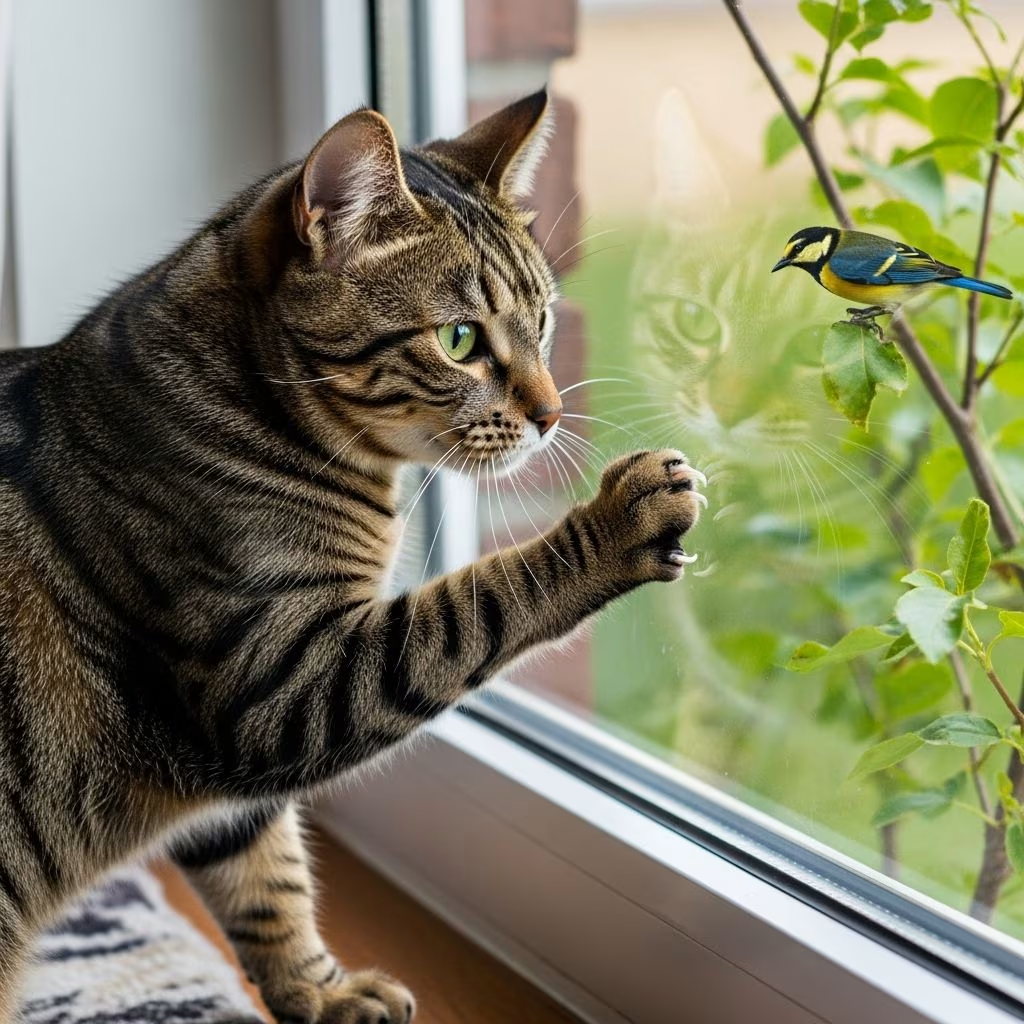
A cat scratching relentlessly at the window can be one of the most frustrating behaviors for pet owners, especially when it echoes through the house at night or disrupts your day. While their claws won’t damage the glass, the persistent scraping sound and your cat’s distress signal something deeper. Cats scratch windows due to innate instincts, environmental triggers, or emotional needs, often stemming from their wild ancestry despite domestic life.
Understanding these motivations is key to addressing the issue humanely. This guide explores the **five primary reasons** cats engage in this behavior, backed by veterinary insights and feline behavior studies, and provides actionable solutions to redirect it. By enriching your cat’s environment and meeting their needs, you can minimize window scratching and strengthen your bond.
The 5 Reasons Why Cats Scratch at Windows
Cats are creatures of instinct, and window scratching often ties back to survival behaviors honed over thousands of years. Here’s a breakdown of the most common triggers, observed in both indoor and outdoor cats.
1. A Desire to Hunt
The **most frequent cause** of window scratching is your cat’s predatory drive activated by wildlife outside. Birds flitting by, squirrels scampering, or even insects can transfix a cat, turning the window into an impenetrable barrier between them and potential prey. You’ll notice your cat staring intently, tail twitching, pupils dilated, before they lunge and scratch frantically.
This behavior mimics stalking and pouncing in the wild. Domestic cats retain 95% of their hunting instincts, even if well-fed, as confirmed by studies from the University of Lincoln’s research on feline predation. The frustration of being confined amplifies the scratching, serving as a futile attempt to ‘break through’ and chase.
- Signs: Fixed gaze outside, meowing urgently, rapid pawing.
- Affected cats: All ages, but high-energy young adults most prone.
2. They Want to Go Outside Or Be Let Inside
If your cat is accustomed to outdoor access via windows or doors, a closed pane becomes a confusing obstacle. They may scratch to signal ‘open up!’ or in puzzlement at the ‘invisible wall.’ Indoor-outdoor cats or those with prior free access exhibit this most.
Cats lack the cognitive understanding of glass mechanics, leading to persistent clawing. This is common in multi-cat homes or during seasonal changes when routines shift. VCA Animal Hospitals notes that such frustration can escalate to anxiety if unmet.
- Triggers: Recent window closures, habituated entry points.
- Solution hint: Consistent access or alternatives like cat flaps.
3. They Can See Their Reflection
Windows act as mirrors, especially at dusk or in low light, prompting territorial aggression. Your cat perceives the reflection as a rival intruder, scratching to confront and repel it. This ‘mirror cat’ phenomenon confuses many owners, as the ‘rival’ vanishes and reappears unpredictably.
Behaviorists explain this as inter-cat aggression redirected at glass. Rubbing cheeks (with scent glands) alongside scratching reinforces ownership claims.
- Peak times: Dawn/dusk when reflections are clearest.
- Breeds prone: Siamese, Bengals—highly territorial types.
4. Scent-Marking
Scratching deposits pheromones from paw glands, claiming the window and view as territory. This communicative act wards off perceived threats and comforts the cat. Often paired with chin-rubbing or flank-wiping on the glass.
Per VCA Hospitals, scent-marking surges in multi-pet homes or during stress, signaling ‘this is mine.’ It’s subtler than furniture scratching but persistent on favored perches.
- Visual cues: Transparent scratches, paired with rubbing.
- Benefits for cat: Reduces anxiety via familiar scents.
5. Stress and Anxiety Relief
Boredom, confinement, or environmental changes spark stress-induced scratching as self-soothing. The rhythmic scrape releases endorphins, akin to kneading. Lonely or understimulated cats fixate on windows for entertainment.
ASPCA data links this to insufficient enrichment; cats need 15-20 minutes daily play to thrive. Underlying issues like illness or household tension amplify it.
- Risk factors: Recent moves, new pets, lack of toys.
- OCD-like cases: Consult vets for persistent patterns.
How to Stop Cats from Scratching Windows
Stopping window scratching requires identifying the root cause and redirecting energy positively. Punishment fails—cats don’t connect it to the behavior. Instead, focus on prevention, enrichment, and deterrence. Start by cleaning scratches with a glass polisher for a fresh slate.
Redirect with Enrichment
Provide alternatives to satisfy instincts:
- Scratching posts: Place sisal or cardboard posts near windows; reward use with treats.
- Cat trees and shelves: Vertical space mimics territory, reducing window fixation.
- Interactive toys: Feather wands, laser pointers for 15-minute sessions twice daily.
Window perches with built-in toys distract from direct scratching.
Manage Access and Views
For outdoor urges:
- Install cat flaps on secure doors for safe entry/exit.
- Keep windows crack-open at safe heights (ground floor, screened).
- Block views with tinted film or curtains during high-activity times.
Gentle Deterrents
Non-harmful repellents work well:
| Method | How It Works | Pros | Cons |
|---|---|---|---|
| Citrus sprays | Cats detest citrus scent; mist diluted lemon/orange. | Natural, cheap | Needs reapplication |
| Motion-sensor sprays | Air puff or hiss startles on approach. | Effective long-term | Initial cost (~$30) |
| Double-sided tape | Tacky surface unpleasant on paws. | Easy DIY | Visible, temporary |
Combine methods: Enrichment first, deterrents as backup.
Address Stress Holistically
- Feliway diffusers release calming pheromones.
- Enrich environment: Puzzle feeders, tunnels.
- Vet check: Rule out hyperthyroidism or pain.
- Spay/neuter: Curbs mating-related restlessness.
Consistency yields results in 1-4 weeks; track progress in a journal.
Frequently Asked Questions (FAQs)
Is window scratching harmful to my cat?
No, but excessive sessions risk paw irritation. Provide posts to protect nails.
Why does my cat only scratch one window?
Likely the prime wildlife-view spot or sunny perch. Redirect specifically there.
Will my cat stop if I ignore it?
Ignoring works for attention-seeking but not instincts. Address the cause.
Can kittens outgrow this?
Many do with training, but provide outlets early to prevent habits.
What if scratching persists despite solutions?
Consult a veterinary behaviorist for anxiety or medical issues.
Window scratching reflects your cat’s unmet needs—hunting, territory, or comfort. By decoding and responding, you create a stimulating home, curbing the behavior naturally. Patience and positivity transform frustration into feline fulfillment.
References
- Cat Behavior Problems – Scratching Behavior — VCA Animal Hospitals. 2023-05-15. https://vcahospitals.com/know-your-pet/cat-behavior-problems—scratching-behavior
- Why Is My Cat Scratching at the Window? 5 Reasons & How To Stop — Catster. 2024-08-20. https://www.catster.com/cat-behavior/why-is-my-cat-scratching-at-the-window/
- The Welfare of the Domestic Cat — University of Lincoln (peer-reviewed study on feline predation instincts). 2022-11-10. https://doi.org/10.1007/978-3-031-29651-8
- Feline Behavior Guidelines — American Association of Feline Practitioners. 2023-02-01. https://catvets.com/public/PDFs/PracticeGuidelines/Feline-Behavior-Guidelines.pdf
- Stress and Anxiety in Cats — ASPCA. 2024-01-12. https://www.aspca.org/pet-care/cat-care/common-cat-behavior-issues/stress-and-anxiety



