

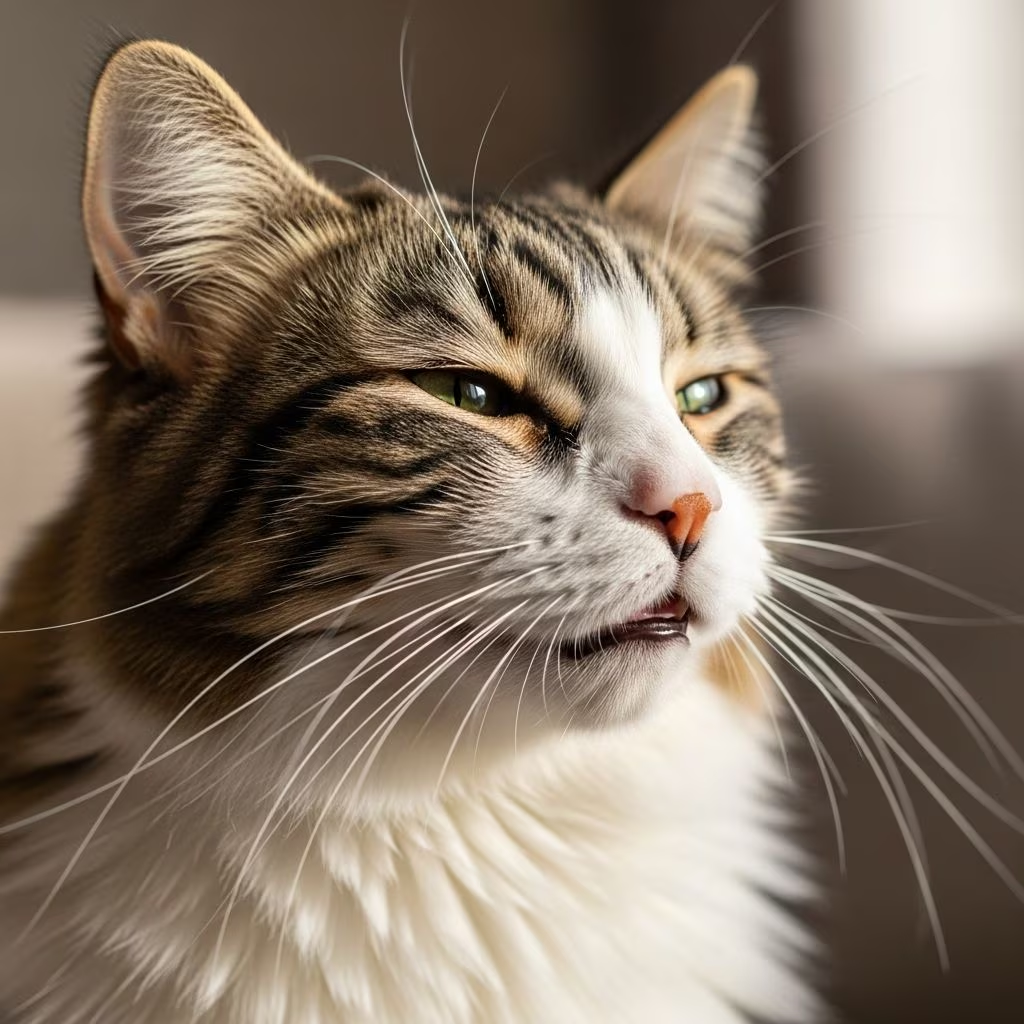
Cats are renowned for their soothing purr, a rhythmic vibration that often signals contentment. However, if your cat is purring all the time, even in unusual situations, it could indicate more than just happiness. Purring serves multiple purposes, from bonding and relaxation to self-soothing during stress or pain. Understanding the context, body language, and frequency helps decipher this behavior.
This article delves into the science of purring, common reasons for constant purring, associated body language, potential health concerns, and practical advice for cat owners. By the end, you’ll know when constant purring is normal and when to consult a veterinarian.
How Do Cats Purr?
The exact mechanism of purring has intrigued scientists for decades. Recent research reveals that domestic cats possess specialized ‘pads’ embedded in their vocal cords, consisting of fatty tissue that enables low-frequency vibrations without constant brain input. These pads allow the larynx to oscillate at frequencies between 25 and 150 Hertz during both inhalation and exhalation, producing the characteristic rumble.
Unlike meowing or hissing, which rely on flow-induced self-sustained oscillation driven by airflow, purring involves rapid contractions of the laryngeal muscles, occurring 20-30 times per second. This is triggered by a neural oscillator in the brain, possibly in the infundibular region, and coordinated with diaphragm movements. Electromyographic studies confirm that the glottis rapidly dilates and constricts, vibrating air as the cat breathes steadily.
Notably, only small to medium-sized cats with fully rigid hyoid bones can purr; big cats like lions roar instead due to a partially rigid hyoid. Kittens begin purring as early as two days old, using it for communication with their mother.
Reasons Why Your Cat Might Be Purring All the Time
Constant purring isn’t always a sign of bliss. Cats purr in diverse scenarios, often blending positive and negative emotions. Here’s a breakdown of the primary reasons:
- Contentment and Relaxation: The most common cause. Cats purr when happy, such as while lounging in a sunbeam, eating, or being petted. Relaxed body language includes half-closed eyes, flattened ears backward, and a loose tail.
- Communication and Bonding: Mother cats purr to reassure kittens during nursing, and kittens purr back to signal needs. Adults purr during greetings, to solicit food or attention, or to signal non-threat to other cats.
- Self-Soothing and Stress Relief: Cats purr when anxious, frightened, or in unfamiliar settings like vet visits. This acts as a coping mechanism, similar to human humming.
- Pain Management and Healing: The 25-150 Hz frequency promotes bone healing, reduces swelling, and eases pain. Injured or ill cats often purr continuously to self-heal.
- Attention-Seeking: Purring while rubbing against you or meowing indicates a request for pets, food, or play.
Body Language to Read with Constant Purring
Context is key. Observe your cat’s overall demeanor to interpret purring accurately. Relaxed purring features soft eyes, slow blinks, and exposed belly; stressed purring shows tense posture, dilated pupils, or flattened ears.
| Sign of Contentment | Sign of Stress/Anxiety |
|---|---|
| Half-closed eyes, slow blinks | Dilated pupils, wide eyes |
| Ears slightly forward or flat back | Ears flat against head or twitching |
| Loose, curled tail | Tail puffed or lashing |
| Kneading paws, drooling | Tense body, hiding, pacing |
| Sprawled out, belly exposed | Crouched, whiskers forward |
If purring accompanies euphoric behaviors like kneading and drooling, it’s likely positive. Conversely, purring with avoidance or aggression cues suggests distress.
When Constant Purring Could Indicate a Problem
While purring aids healing, excessive or sudden constant purring warrants attention. It may mask underlying issues:
- Illness or Injury: Cats purr through pain from arthritis, dental disease, abscesses, or hyperthyroidism. Look for lethargy, appetite changes, or hiding.
- Respiratory Issues: Conditions like asthma or infections can alter purring patterns.
- Neurological Disorders: Rarely, constant purring stems from brain lesions affecting the neural oscillator.
- Hypertrophic Cardiomyopathy: Heart disease may cause purring with rapid breathing or weakness.
Monitor for red flags: weight loss, vomiting, limping, or behavioral shifts. A vet exam, including bloodwork and imaging, can rule out problems.
Is Constant Purring Normal?
Most cases of constant purring are benign, especially in relaxed cats. Some felines are ‘chronic purrers,’ purring during most interactions due to personality or breed traits (e.g., Ragdolls). However, if paired with symptoms, it’s not ‘normal’ and requires professional evaluation.
Studies show purring frequencies overlap with therapeutic vibrations used in human medicine, suggesting evolutionary benefits for self-repair.
What Should You Do If Your Cat Is Purring All the Time?
Start with observation:
- Assess Context: Note when, where, and with what body language purring occurs.
- Check Health: Weigh your cat weekly; monitor eating, litter habits, and energy.
- Enrich Environment: Provide scratching posts, toys, and quiet spaces to reduce stress.
- Vet Visit: Schedule if purring persists with symptoms. Early detection improves outcomes.
- Daily Interaction: Regular play and affection strengthen bonds, potentially normalizing purring.
For stress-related purring, pheromone diffusers or calming treats help. Never ignore veterinary advice.
Frequently Asked Questions (FAQs)
Why is my cat purring but walking around?
This often signals anxiety or attention-seeking. The cat may be self-soothing while patrolling territory or soliciting interaction.
Do cats purr when they are dying?
Yes, some purr in final stages to manage pain or seek comfort from owners.
Why does my cat purr at the vet?
Vets trigger stress; purring is a self-soothing response in this unfamiliar, scary environment.
Can purring heal humans?
The 25-50 Hz range may reduce stress and aid bone growth, per studies on vibrational therapy.
Why do some cats purr more than others?
Personality, breed, age, and health influence frequency. Kittens and affectionate breeds purr most.
Conclusion
Constant cat purring reflects a complex behavior rooted in contentment, communication, stress relief, and healing. While often harmless, contextual clues and symptoms guide whether it’s benign or concerning. By tuning into your cat’s cues and seeking vet care when needed, you ensure their well-being. Embrace the purr—it’s a window into your feline’s world.
References
- Purr – Wikipedia — Wikipedia Contributors. 2023-10-15. https://en.wikipedia.org/wiki/Purr
- Decoding the Cat’s Purr — Heineke Veterinary Hospital. 2023-05-20. https://heinekevet.com/decoding-the-cats-purr/
- Why Do Cats Purr | The Science Behind A Normal Feline Behavior — The Vet Collection. 2024-02-10. https://www.tvmf.org/articles/why-do-cats-purr/
- Why Do Cats Purr? 5 Meanings Behind a Purring Cat — PetMD. 2024-08-05. https://www.petmd.com/cat/behavior/why-do-cats-purr
- Why does my cat purr? — Cats Protection. 2023-11-12. https://www.cats.org.uk/cats-blog/why-does-my-cat-purr
- How do cats purr? New finding challenges long-held assumptions — Science.org. 2022-11-17. https://www.science.org/content/article/how-do-cats-purr-new-finding-challenges-long-held-assumptions



