

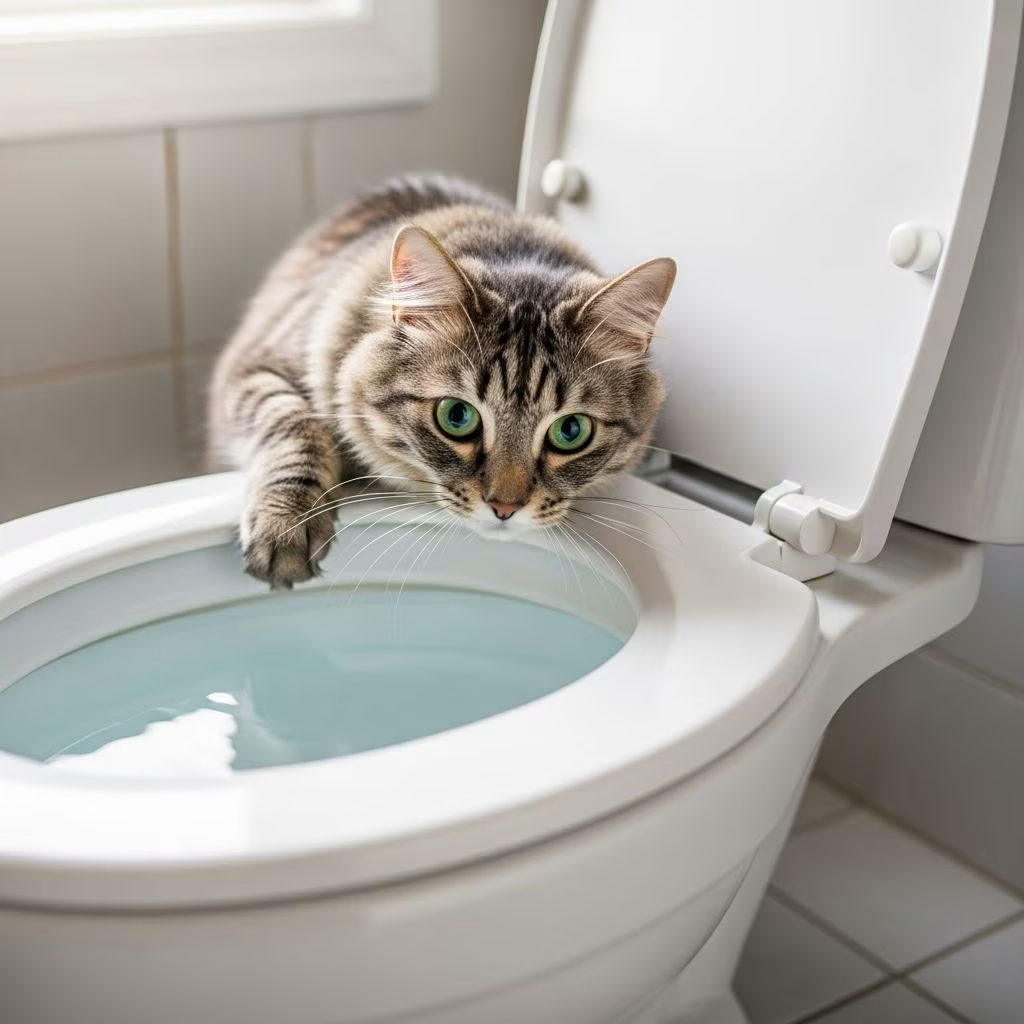
Many cat owners notice their felines showing an unusual fixation on the bathroom, particularly the toilet. Whether it’s pawing at the water, staring intently during flushes, or insisting on joining you, this behavior can be puzzling and sometimes concerning. Understanding the root causes helps ensure your cat’s safety and well-being while addressing the obsession effectively.
Cats retain ancestral instincts that make certain household features irresistible. Toilets combine elements of movement, scent, coolness, and enclosure that tap into these drives. Below, we break down the six primary reasons, drawing from feline behavior patterns observed by experts.
The 6 Reasons Why Your Cat May Be Obsessed With the Toilet
1. They Love Playing With the Water
Contrary to the myth that all cats despise water, many enjoy interacting with it, especially when it’s moving. Breeds like the Maine Coon are particularly fond of water play, but even typical domestic cats may dip paws into streams or bowls. The toilet provides a shallow, accessible pool where they can splash, bat at droplets, or watch ripples form.
This stems from their predatory heritage: moving water mimics prey like fish or insects. The sound of dripping from a leaky faucet or post-flush swirls captivates their senses, turning the toilet into an interactive toy. If your cat paws at their water bowl similarly, the toilet is just an extension of this playful instinct.
- Sensory appeal: Visual motion and gurgling sounds stimulate hunting reflexes.
- Accessibility: Low rim allows easy paw entry without full immersion.
- Safe exploration: Shallow depth prevents drowning risk, unlike deeper baths.
Encourage alternatives like a pet water fountain to satisfy this urge safely, as toilet water harbors bacteria.
2. They’re Thirsty
Cats often prefer running or freshly refreshed water over stagnant bowls, a holdover from wild ancestors who avoided bacteria-laden still sources. Flushing replenishes the toilet bowl with cool, aerated water that stays chilled longer than room-temperature bowls.
If your cat’s bowl is near food, in a busy area, or unclean, they’ll seek better options. Toilets seem “fresh” post-flush, and the movement entices picky drinkers. Studies on feline hydration show cats with fountains consume more water, confirming this preference.
- Cooler temperature than standing bowls.
- Freshly circulated after each flush.
- Avoidance of bowls tainted by proximity to litter or food.
Solution: Clean bowls daily, use fountains, and place water away from litter boxes. Keep toilet lids down to block access.
3. They’re Stalking the Flush
A strong prey drive compels cats to pursue anything fleeing or vanishing. The toilet flush creates a dramatic vortex: water and contents spiral away with rushing sounds and motion, triggering chase instincts. Indoor cats, lacking real prey, fixate on this household “hunt.”
This is purely curiosity-driven; they may crouch, pounce, or stare wide-eyed as the water drains. Variations in prey drive exist across individuals, but most cats exhibit it to some degree.
To redirect: Provide interactive toys like laser pointers or feather wands that simulate fleeing prey, reducing toilet fixation.
4. The Smell
Cats possess an acute sense of smell—14 times stronger than humans—and use it for communication and territory marking. Urine scents signal ownership, so they interpret your toilet use as marking behavior, prompting investigation or counter-marking.
Even impeccably clean toilets retain faint odors to a cat’s nose. This draws them to sniff, rub, or paw, reinforcing territorial bonds within the household.
- Territorial mimicry: They see you as a fellow “marker.”
- Scent investigation: Essential for social cues.
- Persistent appeal: Cleaners mask but don’t eliminate all traces.
Maintain rigorous cleaning with pet-safe products and ensure multiple litter boxes for proper elimination outlets.
5. They Want Attention
When obsession coincides with your bathroom visits, it’s often about bonding. Cats follow owners to private spaces out of affection, FOMO (fear of missing out), or routine predictability. The enclosed bathroom becomes prime interaction time.
Behaviors include door-scratching, meowing, or leg-rubbing. This social drive strengthens pack bonds, viewing you as family.
Address by scheduling daily play and cuddle sessions outside the bathroom, fulfilling needs proactively.
6. Bathrooms Are Fun
Bathrooms offer a sensory playground: cool tiles, sinks for lounging, toilet paper for shredding, and enclosed security reminiscent of wild dens. Echoing acoustics amuse with meow rebounds, and potential bugs or laundry add intrigue.
The often-closed door heightens curiosity—cats hate exclusion. Positive past experiences (e.g., bath play) reinforce return visits.
- Cool surfaces for hot days.
- Texture variety: Paper, towels, rugs.
- Secure enclosure for relaxation.
Kitty-proof by securing cleaners, meds, and trash; provide similar outlets elsewhere.
Why Running Water Fascinates Cats
Central to many obsessions is water’s motion. Evolutionarily, running sources are safer, engaging sight, sound, and even taste via oxygenation. Domestic setups rarely replicate this, making toilets stand out.
Cool, Smooth Surfaces and Comfort
Porcelain stays cool, ideal for lounging in warm climates. Bathrooms’ tiles and humidity provide respite, with toilets as perches.
Privacy, Territory, and Social Dynamics
Enclosed spaces claimable as territory; following owners asserts inclusion. Door protests signal possessiveness.
Risks of Toilet Obsession
Bacterial exposure from unclean water risks illness. Chewing paper/towels can cause obstructions; chemicals/meds are toxic. Monitor for pica (obsessive fabric sucking), potentially medical.
| Risk | Symptoms | Prevention |
|---|---|---|
| Bacteria ingestion | Diarrhea, vomiting | Closed lid, fountains |
| Obstruction | Lethargy, no feces | Secure paper/items |
| Toxicity | Seizures, drooling | Lock cabinets |
How to Stop Your Cat’s Toilet Obsession
- Install a pet fountain for fresh, moving water.
- Keep lids closed and doors shut when absent.
- Enrich environment: Toys, scratching posts, perches.
- Daily play/attention to curb attention-seeking.
- Clean bowls frequently; elevate if needed.
- Vet check for thirst/medical issues like diabetes.
Consistency redirects instincts positively.
Frequently Asked Questions (FAQs)
Is it safe for cats to drink toilet water?
No, due to chemicals and bacteria. Provide clean alternatives.
Why does my cat follow me to the bathroom?
Affection, curiosity, territory.
Can toilet obsession indicate health issues?
Excessive thirst may signal diabetes or kidney problems—consult a vet.
How do I discourage toilet play?
Use fountains, close lids, enrich elsewhere.
Do all cats love bathrooms?
Many do for sensory reasons, but personalities vary.
References
- Why Are Cats Obsessed with Toilets? Unpacking Feline Fascination — Noots Pets. 2023-10-15. https://nootspets.com/blogs/news/why-are-cats-obsessed-with-toilets
- Why Is My Cat Obsessed With the Toilet? 6 Possible Reasons — Catster. 2024-05-20. https://www.catster.com/cat-behavior/why-is-my-cat-obsessed-with-the-toilet/
- Why Does My Cat Follow Me to the Bathroom? — Chewy. 2023-08-12. https://www.chewy.com/education/cat/training-and-behavior/why-does-my-cat-follow-me-to-the-bathroom



