

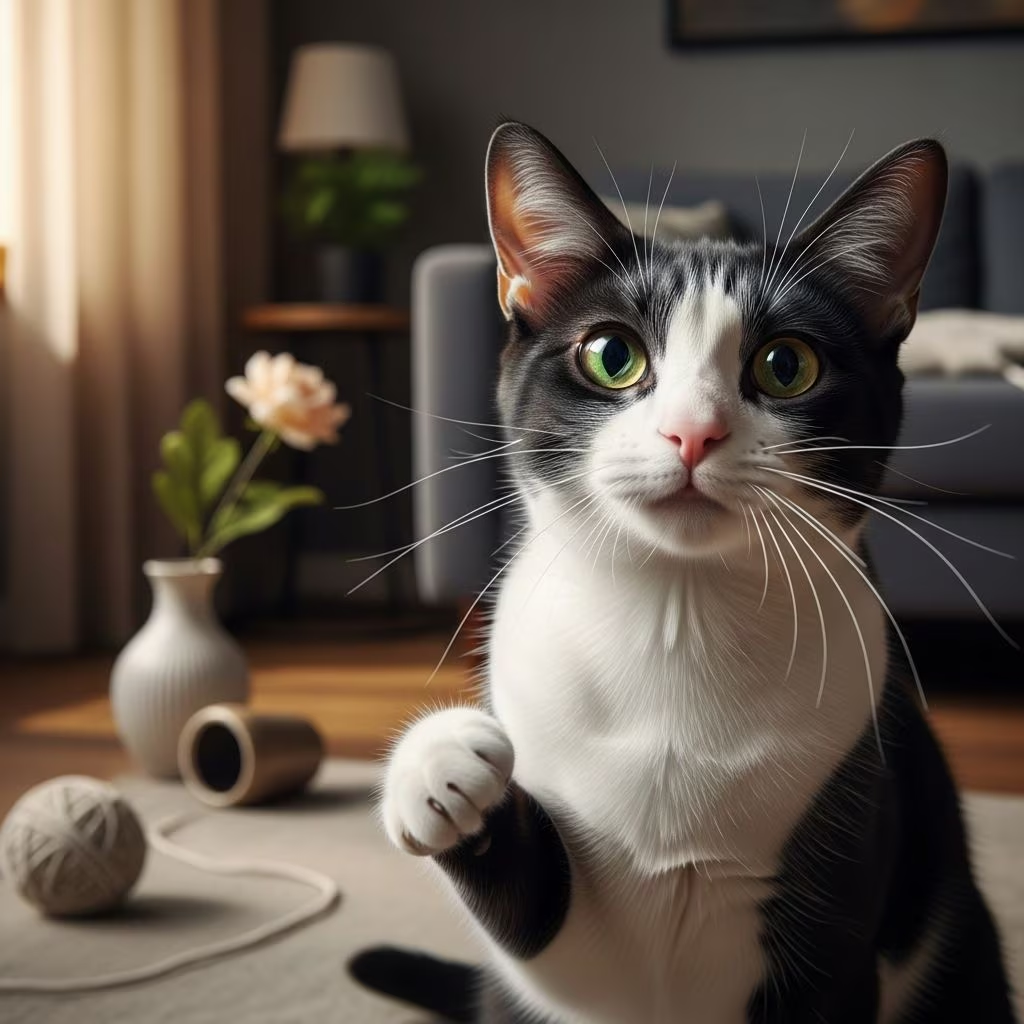
Cats are often seen as independent and aloof, but when they start **misbehaving**, it can frustrate even the most patient pet parent. From sudden litter box avoidance to aggressive outbursts or relentless furniture scratching, these behaviors signal something is amiss in your cat’s world. Importantly, cats don’t act out to spite you; their actions stem from unmet needs, health problems, or environmental stressors. Understanding the root cause is the first step to resolution. This comprehensive guide covers the most common reasons for cat misbehavior, backed by expert insights, and provides actionable solutions to help your feline friend return to their harmonious self.
Is It a Medical Problem?
Before blaming your cat’s attitude, rule out **medical issues**—they’re the most common culprit behind sudden behavioral changes. A cat in pain or discomfort from conditions like urinary tract infections (UTIs), hyperthyroidism, arthritis, or dental disease may avoid the litter box, become aggressive, or over-groom. For instance, a cat with a bladder issue might associate the litter box with pain, leading to elimination outside it.
Vision or mobility problems can also trigger fear-based aggression or hiding. Excessive meowing or yowling often indicates discomfort from illness. Cats are masters at hiding pain, so subtle signs like reduced appetite, lethargy, or changes in grooming can be overlooked.
- Action Step: Schedule a vet visit immediately if behavior changes abruptly. Early diagnosis prevents escalation.
- Tip: Track symptoms like frequency of incidents, eating habits, and litter use to share with your vet.
Once medical causes are ruled out, environmental and behavioral factors come into play. Acting early maximizes success rates.
Stress and Anxiety in Cats
**Stress** is a major trigger for misbehavior, manifesting as litter avoidance, spraying, aggression, or excessive grooming. Cats thrive on routine; disruptions like moving, new pets, babies, or household changes spike anxiety. Separation anxiety or competition with other animals can lead to resource guarding or hiding.
Signs include dilated pupils, flattened ears, tail twitching, or vocalizing. Stressed cats may urine mark to reclaim territory or self-soothe through over-grooming, resulting in bald patches.
How to Reduce Stress
- Identify triggers: New pet? Introduce gradually with scent swapping and supervised meetings.
- Maintain routines: Consistent feeding, play, and litter cleaning.
- Create safe spaces: Provide hiding spots, elevated perches, and pheromone diffusers like Feliway.
- Slow changes: Gradually adjust schedules to allow adaptation.
Managing stress often resolves multiple issues simultaneously.
Boredom and Lack of Stimulation
Bored indoor cats turn to mischief for entertainment. **Boredom** causes furniture scratching, night zooming, or knocking items off shelves to elicit a reaction. Without mental and physical outlets, frustration builds, leading to destructive behaviors.
Cats need daily play mimicking hunting: chasing, pouncing, stalking. Puzzle feeders, interactive toys, and window perches combat under-stimulation.
| Problem Behavior | Stimulation Solution |
|---|---|
| Furniture scratching | Sisal posts in high-traffic areas; rotate toys |
| Zoomies at night | Evening play sessions with wand toys |
| Object knocking | Puzzle feeders; cat trees for climbing |
Aim for 15-30 minutes of play twice daily. Enrich the environment with cardboard boxes, tunnels, and foraging opportunities.
Litter Box Problems
**Litter box avoidance** tops behavior complaints, often due to dissatisfaction rather than spite. Causes include dirty boxes, wrong litter type, box location, or medical pain. Multi-cat homes need n+1 boxes (n = number of cats) in quiet, accessible spots.
- Common Fixes:
- Clean daily; scoop twice daily, full change weekly.
- Offer choices: Clumping vs. non-clumping; covered vs. open.
- Strategic placement: Away from food, easy access, no ambushes.
- Enlarge boxes for seniors; low-entry for arthritis.
Use enzymatic cleaners for accidents to remove scents. If unresolved, vet check for UTIs.
Aggression in Cats
Cat **aggression** alarms owners but serves purposes like defense or play. Types include fear-based (hissing, swatting), redirected (frustrated lashing), petting-induced (over-stimulation), or inter-cat. Pain underlies many cases.
Never punish— it heightens fear. Redirect with toys; provide escape routes.
- Fear Aggression: Desensitize slowly; use treats for positive associations.
- Play Aggression: Scheduled interactive play; avoid hands as toys.
- Inter-Cat: Separate, reintroduce gradually.
For persistent cases, consult a behaviorist.
Furniture Scratching
**Scratching** fulfills natural urges: claw conditioning, marking, stretching. Punishment fails; provide appealing alternatives.
- Choose posts: Tall (3ft+), sturdy, sisal/upright textures.
- Placement: Near problem areas; multiple options.
- Attract: Rub catnip, hang toys; praise use.
- Protect furniture: Double-sided tape, sprays.
Trim nails regularly; soft caps as interim.
Excessive Vocalization or Yowling
Non-stop **meowing** signals demands, heat, or distress. Unspayed cats yowl in heat; spay/neuter resolves. Boredom or cognitive issues in seniors mimic this.
Ignore attention-seeking; reward quiet. Night yowling? Day sleep enrichment. Vet for hyperthyroidism.
Over-Grooming and Self-Injury
**Excessive grooming** creates bald spots from stress, allergies, or pain. Rule out fleas, mites, food sensitivities.
Solutions: Flea preventives, hypoallergenic diets, anxiety reducers. Elizabethan collars temporarily.
Resource Guarding and Food Aggression
Cats guard food/toys from insecurity or competition. Feed separately; hand-feeding builds trust.
- Slowly approach bowls; trade for treats.
- Enrich meals: Puzzle feeders reduce competition.
General Tips for Correcting Cat Behavior
Effective correction emphasizes positive reinforcement over punishment. Punishment increases stress, worsening issues.
- Environmental Mods: Unpleasant scents (citronella) for off-limits areas.
- Disruption Devices: Ultrasonic trainers, air sprays for owner-present misdeeds.
- Routines: Predictable schedules build security.
- Praise: Reward good choices lavishly.
Provide a ‘feline roadmap’: Clear paths to appropriate behaviors. Patience yields results; consult pros for tough cases.
Frequently Asked Questions (FAQs)
Q: Why did my well-behaved cat suddenly start peeing outside the litter box?
A: Likely medical (UTI) or stress; vet first, then optimize litter setup.
Q: How do I stop my cat from scratching the couch?
A: Offer better posts, place near couch, deter furniture with tape.
Q: My cat attacks my legs during play—what now?
A: Redirect to toys; never use hands. Daily hunt simulations.
Q: Is punishing my cat effective?
A: No—it boosts fear and problems. Use positive methods.
Q: When should I see a behavior specialist?
A: If issues persist post-vet and home fixes, or involve injury.
References
- Correcting Cat Behavior | Yowling, Furniture Scratching, Marking — PetAssure. 2023. https://www.petassure.com/maxscorner/tips-on-correcting-cat-behavior/
- Common cat behavioral issues – Diet & Treatment Advice — Reveal Pet Food. 2024. https://revealpetfood.com/common-cat-behavioral-issues-diet-treatment-advice/
- The “Must-Have” Checklist for Solving Your Cat’s Behavior Problem — Cat Behavior Associates. 2023. https://catbehaviorassociates.com/the-must-have-checklist-for-solving-your-cats-behavior-problem/
- Behavior Management Products for Cats — VCA Animal Hospitals. 2025-01-10. https://vcahospitals.com/know-your-pet/behavior-management-products-for-cats
- Cat Behaviour Problems & Solutions for Pet Parents — Heads Up For Tails. 2024. https://headsupfortails.com/blogs/cats/cat-behaviour-problems-and-solutions
- Understanding & Solving Cat Behavior Problems — All About Purrs. 2023. https://allaboutpurrs.com/problem-solving



