

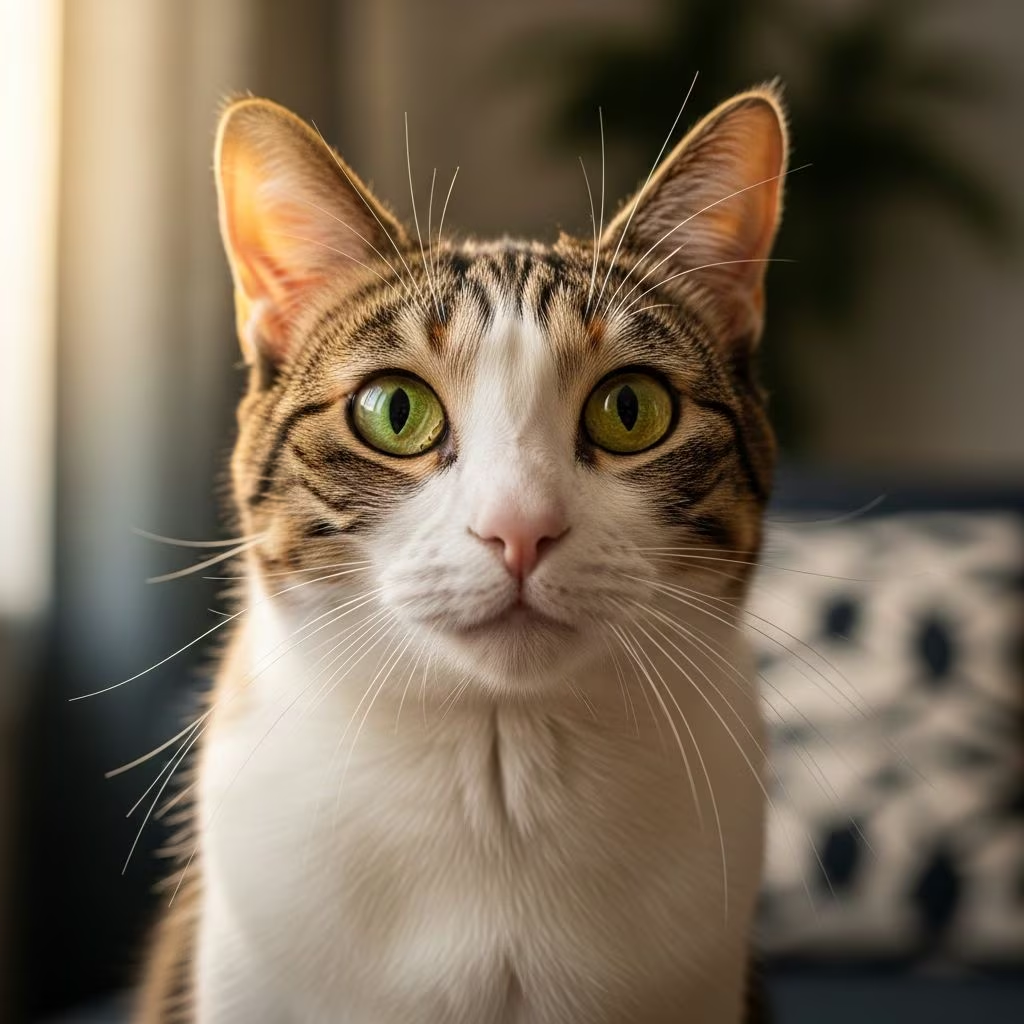
Why Is My Cat in Heat So Much?
If you have an unspayed female cat, you may have noticed she seems to be in heat constantly—meowing loudly, rubbing against you affectionately, and displaying other distinctive behaviors. This can leave many cat owners wondering if something is wrong with their pet. The truth is, frequent heat cycles in unspayed cats are completely normal, though understanding the reasons behind them can help you manage your cat’s behavior and make informed decisions about her health and reproduction.
Understanding the Feline Heat Cycle
To understand why your cat is in heat so much, it’s important to first understand how the feline reproductive cycle works. Unlike humans and dogs, cats have a unique reproductive system designed by nature for maximizing breeding opportunities. Cats are “induced ovulators,” which means they only release eggs in response to mating, rather than on a predictable schedule like humans. This fundamental difference explains much about their frequent heat cycles.
The feline heat cycle, also called the estrous cycle, consists of several distinct phases. Each complete cycle can last from just a few days to several weeks, depending on environmental factors and the individual cat.
The Four Stages of the Feline Heat Cycle
Understanding the different stages of heat can help you recognize what your cat is experiencing:
- Proestrus: This is the initial stage when estrogen levels begin to rise. It typically lasts only one or two days, and there are no visible symptoms during this phase. Male cats may show increased interest in your female cat, but she will not be receptive to their advances.
- Estrus: This is the most noticeable phase and the stage most people refer to when they say a cat is “in heat.” Estrus lasts approximately one week, though it can range anywhere from three to 14 days. During this phase, your cat will exhibit the most obvious behavioral changes and is sexually receptive to males.
- Interestrus: If mating does not occur, the cat enters a rest period between heat cycles. This can last anywhere from two to 19 days in healthy cats.
- Anestrus: This is the longest phase of the reproductive cycle, occurring during seasons with shorter daylight hours. During anestrus, the cat is not cycling and will not come into heat.
How Often Do Cats Go Into Heat?
One of the most surprising facts about feline reproduction is the frequency of heat cycles. Unspayed cats typically go into heat every two to three weeks during the breeding season. This means that if your cat is not spayed, she could potentially cycle almost continuously for several months out of the year, with only brief breaks between cycles.
Within a single breeding season (roughly February through October in the Northern Hemisphere), an unspayed cat can experience multiple heat cycles. Each individual cycle lasts only about two to three weeks, but because the cat enters a new cycle shortly after the previous one ends (if she has not mated or become pregnant), she may appear to be in heat almost constantly.
Why the Breeding Season Matters
The frequency of your cat’s heat cycles is largely controlled by environmental factors, particularly the amount of daylight she receives. Cats are known as “long-day breeders,” meaning their reproductive cycles are triggered by seasonal changes in daylight hours.
Heat cycles typically begin in early spring when daylight hours increase and peak from February to April. They continue through the warmer months and usually end around October or November when daylight hours decrease. However, this seasonal pattern can vary significantly based on geography and living conditions:
- Cats living in tropical regions may cycle year-round due to consistently longer daylight hours.
- Indoor cats kept in well-lit homes or with access to artificial lighting may also cycle throughout the year rather than following natural seasonal patterns.
- Cats in the Northern Hemisphere typically cycle from January through late fall, with breaks during the winter months when daylight is shortest.
Recognizing the Signs of Heat
Understanding the signs and symptoms of heat can help you confirm that your cat’s constant behavior changes are indeed related to her reproductive cycle. Unlike dogs, cats do not bleed during their heat cycle. Instead, the symptoms are primarily behavioral, though there may be some physical signs as well.
Behavioral Signs
- Excessive vocalization, including loud meowing and yowling to attract males
- Extreme affection and rubbing against people, furniture, and other objects
- Rolling on the floor
- Kneading with the back feet
- Wiggling or posturing of the hind end
- Restlessness and inability to settle
- Decreased appetite
- Increased urination or inappropriate urination outside the litter box
- Begging to go outside
Physical Signs
- Swelling and redness of the genital area
- Possible bloody or clear vaginal discharge (though this often goes unnoticed due to regular grooming)
- Abdominal distention
- Increased thirst
When Constant Heat May Be Abnormal
While frequent heat cycles are normal for unspayed cats, there is a condition called persistent heat (prolonged estrus) that represents an abnormal prolongation of the estrous cycle. This rare condition occurs when the hormonal regulation of the reproductive cycle is disrupted, causing a cat to remain in estrus without entering the normal rest phase between cycles.
In healthy cats, the heat cycle includes breaks between estrus phases. However, cats with persistent heat show estrus symptoms consistently without any cyclical breaks in behavior. Several conditions can cause persistent heat:
- Pyometra (a uterine infection)
- Functional ovarian cysts
- Ovarian tumors
- Exposure to hormone replacement therapy products
If your cat appears to be in heat without any breaks for several weeks, or if she shows additional symptoms such as fever, loss of appetite, or lethargy, consult your veterinarian. These could indicate persistent heat or another underlying health condition.
At What Age Do Cats First Go Into Heat?
Understanding when your cat reaches sexual maturity can help you anticipate her first heat cycle. Most cats reach puberty and experience their first heat cycle between 5 and 9 months of age. However, there is considerable variation:
- Some kittens may start cycling as early as 3 to 4 months old
- Others may not experience their first heat until 18 months of age
- Timing depends on breed, weight, and the time of year
- First heat typically occurs in the first spring after birth
Sexual maturity in cats is reached at an average of about six months of age, though this can vary slightly based on daylight hours.
Why Your Cat Seems “Always in Heat”
The reason many cat owners feel their unspayed cat is always in heat comes down to the combination of three factors: the short duration of each heat cycle (two to three weeks), the brief recovery period between cycles (two to 19 days in healthy cats), and the long breeding season that lasts most of the year. Because these cycles overlap and occur in rapid succession without a long break between them, the cat can appear to be in heat continuously.
If your cat is indoor-only and lives in a well-lit environment, she may cycle year-round, making the appearance of constant heat even more pronounced.
Managing Your Cat’s Heat Cycles
If your unspayed cat’s frequent heat cycles are causing behavioral problems or distressing you, there are several management strategies to consider:
- Spaying: The most effective and permanent solution is to have your cat spayed (ovariohysterectomy). Once spayed, your cat will not come into heat and will not be able to become pregnant. Spaying also eliminates the risk of certain reproductive health issues.
- Limiting daylight exposure: While not practical for most cat owners, reducing your cat’s exposure to daylight can theoretically extend the anestrus period and reduce cycling frequency. However, this is not a reliable solution and may affect your cat’s overall well-being.
- Environmental enrichment: Providing adequate play, enrichment, and attention can help manage some of the behavioral symptoms during heat.
- Veterinary consultation: If you’re uncertain whether your cat’s cycling is normal or suspect persistent heat, consult your veterinarian.
The Importance of Spaying
Many veterinarians recommend spaying cats at 4 to 6 months of age, before their first heat cycle. Spaying not only eliminates heat cycles but also provides significant health benefits, including reducing the risk of certain cancers and eliminating the possibility of uterine infections. Additionally, spaying helps prevent unwanted pregnancies and reduces the feline overpopulation problem that shelters face each year.
Frequently Asked Questions
Q: Is it normal for my cat to be in heat every two to three weeks?
A: Yes, it is completely normal for unspayed cats to go into heat every two to three weeks during the breeding season (roughly February to October). Because each heat cycle is relatively short and the recovery period between cycles is brief, unspayed cats can appear to be in heat almost constantly during these months.
Q: Can my cat get pregnant while in heat?
A: Yes, your cat is fertile and can become pregnant during the estrus phase of her heat cycle. However, cats are “induced ovulators,” meaning they only release eggs in response to mating. So pregnancy only occurs if your cat mates with a male during estrus.
Q: How long does a single heat cycle last?
A: A single heat cycle varies in length. The estrus phase (when your cat is “in heat”) typically lasts about one week, though it can range from three to 14 days. The complete cycle, including all phases, can last from several days to several weeks.
Q: Do indoor cats cycle year-round?
A: Indoor cats kept in well-lit homes may cycle year-round because artificial lighting extends the perceived daylight hours. Outdoor and semi-outdoor cats typically cycle seasonally from February through October.
Q: What is the best age to spay my cat?
A: Veterinarians typically recommend spaying cats at 4 to 6 months of age, ideally before their first heat cycle. However, cats can be spayed at any age, and spaying an older cat still provides health benefits.
Q: Is persistent heat the same as normal frequent heat cycles?
A: No. Persistent heat is a rare abnormal condition where a cat remains in estrus without breaks, continuing to show heat symptoms without the normal rest periods between cycles. If your cat shows no breaks in heat symptoms for several weeks, consult your veterinarian.
References
- Persistent Heat (Prolonged Estrus) in Cats — Vetster. https://vetster.com/en/symptoms/cat/persistent-heat-prolonged-estrus
- How Does Cat Behavior Change When They Are in Heat? — The Cat Behavior Clinic. https://www.thecatbehaviorclinic.com/how-does-cat-behavior-change-when-they-are-in-heat/
- Cats in Heat: How Long It Lasts and What To Do — PetMD. https://www.petmd.com/cat/general-health/cat-in-heat
- Estrous Cycles in Cats — VCA Animal Hospitals. https://vcahospitals.com/know-your-pet/estrus-cycles-in-cats
- Cats in Heat/Coming into Season — PDSA. https://www.pdsa.org.uk/pet-help-and-advice/pet-health-hub/conditions/seasons-in-cats
- More About Heat Cycles — BG Shelter Pets. https://www.bgshelterpets.com/more-about-heat-cycles.html



