

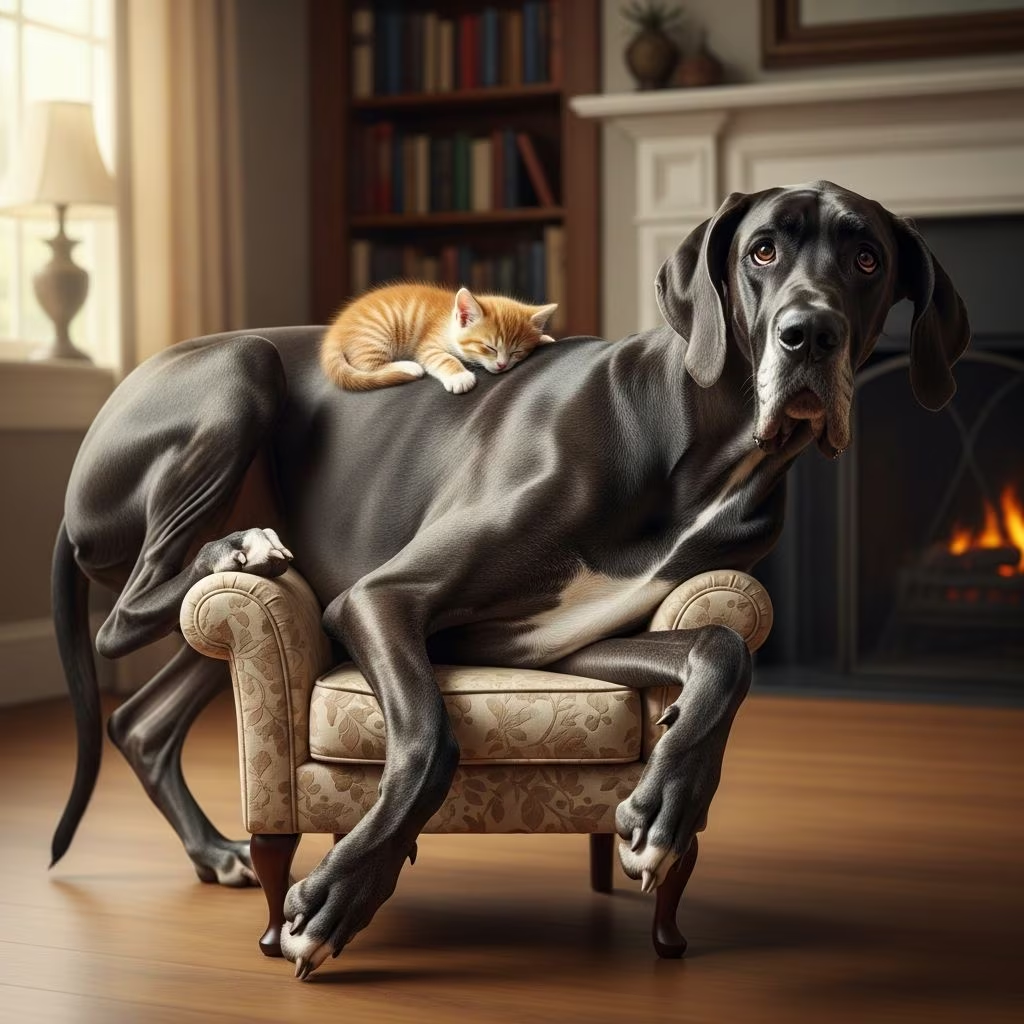
They just really want to sit on your lap.
We’ve come to respect a certain level of personal space in society, but not every creature would agree. Take the **Great Dane**, that jolly giant of a dog who would like to stick their large butt on your lap—do you have some sort of problem with that?
“They don’t seem to have a sense of their size,” says veterinarian **Dr. Justyna Meenan**, medical director at VCA Burrstone Animal Hospital in New Hartford, New York. “This becomes especially evident in crowds where your Dane is attempting to say hello to everyone and is stepping on people’s toes left and right.”
It’s also evident in countless viral videos, where sporty Great Danes leap as if they’re in a gymnastics competition, targeting dad’s stomach or squeezing onto tiny couches. These **gentle giants** tower over most humans yet navigate spaces like enthusiastic puppies oblivious to their 150-pound frames.
So, why don’t Great Danes know how big they are?
“They truly do not seem to realize they are so much bigger than everything around them,” says **Dr. Jennifer Johnson**, medical director at VCA Health Associates Animal Hospital in San Antonio, who owns a Great Dane named Maverick. “They don’t grasp the idea of personal space and often truly believe they are a lap dog.”
What’s more, Dr. Johnson notes, “they’re also typically very affectionate and crave their human’s touch and affection, making them even more likely to crowd you.” This combination of **affectionate nature** and **zero spatial awareness** turns everyday interactions into comedic spectacles: a massive Dane attempting to curl up on a human lap or barreling through doorways without a second thought.
But what explains this profound lack of size perception? The truth is, science hasn’t fully cracked it. Most canines likely don’t possess a conscious understanding of their body size. Dogs learn through **trial and error**, bumping into furniture or failing to squeeze through gaps until they adapt—but they don’t internalize their dimensions like humans do with a mirror or mental map.
Researchers have probed this question. A **2019 study** published in *Animal Cognition* tested dogs’ ability to gauge their size by presenting them with openings too small to pass through. Dogs approached these narrow gaps more slowly and hesitated, suggesting some intuitive body representation. “We concluded that our results convincingly assume that dogs can represent their own body size in novel contexts,” the authors wrote.
However, animal behaviorist **Karen B. London** cautioned that this doesn’t prove full self-awareness. The hesitation might simply stem from visual size comparisons between the dog’s body and the gap, rather than an abstract sense of stature. Experts unanimously agree: breeds like Great Danes exhibit this most dramatically due to their extreme size disparity with the world around them.
**Dr. Liz Stelow**, a veterinary behaviorist at the UC Davis School of Veterinary Medicine, emphasizes that definitive proof is elusive. “It’s not clear that dogs actually have any sense of their actual size, other than their ability to access certain things: tall enough to reach food on the kitchen counters, small enough to get through a hole in the fence, tall enough to jump on the bed,” she says. “And many dogs can be like bulls in a china shop when they try to push their bodies through areas they don’t fit.”
There are some possible reasons for their behavior though
Adorably, the act of planting their backside on your lap could be a **self-soothing behavior**—and have nothing to do with their size perception but everything to do with seeking comfort. Dr. Meenan explains, “In my experience, Danes tend to be quite timid. So, protecting their backends by sitting on their owners’ laps is a soothing behavior.”
When craving pets and cuddles, they treat chairs and couches as “Dane-sized furniture,” plunking down with back legs on the sofa and front paws on the floor. This quirky positioning highlights their **innate need for closeness**, undeterred by physics.
Great Danes’ history plays a role too. Originally bred as **hunting dogs** in Germany (known as “Deutsche Dogge”), they tracked wild boar alongside humans. This heritage made them deeply **people-oriented**, craving constant companionship. Dr. Stelow notes, “Great Danes were originally bred as hunting dogs, making them very people-oriented, as hunting breeds typically are. As such, they are typically very affectionate and, unfortunately, can be susceptible to separation anxiety.”
Separation anxiety amplifies their lap-sitting tendencies. After time apart, they dive straight into snuggle mode, size be damned. Owners report Danes whining at doors, then immediately attempting full-body hugs upon return—often toppling furniture or people in the process.
Great Dane Size and Physical Traits
To understand their obliviousness, consider their stats. Males stand 30-34 inches at the shoulder, females 28-32 inches, weighing 140-175 pounds for males and 110-140 for females. They’re the tallest dog breed, capable of reaching countertops effortlessly or resting heads on tabletops while standing.
This **imposing stature** contrasts sharply with their gentle temperament, earning them the nickname “gentle giants.” Yet, their size invites mishaps: knocking over toddlers, clearing coffee tables with a swish of their tail, or wedging into spaces meant for Chihuahuas.
| Trait | Male | Female | |
|---|---|---|---|
| Height (shoulder) | 30-34 inches | 28-32 inches | |
| Weight | 140-175 lbs | 110-140 lbs | |
| Lifespan | 7-10 years | 7-10 years | |
| Temperament | Affectionate, Gentle, Clumsy | ||
Large breeds like Great Danes face health challenges tied to size, including bloat (gastric dilatation-volvulus), hip dysplasia, and heart issues, which shorten lifespans compared to smaller dogs. According to research from the University of Georgia, larger dogs age faster metabolically.
Training Tips for Great Dane Size Awareness
While they may never “get” their size, training helps manage chaos. Start early with **puppy socialization** to teach boundaries. Use positive reinforcement: reward calm greetings, ignore jumping.
- Teach ‘Place’: Designate a dog bed as their “lap alternative.” Lure with treats, build duration.
- Leash Manners: Practice loose-leash walking to prevent toe-stepping in crowds.
- Impulse Control: Commands like “wait,” “leave it,” curb counter-surfing and door-dashing.
- Desensitization: Expose to busy environments gradually, rewarding polite behavior.
Physical management is key: baby gates for small spaces, reinforced furniture, and ample exercise (60-90 minutes daily) to burn energy and reduce clumsiness. Danes thrive on mental stimulation too—puzzle toys prevent boredom-induced destruction.
Health Considerations for Giant Breeds
Great Danes’ size demands specialized care. Feed large-breed puppy food until 18-24 months to support joint development. Multiple small meals prevent bloat; elevated bowls aid digestion but consult vets.
Regular screenings for **dilated cardiomyopathy** (DCM) and orthopedic issues are vital. The Orthopedic Foundation for Animals (OFA) recommends hip/elbow evaluations before breeding.
Living with a Great Dane: Pros and Cons
| Pros | Cons |
|---|---|
| Devoted companion | High food costs ($100+/month) |
| Gentle with family | Space requirements (big yard ideal) |
| Low grooming | Shorter lifespan |
| Intimidating watchdogs | Potential vet bills for growth issues |
Frequently Asked Questions (FAQs)
Q: Do Great Danes outgrow their clumsy phase?
A: Somewhat, with maturity around 2-3 years and training, but their size ensures lifelong awkward moments. Consistent boundaries help.
Q: Are Great Danes good with children?
A: Yes, when raised together. Supervise due to size— they can accidentally knock kids over despite gentle natures.
Q: How much exercise do Great Danes need?
A: 60-90 minutes daily, split into walks, play, and mental games. Avoid overexertion in puppies to protect joints.
Q: Why do Great Danes sit on laps?
A: Affection, comfort-seeking, and possible anxiety. It’s self-soothing; redirect to their bed with rewards.
Q: Can Great Danes live in apartments?
A: Possible with ample exercise, but challenging due to size. Stairs strain joints; ground-floor with yard preferred.
Conclusion: Embracing the Gentle Giant’s Quirks
Great Danes’ obliviousness to their size is part of their charm. With patience, training, and love, these giants become dream companions. Their big hearts match their bodies—handle with care, and enjoy the laughs.
References
- Body Size Representation in Dogs — Kis, A. et al. Animal Cognition. 2019-05-15. https://doi.org/10.1007/s10071-019-01262-7
- AKC Great Dane Breed Standard — American Kennel Club (akc.org). 2023-01-01. https://www.akc.org/dog-breeds/great-dane/
- Orthopedic Foundation for Animals: Giant Breed Health — OFA.org. 2024-06-12. https://ofa.org/diseases/hip-dysplasia/
- UC Davis Veterinary Behavior Guidelines — UC Davis School of Veterinary Medicine. 2022-11-20. https://www.vetmed.ucdavis.edu/hospital/animal-health-topics/behavior-large-breeds
- Size and Longevity in Dogs — Greig et al. Frontiers in Veterinary Science. 2019-10-10. https://doi.org/10.3389/fvets.2019.00399



