

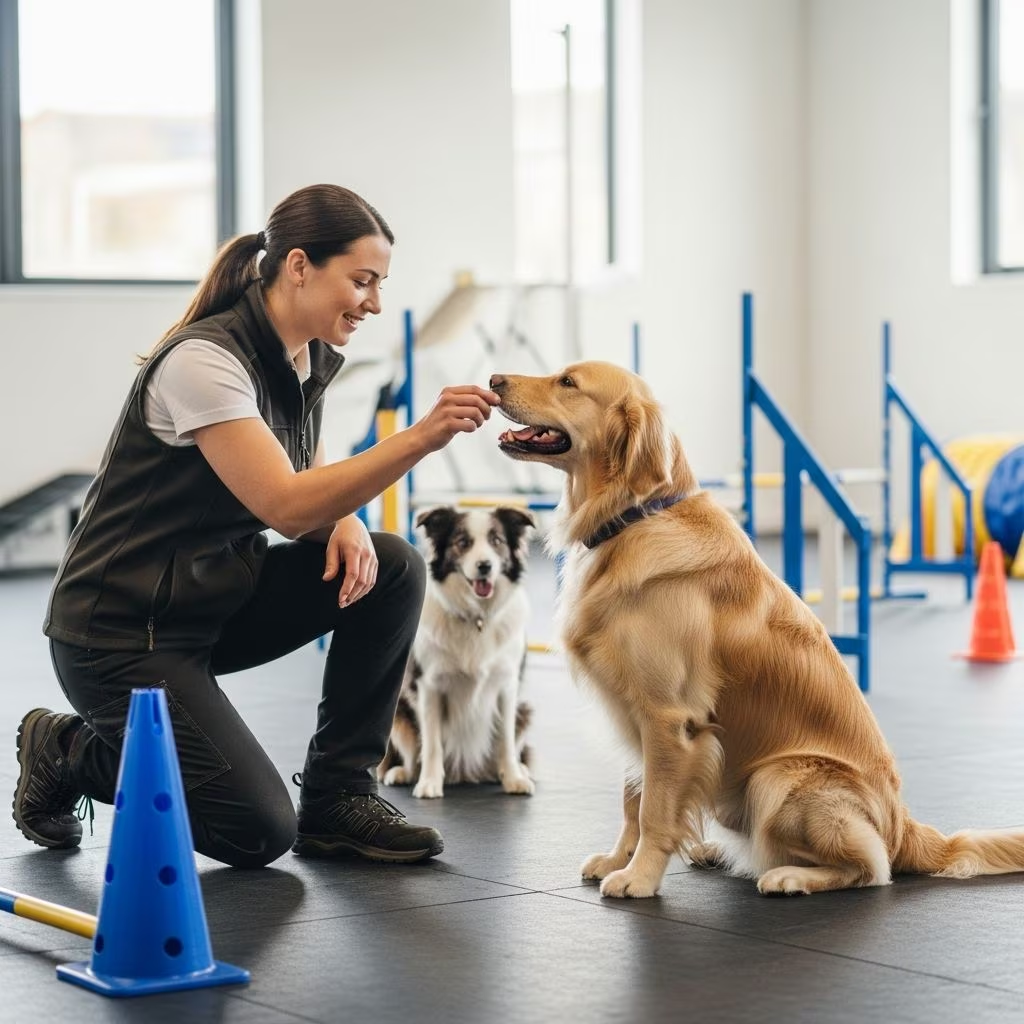
Professional dog trainers overwhelmingly prioritize reward-based methods over punishment because scientific evidence demonstrates superior effectiveness, enhanced welfare, and lasting behavioral changes. Punishment might temporarily halt unwanted actions, but it often leads to stress, fear, and weakened relationships, whereas positive reinforcement fosters enthusiasm and reliability in dogs.
The Science Behind Training Effectiveness
Research consistently shows that reward-based training outperforms punishment in teaching obedience and managing behaviors. A study involving 364 dog owners in England revealed that dogs trained with rewards for tasks like sitting, recalling, and walking nicely exhibited higher overall obedience levels. Specifically, the more tasks trained using praise, food, or play, the better the dogs performed across the board.
In contrast, punishment-based approaches, such as yelling or leash jerks used by 66% and 12% of owners respectively, did not prove most effective for any specific task. Instead, dogs subjected to punishment displayed more problematic behaviors, including aggression, fearfulness, and separation anxiety.
Stress and Welfare Impacts of Training Choices
Punishment elevates stress hormones and triggers avoidance in dogs. A large quasi-experimental study with 92 companion dogs compared reward, mixed, and aversive training schools. Dogs in aversive groups showed elevated cortisol post-training, more panting, tense postures, and stress signals like lip-licking and yawning.
- Dogs from aversive schools were more pessimistic in cognitive bias tests, hesitating longer before approaching ambiguous food bowls, indicating a negative emotional state.
- Reward-trained dogs displayed playful demeanors and quicker engagement.
- Mixed-method dogs fell between, with moderate stress but better than purely aversive.
Another investigation confirmed punishment-trained dogs exhibit tail-tucking, averted gazes, and submissive postures, signaling discomfort that hinders learning.
Learning Speed and Retention Advantages
Positive reinforcement accelerates skill acquisition and memory. Dogs rewarded for correct responses repeat behaviors more readily, embedding commands deeply. Published findings in Applied Animal Behaviour Science demonstrated reward-trained dogs mastered new tasks faster and retained them longer than punishment cohorts.
| Training Method | Learning Speed | Retention Duration | Stress Levels |
|---|---|---|---|
| Reward-Based | High | Long-lasting | Low |
| Punishment-Based | Slow | Short-term | High |
| Mixed | Moderate | Variable | Moderate |
This table summarizes key outcomes from multiple studies, highlighting why rewards dominate professional protocols.
Real-World Comparisons: E-Collars vs. Positive Methods
A government-funded trial at the University of Lincoln tested electronic collars against positive reinforcement for recall issues in 93 dogs. Both groups improved recall over 90% per owner reports, but e-collar dogs showed stress via yelps and yawns, with slower response times upon video review.
Owners using aversives reported diminished bonds, as fear erodes trust essential for cooperation. Reward methods preserved playfulness and strengthened attachments.
Addressing Common Behavior Problems Humanely
Chewing or stealing food responds better to redirection than scolding. Providing chew alternatives increased obedience for not destroying objects, bypassing punishment’s fallout.
Comprehensive reviews affirm reward techniques prevent relinquishment-linked issues, with clicker training proving effective for detection and service roles.
Why Punishment Falls Short Long-Term
While punishment adds aversives to suppress actions, it risks fallout like avoidance or aggression. Dogs learn ‘what not to do’ slower and less reliably than ‘what earns rewards.’
Experts note punishment’s variability—owners inconsistently define or apply it, skewing results. Objective measures favor rewards universally.
Building a Strong Owner-Dog Partnership
Rewards enhance mutual trust, turning training into enjoyable bonding. Dogs view handlers as sources of good outcomes, boosting compliance in distractions.
Transition tips:
- Start with high-value treats for basics like sit and stay.
- Use markers like clickers for precise timing.
- Ignore minor issues; reinforce alternatives.
- Practice short, fun sessions daily.
Expert Consensus and Regulatory Shifts
Global trends regulate aversives due to welfare data. Studies like Vieira de Castro et al. (2020) underpin calls for positive standards, showing cortisol spikes and pessimism in punished dogs.
Positive methods match or exceed aversives in efficacy without welfare costs, as seen in equine parallels.
FAQs
Does punishment ever work in dog training?
It may suppress behaviors momentarily, but studies show it increases stress and problems long-term, making rewards superior.
How do I switch to reward training?
Identify motivators (food, toys), mark desired actions instantly, and phase out lures gradually for independence.
Can positive methods handle serious issues like aggression?
Yes, with professional guidance; rewards address roots while building calm responses effectively.
What’s the best reward for my dog?
Tailor to preferences: food for most, play for high-drive breeds, praise for social dogs.
Is clicker training necessary?
Not essential but accelerates learning by bridging action and reward precisely.
Practical Training Roadmap
- Assess your dog’s drivers: Test treats, toys, petting.
- Master foundations: Lure sit, down, recall in low-distraction spots.
- Add duration/proofing: Increase challenges with variable rewards.
- Troubleshoot: If stalled, up rewards or simplify.
- Maintain: Random reinforces prevent extinction.
This roadmap, grounded in evidence, ensures progress without punishment’s pitfalls.
References
- Effectiveness of Rewards and Punishments in Dog Training — Psychology Today. 2015-06. https://www.psychologytoday.com/us/blog/canine-corner/201506/effectiveness-rewards-and-punishments-in-dog-training
- Scientific Benefits of Positive Reinforcement vs. Negative Reinforcement in Dog Training — Northwoods Animal Shelter. Accessed 2026. https://www.northwoodsanimalshelter.org/blog/scientific-benefits-of-positive-reinforcement-vs-negative-reinforcement-in-dog-training
- Punishment, Puppies, and Science: Bringing Dog Training to Heel — Undark. 2022-09-12. https://undark.org/2022/09/12/punishment-puppies-and-science-bringing-dog-training-to-heel/
- Improving dog training methods: Efficacy and efficiency of reward… — PMC (Peer-reviewed). 2021. https://pmc.ncbi.nlm.nih.gov/articles/PMC7895348/
- Does training method matter? Evidence for the negative impact of… — PMC (Peer-reviewed). 2020. https://pmc.ncbi.nlm.nih.gov/articles/PMC7743949/
- Why punishment is neither training nor behavioural modification… — University of PEI Veterinary Teaching Hospital (.edu). 2023-05. https://vth.upei.ca/wp-content/uploads/2023/05/Behaviour-Tips_Punishment_final.pdf



