

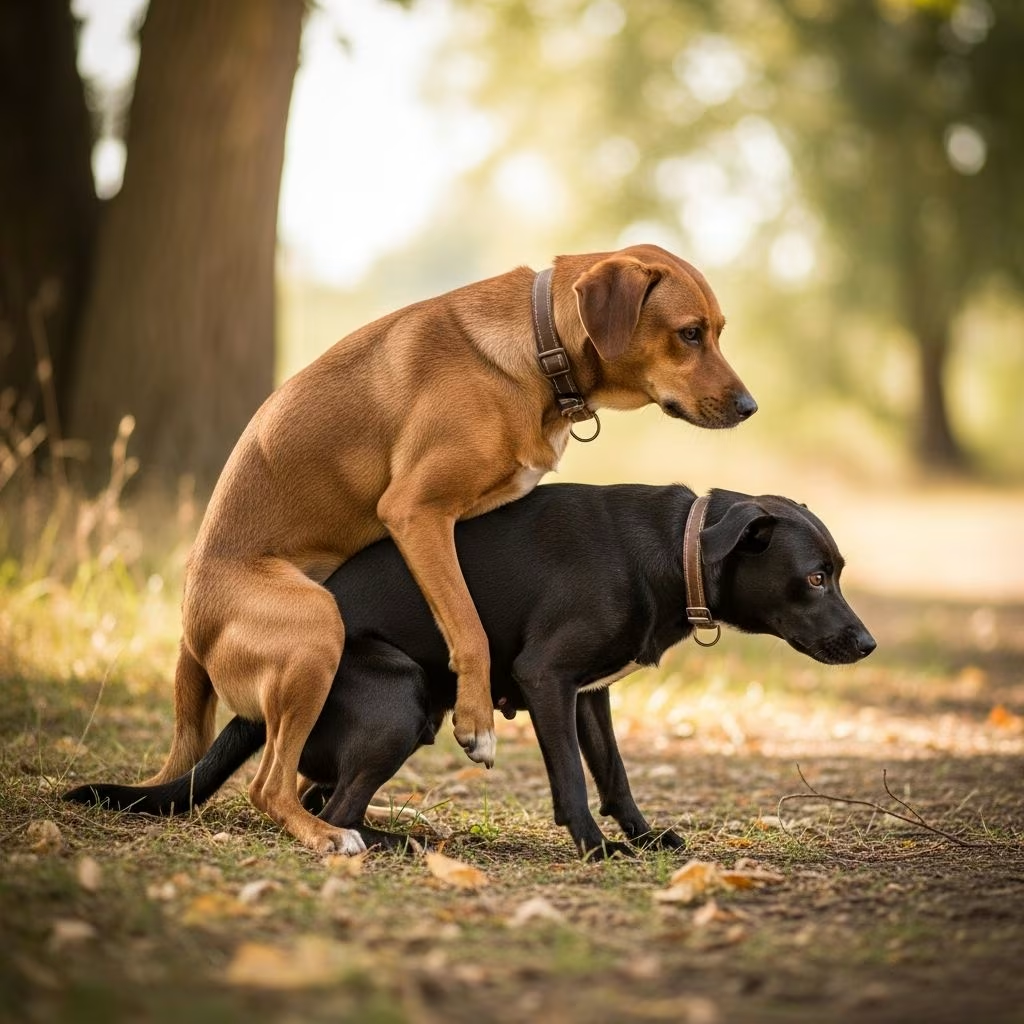
The phenomenon of dogs becoming physically locked together during mating, often called the “copulatory tie,” is a normal and essential part of canine reproduction. This occurs when the male’s penis swells inside the female, and her vaginal muscles contract, preventing separation for a period that typically ranges from 5 to 45 minutes. Understanding this process helps owners distinguish between healthy behavior and potential issues.
The Biological Mechanism of the Copulatory Tie
At the heart of the tie is the male dog’s anatomy, specifically the bulbus glandis, a bulbous structure at the base of the penis. During the second phase of mating, known as second-stage coitus, this bulb enlarges due to increased blood flow, expanding to several times its normal size. Simultaneously, the female’s vaginal muscles contract firmly around it, creating a secure lock.
This mechanism ensures that semen is deposited deep into the reproductive tract. The tie positions the dogs rear-to-rear, a posture achieved after the male swings one hind leg over the female’s back in a quick maneuver called “the turn,” lasting about 5 seconds. The entire mating sequence begins with an initial mounting phase (first-stage coitus, around 2 minutes), followed by the turn and the prolonged tie.
Timing and Triggers in the Female Heat Cycle
Female dogs, or bitches, enter a heat cycle (estrous cycle) roughly twice a year, starting around six months of age, though breed variations exist. The cycle has four phases: proestrus, estrus, diestrus, and anestrus.
- Proestrus (7-10 days): Vulvar swelling and bloody discharge occur; males show interest, but females typically reject them.
- Estrus (3-21 days, average 9 days): Discharge lightens to pinkish; vulva softens; female becomes receptive, flagging her tail to invite mounting. Ovulation happens here, with eggs maturing over 2-5 days post-release.
- Diestrus: Fertility ends; vulvar swelling recedes if no pregnancy occurs.
- Anestrus (100-150 days): Resting phase before the next cycle.
Mating is most successful 2-5 days after the LH surge (luteinizing hormone), when progesterone rises and oocytes mature. The hypothalamus orchestrates this via GnRH, stimulating FSH and LH from the pituitary.
Evolutionary Purpose and Benefits
The copulatory tie, unique to canids, evolved to maximize fertilization chances. It prevents semen leakage and dislodgement, allowing sperm to travel through the cervix, uterus, and into oviducts. Only about 1,000 of hundreds of millions of sperm reach the eggs. The tie also blocks rival males, as dogs remain vulnerable but committed during this window.
Spermatogenesis in males takes 62 days, with sperm maturing via acrosome reaction for egg penetration. In females, all oocytes are present at birth, unlike induced ovulators. The vestibulum’s large size accommodates the bulbus glandis. Pregnancy can occur without a tie, but it’s a sign of successful mating.
How Long Does the Tie Last?
| Stage | Duration | Description |
|---|---|---|
| First-Stage Coitus | ~2 minutes | Initial mounting |
| The Turn | ~5 seconds | Position shift to rear-to-rear |
| Second-Stage Coitus (Tie) | 5-45 minutes (average 5-20 min) | Bulbus glandis swells; muscles contract |
Durations vary by individuals; extremes up to 60 minutes or as short as 5 minutes are possible but less common. Deflating the bulbus glandis requires relaxation of blood vessels and muscles.
Normal vs. Problematic Ties: What to Watch For
Most ties resolve naturally without intervention. Owners should ensure a quiet, safe space away from stressors, as anxiety prolongs the tie. Do not attempt to separate them forcefully, as this risks injury to genitals or spines.
Signs of trouble include:
- Tie lasting over 1 hour
- Excessive straining, yelping, or bleeding
- One dog collapsing or showing distress
- Prior injuries or health issues
In such cases, contact a vet immediately. Lubricants or cold compresses may help in rare supervised scenarios, but professional advice is key. Unplanned matings highlight spaying/neutering benefits.
Owner Responsibilities During Mating
For breeders, supervise to confirm ties and monitor health. Track heat signs: behavioral changes like restlessness or scent-marking. Males may lick or sniff excessively pre-mating. Post-tie, provide water and rest; females may leak fluid.
Prevent unwanted litters: separate during estrus, use belly bands, or opt for sterilization. Spaying eliminates heat cycles and reduces cancers; neutering curbs roaming and prostate issues.
Breeding Best Practices
Health screenings (hips, eyes, genetics) ensure puppy quality. Time breedings via progesterone tests or vaginal cytology. Artificial insemination mimics natural deposition if ties fail. Post-mating, pregnancy lasts 60-90 days.
Vets recommend 2-3 breedings per estrus, spaced days apart, targeting peak fertility.
Frequently Asked Questions (FAQs)
Is it painful for dogs to tie?
No, it’s a natural process without pain for healthy dogs. Mild discomfort from positioning is brief.
Can dogs get pregnant without tying?
Yes, sperm can fertilize without a full tie, though ties boost success.
What if my dogs tied accidentally?
Monitor closely; consult a vet for pregnancy prevention options like misoprostol if within 48 hours (off-label use).
How often do female dogs go into heat?
Typically twice yearly, varying by size: small breeds more frequently.
Should I neuter my dog to avoid ties?
Neutering prevents mating behaviors and offers health benefits; discuss with your vet.
Health Considerations for Reproductive Anatomy
Male testes descend via gubernaculum; penis includes os penis for initial penetration. Females have a spacious vestibulum for ties. Infections or tumors can impair function—regular check-ups are vital.
Hormonal imbalances affect cycles; consult for irregularities.
References
- The Dog Mating Process Explained — Tractive. 2023. https://tractive.com/blog/en/good-to-know/dog-mating
- Dog in Heat: Cycle and Mating Process — PetCubes. 2023. https://petcubes.com/blogs/dog-psychology/dog-in-heat
- Biology of Reproduction of the Dog and Modern Assisted Reproduction — CaniRep (Academic PDF). 2018-01-01. https://www.canirep.com/wp-content/uploads/2018/01/reproductive_physiology_dog_rev.pdf
- Reproduction in Dogs — Vetwest Veterinary Clinics. 2023. https://www.vetwest.com.au/pet-library/reproduction-in-dogs/
- An Introductory Guide to Dog Reproduction — Vitalize Canine. 2024-03-21. https://vitalizek9.com/2024/03/21/dog-reproduction/
- Dog Estrous Cycles — Cornell University College of Veterinary Medicine (.edu). 2023. https://vet.cornell.edu/departments-centers-and-institutes/riney-canine-health-center/canine-health-topics/dog-estrous-cycles



