

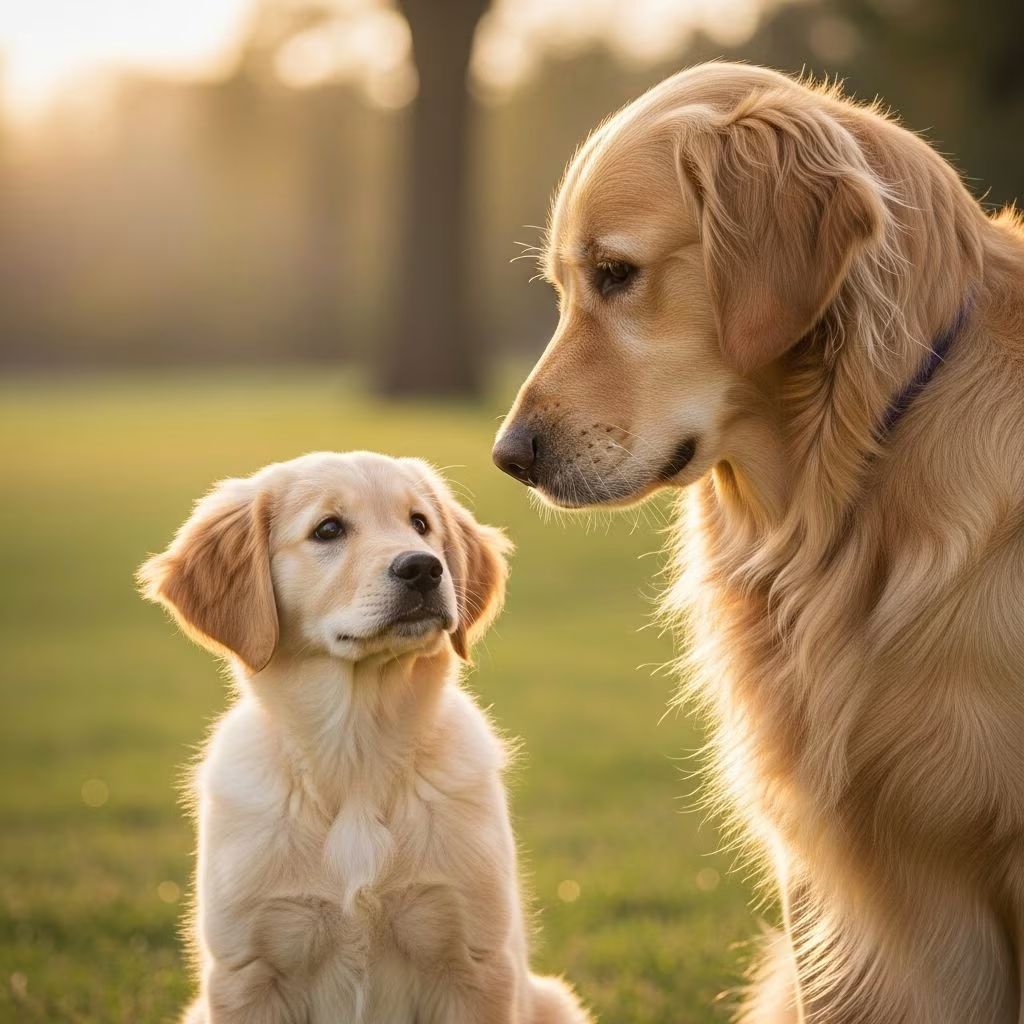
Dogs often retain their endearing puppy-like features and behaviours well into adulthood, a phenomenon known as **neoteny**. This retention of juvenile traits distinguishes domestic dogs from their wolf ancestors, making them more sociable, playful, and dependent on humans.
What is Neoteny in Dogs?
**Neoteny**, or paedomorphosis, refers to the retention of juvenile physical and behavioural characteristics into adulthood. In dogs, this ‘Peter Pan’ effect means adult pets display floppy ears, large round eyes, and perpetual playfulness—traits typical of wolf puppies but lost in mature wild wolves.
Unlike wolves, which undergo rapid physical and behavioural maturation, dogs experience delayed somatic development while reaching sexual maturity early. This evolutionary adaptation arose during domestication, where humans inadvertently selected for tamer, more juvenile wolves that elicited nurturing responses.
Physical Signs of Neoteny
Domestic dogs exhibit distinct physical neotenic traits that enhance their ‘cute’ appeal:
- **Floppy ears**: Unlike erect wolf ears, floppy ears signal submission and friendliness.
- **Large, round eyes**: Wide-set, puppy-like eyes trigger human caregiving instincts.
- **Short muzzles and rounded foreheads**: Brachycephalic (flat-faced) features common in breeds like Pugs and Bulldogs.
- **Compact body size**: Smaller stature compared to wolves, especially in toy breeds.
- **Curly tails and piebald coloration**: Wavy tails and spotted coats are juvenile markers.
These traits evolved as byproducts of selecting for reduced aggression, linked genetically through mechanisms like linkage disequilibrium.
Behavioural Neoteny: The Playful Puppy Forever
Behaviourally, neoteny manifests in lifelong playfulness, high sociability, and dependence on humans. Adult dogs remain energetic, trainable, and less aggressive than wolves, preferring human company over pack hierarchies.
- **Persistent playfulness**: Dogs play-bow and chase tails into old age, unlike wolves who outgrow such behaviours.
- **Increased sociability**: They lick faces, seek attention, and show submission, mimicking wolf pups.
- **Reduced aggression**: Lower territoriality and prey drive in many breeds.
- **Trainability**: Loose, juvenile behavioural patterns make dogs receptive to human commands.
Domestic puppies differ from wolf pups by sleeping more, being cleaner, and less coordinated—traits that foster early human bonding through helplessness.
How Neoteny Evolved in Dogs
Neoteny emerged ~15,000–40,000 years ago during wolf domestication. Humans favoured wolves with juvenile traits: less dominant, more playful subordinates who rarely drew blood in play.
Breeding these ‘neotenic’ adults produced offspring retaining pup-like features. Early sexual maturity in dogs (around 6–12 months vs. wolves’ 2 years) halted full adult wolf behaviours, preserving playfulness and tameness.
Raymond Coppinger’s research highlights ‘planned neoteny’ in working dogs: breeders first selected for behavioural tameness (playfulness, dependency), then physical form. This ‘form follows function’ approach created diverse breeds from a neotenic base.
Breed Differences in Neoteny
Neoteny varies by breed group, reflecting original functions:
| Breed Group | Neoteny Level | Examples | Traits |
|---|---|---|---|
| Toy/Companion | High | Pomeranian, Maltese, Shih Tzu, Pug, Cavalier King Charles Spaniel | Extreme physical neoteny: tiny size, big eyes, floppy ears; lifelong playfulness. |
| Scent Hounds | Intermediate | Beagle, Bloodhound, Basset Hound, Dachshund | Floppy ears, baying (vocal summoning) instead of attacking; cute but functional. |
| Sight Hounds | Low | Greyhound, Whippet, Afghan Hound | Wolf-like lean bodies, prey-killing instinct; less juvenile submission. |
| Terriers | Low | Jack Russell, Fox Terrier | Erect ears, high prey aggression despite small size; minimal neoteny. |
| Herding/Working | Variable | Border Collie (high eye-stalk herding), Corgi (aggressive nipping) | Behavioural neoteny for tameness; physical varies. |
Brachycephalic breeds show high physical neoteny but variable behaviour; toy breeds epitomize the ‘eternal puppy’.
Health Implications of Extreme Neoteny
While neoteny enhances appeal, extreme traits pose welfare risks:
- **Breathing difficulties**: Brachycephalic airway syndrome in Pugs, Bulldogs.
- **Eye disorders**: Proptosis, entropion from large, prominent eyes.
- **Dental issues**: Crowded teeth in short muzzles.
- **Birthing complications**: Dystocia in small-hipped toy breeds.
- **Spinal problems**: Intervertebral disc disease in Dachshunds.
Owners must provide breed-specific care: weight management, vet screenings, and avoiding overbreeding extremes. Neoteny’s benefits—sociability, trainability—outweigh risks with responsible ownership.
Neoteny’s Role in the Human-Dog Bond
Neotenic traits strengthen the human-canine bond. Puppy-like eyes and playfulness activate oxytocin release in humans, mimicking responses to human infants.
From working dogs to companions, neoteny made dogs versatile partners. As roles shifted to pets, selective breeding amplified juvenile morphology—short snouts, pendant ears—for aesthetic appeal.
Understanding neoteny helps owners meet lifelong puppy needs: daily play, socialization, and mental stimulation to prevent boredom-induced issues.
Frequently Asked Questions (FAQs)
What causes neoteny in dogs?
Neoteny results from domestication: humans selected tamer wolves with juvenile traits, leading to early sexual maturity and delayed physical/behavioural maturation.
Which dog breeds show the most neoteny?
Toy breeds like Pomeranians, Pugs, and Cavaliers exhibit extreme neoteny physically and behaviourally, staying playful and dependent.
Is neoteny harmful to dogs?
Moderate neoteny enhances welfare; extremes in brachycephalic/toy breeds cause health issues like breathing and dental problems, requiring vigilant care.
Do all dogs have neoteny?
Yes, but degrees vary: high in companions, low in terriers/sighthounds resembling wolves more closely.
Why do neotenic traits appeal to humans?
Floppy ears, big eyes, and playfulness trigger nurturing instincts, similar to baby schema in human infants.
References
- Neoteny in Dogs: Why Some Puppies Just Never “Grow Up” — Dog Talk Diva. 2025-07-12. https://dogtalkdiva.com/2025/07/12/neoteny-in-dogs-%E2%8E%BC-why-some-puppies-just-never-grow-up/
- Neoteny – why dogs were bred to maintain puppy-like play & features — Dog Walkers Melbourne. N/A. https://www.dogwalkersmelbourne.com.au/articles-dog-walking-pet-sitting/71-dog-neoteny-puppy-love
- Neoteny — Wikipedia (citing primary sources on domestication genetics). 2026 (ongoing). https://en.wikipedia.org/wiki/Neoteny
- The Innocent Eyes Of Dogs — Jose Feneque, DVM (Substack). N/A. https://josefenequedvm.substack.com/p/the-innocent-eyes-of-dogs
- Preliminary results about brachycephalic dogs — Dog Behavior.it. N/A. https://dogbehavior.it/dogbehavior/article/view/1



