

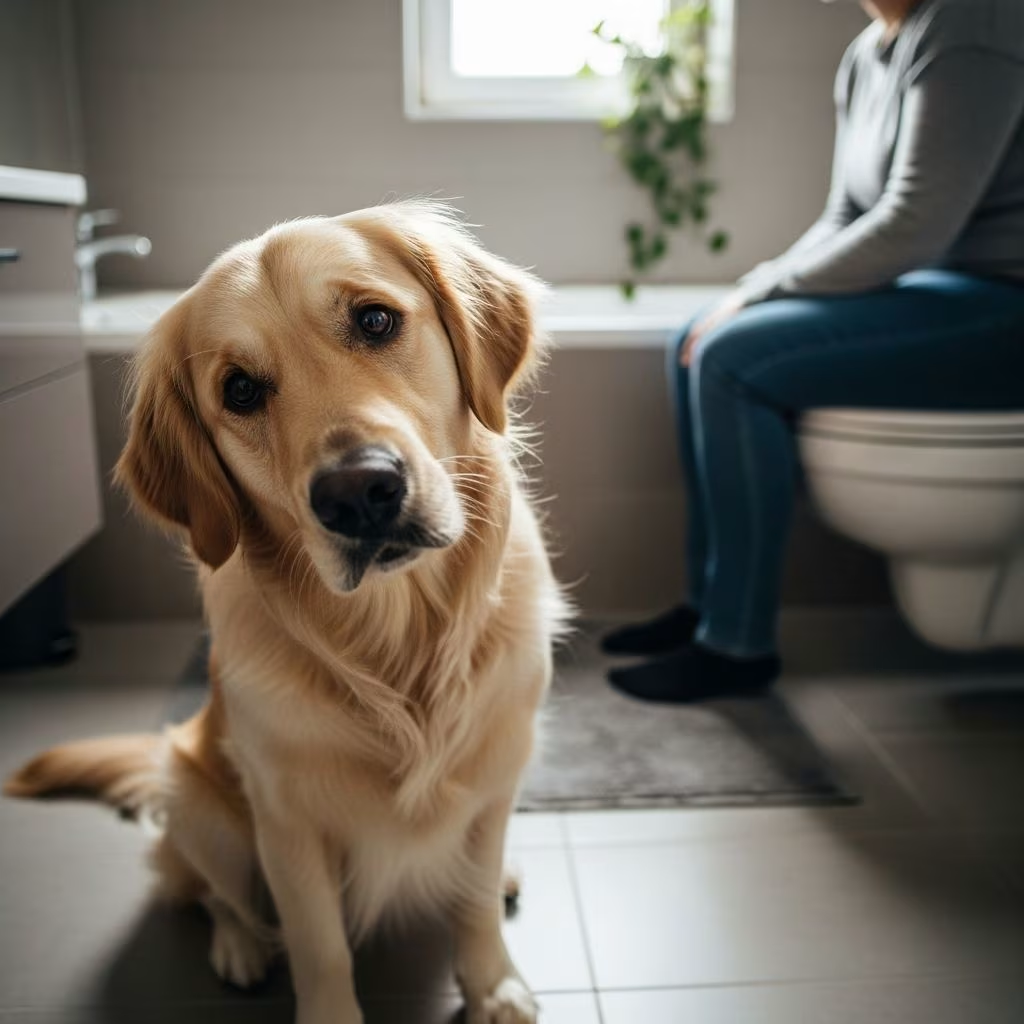
Your dog trailing you to the bathroom and fixing those soulful eyes on you might feel intrusive, but it’s a window into their deep-rooted instincts and unbreakable bond with you. This behavior stems from evolutionary pack dynamics, emotional attunement, and a desire for security, revealing how dogs perceive you as their world.
The Evolutionary Roots of Canine Vigilance
Dogs descend from wolves, where pack members maintained close proximity to leaders and vulnerable individuals for survival. In modern homes, owners become the pack alpha, and the bathroom—a closed space—triggers this ancestral urge to guard or check in. When alone in such areas, dogs may interpret it as isolation, prompting them to monitor from the doorway.
Research shows dogs exhibit proximity-seeking behaviors during uncertain situations, staying near owners to feel secure. This mirrors infant-like attachment, where separation causes distress, leading to attentive staring until reunion.
- Pack hierarchy: Owners as leaders demand loyalty and oversight.
- Vulnerability detection: Bathroom time signals potential weakness, spurring protective instincts.
- Resource guarding: Ensuring no threats encroach on shared territory.
Emotional Intelligence in Your Furry Companion
Dogs excel at reading human emotions, adjusting behaviors based on cues like facial expressions or tone. Studies demonstrate they perform tasks better with happy owners and distance themselves from sad ones, indicating nuanced emotional perception without full empathy.
During private moments like bathroom visits, dogs might sense subtle stress or vulnerability, responding with watchful presence to offer comfort. Heart rate variability data reveals heightened arousal in dogs during owner separation or novel stressors, correlating with proximity-seeking.
| Owner Emotion | Dog Response | Observed Behavior |
|---|---|---|
| Happy/Neutral | Compliant, engaged | Better task performance, less jumping |
| Sad/Stressed | Distant, less compliant | Reduced gazing, avoidance |
| Vulnerable (e.g., bathroom) | Attentive monitoring | Staring, door hovering |
Attachment Styles Shaping Bathroom Habits
The quality of the dog-owner relationship profoundly influences this staring. Securely attached dogs show lower stress during separations, yet still seek visual confirmation of safety. Owners providing warmth foster dogs that approach during threats, while controlling styles may yield more independent pups.
Close bonds reduce overall arousal but heighten attention-seeking in isolation scenarios. Frequent caregiving links to increased attachment behaviors, like persistent staring, as dogs associate owners with comfort.
- Strong emotional ties lower heart rate variability in stress.
- Owner warmth predicts proximity during uncertainty.
- Independent dogs show less arousal, fewer stares.
When Staring Signals Something More
Not all bathroom vigils are benign. Excessive following could indicate separation anxiety, where dogs pace, whine, or destroy items when alone. Environmental changes, health issues, or unmet needs like hunger might amplify this.
Observe patterns: Does staring accompany whining or pacing? It may reflect anxiety rather than mere curiosity. Velcro dogs—those shadowing everywhere—thrive on routine but risk over-dependence.
Practical Solutions for Privacy and Peace
Balance your dog’s needs with personal space through positive training. Start with short separations, rewarding calm behavior with treats. Use baby gates for gradual desensitization, building tolerance to alone time.
- Desensitize gradually: Close the door briefly, increase duration.
- Enrich environment: Provide toys or puzzles during your absence.
- Exercise routine: Tire them out pre-bathroom to reduce energy for staring.
- Positive reinforcement: Praise independence to shift focus.
For anxiety cases, consult vets for underlying issues. Consistency reinforces that bathroom time is safe and uneventful.
Breed Tendencies and Individual Variations
Certain breeds amplify staring due to genetics. Herding dogs like Border Collies instinctively watch for cues, while hounds use scent and sight vigilantly. Small lap dogs prioritize companionship, making privacy elusive.
| Breed Group | Staring Likelihood | Reason |
|---|---|---|
| Herding | High | Task-oriented monitoring |
| Companion | High | Clingy attachment |
| Working | Medium | Protective duty |
| Hound | Medium | Sensory curiosity |
Age matters too: Puppies stare for guidance, seniors for reassurance amid declining senses.
Strengthening the Bond Beyond the Door
View staring as a compliment to your role in their life. Enhance connection through daily rituals: walks, play, training. Teach “place” commands for structured independence, turning vigils into confident waits.
Understand this habit fosters empathy, improving training and reducing frustrations. Dogs don’t judge; they protect and adore unconditionally.
Frequently Asked Questions
Is it normal for dogs to watch me in the bathroom?
Yes, it’s common and rooted in pack loyalty and attachment. Most dogs see it as routine check-ins.
How do I stop my dog from staring at me on the toilet?
Use gates, toys, and training to build alone-time comfort. Reward calm behavior away from the door.
Does bathroom staring mean separation anxiety?
Not always, but paired with distress signs like whining, it might. Monitor and consult pros if needed.
Why do some dogs follow more than others?
Breed, age, relationship quality, and past experiences influence intensity. Secure bonds encourage it positively.
Can I train my dog to give me privacy?
Absolutely. Gradual exposure and reinforcement teach boundaries without harming the bond.
References
- Dogs read human emotions and perform better for happy owners — Max Planck Institute of Geoanthropology. 2023-10-17. https://www.gea.mpg.de/104765/dogs-read-human-emotions
- Dog–Owner Relationship, Owner Interpretations and Dog Emotional Reactivity — National Institutes of Health (PMC). 2022-05-25. https://pmc.ncbi.nlm.nih.gov/articles/PMC9179432/
- Dog Owners’ Interaction Styles: Their Components and Associations With Dog–Person Interaction — Frontiers in Psychology. 2017-01-10. https://www.frontiersin.org/journals/psychology/articles/10.3389/fpsyg.2016.01979/full
- How dogs think — American Psychological Association. 2025-10-01. https://www.apa.org/monitor/2025/10/how-dogs-think



