

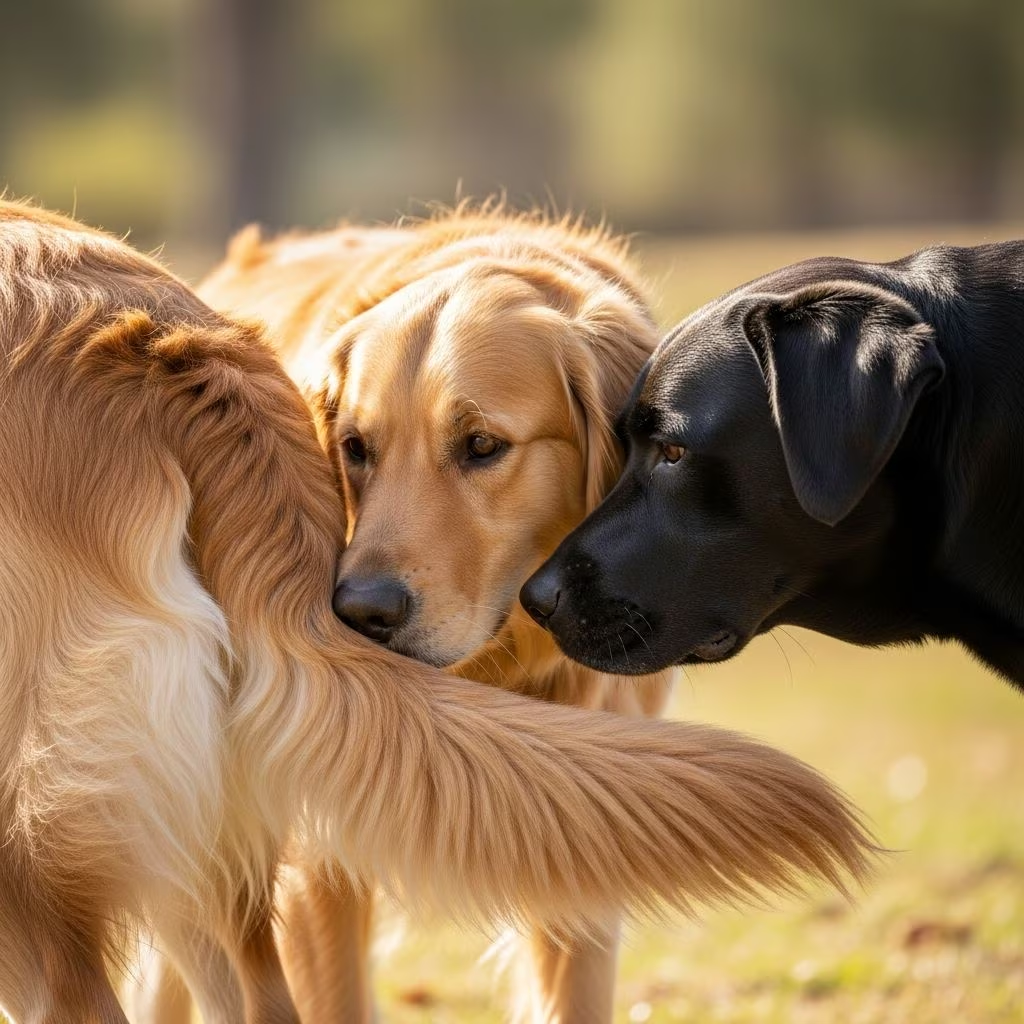
Why Dogs Sniff Rear Ends: Understanding Canine Communication
Dog owners often find themselves puzzled by one of the most distinctive behaviors in the canine world: the rear-end sniff. When two dogs meet, they frequently engage in mutual sniffing of each other’s posterior regions. While this behavior may seem odd or even inappropriate to human observers, it serves a crucial purpose in dog communication and social interaction. This practice is not random or inappropriate; instead, it represents a sophisticated form of chemical communication that allows dogs to gather vital information about one another.
The rear-end sniff is essentially a dog’s version of shaking hands. It’s a greeting ritual that helps dogs identify and get to know one another. But beyond simple introductions, this behavior provides dogs with detailed insights into each other’s health, reproductive status, diet, emotional state, and much more. Understanding the science behind this behavior helps pet owners appreciate the complexity of canine social dynamics and the remarkable sensory abilities that dogs possess.
The Anatomy Behind the Behavior
To understand why dogs sniff rear ends, we must first examine the anatomical structures that make this behavior meaningful. The key to this mystery lies in two small, oval-shaped sacs located inside the rectum on either side of a dog’s anus. These structures are known as anal glands or anal sacs, and they play a pivotal role in canine communication.
The anal glands secrete a distinctive, noxious-smelling substance into the rectum through tiny openings. This fluid contains a complex cocktail of chemical compounds, including fishy-smelling trimethylamine and pungent propionic and butyric acids. The glands naturally empty when the rectal sphincter muscles contract during a bowel movement, coating the stool with this specialized secretion. While pet owners often remain unaware of this process because the odor of the stool masks the anal gland fluid, dogs can detect the distinction perfectly.
The anal glands serve important biological functions beyond communication. They help mark territory and contribute to the dog’s unique scent profile. Every bowel movement essentially stamps the dog’s personal olfactory signature on their environment, creating a biological marker that other dogs can recognize and decode.
The Jacobson’s Organ: A Dog’s Secret Sensory System
While dogs certainly have an impressive sense of smell through their main olfactory system, they possess an additional sensory apparatus that truly sets them apart: the Jacobson’s organ, also known as the vomeronasal organ (VNO). This specialized structure is located above the roof of a dog’s mouth and functions as a separate scent-detection system dedicated to identifying pheromones—chemical signals used for communication.
The Jacobson’s organ is remarkably sophisticated in its function. It allows dogs to detect and process pheromones with extraordinary precision, enabling them to access layers of information that remain completely invisible to humans. This organ communicates directly with the part of the brain that deals with mating, allowing dogs to determine reproductive status and availability. Additionally, in puppies, the Jacobson’s organ enhances their sense of smell, helping newborns locate their mother’s milk and identify their mother from other dogs. Puppies placed between two nursing mothers will instinctively move toward their biological mother based on the pheromone signals detected through this organ.
Interestingly, most humans also possess a vomeronasal organ, though scientists believe it has no functional purpose in our species. In dogs, however, this organ represents a crucial component of their sensory and social infrastructure.
What Information Can Dogs Extract From a Sniff?
When a dog sniffs another dog’s rear end, they’re not simply engaging in a casual olfactory investigation. Instead, they’re conducting a detailed chemical analysis that reveals substantial information about the other dog. According to research from the University of Kentucky, dogs can determine another dog’s health status, reproductive condition, recent diet, and general social and emotional “news” from a single sniff.
The anal gland secretions contain a unique combination of chemical compounds that vary from dog to dog. A groundbreaking study examining anal sac secretions used advanced analysis techniques (gas chromatography–mass spectrometry) and identified 64 different compounds in the samples studied. Some compounds appeared in all dogs, while others were unique to specific individuals. This variation means that each dog possesses a distinctive chemical signature, much like a fingerprint, that other dogs can recognize and remember.
Recent research has unveiled another fascinating layer to this communication system. Scientists at the University of California, Davis discovered that a dog’s anal glands host a bustling community of bacteria, which researchers believe play an important role in producing the smelly anal gland secretions used for communication. Different dogs have different bacterial communities in their anal glands, and the types of bacteria vary based on the dog’s age and weight status. This suggests that bacteria-produced compounds contribute significantly to the unique chemical message each dog broadcasts.
The Role of Pheromones in Canine Communication
Pheromones are chemical substances produced and released by animals that trigger specific behavioral or physiological responses in other members of the same species. In dogs, pheromones are incredibly important for social bonding and reproduction. For example, a mother dog’s pheromones provide comfort and reassurance to her puppies, helping them feel secure and recognized.
Urine and feces are loaded with pheromones, which explains various dog behaviors that perplex pet owners, such as sniffing fire hydrants, other dogs’ markings, or their own feces. Male dogs, particularly those that haven’t been neutered, spend considerable time sniffing females to gather information about reproductive status and availability. This pheromone-based communication system operates across considerable distances and time periods, allowing dogs to “read” messages left by other dogs even when those dogs are no longer present.
The Sensory Superpowers Behind the Sniff
Dogs possess an extraordinary sense of smell that far exceeds human olfactory capabilities. While humans rely primarily on vision to understand their environment, dogs depend on smell as their dominant sense. This difference is fundamental to understanding canine behavior. Puppies are born with fully functional noses from birth, even before their eyes and ears open several weeks later, demonstrating the primacy of olfaction in a dog’s sensory hierarchy.
The numbers speak for themselves. Dogs can detect one or two particles of odor in one trillion particles of air—a sensitivity humans cannot fathom. Their brains contain millions and millions more scent-detecting cells than human brains, and their olfactory bulb (the brain region that interprets smell) occupies a far larger proportion of their brain compared to the human olfactory bulb. Research on explosive detection dogs has shown that they can distinguish individual components within a mixture of odors, demonstrating their remarkable ability to parse complex scent information.
Why Rear Ends Specifically?
Pet owners frequently wonder why dogs choose to sniff rear ends rather than other body parts like ears, feet, or faces. The answer is anatomically straightforward: the rear end houses the anal glands, and their secretions are expelled during defecation. The odor released through the anal glands is uniquely strong and carries rich information. Because this scent is naturally emphasized and refreshed with each bowel movement, it becomes the optimal location for a dog to gather current information about another dog.
Moreover, dogs possess strong scent memory capabilities. By sniffing another dog’s rear end, they essentially store detailed “data” about that individual. If the two dogs encounter each other again, they will sniff rear ends once more to “update” their existing information about each other—much like checking a social media profile for new updates. This ability to remember individual dogs through scent allows dogs to maintain relationships and recognize familiar canines even after years of separation.
Beyond Greeting: Additional Functions of Rear-End Sniffing
While rear-end sniffing primarily serves as a greeting and information-gathering mechanism, it may serve additional functions beyond initial introductions. Some researchers suggest that this behavior could have calming properties for dogs, particularly in stressful situations. The familiar chemical signals present in anal gland secretions might provide reassurance or stress relief to anxious dogs.
Additionally, dogs can involuntarily empty their anal glands when frightened or stressed, releasing a concentrated burst of their personal scent. This involuntary release might serve as a distress signal or fear marker that other dogs can detect and interpret, potentially triggering empathetic or avoidance responses in nearby dogs.
The Broader Context of Canine Scent Communication
Rear-end sniffing is just one component of a larger scent-based communication system that dogs employ throughout their daily lives. Dogs also sniff urine markings left by other dogs on trees, fire hydrants, and other territorial markers. They sniff their own and other dogs’ paw pads, which contain scent glands that release pheromones. They investigate the ground thoroughly before urinating or defecating, gathering information about the area’s recent history. All these behaviors contribute to a comprehensive olfactory picture of their surroundings and the other animals who share their environment.
This scent-based communication system is so integral to dog social structure that it warrants respect and understanding from pet owners. Preventing dogs from engaging in these natural behaviors can cause stress and anxiety, as it deprives them of essential social information exchange.
Research Gaps and Ongoing Investigation
While scientists have made significant progress in understanding rear-end sniffing behavior, considerable research gaps remain. Although it’s long been believed that dogs can learn about sex, reproductive status, health, and behavioral information from sniffing another dog’s rear end, relatively little formal research has directly tested these assumptions. Most of our understanding comes from observational studies and inferences based on the known composition of anal gland secretions and dogs’ documented olfactory abilities.
Future research may reveal additional layers of information that dogs extract from these interactions and may uncover new aspects of this fascinating communication system. As scientists continue to investigate the bacterial communities in anal glands and the specific compounds they produce, we may gain even deeper insights into how this remarkable biological system functions.
Frequently Asked Questions
Q: Is it normal for dogs to sniff each other’s rear ends?
A: Yes, rear-end sniffing is completely normal dog behavior. It’s a natural greeting ritual and communication method that all healthy dogs typically engage in when meeting unfamiliar dogs.
Q: Can I stop my dog from sniffing other dogs’ rear ends?
A: While you can discourage the behavior through training, attempting to prevent this natural behavior entirely isn’t advisable. Dogs need this form of communication to gather important social information. Brief, controlled sniffing during introductions is healthy.
Q: What does it mean if a dog won’t sniff another dog’s rear end?
A: This could indicate fear, anxiety, or lack of interest in social interaction. If your dog avoids this behavior consistently, it may signal stress or behavioral issues worth discussing with a veterinary behaviorist.
Q: Do anal gland problems affect a dog’s communication abilities?
A: Yes, anal gland issues can prevent normal scent secretion and communication. Dogs with blocked or infected anal glands may have difficulty expressing their chemical signals to other dogs.
Q: How old do puppies need to be before they start sniffing other dogs’ rear ends?
A: Puppies begin developing scent-based communication skills very early in life. By the time they’re ready for socialization (around 3-4 weeks of age), they begin learning these important social rituals.
Q: Does spaying or neutering affect rear-end sniffing behavior?
A: While fixed dogs may spend less time investigating reproductive status information, they still engage in rear-end sniffing for other forms of communication and greeting. The behavior typically continues throughout a dog’s life.
References
- Why Do Dogs Sniff Each Other’s Butts? — American Kennel Club (AKC). 2024. https://www.akc.org/expert-advice/training/why-do-dogs-sniff-butts/
- Why do dogs sniff each other’s butts? — Live Science. 2024. https://www.livescience.com/animals/dogs/why-do-dogs-sniff-each-others-butts
- Why do dogs smell each other’s butts? — ManyPets. 2024. https://manypets.com/uk/articles/why-do-dogs-smell-each-others-butts/
- Why Dogs Sniff Rear Ends — VCA Animal Hospitals. 2024. https://vcahospitals.com/know-your-pet/why-dogs-sniff-butts
- Why Do Dogs Sniff Each Other’s Butts? — HowStuffWorks Animals. 2024. https://animals.howstuffworks.com/pets/dogs-sniff-butts.htm



