

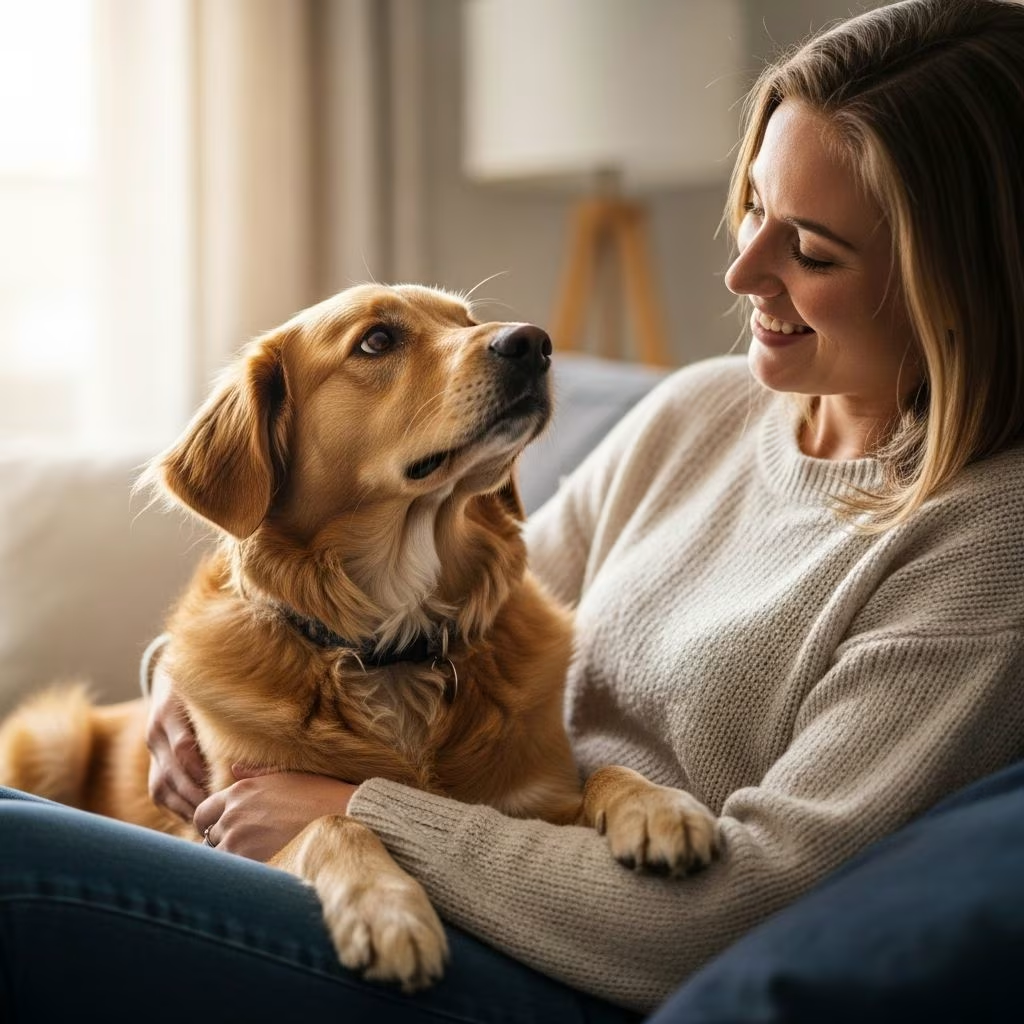
If you have a dog, you’ve likely experienced the warm weight of your furry companion settling onto your lap or feet without warning. This endearing behavior puzzles many dog owners, who wonder whether their pets are trying to assert dominance, seek comfort, or communicate something else entirely. Modern animal behaviorism has moved far beyond outdated theories to reveal the genuine emotional and psychological motivations behind this common canine behavior.
The Evolution of Understanding Canine Behavior
For decades, dog trainers and behaviorists operated under a flawed assumption about why dogs sit on their owners. This misconception stemmed from early research on captive wolves in zoological settings, where dominance hierarchies appeared pronounced and often brutal. Researchers extrapolated these findings to wild wolf populations and, subsequently, to domestic dogs living in human homes. The resulting “dominance theory” suggested that dogs sitting on their owners were attempting to establish themselves as pack leaders and exert control over the household.
This interpretation persisted well into the late twentieth century, influencing training methods and shaping how owners interpreted their dogs’ actions. However, contemporary animal behaviorists have thoroughly debunked this framework. Modern research demonstrates that dogs’ relationships with humans are fundamentally rooted in attachment rather than hierarchical struggle. Understanding this shift in perspective is essential for pet owners who want to accurately interpret their dogs’ behavior and respond appropriately.
Affection and the Need for Physical Closeness
The primary reason dogs sit on their owners is surprisingly simple: they genuinely like being near you. Dogs are inherently social animals that have evolved alongside humans for thousands of years, developing a deep capacity for affectionate bonds. This evolutionary partnership has made dogs exquisitely attuned to human emotions and social cues, enabling them to form attachments that mirror human relationships in many ways.
When your dog settles onto your lap or against your feet, they’re expressing a fundamental need for proximity and physical contact. This behavior manifests in various forms—tail wagging, body wriggling, nudging, and the classic lap-sitting position. Each gesture communicates the same underlying message: “I want to be close to you.” Veterinary behaviorists and certified animal behavior specialists consistently point out that sitting on their owners represents a canine version of a hug or cuddle, a way dogs demonstrate that you hold a special place in their emotional world.
Interestingly, this attachment-based behavior extends beyond a dog’s immediate household. Dogs often sit near guests they perceive as important to their owners, having learned through observation and experience which people are favored by their primary caretakers. This demonstrates the sophisticated social intelligence dogs possess—they recognize emotional connections and respond by seeking proximity to those involved in positive interactions.
Security and Anxiety Management
Beyond affection, dogs frequently sit on their owners as a coping mechanism for anxiety and stress. When dogs encounter unfamiliar environments—a new residence, a hotel room, or a neighbor’s home—they often respond by seeking physical proximity to their owners. This behavior reflects the dog’s reliance on their owner as a source of emotional stability and safety. In the dog’s mind, being in contact with you transforms a potentially frightening situation into one they can navigate with greater confidence.
This security-seeking behavior becomes especially pronounced in dogs with separation anxiety or high-attachment tendencies. For these animals, your physical presence functions as an anchor, grounding them emotionally and regulating their nervous systems through a process known as co-regulation. During co-regulation, your calm demeanor actually transfers to your dog biologically, helping to soothe their anxiety and create a sense of safety that would be impossible for them to achieve independently.
If your dog suddenly begins sitting on you more frequently than usual, and this represents a change in their normal behavior pattern, it may warrant closer observation. Stress, illness, or environmental changes could trigger this intensified need for closeness, signaling that your dog is processing something challenging. Consulting with a veterinarian can help rule out medical causes and provide guidance on supporting your dog through periods of anxiety.
Protective Instincts and Territorial Behavior
Some dogs sit on their owners as a means of asserting protection rather than seeking comfort. A dog might position themselves between you and a stranger, or position themselves to face outward while sitting on your lap—scanning the environment as if standing guard. This behavior reveals that your dog has appointed themselves as your protector, a role they take seriously within the family structure.
Occasionally, this protective impulse is tinged with jealousy. Your dog may climb onto your lap when a visitor arrives, deliberately positioning themselves to block that person’s access to you. While this behavior is generally harmless and endearing, it’s important to distinguish between protective behavior and protective aggression. If your dog’s protective tendencies escalate to growling, snapping, or defensive lunging, professional intervention from a certified animal behaviorist becomes necessary.
The Positive Reinforcement Cycle
Dogs are observant learners that quickly identify which behaviors generate positive outcomes. When your dog sits on you, you likely respond with petting, affectionate words, ear-scratching, or other forms of physical attention. In the dog’s mental framework, your response functions as a reward for the behavior they’ve just performed. This positive reinforcement creates a powerful incentive for repetition.
This dynamic operates similarly whether your dog sits like a human (on their hindquarters with their rear end on the floor) or in a more traditional lap-sitting position. Dogs that have observed their owners sitting on floors, practicing yoga, or spending time at their eye level may adopt similar postures simply because they’ve learned that humans respond enthusiastically to this behavior. Laughter, photograph-taking, and verbal encouragement all signal to your dog that they’ve performed a behavior worth repeating.
Understanding this reinforcement cycle helps owners recognize that their dog isn’t attempting to assert dominance through sitting behaviors—they’re simply engaging in a learned strategy that generates the social connection and attention they crave. This reframing is crucial for accurate interpretation of canine behavior and for building a healthier understanding of your relationship with your pet.
Emotional Synchronization and Bonding
Perhaps the most fascinating aspect of why dogs sit on their owners relates to emotional bonding at a neurological level. When your dog settles against you, they’re not merely seeking physical comfort; they’re engaging in emotional synchronization. Your dog’s brain actually mirrors your emotional state through a process called co-regulation, where your calm energy literally helps regulate their nervous system, and their trust and contentment further calm you in return.
Research demonstrates that dogs respond to their owners’ voices faster than to any other sound, even food-related noises. This heightened responsiveness reflects the deep neural pathways that form when dogs bond with their owners. When your dog sits on you while you’re calm and content, they’re essentially tuning into you on a neurological level, creating a feedback loop of mutual emotional regulation.
Another striking indicator of this bonding is contagious yawning. Studies have shown that dogs yawn when their owners yawn, a behavior that occurs primarily between animals and humans with strong emotional bonds. During this contagious yawning, your dog’s brain is literally mirroring your state, demonstrating that they’re processing your emotional and physical cues at a biological level.
Behavioral Variations and What They Communicate
The specific way your dog sits on you can provide additional insights into their mental state and intentions:
- Facing Outward: When your dog sits on your lap while facing away from you and scanning the room, they’ve shifted into protective mode. They’re indicating that they’ve taken responsibility for monitoring your environment and that you can relax because they’re watching for threats.
- Facing Inward: A dog that sits on you while facing toward you is likely seeking emotional connection and reassurance. This position allows them to make eye contact and maintain close physical contact with minimal barriers.
- Pressed Against You: When your dog presses their body firmly against yours, they’re confirming that you are their safe place in the world. This position maximizes physical contact and the benefits of co-regulation.
- Sudden Changes: If your typically independent dog suddenly becomes clingy and sits on you constantly, something may have shifted in their physical or emotional health. Medical issues, behavioral anxiety, or environmental stressors could all trigger this change and warrant veterinary evaluation.
Frequency and Individual Variation
Not all dogs sit on their owners with equal frequency or intensity. Breed predispositions, individual personality, early socialization experiences, and previous living situations all influence how often a dog seeks to sit on their owner. Some dogs are naturally more independent, while others are velcro dogs that prefer near-constant physical proximity. Both patterns are completely normal, provided they don’t interfere with the dog’s wellbeing or daily functioning.
However, sudden changes in sitting frequency warrant attention. A dog that suddenly plops down on your feet when they’ve never done so before might be experiencing stress, discomfort, or anxiety that requires investigation. Similarly, a previously affectionate dog that stops sitting on you might be signaling physical pain, illness, or emotional distress. Paying attention to deviations from your dog’s baseline behavior is one of the most effective ways to catch emerging health or behavioral issues early.
Supporting Your Dog’s Sitting Behavior
If you enjoy having your dog sit on you, there are ways to reinforce and encourage this behavior safely. Ensure your dog feels comfortable and secure by maintaining a calm, consistent demeanor when they’re in close proximity. Provide positive feedback through gentle petting, soft speech, and treats. Create a comfortable sitting environment by using pillows or cushions that distribute weight properly and prevent joint strain.
If your dog’s sitting behavior becomes excessive or problematic—such as preventing you from moving or creating anxiety—work with a certified animal behaviorist to address the underlying cause. In cases involving separation anxiety or other behavioral conditions, professional guidance can help your dog develop healthier coping mechanisms while you maintain a strong emotional bond.
Frequently Asked Questions
Is my dog sitting on me a sign of dominance?
No. The dominance theory has been thoroughly debunked by modern animal behaviorists. Your dog sits on you primarily because of affection, attachment, anxiety management, or learned reinforcement—not because they’re attempting to establish hierarchical control.
Why does my dog sit on me but not other family members?
Your dog likely perceives you as their primary caregiver or the person who provides the most attention and positive reinforcement. Dogs recognize individual relationships and adjust their behavior accordingly. They may sit on other family members occasionally but prefer the person they’ve bonded with most strongly.
Should I discourage my dog from sitting on me?
Unless the behavior creates problems, there’s no need to discourage it. Allowing your dog to sit on you strengthens your bond and provides them with emotional regulation benefits. However, if mobility or comfort issues arise, you can redirect the behavior to sitting nearby rather than directly on you.
What if my dog suddenly starts sitting on me excessively?
Sudden behavior changes warrant veterinary evaluation. Your dog may be experiencing pain, illness, anxiety, or environmental stress. A veterinarian can rule out medical causes and recommend appropriate interventions if behavioral issues are identified.
Conclusion
Your dog sitting on you is a genuine expression of affection, attachment, and trust. Rather than an attempt at dominance, this behavior reflects your dog’s sophisticated emotional intelligence and their reliance on you for security, comfort, and social connection. By understanding the underlying motivations, you can appreciate this behavior for what it truly is: a sign that your dog sees you as their safe place, their emotional anchor, and their beloved family member. The next time your dog settles onto your lap or feet, you can feel confident knowing that they’re communicating their deep affection and trust in the most direct way their species knows how.
References
- Why Do Dogs Sit on You? — Whole Dog Journal. https://www.whole-dog-journal.com/behavior/why-do-dogs-sit-on-you/
- Dogs Sitting Like Humans: 7 Reasons Why They Do It — Rubyloo. https://rubyloo.co/blogs/news/dogs-sitting-like-humans
- If Your Dog Suddenly Sits on You, Don’t Ignore This — YouTube. https://www.youtube.com/watch?v=yQpzfl78Rpc



