

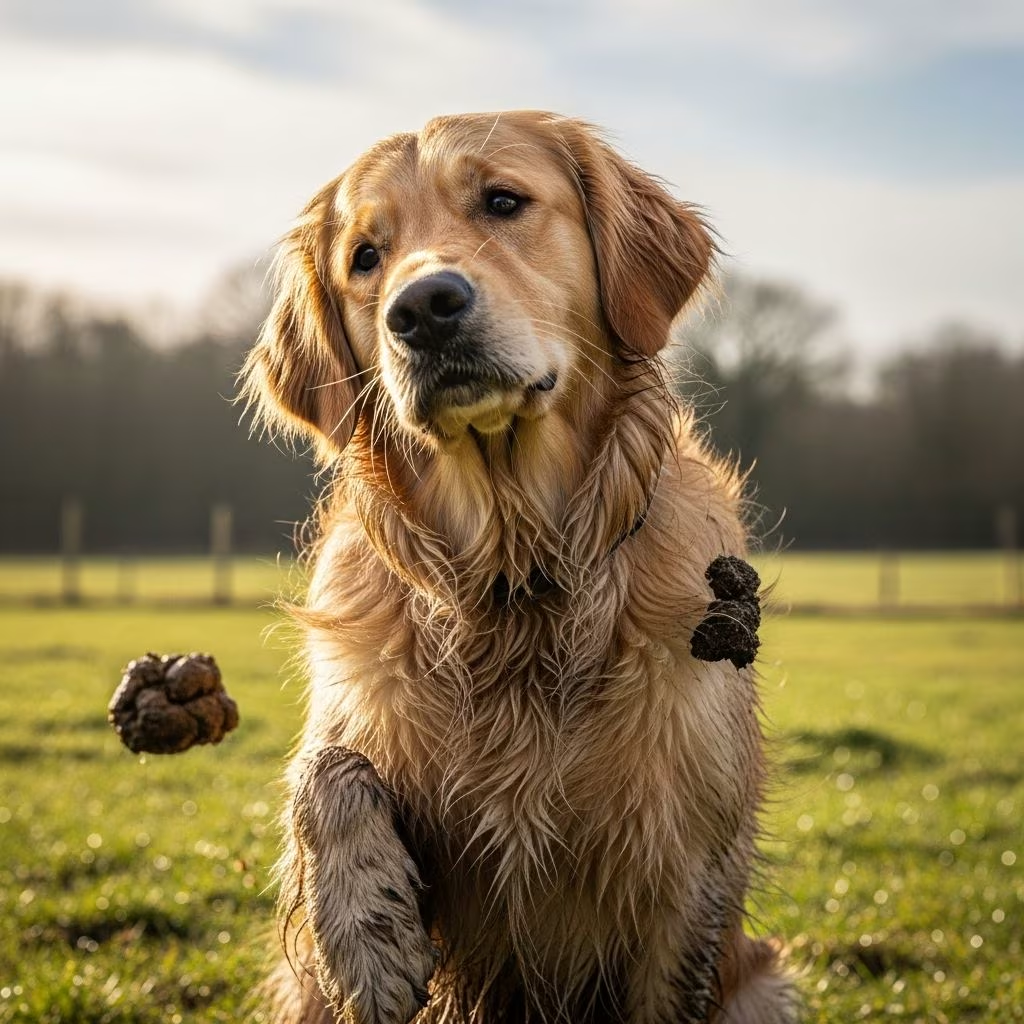
Dogs rolling in poo is a common yet perplexing behaviour that leaves many pet owners baffled and frustrated. This instinctive action, often targeting fox, badger, or other animal faeces, stems from their wild ancestry and serves multiple purposes like camouflage, communication, and sensory enjoyment. While gross to humans, it’s natural for dogs, but understanding it helps manage the mess.
Instinctual Behaviour: Roots in the Wild
The primary driver for dogs rolling in poo traces back to their evolutionary past. Wild canids like wolves roll in strong-smelling substances to mask their scent, aiding survival in hunting or evading predators.
Evolutionary Camouflage
In the wild, rolling in faeces or carrion hides a dog’s natural odour from prey, allowing stealthy approaches. Prey animals rely heavily on smell to detect threats, so covering their scent with poo gives hunters an edge. Domesticated dogs retain this trait despite no longer needing to hunt for food.
Research on wolves shows they roll in diverse odours, including prey faeces, to blend into environments. This behaviour persists in dogs as a genetic holdover, triggered by strong smells during walks.
Sensory Pleasure and Exploration
Dogs possess an extraordinary sense of smell—up to 100,000 times more sensitive than humans. Rolling in poo provides intense olfactory stimulation, akin to sensory enrichment. It’s pleasurable, like a dog ‘high’ from novel scents.
Experts note dogs may wriggle ecstatically, dropping shoulders and rubbing faces into the material, indicating enjoyment rather than mere utility. This explains why they target not just poo but dead animals, urine, or mulch.
Communication and Social Signals
Beyond survival, poo-rolling facilitates pack dynamics. Dogs use it to share information, mark territory, or bond.
Bringing Scents Back to the Pack
Wild dogs roll in odours to transport scents home, alerting packmates to food sources or other animals’ presence. By anointing themselves, they imprint their own scent onto the material while carrying alien smells.
Dr. Amy Attas explains: ‘Dogs mark areas with scent glands… communicating they have been there.’ This ‘I was here’ signal informs other dogs via cheek and body glands.
Social Bonding and Hierarchy
Rolling mimics packmates, fostering unity—like donning a ‘team scent.’ It may assert status by dominating another animal’s odour or appear less threatening in hierarchies by camouflaging personal scent.
Puppies often learn by imitating mothers or littermates, turning it into social play.
Masking Scent for Hunting or Defence
Hunting instincts drive dogs to cover their smell with poo, preventing prey detection. Conversely, it deters predators by making the dog unappealing.
Prey Drive Activation
When stalking, a detectable dog scent triggers flight in prey. Poo-masking allows closer approaches, improving success rates—a tactic observed in wolves.
Domestic dogs activate this on walks, rolling in fox poo (strong and novel) despite full bellies.
Defence Against Predators
Pungent coverings signal ‘avoid me’ to threats, blending the dog into foul environments. While less relevant today, it’s a primal defence.
Social and Pack Dynamics
In multi-dog homes, rolling strengthens bonds. Imitation spreads the behaviour, reinforcing group identity.
- Bonding: Shared scents promote acceptance, like a ‘pack uniform.’
- Imitation: Seeing others roll prompts copycat actions—monkey see, monkey do.
- Hierarchy: Dominant dogs may roll to claim scents, subordinates to fit in.
Potential Health and Medical Reasons
Though mostly behavioural, excessive rolling warrants vet checks. It may signal allergies, skin issues, or nutrition gaps.
Skin Conditions and Itch Relief
Dogs with allergies or parasites roll to soothe irritation using poo’s moisture or texture as a natural balm. Monitor for redness or hair loss.
Dietary or Digestive Problems
Pica-like urges from deficiencies lead to eating or rolling in faeces. Imbalanced diets cause scent-seeking for ‘self-medication’. Consult vets for stool tests or diet tweaks.
How to Stop Dogs Rolling in Poo: Prevention Tips
While ineradicable, you can minimise occurrences with proactive strategies.
| Strategy | Description | Effectiveness |
|---|---|---|
| Supervision & Leash | Keep on-lead in poo-prone areas; distract with commands before rolling. | High |
| Training Commands | Teach ‘leave it’ or ‘come’; reward heavily for compliance. | High with consistency |
| Deterrents | Use citrus sprays or motion-activated devices near hotspots. | Moderate |
| Exercise & Enrichment | More walks, toys reduce boredom-driven rolling. | Supportive |
| Diet Check | Balanced nutrition prevents medical triggers. | Essential |
Positive reinforcement works best; punishment increases anxiety and rolling.
Cleaning Up After Poo-Rolling
Act fast to avoid skin issues or ingestion.
- Pre-rinse with hose to remove chunks.
- Bathe with dog-safe shampoo; focus on face last.
- Use odour-neutralising wipes for quick fixes.
- Dry thoroughly to prevent chills.
- Check for injuries; vet if persistent odour lingers.
Breed matters: double-coated dogs need deshedding shampoos.
When to See a Vet
Consult if rolling is sudden, obsessive, or paired with vomiting, lethargy, or bald patches. Rule out allergies, infections, or anal gland issues.
Frequently Asked Questions (FAQs)
Why do dogs roll in poo?
Dogs roll in poo primarily due to ancestral instincts for camouflage, communication, and sensory pleasure from strong smells.
Is it normal for dogs to roll in poo?
Yes, it’s a widespread natural behaviour, though unpleasant for owners.
Why do dogs prefer certain poo like fox or badger?
These have novel, potent scents triggering stronger instincts than familiar dog poo.
How can I train my dog not to roll in poo?
Use ‘leave it’ training, supervision, and distractions; consistency is key.
Does rolling in poo harm my dog?
Usually harmless, but risks bacteria/parasites; bathe promptly and vet persistent cases.
Why does my dog roll in dead animals too?
Same reasons: strong, novel scents for masking or sharing.
References
- Why do dogs roll in poop? – PetDelux — PetDelux. 2023. https://petdelux.com/blogs/guide/why-do-dogs-roll-in-poop
- Why Do Dogs Roll In Poop? 6 Tips on Dealing with a Roller — PawDAO London. 2023. https://pawdawoflondon.com/blogs/pupdates/why-do-dogs-roll-in-poop-6-tips-on-dealing-with-a-roller
- Why Do Dogs Roll In Poop? Is This Normal? — Chewy. 2024-01-14. https://www.chewy.com/education/dog/training-and-behavior/why-do-dogs-roll-in-poop
- Why Do Dogs Roll In Poop? — PetLab Co. 2023. https://thepetlabco.com/learn/dog/behavior/dog-rolling-in-poop
- Why Do Dogs Roll in Poop (& Other Smelly Things)? — Hill’s Pet. 2024. https://www.hillspet.com/dog-care/behavior-appearance/why-do-dogs-roll-in-poop



