

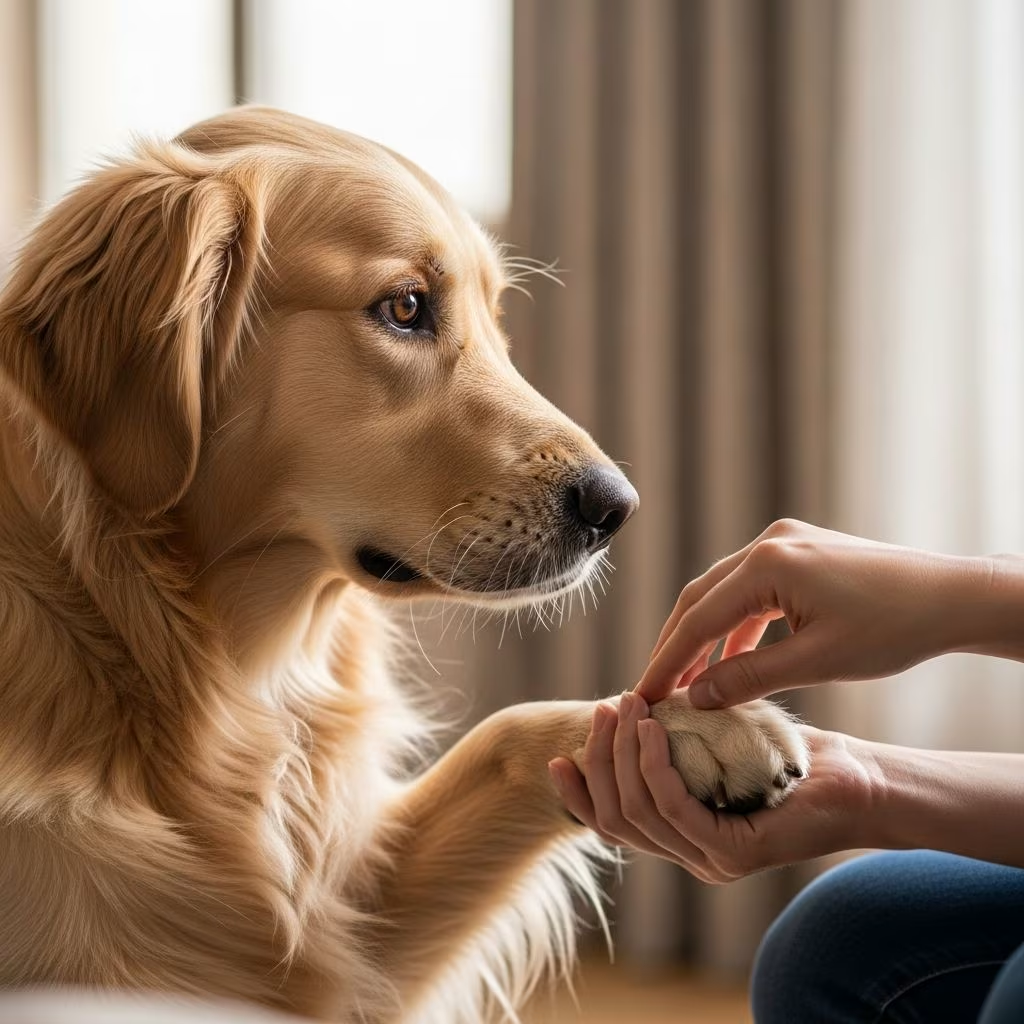
Dogs often pull away, tense up, or vocalize when their paws are touched due to a combination of heightened sensory nerves, evolutionary survival instincts, and individual emotional responses. This sensitivity stems from paws packed with nerve endings essential for environmental awareness, triggering defensive reactions even in safe domestic settings.
The Anatomy of Canine Paw Sensitivity
Canine paws feature an exceptionally high density of nerve endings, particularly on the top surfaces and between the pads, making them far more sensitive than the tougher undersides used for walking. These nerves detect subtle ground vibrations, temperature shifts, and textures, providing critical survival data in the wild.
In modern pets, this wiring persists, causing reflexive flinches or avoidance when touched unexpectedly. Neurobiological studies show such contact can activate the amygdala—the brain’s fear center—prompting instinctive withdrawal akin to a territorial threat.
Evolutionary Roots of Paw Protectiveness
From a behavioral standpoint, paw aversion is a self-protection mechanism honed over millennia. Wild ancestors relied on paws for hunting, fleeing predators, and navigating rough terrain; any vulnerability here meant life-or-death risks. Domestic dogs retain this, viewing sudden paw grabs as potential harm.
Research from animal behavior centers indicates that about 65% of dogs show avoidance to gentle paw touches, influenced by breed, age, and early experiences. Hunting breeds like Beagles exhibit heightened sensitivity from their history on varied terrains, while puppies react strongly due to underdeveloped nervous systems.
Individual Variations in Paw Tolerance
Not all dogs respond identically; factors like genetics, socialization, and past handling shape reactions. Peer-reviewed studies on paw preference reveal no direct link to overall emotionality, but task-specific preferences (e.g., holding toys or stepping over obstacles) highlight paws as key sensory tools.
- Breed influences: Active breeds prioritize paw agility, amplifying touch aversion.
- Age effects: Seniors may tolerate less due to arthritis; puppies need gradual exposure.
- Socialization role: Well-handled pups from professional programs adapt faster.
Owners often misread tense paw lifts as play bids, but context matters: relaxed eyes signal affection-seeking, while pinned ears indicate stress relief.
Neurological and Emotional Triggers
When paws are touched, dogs may release stress signals or seek reassurance via paw extension, linked to oxytocin—the bonding hormone. Gentle responses boost this hormone in both dog and owner, calming nerves, especially in anxious pets.
Experimental data from validated questionnaires like the Positive and Negative Activation Scale (PANAS) assess emotional predispositions, showing paw use consistency across tasks but no strong emotionality tie. Ambilateral dogs (no strong paw preference) sometimes score higher in sociability.
| Factor | Impact on Sensitivity | Examples |
|---|---|---|
| Nerve Density | High (top/pads) | Ticklish flinch |
| Breed | Variable | Hunting breeds: higher |
| Emotional State | Context-dependent | Stress: appeasement paw |
| Socialization | Improves tolerance | Trained pups: better |
Recognizing Stress Signals During Handling
Observe body language to differentiate: a loose posture with soft gaze means contact-seeking; rigid stance with lip licks suggests discomfort. Paw offers can act as an “anti-stress button,” particularly in noisy or unpredictable settings, where insecure dogs press for security.
Unconscious owner rewards—smiles, pets, talk—reinforce this, turning paws into communication tools. Misinterpreting leads to frustration during grooming; understanding fosters empathy.
Building Paw Comfort Through Desensitization
Counterconditioning pairs paw touch with rewards, reshaping associations. Start with high-value treats during brief contacts, repeating 15 times per paw daily. Progress slowly: touch for seconds, then hold, massage, and simulate nail trims.
- Pair touch with treats without restraint.
- Increase duration gradually.
- Add tools like clippers for sound exposure.
- Practice in varied settings for generalization.
Professionally socialized dogs tolerate better; new adoptees may need weeks. Patience prevents escalation to fear aggression.
Practical Techniques for Daily Care
For nail trims, use grinders over clippers to reduce noise anxiety. Daily paw massages build resilience, improving vet visits and walks. Track progress: note reduced pulls or voluntary paw offers.
- Begin short sessions: 5-10 seconds per paw.
- Use frozen Kongs: Licking distracts during handling.
- Positive reinforcement only: No force to avoid setbacks.
Integrate into play: gentle shakes reward loose paws, distinguishing from stress signals.
Advanced Training for Challenging Cases
For severe aversion, consult behaviorists. Studies show gradual exposure reduces amygdala activation over time. Combine with environmental management: quiet rooms minimize triggers.
Breed-specific tweaks help—high-energy types benefit from exercise-first sessions to lower baseline stress.
Common Myths About Paw Handling
Myth 1: All dogs hate paws touched. Reality: Varies widely; many enjoy after conditioning.
Myth 2: It’s just ticklishness. Reality: Deeper instincts drive most reactions.
Myth 3: Force works. Reality: Builds fear; positivity endures.
Health Benefits of Paw Comfort
Tolerant paws enable early injury detection, proper hygiene, and mobility checks. Regular handling prevents overgrown nails causing pain or imbalance.
Frequently Asked Questions
Why does my dog lick its paws excessively?
Beyond sensitivity, allergies or boredom may cause this; consult a vet if persistent.
Can puppies be trained early?
Yes, gentle daily exposure from 8 weeks builds lifelong tolerance.
What if my dog growls during paw touch?
Stop immediately; use counterconditioning and seek professional help for fear aggression.
Do certain breeds tolerate better?
Companion breeds often do; working breeds vary by individual.
How long until improvement?
Weeks to months with consistency; track via journal.
References
- Issue: Handling and Touch Sensitivity — Hawaiian Humane Society. 2020-12. https://www.hawaiianhumane.org/wp-content/uploads/2020/12/Dog-Behavior-Resources-Handling-Touch-Sensitivity.pdf
- Is There an Association between Paw Preference and Emotionality in Pet Dogs? — PMC/NCBI (Peer-reviewed). 2022. https://pmc.ncbi.nlm.nih.gov/articles/PMC9103732/
- Exploring the Deep Reasons Behind Dogs’ Resistance to Paw Touching — OreAte AI Blog (Research summary). 2024. https://www.oreateai.com/blog/exploring-the-deep-reasons-behind-dogs-resistance-to-paw-touching-and-scientific-coping-strategies/496052b1aad8cefae57f0d6c2dbade31
- If Your Dog Gives You Its Paw — George vs Sheldon (Expert analysis). 2024. https://www.georgevsheldon.co.uk/29-165350-if-your-dog-gives-you-its-paw-its-not-to-play-or-say-hello-animal-experts-explain-the-real-reasons/
- Why Dogs Don’t Like Their Paws Touched — WagWalking (Behavior overview). 2023. https://wagwalking.com/behavior/why-dogs-dont-like-their-paws-touched



