

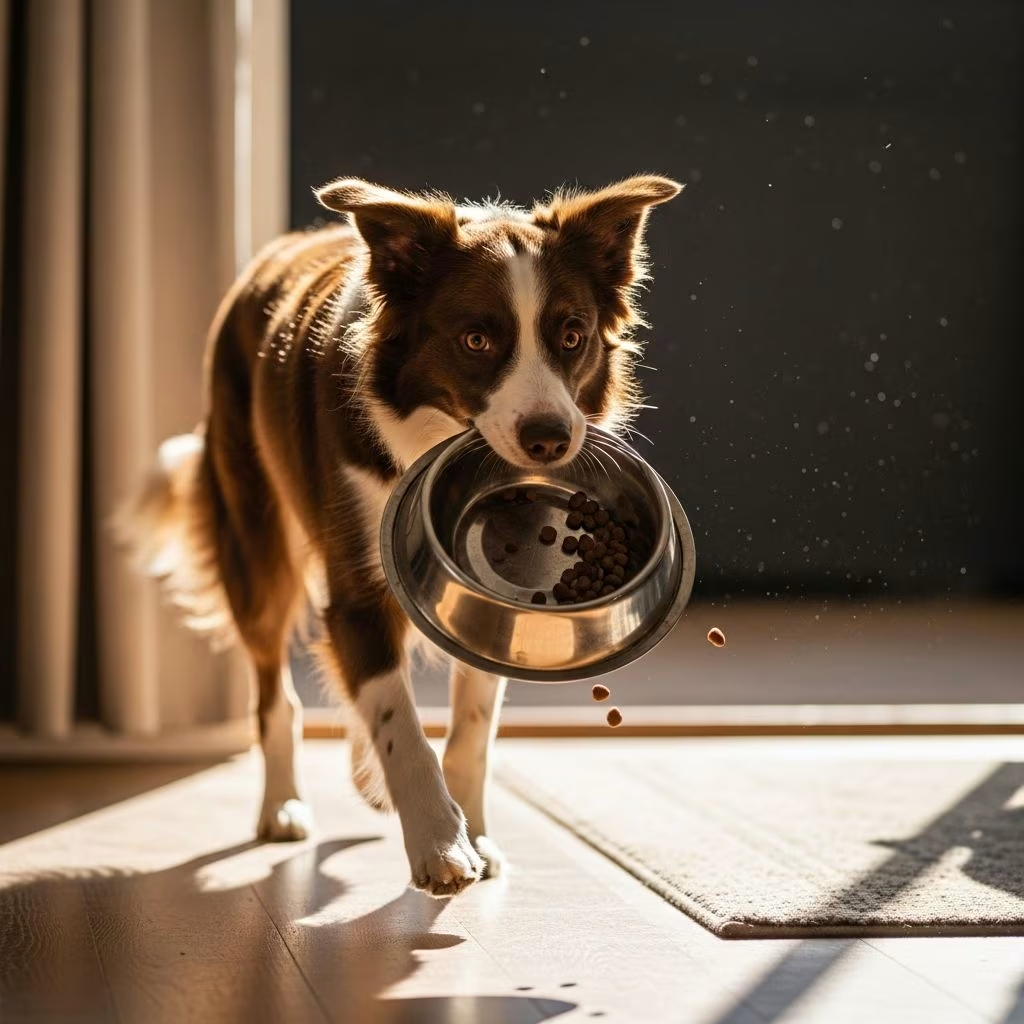
Dogs often pick up their kibble or wet food from the bowl and carry it to another location like a bed, carpet, or even the living room floor. This behavior stems from a mix of evolutionary instincts, environmental factors, and individual personality traits, helping dogs feel more secure while eating.
The Evolutionary Roots of Food Transport
Domestic dogs descend from wolves, whose feeding habits were shaped by wild survival needs. Wolves frequently carried food away from communal kill sites to safer, private spots to avoid competition or theft from pack members. This instinct persists in dogs, prompting them to relocate meals to perceived secure areas.
In the wild, eating in shared spaces risked interruption, so transporting food minimized vulnerability. Modern dogs, despite abundant food, retain this wiring. Studies on canine domestication show how human-selected traits like dependence on owners evolved alongside scavenging behaviors, influencing how dogs handle meals today.
Security and Comfort in Eating Choices
Many dogs choose spots like soft beds or quiet corners because they offer physical comfort and a sense of safety. Elevated surfaces or enclosed areas mimic natural dens, reducing exposure while chewing. This is especially common in multi-pet homes where dogs guard resources instinctively.
- Soft surfaces: Beds provide cushioning, making prolonged eating more enjoyable.
- Quiet zones: Away from foot traffic, minimizing disturbances.
- Personal territory: Dogs claim spots with their scent for reassurance.
Nutritional influences also play a role; diets high in carbohydrates can heighten alertness or hyperactivity, prompting dogs to seek familiar, calming environments during meals.
Food Guarding: A Protective Instinct
Relocating food often ties to resource guarding, where dogs protect meals from perceived threats like family members or other animals. This behavior links to feeding routines; irregular schedules or treat-giving during human meals can amplify guarding tendencies.
Research indicates that feeding multiple dogs together may reduce aggression in some cases but heighten it in others, depending on hierarchy. Owners inadvertently reinforce guarding by approaching bowls, triggering the dog’s relocation response.
Environmental and Household Influences
Home dynamics significantly affect this habit. Noisy kitchens or high-traffic feeding areas make dogs uneasy, leading them to quieter spots. Boredom or lack of stimulation can turn eating into an exploratory activity, with dogs scattering kibble for ‘play’.
| Household Factor | Impact on Behavior | Solution |
|---|---|---|
| Busy feeding area | Dog moves food to calm spot | Relocate bowl to quiet room |
| Multiple pets | Increased guarding/relocation | Separate feeding times |
| Irregular meals | Anxiety-driven transport | Consistent schedule |
| Boredom | Scattering for entertainment | Enrichment toys |
Health and Dietary Connections
Diet quality impacts eating patterns. High-carb kibbles cause blood sugar spikes, leading to restless behavior and food scattering. Picky eaters or those with nutritional gaps may hoard food in multiple spots, echoing ‘feast or famine’ ancestry.
Anxiety or stress can manifest as abnormal habits; separation anxiety might prompt hiding food for later. Digestive issues from rapid eating—exacerbated by relocation—risk choking or bloat, so monitoring is key.
Training Strategies to Redirect the Habit
While harmless for most, relocation can create messes or hygiene issues. Positive reinforcement training helps:
- Observe patterns: Note preferred spots to understand triggers.
- Secure environment: Feed in a gated, quiet area.
- Use puzzle feeders: Slow eating and add mental stimulation.
- Reward calm eating: Treats for staying at the bowl.
- Gradual desensitization: Sit nearby during meals, rewarding non-relocation.
Feeding enrichment reduces stereotypic behaviors; devices like kibble dispensers engage dogs, curbing the need to move food. Consistent routines build trust, minimizing anxiety-driven habits.
When to Consult a Professional
If relocation accompanies aggression, excessive scattering, or weight loss, underlying issues like medical conditions or severe anxiety may be at play. Veterinarians can rule out nutritional deficiencies or gastrointestinal problems.
Behaviorists recommend assessing feeding routines; changes like separate meals for multi-dog homes often resolve conflicts. For compulsive patterns, rule out boredom or stress eating first.
Nutritional Tips for Balanced Behavior
Opt for high-protein, moderate-fiber diets to promote satiety and steady energy, reducing hyperactivity. Avoid over-reliance on treats, which can foster begging or guarding.
- Protein-rich foods enhance focus and calm.
- Fiber aids digestion, preventing rapid intake.
- Balanced carbs prevent sugar crashes.
Regular vet check-ups ensure diets meet needs, supporting emotional stability via gut-brain connections.
FAQs
Is it normal for dogs to move food around?
Yes, it’s a common, instinctual behavior linked to security and ancestry, rarely indicating problems unless extreme.
How do I stop my dog from taking food to the bed?
Feed in a comfortable, secure spot with enrichment toys; reward staying put.
Does diet affect this behavior?
Absolutely—high-carb diets can increase restlessness, prompting relocation.
Why do puppies do this more?
Puppies teethe and explore; provide safe chews to redirect.
Can multiple dogs share bowls without issues?
Sometimes, but separate feeding often prevents guarding.
Real-Life Examples and Case Studies
Consider Luna, a Labrador in a busy household, who carried kibble to her crate amid family chaos. Switching to crate feeding resolved it. Similarly, Max, a senior Beagle, hoarded food due to past scarcity; routine meals restored normalcy.
These cases highlight how tailored adjustments address root causes effectively.
References
- The Link Between Diet and Behaviour in Dogs — CanineCeuticals. 2023-05-15. https://canineceuticals.com.au/blogs/news/the-link-between-diet-and-behaviour-in-dogs
- The Relationship Between Feeding Routines of Dog Owners — IAABC Journal. 2022-10-01. https://journal.iaabcfoundation.org/feeding-behaviour/
- Canine Feeding Behavior — Royal Canin Academy. 2024-01-20. https://academy.royalcanin.com/en/veterinary/canine-feeding-behavior
- Abnormal Eating Habits in Dogs — UC Davis Veterinary Medicine. 2023-08-10. https://healthtopics.vetmed.ucdavis.edu/health-topics/canine/unusual-eating-habits-dogs
- Understanding Pet Food Habits — HEVH.net. 2024-03-05. https://www.hevh.net/understanding-pet-food-habits/
- Compulsive Eating in Dogs — Pet Professional Guild. 2022-11-12. https://www.petprofessionalguild.com/barks/barks-magazine-blog/compulsive-eating-in-dogs/



