

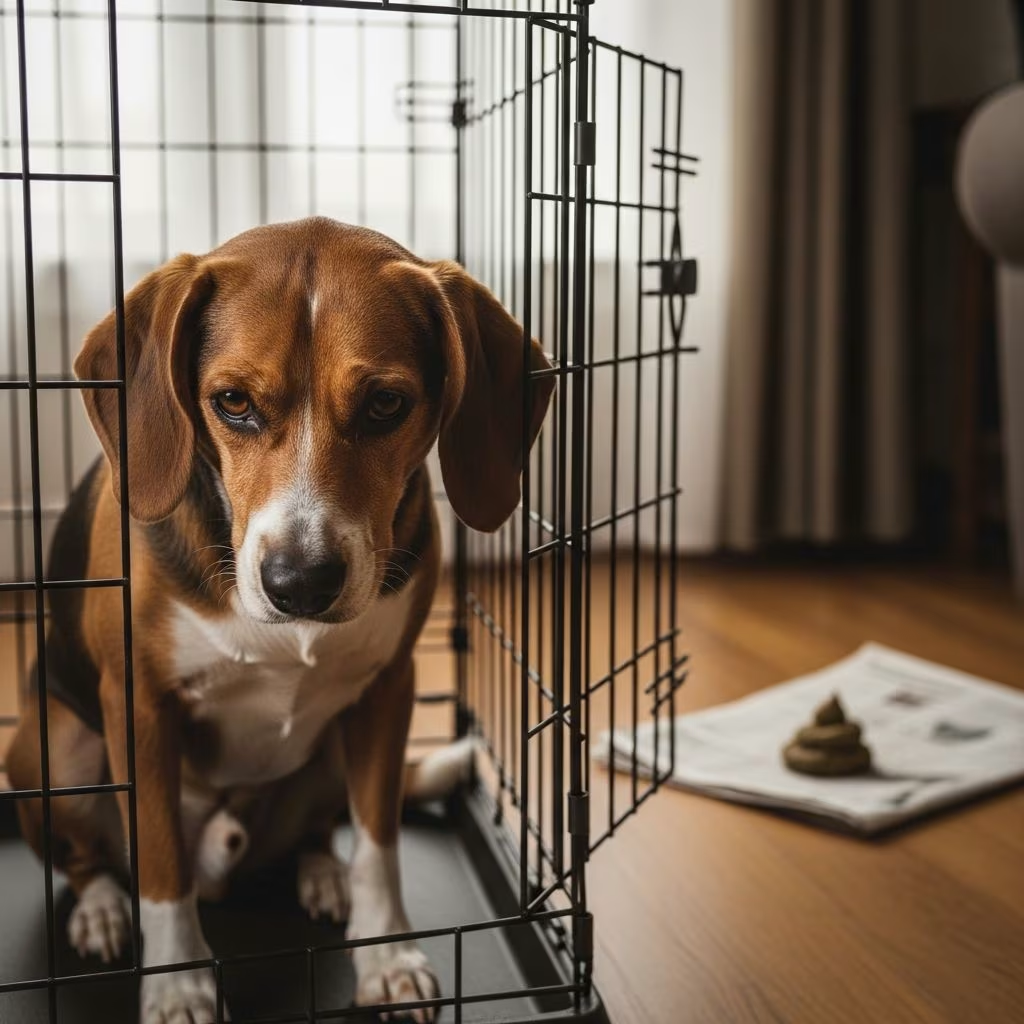
Dogs instinctively avoid soiling their sleeping areas, yet many owners face the frustrating issue of crate defecation. This behavior, known as crate soiling, can stem from health problems, improper training, or environmental factors. Addressing it requires identifying the cause and implementing targeted solutions to rebuild clean habits.
Common Triggers for Crate Defecation
Understanding the ‘why’ is the first step. Puppies and adult dogs may poop in crates due to unmet physical needs, stress, or past experiences. A sudden change in behavior often signals an urgent issue, while ongoing problems point to routine flaws.
- Age-Related Limitations: Young puppies lack bladder and bowel control. A 2-month-old can hold for about 3 hours, increasing by one hour per month of age, plus one extra.
- Overly Large Crates: Excess space allows dogs to separate sleeping from elimination zones, defeating the crate’s purpose.
- Infrequent Breaks: Skipping potty walks leads to unavoidable accidents during confinement.
Health Issues Leading to Crate Soiling
Medical conditions top the list for new or unexplained crate soiling, especially in previously trained dogs. Veterinary evaluation is essential before assuming behavioral causes.
Conditions increasing elimination urgency include urinary tract infections (UTIs), gastrointestinal upset, parasites, and inflammatory bowel disease. Painful defecation from issues like colonitis or orthopedic problems can also force indoor accidents. Senior dogs may suffer from cognitive dysfunction syndrome, eroding house training.
| Condition | Symptoms | Action |
|---|---|---|
| UTI or Parasites | Frequent small accidents, straining | Vet exam, meds within 24 hours |
| GI Upset | Diarrhea, sudden onset | Fecal test, diet change |
| Cognitive Decline (Seniors) | Inconsistent patterns, confusion | Neurologic assessment |
| Incontinence | Dribbling, no awareness | Sphincter evaluation |
If symptoms persist post-treatment, reconsult your vet. Early intervention prevents habit formation.
Behavioral and Anxiety-Related Causes
Not all crate soiling is medical. Behavioral factors account for about 20% of house soiling cases in pets. Lack of proper house training means dogs eliminate for relief without learned preferences for outdoors.
Fear-based issues like separation anxiety trigger soiling during absences, even brief ones. Noise phobias (thunder, fireworks) or outdoor fears prevent complete elimination outside. Rescued dogs from mills may have ingrained habits from confined, soiled environments.
- Separation Anxiety: Soiling only when alone; treat with desensitization.
- Fear of Outdoors: Refusal to potty; create safe indoor spots temporarily.
- Excitement/Submissive: Accidents during greetings; build calm routines.
Observe patterns: Consistent spots suggest learned preference; random soiling indicates anxiety.
Training Mistakes That Encourage Soiling
Crate training leverages dogs’ den instinct, but errors undermine it. Leaving food/water available all day disrupts schedules, making prediction impossible. Puppies should hold for age in months +1 hour (e.g., 4-month-old: 5 hours).
Punishment worsens issues, fostering fear and more accidents. Instead, focus on prevention and positive reinforcement.
Step-by-Step Solutions to Stop Crate Soiling
Resolve crate soiling systematically: Rule out health issues, adjust routines, clean thoroughly, and retrain gradually.
1. Establish a Strict Schedule
Feed/water at set times; potty immediately after meals, play, and naps. Track in a journal to refine timing. For example:
- 6 AM: Feed, potty walk
- 8 AM: Crate for 4 hours max (age-dependent)
- Repeat every 3-5 hours
2. Optimize Crate Size and Setup
Ensure the crate fits snugly—room to stand/turn, no more. Remove bedding if soiled; use puppy pads in a divider if needed.
3. Deep Cleaning Protocols
Residual odors invite repeats. Use enzymatic cleaners, vinegar, or hydrogen peroxide; air dry fully. Baking soda absorbs lingering smells.
- Inspect daily; rotate crate bases if possible.
- Avoid ammonia-based cleaners—they mimic urine scent.
4. Retraining for Habitual Soilers
For entrenched habits:
- Remove from crate; use a penned area with papers/absorbent material.
- Take out frequently (every 1-2 hours); reward outdoor success lavishly.
- Gradually shrink indoor area, then reintroduce short crate sessions (5 mins, build up).
- If accident occurs, clean and restart—no punishment.
For medical/elderly cases, maintain options like indoor potties.
5. Managing Anxiety Components
Consult a veterinary behaviorist for fear issues. Use counter-conditioning: Pair crate with treats/toys; practice short absences.
Prevention Strategies for Long-Term Success
Prevent recurrence with consistency:
- Never exceed hold-time limits, especially overnight.
- Exercise before crating to empty bowels.
- Monitor diet: Avoid high-fiber or sudden changes.
- Puppy-proof transitions: Increase crate time as control improves.
Track progress weekly; expect 80-90% improvement in 2-4 weeks with diligence.
Special Considerations for Puppies vs. Adults
| Group | Key Challenges | Tailored Fixes |
|---|---|---|
| Puppies | Immature control, inconsistent schedules | Frequent breaks, scheduled meals |
| Adults | Sudden onset, anxiety | Vet check, behavior consult |
| Seniors | Mobility loss, cognition | Accessible potties, meds |
Frequently Asked Questions (FAQs)
Is crate soiling always a sign of medical problems?
No, but rule it out first, especially with changes. Behavioral causes are common in untrained pups.
How long can a puppy stay in a crate without soiling?
Age in months +1 hour daytime; 6-8 hours overnight for most. Adjust for breed size.
What if cleaning doesn’t stop the odor?
Use enzymatic pet cleaners; multiple washes may be needed. Consider crate replacement.
Can punishment help?
No—it increases anxiety and soiling. Use positive methods only.
When to seek professional help?
If no improvement in 1-2 weeks post-vet, or anxiety signs present.
References
- Crate Soiling: Why Does My Puppy Keep Having Accidents in the Crate and How Can I Fix It? — Beyond the Dog Training. Accessed 2026. https://beyondthedogtraining.com/houston-puppy-training/crate-soiling-why-does-my-puppy-keep-having-accidents-in-the-crate-and-how-can-i-fix-it/
- Canine House Soiling: Back to Basics — Today’s Veterinary Practice. Accessed 2026. https://todaysveterinarypractice.com/behavior/canine-house-soiling-back-basics/
- Dog Behavior Problems — Soiling in the Crate or Kennel — Humane Society of Missouri. Accessed 2026. https://hsmo.org/portfolio-item/soiling-in-the-crate-or-kennel/
- Dog Behavior Problems – House Soiling — VCA Animal Hospitals. Accessed 2026. https://vcahospitals.com/know-your-pet/dog-behavior-problems-house-soiling



